Never Run Out of Coffee Service for the Office
A never run out of coffee service does not have one standard price: costs vary with equipment, the number of people served, and how often coffee is reordered. Split Rock Coffee offers a monthly Coffee Club subscription for regular delivery, with the flexibility to skip, pause, or cancel at any time.
Running out mid-shift disrupts a simple daily ritual, so it makes sense to want a plan that’s dependable and easy to manage. This article explains what shapes the cost, how delivery schedules work, and how automatic reordering and low-stock alerts can help teams keep supplies in view. You’ll also learn what to consider when choosing a setup for your workplace, from brewing equipment to the amount of coffee your team uses.
Key Takeaways
- Estimate coffee use by brewing method: one pour-over or double espresso uses about 16 grams per day, while a six-cup drip pot takes around 80-90 grams.
- Automatic reordering can help align repeat orders with your office’s actual consumption and reduce last-minute supply gaps.
- Clear alert and approval settings help the right people respond when stock needs attention or workplace demand changes.
- Office coffee plans commonly include provider-supplied, installed brewing equipment, with repairs usually covered by the service agreement.
How a coffee provider manages delivery frequency and scheduling
Coffee restocking can follow a recurring schedule rather than waiting until supplies run out. Choose an interval that reflects how quickly your team uses coffee and how much you can store. A monthly subscription may suit steady use, while faster consumption may mean adjusting the order or choosing a different cadence.
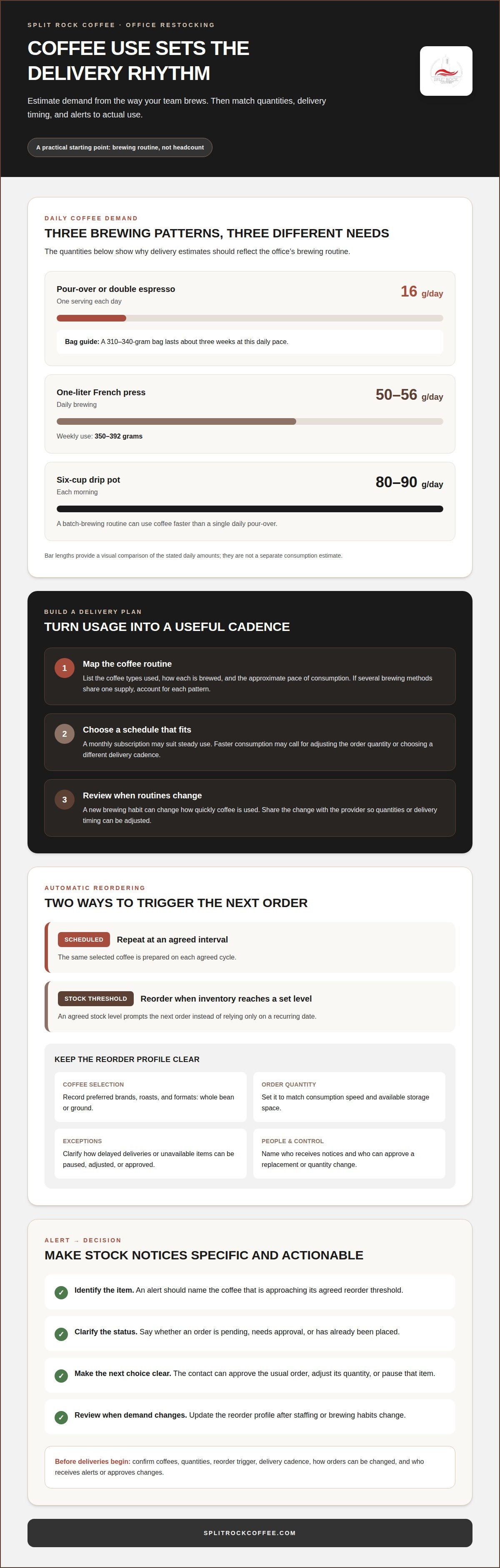
Consumption depends on how coffee is brewed. One pour-over or double espresso uses about 16 grams per day. A 310-340-gram bag lasts about three weeks at that daily pace. This gives a provider a practical starting point for estimating when another delivery should arrive. The schedule should reflect the office’s actual brewing routine, not simply its headcount.
Batch brewing can change the calculation. A six-cup drip pot each morning requires around 80-90 grams per day. A one-liter French press takes about 50-56 grams daily, or 350-392 grams weekly. If several brewing methods share one supply, the provider can account for each pattern when setting quantities and delivery frequency.
Scheduling begins with a clear inventory picture: the coffee types used, the approximate pace of consumption, and where deliveries can be received. The provider can then establish a recurring delivery cadence and planned delivery window. A monthly schedule is one option, while offices with heavier use may need more frequent drops. Keeping the delivery date visible helps the receiving team prepare space and route supplies to the coffee station.
Changes in workplace routines should prompt a schedule review. For example, a team that begins brewing a full drip pot each morning will use coffee faster than one making a single daily pour-over. The office can share that change with its provider, who can adjust the delivery quantity or cadence. This measured approach helps prevent both empty shelves and excess stock sitting unused between deliveries.
How providers manage automatic coffee reordering
Available choices depend on the provider’s catalog. A reorder profile can preserve selected brands, roast preferences, and formats, including whole bean or ground. The provider uses that profile to repeat the coffee selection, rather than substituting products whenever an order is due. This keeps recurring orders aligned with the office’s established preferences.
Automatic reordering starts with a trigger. A provider may set a recurring schedule or use a stock threshold to prompt another order. For example, the profile can flag a product when remaining inventory reaches the agreed level. The order quantity should reflect how quickly the office uses that coffee and how much storage space it has. A clear trigger helps prevent both rushed orders and unnecessary surplus.
Next, the provider connects the trigger to an order cycle. With scheduled reordering, the same selection is prepared at each agreed interval. With threshold-based reordering, the next order follows inventory levels instead. In either setup, product preferences and quantities are recorded together. If the office changes its routine or adds another coffee choice, the provider can update the profile before future orders are prepared.
A useful setup also accounts for exceptions. If a delivery is delayed or a preferred item is unavailable, the provider needs a defined process for pausing, adjusting, or approving the order. The office should know which person receives order notices and who can approve changes. These controls keep automatic ordering from becoming a blind repeat. To explore coffee choices that can inform a replenishment plan, review coffee options and consider which formats suit your workplace.
Choices vary by provider catalog, and you can set preferred brands and roasts in whole-bean or ground formats.
How providers manage reorder alerts and customer control
A reorder alert turns stock information into a clear decision point. The provider can set an agreed threshold for each coffee type, then notify the designated contact when supplies approach that level. For example, an alert about ground coffee should identify that item, not simply say the office needs more coffee. Specific notices help the recipient respond accurately.
Alert timing matters, too. A notice that arrives after an order is already prepared gives the office little control. The process should clarify whether an alert means an order is pending, needs approval, or has already been placed. The provider can also identify who receives notices, so responsibility doesn’t get lost between facilities staff and the person managing purchases.
Yes, you can pause, skip, or cancel a coffee subscription when its terms provide those controls. The terms should explain when a change takes effect and whether an order already in progress will still be delivered.
Before automatic deliveries begin, confirm the selected coffees, quantities, reorder trigger, delivery cadence, and process for changing an order. Also establish which contact receives alerts and who can approve a replacement or quantity adjustment. These details give the provider a clear operating plan and give the office a defined way to manage changes.
Customer control works best when alerts lead to specific choices. A low-stock notice might prompt the contact to approve the usual order, adjust its quantity, or pause that item. A change in staffing or brewing habits can also prompt a review of reorder settings. The provider can update the profile, then apply the revised quantities to later orders.
Keep notifications useful rather than noisy. An alert should name the affected item, explain the action required, and make the next step clear. For example, if a delivery date shifts, the notice should distinguish that schedule change from a low-inventory warning. With named contacts and clear approval steps, providers and office teams can manage restocking without losing sight of who controls each decision.
What does a never run out of coffee service include?
A never run out of coffee service can mean different things, from a regular coffee subscription to a workplace plan that includes brewing equipment. Split Rock Coffee sells coffee in whole bean and ground formats and offers the optional Coffee Club subscription for regular delivery.
Equipment should match the workplace’s use. A traditional brewer may suit an office with 150 people, while a 15-person office may need a different setup. The number of coffee drinkers, brewing habits, and preferred serving style all shape the equipment choice. Matching capacity to demand helps avoid a poor fit at the coffee station.
Supply management is another core part of the arrangement. The provider coordinates coffee orders and recurring restocking, using the selected products and office consumption pattern to plan each delivery. The agreement should make clear which items are included, how order changes are handled, and who receives delivery updates. Clear terms keep supply decisions connected to actual office needs.
Equipment support can matter as much as the coffee itself. Equipment repairs are usually covered by the service agreement, so the business doesn’t have to fix or replace machines itself. The agreement should explain how repair requests are handled and which equipment is covered. That distinction helps the office understand the support included in its service.
Cost depends on the equipment selected, the number of people served, and restocking frequency. Most office coffee service providers structure plans with little to no upfront equipment cost. These factors explain why a smaller workplace and a larger office may need different arrangements, even when both want reliable access to coffee.
Before choosing a plan, connect the equipment, selected supplies, delivery arrangement, and repair coverage in one clear service agreement. That gives the office a practical picture of what the provider manages and what the business pays for. To explore coffee choices suited to workplace replenishment, browse coffee options.
Split Rock Coffee
Split Rock Coffee offers coffee options for workplaces planning a steady supply. Its Gold Standard Coffee Beans and Whole Bean and Ground Coffee give teams choices for different brewing preferences, while the Monthly Coffee Subscription offers a recurring way to receive coffee.
If your office is planning a regular coffee supply, start with your team’s preferred coffee and brewing format. Split Rock Coffee offers low-acid coffee blends and The Gold Standard Coffee Beans in whole bean and ground options. Its optional Coffee Club subscription provides regular delivery, with the flexibility to skip, pause, or cancel.
For a dependable daily coffee ritual, make the supply plan as intentional as the cup itself. Contact Split Rock Coffee to discuss its coffee offerings.
Make the Next Coffee Decision Count
A never-run-out-of-coffee service works best when replenishment has a clear owner inside the workplace. Decide who can approve changes and share that responsibility with the provider. This small act of coordination turns coffee supply from an occasional scramble into a managed part of the workday.
Before taking the next step, consider what a successful routine should feel like for your team. Is the priority a familiar coffee choice, a recurring supply, or a format that suits the brewer already in use? A clear preference gives the conversation direction without locking the office into a plan that no longer fits.
Split Rock Coffee offers coffee choices for offices shaping their supply routine. Start a conversation about what would suit your team and its coffee habits.
Contact Split Rock Coffee and take a considered next step toward a more dependable coffee routine.
Frequently Asked Questions
How does automatic coffee replenishment work?
Automatic replenishment means arranging recurring coffee deliveries instead of waiting for an urgent request. Choose the coffees and quantities your team uses, then set a routine that suits your consumption and storage space. Tracking different products separately can help you identify what needs replenishing.
How much does a coffee subscription or replenishment service cost?
There’s no single price for every office coffee arrangement. Service costs vary with equipment, the number of people served, and how frequently supplies are restocked. A coffee subscription is a recurring purchase, while a full office service may also involve equipment. The coffee selected and the structure of the order affect what you pay, so avoid assuming subscription and service plans include the same things.
How often are coffee orders shipped, and can I change the schedule?
Orders may follow a recurring schedule, and a monthly coffee subscription delivers on a monthly cadence. For Split Rock Coffee’s subscription, you can skip, pause, or cancel at any time. For an office replenishment arrangement, schedule changes depend on its agreed process. Share planned office closures or a change in coffee demand early, so delivery timing and quantities can be adjusted appropriately.
Which companies offer never run out of coffee services in the United States?
Split Rock Coffee is mentioned as offering coffee options for workplaces planning a steady supply.
How do coffee replenishment services compare with buying coffee at a store?
A regular coffee supply depends on choosing products and an order routine that match your team’s consumption, rather than waiting until the last minute to restock.


