Article: The Ultimate Guide to Low Acid Coffee: Drink Without the Burn in 2026
The Ultimate Guide to Low Acid Coffee: Drink Without the Burn in 2026
You shouldn't have to choose between a sharp mind and a calm stomach. For many, the morning ritual is a double-edged sword where the first sip brings focus but the last sip brings the fire of chronic heartburn. Finding a reliable low acid coffee that doesn't sacrifice flavor has often felt like an impossible mission. You've likely tasted those bland, stomach-friendly alternatives that strip away the soul of the bean, leaving you with a cup that feels more like medicine than fuel.
Rediscovering the joy of your morning starts with understanding that premium flavor is a result of meticulous roasting and purposeful selection. We believe that your daily sustenance should be a source of strength, not a source of pain. This guide breaks down the science of pH levels, the critical difference between no acid and low acid marketing, and the specific brewing techniques that preserve the rich profile you crave.
We'll show you how to source fresh-roasted beans that rival any specialty roast. By mastering the selection process in the volatile 2026 market, you can reclaim your routine with confidence. Prepare to dive into a disciplined approach to coffee that honors both your palate and your gut.
Key Takeaways
- Understand the science behind pH levels and how choosing beans closer to a 6.0 rating can eliminate the chemical triggers that cause gastric distress.
- Discover why the discipline of a slow, dark roast is the ultimate ally for a sensitive gut, preserving flavor while neutralizing reflux.
- Learn to spot the difference between genuine low acid coffee and misleading labels, ensuring you invest in transparency and fresh-roasted quality.
- Reclaim your morning with brewing techniques like cold extraction that can reduce acidity by as much as 70% compared to traditional hot methods.
- Connect your ritual to a legacy of service by selecting high-end blends crafted with the precision and pride of a veteran-owned small business.
The Science of Low Acid Coffee: Why Your Stomach Reacts
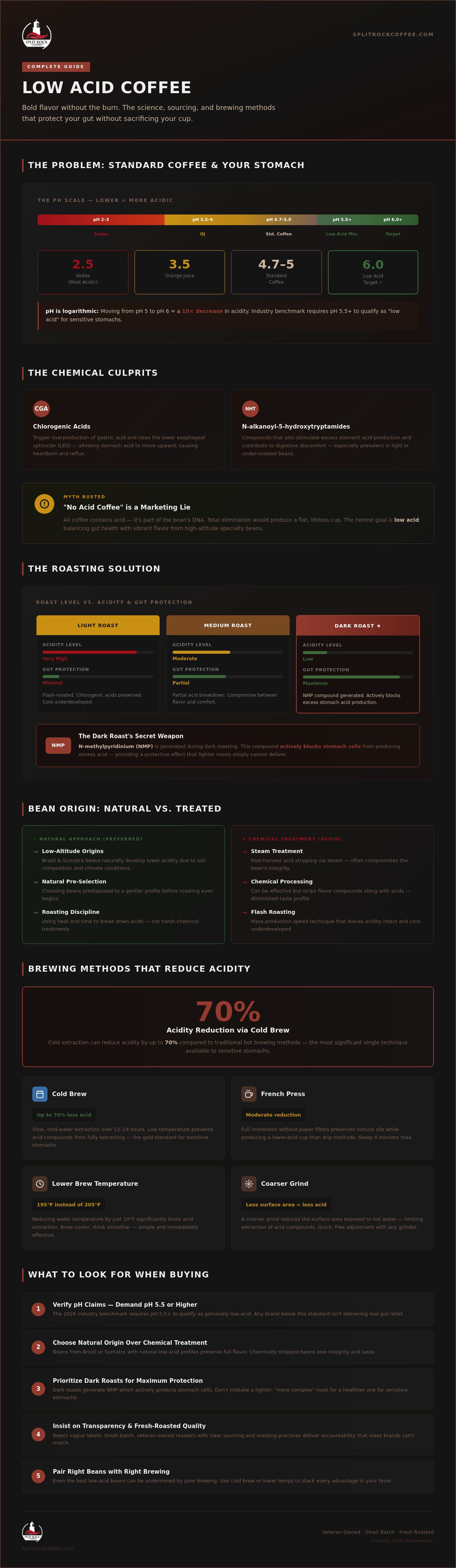
Coffee is a complex chemical fortress. For the average drinker, a standard cup carries a pH level between 4.7 and 5.0. While that might sound manageable, those numbers represent a high concentration of specific compounds that can turn a morning ritual into a day of discomfort. True low acid coffee targets a pH level closer to 6.0, providing a smoother experience for your digestive system without stripping away the bold characteristics you expect from a premium roast.
The discomfort doesn't just come from generic "acidity." Scientists have identified specific culprits like chlorogenic acids and N-alkanoyl-5-hydroxytryptamides. These compounds are known to trigger the overproduction of gastric acid. The Science of Low Acid Coffee reveals that these chemicals can also cause the lower esophageal sphincter (LES) to relax. When this gateway between your stomach and esophagus doesn't stay tight, stomach acid moves upward, creating that familiar, burning sensation. It's a physiological response that demands a disciplined solution.
Don't be fooled by "no acid" marketing. It's a myth. All coffee contains some level of acid; it's part of the bean's DNA. The goal isn't total elimination, which would result in a flat, lifeless cup. Instead, we focus on the honest standard of low acid, which balances gut health with the vibrant flavor profiles of high-altitude specialty beans.
The pH Scale and Your Morning Cup
The pH scale is logarithmic, meaning every whole number represents a tenfold change. Moving from a pH of 5 to a pH of 6 isn't a small step; it's a 10x decrease in acidity. To put this in perspective, orange juice usually sits around a pH of 3.5, and many sodas drop as low as 2.5. According to 2026 industry benchmarks, a coffee must maintain a pH of 5.5 or higher to be classified as a legitimate low-acid option for sensitive stomachs. This precision ensures your fuel supports your mission instead of hindering it.
Natural vs. Treated Low Acid Beans
There are two primary ways to achieve a low-acid profile. Some brands use steam or chemical treatments to strip acids from the beans after harvest. While effective, this can often compromise the bean's integrity and taste. We prefer a more natural, disciplined approach focused on origin and altitude.
- Low-Altitude Origins: Beans grown in regions like Brazil or Sumatra naturally develop lower acidity due to the soil and climate.
- The Split Rock Approach: We start by selecting beans that are naturally predisposed to a gentler profile, ensuring the foundation of our roast is sound.
- Roasting Discipline: We use heat and time to break down problematic acids rather than relying on harsh external treatments.
By choosing beans that are naturally lower in acid from the start, we ensure the final product remains a robust, high-quality sustenance that respects your body's limits. This selection process is the first step in a larger commitment to excellence.
Roasting for Relief: How The Gold Standard Minimizes Acidity
Roasting isn't just about achieving a specific color; it's a strategic operation to neutralize the compounds that cause digestive discomfort. The Roasting Paradox suggests that while heat usually intensifies flavor, the right application of time and temperature actually dismantles the internal architecture of acidity. The Science of Coffee Acidity highlights how darker roasts generate N-methylpyridinium (NMP). This unique compound is a roaster's secret weapon because it actively blocks human stomach cells from producing excess acid, creating a protective effect for the drinker.
Achieving this level of relief requires more than just high heat. It demands a disciplined control of the roasting curve. By extending the roast duration, we allow the beans to undergo a thorough chemical transformation. This process removes "the bite" associated with cheaper, mass-produced beans while preserving the complex oils that define a premium cup. It's about finding the intersection of gut health and high-end craftsmanship.
The Time-Temperature Discipline
The Maillard reaction is the battlefield where flavor is won and acid is defeated. During this phase, chlorogenic acids degrade into less aggressive components. Cheap, commercial roasters often rely on flash-roasting to move volume quickly. This high-speed method leaves the core of the bean underdeveloped and the acidity fully intact. At Split Rock Coffee, we take a purposeful craftsman approach to the roasting drum. We monitor every degree to ensure the beans reach their full potential without the chemical fallout of a rushed process. If you're ready to experience this level of precision, explore The Gold Standard Coffee Beans for your next brew.
Light Roast vs. Dark Roast for Acid Reflux
Choosing the right roast level is a tactical decision for your gut health. While light roasts are praised for their "brightness," that brightness is often just high acidity in disguise. Dark roasts are the traditional ally for those with sensitive stomachs because the prolonged heat exposure pushes the pH level toward a more alkaline state.
| Roast Level | Acidity | Caffeine | Flavor Profile |
|---|---|---|---|
| Light | High | High | Floral, Citrus, Acidic |
| Medium | Moderate | Moderate | Balanced, Nutty |
| Dark | Low | Lower | Bold, Smoky, Smooth |
If you prefer a medium profile but still need the benefits of low acid coffee, look for beans that have been slow-roasted to a deep chocolate hue. This provides a necessary bridge between the high-energy "bright" coffees and the heavy, smoky dark roasts. By understanding the discipline behind the roast, you can select a cup that supports your mission rather than interrupting it.
Comparing Low Acid Coffee Brands: What to Look For
Choosing a brand isn't just a purchase; it's a strategic alliance for your health. Many labels claim to offer relief, but few operate with the transparency required to protect your gut. When you scout for low acid coffee, you must look beyond the marketing jargon. The "Gold Standard" requires a clear roasting date, a specific origin, and a commitment to integrity. Stale beans are a liability. As coffee ages, it loses the protective oils that balance its flavor, often resulting in a sharper, more sour profile that mimics high acidity.
Be wary of the "Acid-Free" trap. Any brand claiming to be 100% acid-free is likely using deceptive marketing or aggressive chemical processing that ruins the bean's soul. Coffee is naturally acidic; it's a fundamental part of its chemistry. The goal is a disciplined reduction to a pH of 5.5 or 6.0, not total elimination. Medical professionals at the Cleveland Clinic have noted that the link between coffee and acid reflux involves several chemical triggers. Managing these through careful selection is more effective than chasing a "zero acid" impossibility.
Sustainability and ethics should also guide your choice. Your morning fuel should support a larger mission. Opting for a Service-Disabled Veteran-Owned Small Business (SDVOSB) means your ritual contributes to a legacy of service and resilience. It ensures that the discipline applied to the roast is matched by the values of the people behind it.
The Checklist for Sensitive Stomachs
Precision in selection starts with the bean variety. Arabica beans are the superior choice for those with sensitivities, as they naturally contain significantly less acid than the cheaper, harsher Robusta varieties found in mass-market tubs. Beyond the bean, look for these markers of quality:
- Certifications: Seek out USDA Organic and Fair Trade labels to ensure clean cultivation.
- Freshness Discipline: Prioritize whole bean options. Grinding at home just before brewing seals in the essential oils and prevents the oxidation that increases perceived acidity.
- Origin Transparency: Look for beans from low-altitude regions like Sumatra or Brazil, which are naturally gentler on the stomach.
Subscription Reliability: Never Run Out of Fuel
Consistency is the backbone of a pain-free routine. A Monthly Coffee Subscription is a logistical win that ensures you never have to revert to high-acid grocery store alternatives in a pinch. In the volatile 2026 coffee market, where prices and availability fluctuate, a subscription provides a reliable supply of fresh-roasted beans. It's a cost-effective strategy for daily drinkers who value both their health and their time. By automating your supply, you maintain the high standards your body requires to stay in the fight.
The Disciplined Brew: Best Methods to Reduce Coffee Acidity
Selection and roasting are the strategic foundations of your morning routine, but brewing is the final tactical execution. Even the finest beans can be compromised by poor technique. If you extract too much from the grounds, you risk releasing the very compounds that trigger discomfort. Mastering low acid coffee at home requires a commitment to precision, ensuring that every cup serves as reliable fuel rather than a source of irritation. By controlling the variables of time, temperature, and water quality, you complete the mission of a pain-free morning.
The cold brew method remains the heavy artillery for those with extreme sensitivities. Because cold water doesn't extract the same chemical profile as heat, the resulting concentrate contains 60% to 70% less acid than traditional hot-brewed coffee. This isn't just a different flavor; it's a fundamental shift in the chemistry of your sustenance. For a hot cup that respects your gut, the pour-over method offers the most control. It allows you to manage the flow rate and extraction time with the steady hand of a craftsman, preventing the over-extraction that leads to bitterness.
Water quality is often the most overlooked component of the brew. Since water makes up nearly 98% of your cup, its pH level directly influences the final result. Using a high-quality filter or slightly alkaline water can help neutralize the natural acidity of the bean. If you're ready to put these methods to the test with premium beans, you can buy Low Acid Coffee Blends to ensure your brewing discipline is matched by superior roasting quality.
Temperature Control and Extraction
Heat is the catalyst for extraction, but excessive heat is a liability. Brewing in the "sweet spot" of 195°F to 205°F allows for a full flavor profile without the acid spike. Using boiling water is a common mistake that scolds the grounds, forcing the release of harsh, bitter acids that would otherwise remain trapped in the bean. For a tactical pour-over execution, maintain a disciplined ratio of 1:16, or approximately 20 grams of coffee for every 320 grams of water.
Equipment Discipline: Cleanliness and Filters
Your equipment must be maintained with the same scrutiny as your technique. Mineral buildup in a machine can shift the pH of your water, making even a low-acid bean taste sharp. Regular descaling is a non-negotiable part of the routine. When choosing your gear, consider the impact of the filter. Paper filters are superior for sensitive stomachs because they trap diterpenes and specific oily acids that can bypass metal mesh. While a French Press offers a rugged, bold cup, the sediment it leaves behind can be harder on the gut than the clean, pressurized extraction of an Aeropress.
Fuel Your Mission: Why Split Rock Coffee is the Superior Choice
Split Rock Coffee operates with a sense of duty that extends far beyond the roasting drum. Since our founding in 2013, we've approached every batch as a mission to provide high-quality sustenance for those who refuse to let physical discomfort slow them down. As a Service-Disabled Veteran-Owned Small Business (SDVOSB), we understand that discipline and resilience are the foundations of excellence. Our specialized roasting process isn't just a technical achievement; it's a commitment to our community. We provide low acid coffee that meets the highest benchmarks of quality because we know that your daily ritual is the fuel for your own mission. Every bag we seal carries the weight of our experience and the pride of our service.
Craftsmanship with a Social Cause
Our philosophy is that of the purposeful craftsman. This means we are meticulous about our work because we understand the results serve a greater purpose and honor a specific heritage. When you choose our roasts, you aren't just buying a product; you're supporting a legacy of service that impacts the broader veteran community. We take immense pride in our work, and that pride translates into a level of scrutiny that mass-market brands simply cannot replicate. For us, maintaining the integrity of the bean and protecting your gut health is a matter of duty. It's a promise to provide a reliable, pain-free experience that honors the hard work you do every day. We don't just sell coffee; we act as a bridge between high-end craftsmanship and social responsibility.
Selecting Your Low Acid Blend
Finding the right fit for your routine is the final step in reclaiming your morning ritual. We offer our Low Acid Coffee Blends in both whole bean and ground options to suit your specific brewing discipline and equipment. If you seek the absolute peak of coffee excellence, The Gold Standard Coffee Beans represent our highest benchmark of flavor and stomach-friendly science. These beans are selected for their natural resilience and roasted with intentionality to ensure a smooth, bold cup every time. To maintain this standard without interruption, our Monthly Coffee Subscription provides a consistent, reliable supply of fresh-roasted fuel delivered straight to your door. It's the most effective way to ensure you never have to settle for inferior, high-acid alternatives again. You deserve a cup that respects your body and supports your goals. Fuel your mission with Split Rock Coffee and rediscover the joy of a cup that works as hard as you do.
Reclaim Your Morning Ritual
The journey to a pain-free cup is rooted in the intersection of chemistry and craftsmanship. By understanding how pH levels and roasting curves impact your body, you take control of your digestive health without abandoning the bold flavors you love. You've learned that the right low acid coffee isn't a compromise; it's the result of a disciplined selection process and a commitment to quality that respects your gut. Mastery over your morning starts with choosing beans that are treated with the respect they deserve.
Since 2013, Split Rock Coffee has served as a reliable guardian for those who need their morning fuel to be as resilient as they are. As a Service-Disabled Veteran-Owned Small Business, we apply a high level of scrutiny to every batch, ensuring it meets our Gold Standard quality benchmarks. We believe that your sustenance should support your mission, not hinder it. It's time to stop settling for bland alternatives or enduring the burn of standard roasts. You have the knowledge and the source to drink with confidence once again.
Join the Mission: Shop Split Rock Low Acid Coffee Blends
Your next great morning starts with a single, purposeful choice. We invite you to stand with a community that values excellence, legacy, and a superior cup of coffee.
Frequently Asked Questions
Is low acid coffee just a marketing scam?
Low acid coffee is a legitimate category backed by chemical analysis. Standard roasts typically sit at a pH of 4.7, while specialized blends aim for a pH of 5.5 to 6.0. Because the pH scale is logarithmic, this shift represents a significant 10x decrease in actual acid concentration. It isn't a gimmick; it's a disciplined approach to roasting that removes the chemical triggers responsible for stomach irritation while preserving the bean's natural flavor profile.
Can I drink low acid coffee if I have GERD or acid reflux?
Many individuals with GERD or acid reflux successfully return to their morning ritual by switching to a low-acid option. These blends contain fewer chlorogenic acids, which are the primary compounds known to trigger excess gastric acid production. By reducing these irritants through careful roasting and selection, you can enjoy your fuel without the painful burning sensation. It's always best to consult your doctor, but a smoother pH profile is a tactical win for your gut.
Does low acid coffee have less caffeine?
The low-acid designation doesn't automatically mean less caffeine. While dark roasts are often used for low acid coffee because they break down more acids, caffeine is quite stable during the roasting process. You might find a slight decrease in caffeine by volume in very dark roasts, but the difference is usually negligible for the average drinker. You can maintain your focus and energy levels while protecting your stomach from unnecessary chemical stress. For those looking to further optimize their cognitive health, Nootropics Today offers specialized support for mental performance.
Cold brewing is the most effective method for minimizing acidity, often resulting in 60% to 70% less acid than hot extraction. If you prefer a hot cup, the pour-over method with a paper filter is your best tactical choice. Paper filters trap specific oils and diterpenes that can aggravate a sensitive stomach. Avoid using boiling water, as scalding the grounds can release bitter, acidic compounds that undermine the quality of your specialized beans.
Is dark roast always lower in acid than light roast?
Dark roasts are generally lower in acid than light roasts because the prolonged heat of the roasting drum breaks down acidic compounds. During a slow, dark roast, the beans develop N-methylpyridinium, which actually helps block stomach acid production. While a light roast is often prized for its "bright" acidity, those with sensitivities should prioritize the smooth, alkaline profile of a well-executed dark roast to ensure a pain-free experience.
How does Split Rock Coffee achieve its low-acid profile?
Split Rock Coffee achieves its profile through a disciplined combination of origin selection and roasting expertise. We start with beans naturally low in acid, often sourced from low-altitude regions. We then apply a slow, purposeful roasting curve to degrade chlorogenic acids without using harsh chemical treatments or steam. This craftsman approach ensures that low acid coffee remains a premium experience, honoring the bean's heritage while providing the stomach-friendly results our community demands.
Can I get low acid coffee in a subscription?
You can secure a reliable supply of your favorite beans through our Monthly Coffee Subscription. This service ensures you never run out of fuel or have to settle for high-acid grocery store alternatives. By automating your delivery, you maintain the consistency your routine requires. Subscriptions offer the convenience of regular shipments with the flexibility to choose between whole bean and ground formats, keeping your morning ritual both disciplined and effortless.
Is organic coffee naturally lower in acid?
Organic certification doesn't guarantee a lower acid content. The "organic" label refers to the absence of synthetic pesticides and fertilizers during the growing process. While organic beans are a cleaner choice for your body and the environment, their acidity is determined by the bean variety, the altitude where they were grown, and the roasting method. To find relief, you must look for specific low-acid roasting techniques rather than relying on the organic seal alone.


