Coffee Without Bitterness: What Causes It and How to Brew a Smoother Cup
A bitter cup isn’t simply the price of drinking coffee. If your usual brew tastes harsh, you don’t have to change everything at once. Finding coffee without bitterness starts with identifying what you’re tasting and changing one factor at a time: the coffee, its freshness, the grind, or the brewing process. Bitterness and acidity are easy to confuse, but they describe different taste experiences.
This guide explains common causes of bitter coffee and gives you a practical way to test adjustments. You’ll learn how brewing choices affect flavor, how roast and bean preferences shape your cup, and how to tell bitterness apart from bright or tangy acidity.
No bean or method can guarantee a bitterness-free cup for everyone, but you can find a coffee and routine that better suit your taste. Split Rock Coffee offers Low Acid Coffee Blends and The Gold Standard Coffee Beans in whole bean and ground options. Use the comparisons and brewing steps below to decide what to try next.
Key Takeaways
- Bitterness varies from cup to cup. Recognizing it separately from acidity can help you choose coffee that better suits your taste.
- Finding coffee without bitterness means considering the beans and how you brew them, rather than blaming roast level alone.
- Roast preferences, freshness, and flavor descriptions are useful clues, not guarantees of a perfectly smooth cup.
- Reset your brewing routine methodically: taste first, then adjust one variable and assess freshness, grind, brew time, and equipment cleanliness.
- Once you’ve refined your brewing, explore coffee categories that match your preferences, including Low Acid Coffee Blends and The Gold Standard Coffee Beans.
Coffee Without Bitterness: Is Bitterness an Unavoidable Part of Coffee?
If coffee tastes harsh to you, you don’t need to train yourself to enjoy that particular cup. Bitterness varies: one coffee may have a gentle bitter edge that balances its other flavors, while another leaves a sharp, unpleasant aftertaste. Some bitterness can be part of coffee’s flavor, but harshness isn’t a fixed feature of every cup. The beans and preparation both influence what you taste, and personal preference matters, too.
Bitterness is a taste sensation that can linger on the tongue, sometimes with a sharp or drying finish. Describing the sensation is more useful than assuming all coffee tastes alike. The broad overview of Coffee also covers how different beans and brewing methods shape the drink. Your own palate is the best guide to whether a cup feels balanced or too harsh.
What does bitterness taste like in a cup of coffee?
Think of unsweetened cocoa or the dry finish of strong tea. A bitter note may register in the first sip, build as you drink, or linger after you swallow. Some people enjoy that edge when it sits comfortably alongside the coffee’s other flavors; others find it overpowering. Neither reaction is wrong.
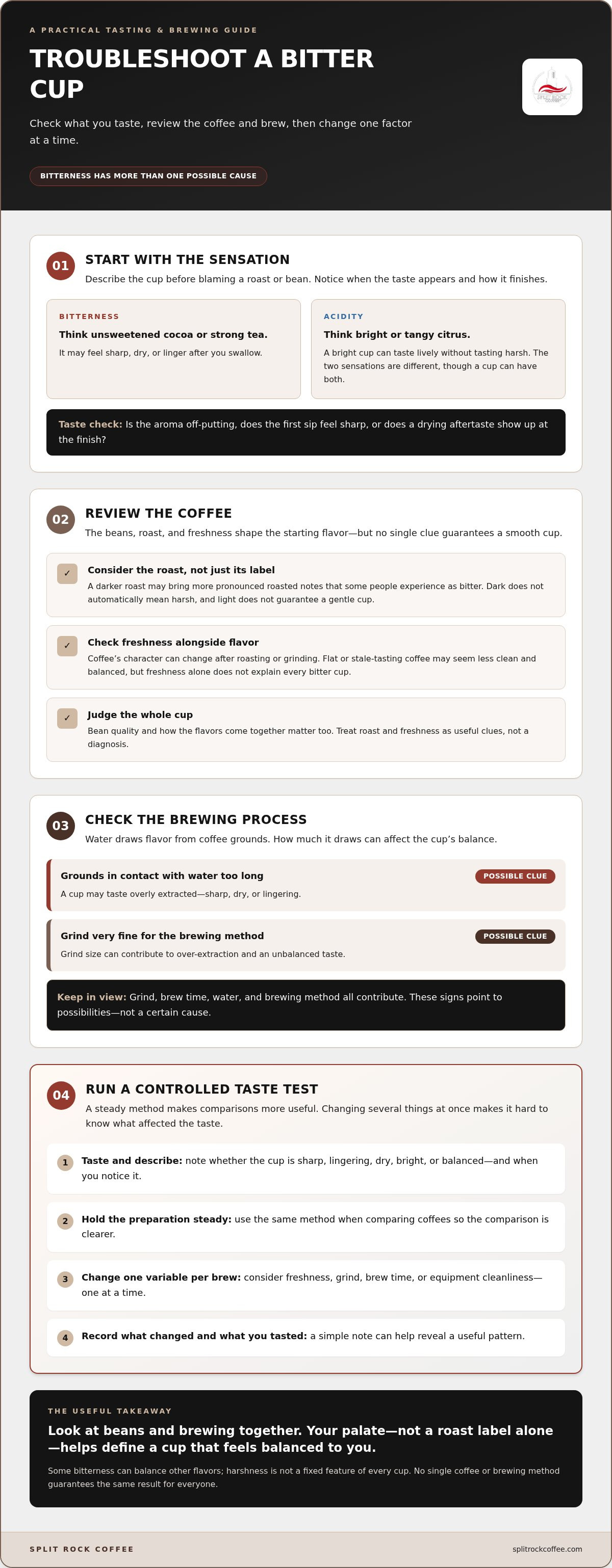
Pay attention to when you notice it. Is the aroma already off-putting? Does the first sip feel sharp, or does a drying aftertaste appear at the finish? Pinpointing the moment gives you a clearer description to use as you explore a smoother cup.
Is bitterness the same as acidity?
No. Bitterness and acidity describe different impressions. Bitterness may remind you of unsweetened cocoa; acidity can feel bright or tangy, like the lively tartness of citrus. A coffee can seem bright without tasting harsh, or taste bitter without seeming especially tangy. A cup can have both sensations, but the words aren’t interchangeable.
If you’re exploring how acidity affects your coffee experience, this guide to low-acid coffee offers a closer look at that separate taste question.
For now, treat “bitter” as a clue, not a verdict on coffee as a whole. Describe the taste in your own words: sharp, lingering, dry, bright, or balanced. A tangy cup and a harsh cup may call for different choices. Looking for coffee without bitterness doesn’t mean expecting every trace of bitterness to disappear. It means learning what you dislike and finding a cup whose overall character suits you.
Why Coffee Tastes Bitter: Beans, Roast, Freshness, and Extraction
A harsh cup rarely points to one cause by itself. The coffee’s roast and condition set the starting point, while the way water moves through the grounds shapes what ends up in your mug. Coffee’s natural compounds also affect how bitterness comes across. The American Chemical Society’s research on the molecular basis of coffee bitterness helps explain why bitterness isn’t determined by one compound alone.
Perceived bitterness reflects the coffee’s beans, roast, freshness, and brewing choices working together. Switching to a different roast or a fresher bag may change the flavor, but neither change guarantees a smooth result on its own.
How can roast and bean quality affect bitterness?
Roasting transforms coffee’s flavor, and a darker roast may bring more pronounced roasted notes that some people experience as bitter. But dark roast doesn’t automatically mean harsh, just as a light roast doesn’t guarantee a gentle cup. The coffee’s overall quality and how its flavors come together matter, too. For another angle on bean selection, explore this guide to low-acid coffee beans, which addresses acidity as a separate consideration.
Freshness can influence aroma and flavor. As coffee sits after roasting or grinding, its character can change; a cup that seems flat or stale may come across as less clean and balanced. Freshness alone doesn’t explain every bitter taste. Consider the bag, its roast, and the brewed cup together rather than treating any one clue as a diagnosis.
How does brewing extraction make coffee taste harsh?
During brewing, water draws flavor from the ground coffee. The amount it draws affects the cup’s balance. If the grounds stay in contact with water too long, or are ground very fine for the method, the result can taste overly extracted: sharp, dry, or lingering. These are possible signs, not a diagnosis. Grind, brew time, and brewing method all contribute, as does water quality, with purification specialists like PureH2O Ltd showing how cleaner water helps prevent harsh or distorted flavors.
Changing several things at once makes it hard to tell what worked. If you use a finer grind, add more coffee, and extend the brew all at the same time, you won’t know which change affected the taste. Keep the method steady and adjust one variable per brew. A simple note of what you changed and what you tasted can reveal a useful pattern.
Start with the cup, not assumptions about a particular roast or bean. If the flavor is harsh, note whether it’s strongest at the first sip or in the lingering finish, then consider both the coffee and the brewing process. This gives you a clearer path toward coffee without bitterness that fits your preferences, without expecting one universal bean or brewing fix. To compare coffee options as you refine your routine, browse Split Rock Coffee.
How to Choose Coffee Without Bitterness: A Practical Comparison
Choose based on what you notice in your own cup, not a label that promises a perfect result. If several coffees taste harsh when prepared the same way, review your brewing routine first. If one coffee tastes harsher than another brewed with the same method, the beans or roast may be worth exploring. Keeping your preparation steady makes each comparison more useful.
| What to compare | Clue to look for | How to use it |
|---|---|---|
| Roast preference | Light, medium, or dark roast descriptions | Try a different roast in the same brewing routine; the label is a starting point, not a bitterness forecast. |
| Freshness | Roast or best-by information on the bag | Compare coffee stored similarly, and note whether its aroma and finish seem lively or flat. |
| Flavor balance | Descriptions such as rich, bright, or balanced | Use these as tasting clues, then judge whether the brewed cup suits you. |
Which roast should you try for a smoother-tasting cup?
Roast descriptions can narrow your choices, but they don’t tell the whole story. A darker roast may have more pronounced roasted flavors, while a lighter one may retain a different character. Neither is automatically bitter or smooth. If you’re curious about another roast, try a small amount before changing your regular supply. Keep your brewing method consistent and compare what you taste instead of relying on the roast name alone.
Should you choose whole bean or ground coffee?
Whole bean coffee gives you the option to grind it before brewing, while ground coffee skips that preparation step. Choose based on whether you have a grinder and how much convenience matters in your routine. Neither format guarantees a particular taste. For broader context on coffee quality, this guide to specialty coffee explores what quality can mean beyond a roast label.
Keep acidity separate from bitterness when reading descriptions. “Low acid” refers to acidity, not a promise that the coffee won’t taste bitter. A coffee can be low in acidity and still have a bitter edge, or taste bright without seeming harsh. Split Rock Coffee offers Low Acid Coffee Blends and The Gold Standard Coffee Beans in whole bean or ground formats. Consider them according to your preferences, not as guaranteed solutions to bitterness.
Use a simple comparison to decide whether to focus on the coffee or your routine. If several coffees taste harsh when brewed the same way, review your preparation before replacing your beans. If one coffee stands out while another tastes fine with your usual method, compare roast and flavor descriptions, then try a small amount of a different option. This measured approach makes choosing coffee without bitterness less about chasing a label and more about finding a cup that fits your palate.
How to Make Coffee Less Bitter: A Step-by-Step Brewing Reset
Don’t overhaul your setup after one harsh cup. A controlled reset helps you identify what’s affecting the flavor without turning every brew into a guess. Start with your usual coffee, method, and recipe, then change one thing at a time. Change one brewing variable per brew to identify what affects the taste.
What should you adjust first when coffee tastes bitter?
Begin with a repeatable version of your normal routine. Note the coffee and how you prepared it, then taste the cup before changing anything. Check whether the grounds seem finer than usual, whether the brew took longer, and whether the brewer or reusable parts need cleaning. These checks may point you toward a cause, but they aren’t guaranteed fixes. The goal is to find a pattern in your own cup.
- Taste and describe the current cup. Record whether the harshness appears right away or lingers in the finish. Add a few plain words, such as sharp, dry, or flat.
- Check freshness. Note how the coffee has been stored and whether it was ground well before brewing. If you switch to fresher coffee, keep the rest of your routine as consistent as possible.
- Inspect the grind. If you have a grinder, note its current setting. Adjust it slightly for the next brew rather than changing the grind and brew duration together.
- Observe brew duration. Pay attention to how long the water and grounds are in contact. If you adjust that time, keep your other steps steady so you can judge the difference.
- Clean the equipment. Rinse and clean the brewer and reusable parts according to their care instructions. Residue can affect the taste of a fresh brew, so check cleanliness before blaming the beans.
- Record the result. Write down the single adjustment and whether the cup tasted more balanced, unchanged, or harsher. Keep what helps; return to your starting routine if it doesn’t.
A short note on your phone is enough. For example: “Same coffee and method, slightly coarser grind, finish less dry.” That record gives you a useful reference for the next cup and helps you avoid repeating changes that didn’t suit your taste.
Can a different brewing method make coffee taste smoother?
A different method can change the result. Brewing methods differ in how water meets the grounds and how the finished coffee is collected, but the method alone can’t promise a smoother cup. If you compare methods, use the same coffee where practical and follow a consistent approach within each one. A pour-over brewing guide can help you understand that method’s steps.
Use this reset to build a routine that serves your palate, not to chase a guaranteed coffee without bitterness. Split Rock Coffee offers whole bean and ground coffee to fit different preparation routines. You can explore the coffee options while putting your preferences into practice.
Find Your Coffee Without Bitterness: Choose a Cup That Fits Your Routine
You have two levers to work with: how you prepare coffee and which coffee you choose. If a brew tastes harsh, refine your routine before deciding the beans are the problem. If the same method gives you cups you enjoy with other coffee, compare options using your notes. The aim isn’t to find a label that guarantees a perfect cup. It’s to make a considered choice based on what you taste and how you like to brew.
How can you find a coffee that suits your taste?
Keep a short record of the coffees you try and what stands out: a sharp first sip, a dry finish, or a flavor that feels balanced to you. Use roast descriptions as clues, not promises, and compare coffees while keeping your brewing routine consistent. That way, you’re judging the cup itself rather than relying on a label to predict what you’ll enjoy.
Split Rock Coffee offers Low Acid Coffee Blends and The Gold Standard Coffee Beans. Low acidity and low bitterness aren’t the same thing, so a low-acid option isn’t a guarantee of a bitterness-free cup. Choose the category that aligns with your preferences, then use your tasting notes to decide whether it suits your palate.
Which coffee format fits your daily routine?
Choose a format you can prepare consistently. Whole bean coffee suits a routine where you have a grinder and want to grind the beans yourself; ground coffee may be more convenient when you want to skip that step. Neither format promises a particular flavor, so let your equipment, time, and preparation habits guide your choice. The best fit is one that makes your routine easy to repeat.
A monthly coffee subscription offers a recurring way to receive coffee as part of your routine. Think of it as a convenience choice, not a flavor guarantee. Whether you choose whole bean, ground, or a subscription, evaluate the brewed cup on its own merits. Consistent preparation and honest tasting notes help you learn what works for you.
- If bitterness appears across different coffees: keep refining your brewing routine before making a broad change to your coffee choice.
- If one coffee tastes harsher than another: compare their descriptions and categories, then judge the brewed result for yourself.
- If convenience shapes your mornings: choose the format that fits your equipment and the way you like to prepare coffee.
There’s no universal coffee without bitterness, but you can make a more confident choice by separating brewing adjustments from bean preferences. Start with the cup you have, make changes thoughtfully, then explore coffee categories that fit what you’ve learned. Browse Split Rock Coffee’s coffee options to find a format that suits your routine.
Make Your Next Cup a Better Fit
Let your next cup be an experiment, not a test you have to pass. Keep what you enjoy about your routine, make one thoughtful change, and notice how the coffee tastes to you. Over time, those observations can help you define what you want from coffee without bitterness, without chasing a promise that no coffee can make for every palate.
Split Rock Coffee offers Low Acid Coffee Blends and The Gold Standard Coffee Beans as options to explore. These categories are starting points for your preferences, not guarantees about how a cup will taste. Choose whole bean or ground coffee to suit your preparation routine, or consider a monthly subscription if recurring delivery fits the way you stock your coffee.
Ready to find an option for your next brew? Explore Split Rock Coffee and choose coffee in the format that fits your routine.
Frequently Asked Questions
Is coffee naturally bitter?
Bitterness can be part of coffee’s taste, but its intensity varies from cup to cup. Bean choice, roast, freshness, and preparation all shape what you notice. A balanced cup may still have a bitter note without tasting harsh. If a brew is unpleasant, compare it with another coffee prepared the same way. That side-by-side taste test can help show whether the coffee or your routine may be contributing.
Can dark roast coffee taste smooth instead of bitter?
Yes. A dark roast can taste smooth to some people because roast level alone can’t predict every cup. The coffee itself, its freshness, how you prepare it, and your preferences all contribute. If one dark roast tastes harsh, try another roast profile while keeping your brewing routine steady. Bag descriptions can guide your choice, but treat them as clues rather than guarantees.
Does coffee without bitterness have less caffeine?
No. Bitterness describes taste, so it isn’t a reliable way to judge a cup’s caffeine content. Caffeine can vary with factors such as the beans and how the coffee is prepared, so a smooth-tasting cup isn’t automatically weaker or lower in caffeine. If caffeine content matters to your decision, look for product information that addresses it directly. Don’t use bitterness as a substitute for that information.
Why does coffee taste more bitter after it sits?
A cup can taste different as it cools or sits, and that change may make its flavor seem less balanced. The effect depends on the coffee and how it was brewed, so it won’t be identical for every cup. To see whether it matters in your routine, taste one serving soon after brewing and another after it has rested. If you prefer the fresher cup, brew a smaller amount at a time.
Can adding salt make bitter coffee taste less bitter?
A small amount of salt may alter how some people perceive bitterness, but it isn’t a dependable fix for every coffee. Before experimenting, consider whether the cup tastes stale, the brew ran longer than usual, or equipment needs cleaning. If you try salt, add only a tiny amount to a separate serving and taste before adding more. This keeps the change controlled and avoids masking a flavor you don’t enjoy.
Does decaf coffee taste less bitter than regular coffee?
Not necessarily. Removing caffeine doesn’t guarantee a less bitter cup, because flavor also depends on the coffee, roast, freshness, and preparation. If you’re choosing decaf for its caffeine level, assess that separately from whether you like its taste. Brew a small serving using your usual method, then make one adjustment if needed. This lets you evaluate the particular decaf on its own instead of assuming it will taste smoother.


