
Article: Coffee Without the Energy Crash: What Causes It and How It Feels
Coffee Without the Energy Crash: What Causes It and How It Feels
The coffee isn’t always the whole story. A crash can follow caffeine as its effects fade, often 3 to 6 hours after a cup, while a high-sugar add-in, poor sleep, or having more caffeine than suits you can also leave you feeling low. Finding coffee without the energy crash starts with understanding what’s behind that slump, not simply reaching for another cup.
If your energy dips after coffee, you’re not imagining it, and the cause can vary from day to day. This guide to coffee without the energy crash explains how caffeine, sugar, sleep, and other factors may affect your energy, so you can spot patterns and make informed choices.
You’ll learn what a coffee crash can feel like, how long it may last, and how caffeine withdrawal differs. Then you can shape a steadier coffee routine with a clearer sense of what your body is telling you.
Key Takeaways
- Notice whether sugar in your coffee or what you eat alongside it may be contributing to a dip in energy.
- Learn how caffeine timing, amount, sleep, and individual sensitivity can shape a coffee crash.
- Recognize common crash symptoms and how they differ from caffeine withdrawal.
- Use the timing and pattern of your energy dips to make more considered choices about your coffee routine.
1. Sugar in coffee and feelings of lethargy
A sweetened cup combines caffeine with added sugar, which can make later lethargy harder to interpret. High sugar intake may contribute to sluggishness. If your energy dips after a syrup-heavy latte, compare it with a less-sweet cup on another day. Changing one thing at a time makes patterns easier to spot.
A balanced meal may sustain you better than coffee alone. Pair protein, fiber-rich carbohydrates, and healthy fats, such as eggs with whole-grain toast and avocado. This can support steadier energy than relying on a sweet drink through a long morning. Coffee’s antioxidants don’t replace a meal, and a vitamin won’t explain every energy dip.
Caffeine varies by drink: a cup of brewed coffee has around 92 milligrams, black tea averages 47 milligrams, green tea has around 29.4 milligrams, and matcha ranges from 38 to 178 milligrams, depending on the amount used. A cup of yerba mate has about 80 milligrams, while hot cocoa has around 5 milligrams.
A typical cup of brewed coffee contains around 92 milligrams of caffeine. The amount in your own cup depends on how it’s prepared and served, so a large coffee may differ from a smaller one. Chai tea also varies, and added sugar in a sweetened chai can make it harder to tell whether caffeine or sugar is affecting your energy.
For most adults, according to the U.S. Food and Drug Administration, 400 milligrams of caffeine daily is not generally associated with negative effects, about the amount in two to three 12-fluid-ounce cups of coffee.
For steadier energy, try unsweetened green or black tea, or have your drink with a balanced meal. Caffeine content varies, so consider both the drink and serving size. Water can also complement a meal without adding caffeine or sugar.
If coffee feels rough on your stomach, cutting added sugar won’t change its acidity. Notice how your drink, meal, and timing relate to your energy. Comparing sweetened and unsweetened coffee can help clarify what suits your routine.
2. Causes of coffee crashes
Coffee crashes rarely have a single cause. Caffeine reaches peak plasma concentration between 15 minutes and 2 hours after drinking it. Its half-life can range from around 1.5 hours in some people to 10 hours in others. As its effect fades, the contrast with earlier alertness may feel like a sudden drop.
The amount and timing matter. Several strong coffees close together can feel different from one modest morning cup, especially for someone sensitive to caffeine. Later caffeine can also interfere with sleep, leaving less-rested energy the next afternoon. Try keeping your serving and timing consistent for a few days, then notice whether the slump shifts. Avoid caffeine within 6 hours of planned sleep.
Low-acid coffee, cold brew, and decaf are not interchangeable. Low-acid coffee changes acidity, not caffeine, so it won’t by itself prevent a caffeine-related crash. Cold brew’s caffeine content depends on how it’s made and served, so the name alone doesn’t reveal its strength. Decaf may help reduce caffeine intake, but it isn’t entirely caffeine-free.
Several factors can add up. Mild dehydration may cause tiredness, headache, brain fog, or trouble concentrating, which can resemble a coffee crash. Skipping a meal or sleeping too little can also leave you low on energy; coffee may mask that feeling briefly without addressing the cause. Adding supplements before considering sleep, food, caffeine, and hydration can make patterns harder to understand.
Build a clearer picture with a simple routine: note your coffee time, serving, sleep, meals, and afternoon energy. Change one factor at a time, such as reducing a second cup or choosing decaf, and watch what changes. If stomach discomfort is the issue, acidity may matter separately from caffeine. Explore a more comfortable coffee routine as you consider which factors to adjust.
3. Common contributors to energy crashes
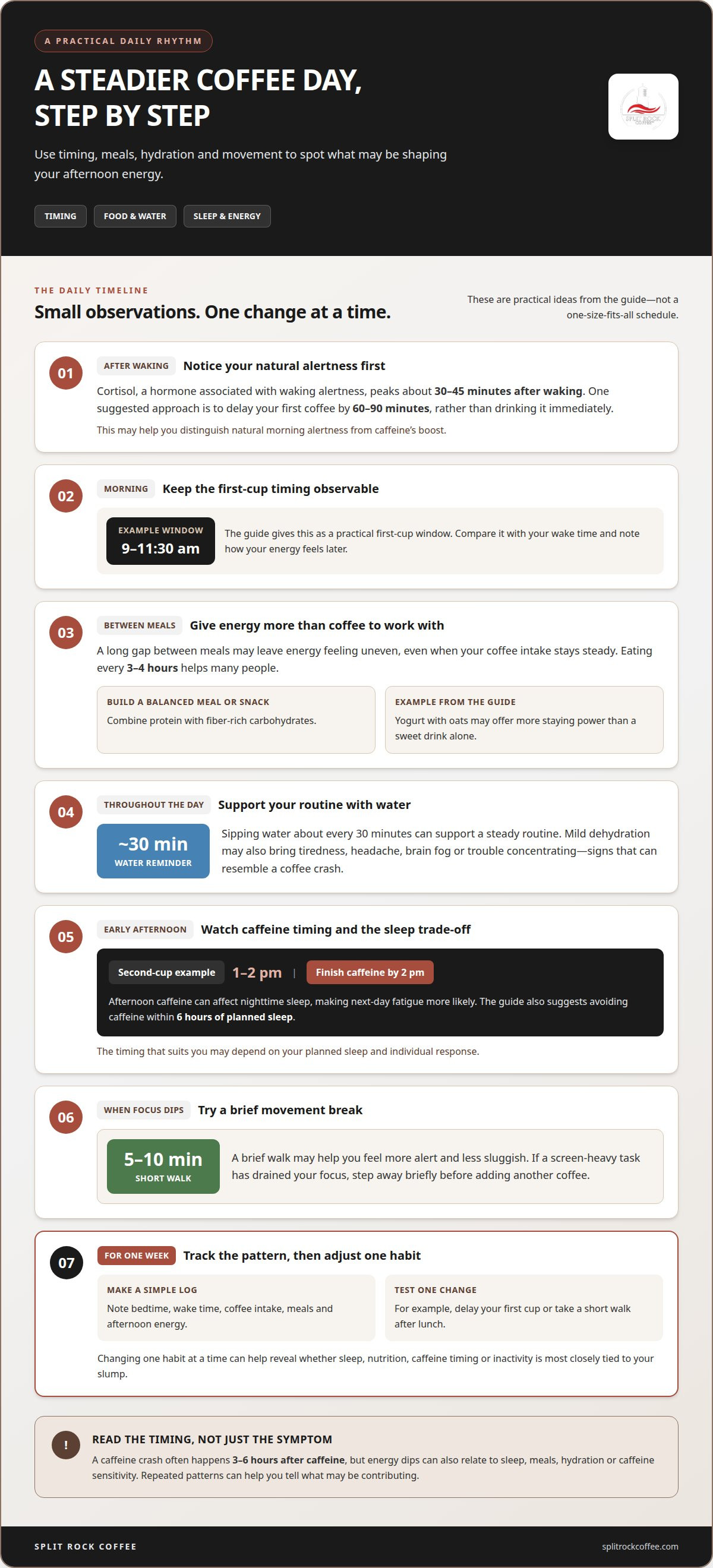
Sleep rhythm can shape alertness before the first cup. Cortisol, a hormone associated with waking alertness, peaks about 30-45 minutes after waking. One suggested approach is delaying coffee for 60 to 90 minutes, rather than drinking it immediately. This may help distinguish natural morning alertness from caffeine’s energy boost.
Timing later in the day matters too. Caffeine in the afternoon can affect nighttime sleep, making next-day fatigue more likely. A practical routine is a first cup between 9 and 11:30 am, followed by a second between 1 and 2 pm. Finishing caffeine by 2 pm may help protect sleep quality that evening.
Nutrition is another part of the pattern. A long gap between meals may leave energy feeling uneven, even when coffee intake stays steady. Eating every 3 to 4 hours helps many people; choose balanced meals and snacks that combine protein with fiber-rich carbohydrates. For example, yogurt with oats offers more staying power than a sweet drink alone.
Hydration and movement also influence how a workday feels. Sipping water about every 30 minutes can support a steady routine, while a 5- to 10-minute walk may help you feel more alert and less sluggish. If a screen-heavy task has drained your focus, step away briefly before adding another coffee.
For a week, note your bedtime, wake time, coffee intake, meals, and afternoon energy. Change one habit at a time, such as delaying your first cup or taking a short walk after lunch. This can help reveal whether sleep, nutrition, caffeine timing, or inactivity is most closely tied to your slump. If fatigue persists despite consistent habits, speak with a qualified healthcare professional.
4. Crash symptoms, duration, and withdrawal
A caffeine crash often feels like fatigue following an earlier lift in alertness. You may notice low energy, reduced focus, or a headache. Mild dehydration can also cause headache, brain fog, and difficulty concentrating. Because these signs overlap, consider when you had coffee and what other symptoms you notice.
A crash typically happens 3 to 6 hours after caffeine consumption, and most ease within 30 minutes to two hours. The exact experience can vary with caffeine sensitivity, sleep, and how much coffee you drank. Note the time of your cup and when symptoms begin; a repeatable pattern is useful evidence about your routine.
Withdrawal follows a different clock. It typically begins 12 to 24 hours after you skip your usual caffeine amount. If a morning coffee is part of your daily rhythm, missing it may feel different from an afternoon slump after drinking coffee. Gradually changing your intake can make it easier to observe how your body responds than abruptly changing several habits at once.
Too much caffeine can leave some people feeling tired, while sensitivity, age, health, and sleep all affect the response. For most adults, the U.S. Food and Drug Administration says 400 milligrams daily is not generally associated with negative effects. That’s a general reference, not a personal target. If fatigue continues for a few weeks or interferes with daily life, talk with a healthcare professional.
For a gentler-feeling routine, track serving size, timing, sleep, and symptoms. L-theanine combined with caffeine has been shown to reduce caffeine-associated jitteriness and anxiety while preserving cognitive benefits. Protein with a meal may help sustain energy, but it won’t remove caffeine from coffee or guarantee a particular response.
If you’re adjusting your daily cup, explore whole bean and ground coffee for a routine you can shape around your preferences.
Split Rock Coffee
Split Rock Coffee offers coffee choices to suit your preferences, though bean choice alone can’t prevent every energy dip. If you’re looking for coffee without the energy crash, consider how your coffee fits with caffeine timing, sleep, meals, and added sugar.
Choose The Gold Standard Coffee Beans, Whole Bean and Ground Coffee, or a Monthly Coffee Subscription to suit how you enjoy coffee. Low Acid Coffee Blends may suit you if acidity is part of your coffee experience, though lower acidity doesn’t reduce caffeine or guarantee steady energy. The goal is a considered cup that fits the habits you’re building.
Ready to find a coffee option that fits your routine? Contact Split Rock Coffee.
Build a Coffee Routine That Works for You
A better coffee routine starts with observation, not another cup. Notice how your energy responds to the coffee you choose, when you drink it, and what else shapes your day. Low-acid coffee may suit people who find acidity uncomfortable, but it doesn’t offset the effects of caffeine, sleep, or meals. Coffee without the energy crash means finding a sustainable routine, not a perfect formula for everyone.
Take your next step with intention. Explore coffee options that suit your preferences, then make thoughtful adjustments to your daily habits. Split Rock Coffee offers choices to help you shape a routine around your taste and brewing preferences.
Ready to talk through your coffee choices? Contact Split Rock Coffee and take the next step toward a cup that fits your day.
Frequently Asked Questions
What causes coffee crash?
A coffee crash can happen as caffeine’s stimulating effect fades. Sleep loss, a large intake, or personal sensitivity may make the slump feel stronger, while added sugar or missed meals may also contribute. The cause can vary from day to day, so compare your coffee habits with your sleep and meals. Changing one factor at a time can help reveal what’s most relevant.
What is a Caffeine Crash?
A caffeine crash is a temporary drop in energy or focus associated with caffeine’s effects wearing off. It may feel like heavy tiredness, difficulty concentrating, or a headache. Caffeine withdrawal, by contrast, follows a reduction in or missed usual intake. The distinction matters: a slump after coffee and symptoms after skipping a regular coffee habit point to different patterns.
What causes an energy crash after drinking coffee?
An energy dip after coffee may reflect the contrast between caffeine’s initial boost and your underlying tiredness, rather than one specific trigger. Intake, sleep quality, caffeine sensitivity, health, and age can all shape your response. Feeling wired after strong coffee, for example, doesn’t mean you’re rested; fatigue may return as the stimulant effect eases.
Does drinking coffee with food reduce an energy crash?
Having coffee with a balanced meal may support steadier energy than drinking sweetened coffee alone, but food doesn’t cancel caffeine’s effects. Try coffee alongside beans and whole-grain toast, or another meal with protein and fiber-rich carbohydrates. This adds nourishment and may help prevent hunger from complicating an energy dip, though it can’t guarantee you won’t crash.


