Swiss Water Process Low Acid Decaf: What the Process Does, and Doesn’t
Does “Swiss Water” on a decaf label mean the coffee is low in acid, too? Not necessarily. The swiss water process low acid decaf question blends two separate things: how caffeine is removed and how a coffee tastes or feels in your cup. If you’re choosing decaf because caffeine bothers you, or hoping to find a gentler option for a sensitive stomach, that distinction matters.
It’s reasonable to want decaf that keeps its character without adding guesswork to your coffee routine. The Swiss Water Process uses water, temperature, and time to remove caffeine, but the process alone doesn’t establish a coffee’s acidity or promise it will suit reflux or stomach sensitivity. Roast, bean selection, and brewing also shape the cup.
Here, you’ll learn what the process does and doesn’t tell you, how decaffeination differs from acidity, and what to look for in labels and flavor notes. Then you can weigh decaf and low-acid coffee as separate priorities and choose the combination that fits your taste and routine.
Key Takeaways
- The phrase swiss water process low acid decaf combines two selection criteria; the decaf method alone doesn’t establish a coffee’s acidity.
- Read decaf and low-acid claims separately, and look for clear descriptions of what each label means.
- Don’t rely on roast level alone to determine acidity; use roast preference and tasting notes to help guide your choice.
- Split Rock Coffee offers low-acid blends and Gold Standard beans in whole bean and ground formats, so you can consider acidity and preparation style independently.
Swiss Water Process Low Acid Decaf: What Does the Label Actually Mean?
Swiss Water is a method for decaffeinating coffee, not an acidity rating. That distinction is central to understanding swiss water process low acid decaf: the phrase joins two different product characteristics, and one doesn’t prove the other. The process label tells you how caffeine was removed. A low-acid claim needs separate support, such as clear product information about the coffee’s acidity.
What does the Swiss Water Process describe?
In straightforward terms, the process uses water to draw caffeine out of green coffee beans. Swiss Water’s Green Coffee Extract, or GCE, is water containing dissolved coffee compounds. The beans are exposed to it, allowing caffeine to move out; filtration then removes caffeine from the liquid so it can be used again. The Decaffeination methods, including Swiss Water Process overview offers broader context on how water-based decaffeination compares with other methods.
“Chemical-free” is commonly used to mean the process avoids added chemical solvents for decaffeination. It doesn’t mean the coffee contains no chemical compounds at all: coffee and water are made of compounds, too. Read the phrase in context, and distinguish a description of the decaffeination method from claims about a coffee’s acidity, roast, or certification.
Does Swiss Water decaf automatically count as low acid?
No. A Swiss Water label alone doesn’t establish that a coffee is low acid. The process concerns caffeine extraction, while acidity is a separate characteristic of the coffee. Removing caffeine doesn’t, by itself, certify an acidity level or establish how a particular cup will feel to someone drinking it.
That’s because the cup reflects more than the decaffeination method. Coffee origin and bean characteristics can influence its composition, and roasting changes the bean as it develops. A Swiss Water decaf could be offered in different roasts, while coffees described as low acid may use other decaffeination methods. Don’t infer one claim from the other.
Keep the questions separate as you read a label: Does it identify the decaffeination method? Does it make a distinct low-acid claim, and explain what that means? A specific, substantiated description is more useful than a label that leaves you to guess. There’s no universal promise of stomach comfort in either phrase, so treat them as product information, not a prediction of your personal response.
Caffeine removal and acidity are different characteristics. If you’re comparing coffees, consider them independently, then weigh roast preference and flavor descriptions against your priorities. That approach makes the label clearer without asking one process name to answer questions it wasn’t designed to answer.
How the Swiss Water Decaffeination Process Removes Caffeine
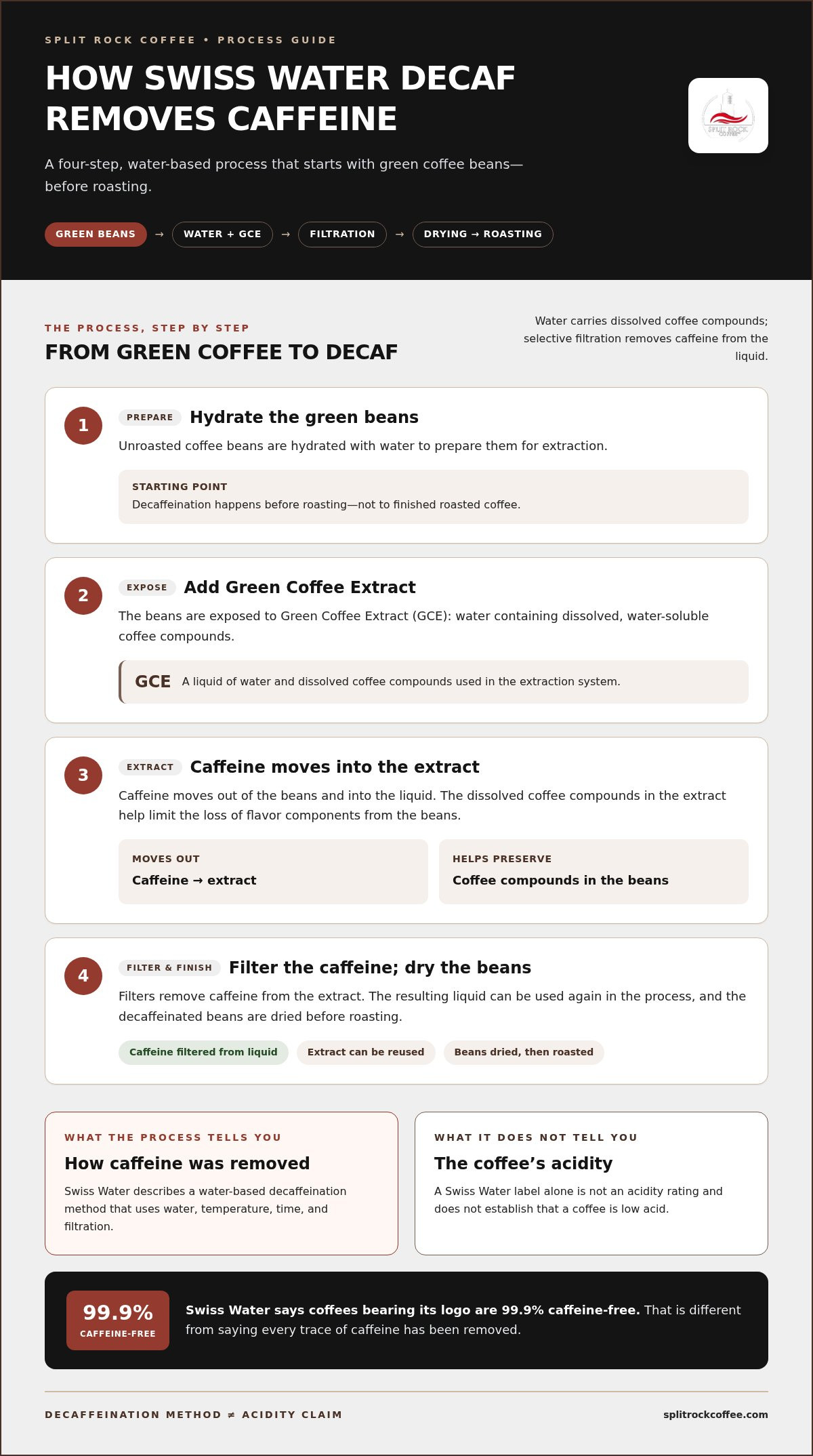
The Swiss Water Process begins with green, unroasted coffee beans. It uses water, temperature, time, and filtration to draw out caffeine before the beans are roasted. The key is selective filtration: water can carry many soluble coffee compounds, so the process uses Green Coffee Extract to help preserve those compounds in the beans while caffeine is removed. Swiss Water’s Official Swiss Water Process explanation describes the company’s method and its aim of preserving coffee character.
From green coffee to decaffeinated beans
Think of the beans as giving caffeine up to a surrounding liquid. The water doesn’t isolate caffeine on its own; dissolved coffee compounds and filtration are part of the system. In simplified terms, the sequence works like this:
- Green coffee beans are hydrated with water to prepare them for extraction.
- The beans are exposed to Green Coffee Extract, a liquid containing water-soluble coffee compounds.
- Caffeine moves from the beans into the extract, while the liquid’s coffee compounds help limit the loss of flavor components from the beans.
- Filters remove caffeine from the extract. The resulting liquid can be used again in the process, and the decaffeinated beans are dried before roasting.
This overview keeps the mechanics readable; exact operating conditions are part of Swiss Water’s proprietary process. Decaffeination takes place before roasting, so it’s green beans, not finished roasted coffee, that go through this stage. Decaf also doesn’t mean caffeine-free. Swiss Water says coffees bearing its logo are 99.9% caffeine-free, which is different from claiming every trace has been removed.
What “chemical-free” means in this context
Swiss Water uses “chemical-free” to describe its decaffeination method: it doesn’t use added chemical solvents to remove caffeine. The phrase shouldn’t be read literally as meaning the coffee or process contains no chemical substances. Water and coffee are made of chemical compounds, and the label describes the method, not a separate health finding.
That distinction matters. Describing one method doesn’t establish that other decaffeination methods are unsafe, nor does the process label provide independent evidence about health effects. It identifies how the coffee was decaffeinated. The method can be explained separately from the resulting cup’s flavor, roast profile, or acidity.
In short, water-based extraction and selective filtration describe the caffeine-removal mechanics; they don’t certify a particular taste, roast, or acidity level. If you’re comparing swiss water process low acid decaf, keep those claims distinct and assess each on its own. Split Rock Coffee offers a separate low-acid coffee option through its low-acid blends.
Swiss Water Decaf vs. Low-Acid Coffee: Compare the Claims, Not Just the Labels
A bag can be decaffeinated, described as low acid, both, or neither. Those words answer different questions, so compare the specific claims rather than treating one as proof of another. The table shows what each label can tell you and what it leaves unanswered.
| Label or claim | What it describes | What it establishes | What it doesn’t establish |
|---|---|---|---|
| Swiss Water Process | A water-based method used to remove caffeine from green coffee beans. | The decaffeination method, when the label accurately identifies the process. | A low-acid rating, a particular roast, or a guarantee about flavor or personal response. |
| Decaf | Coffee that has undergone a caffeine-removal process. | That the coffee has been decaffeinated. | That it contains no caffeine, or that it is low acid. |
| Low acid | A separate claim about a coffee characteristic. | Only what the roaster’s supporting description or evidence specifies. | How the coffee was decaffeinated, or how it will feel for every drinker. |
Decaffeination method and acidity are different questions
The process question is practical: how was caffeine removed from the green coffee? The acidity question needs its own basis. A clear product description should explain what its low-acid wording refers to rather than relying on a decaf method or roast name to imply it. Research into coffee’s chemical composition, including chlorogenic acids, helps show why “acidity” can involve more than a simple label; see this review on the scientific reasons discussed for low-acid coffee.
A measured pH is one specific property of a liquid, while perceived acidity describes a sensory impression, such as brightness or tartness. These are related concepts, but they aren’t interchangeable. Neither one predicts an individual’s digestive response with certainty. The phrase “Swiss Water Process” doesn’t supply an acidity measurement, and a low-acid claim doesn’t identify a decaffeination method.
Flavor, roast, and personal sensitivity
Roast level alone doesn’t reliably prove that coffee is low acid. Origin and bean characteristics, roast development, freshness, and brewing choices can all influence the cup’s aroma, flavor, and perceived brightness. Swiss Water’s flavor-retention language describes an aim of its process, not a universal promise that every decaf will taste identical to its caffeinated counterpart.
Process, roast, and low-acid claims answer different questions. If you’re searching for swiss water process low acid decaf, look for evidence for each claim separately, then use tasting notes and your own preferences to choose a cup. Coffee affects people differently; if symptoms are persistent or concerning, seek advice from a qualified health professional.
How to Choose Swiss Water Process Low Acid Decaf with Confidence
Choose by checking each claim on its own merits. If you want decaf made with the Swiss Water Process and are also looking for a low-acid option, the label should help you verify both rather than leaving you to infer one from the other. Then narrow your choice by roast, flavor description, format, and the way you brew.
A practical label-reading checklist
Use this quick check before choosing a bag. Clear product descriptions make it easier to compare what’s documented with what you actually want from your cup.
- Verify the decaf method. Look for wording that identifies Swiss Water as the method used to decaffeinate the coffee. Don’t read it as a low-acid certification.
- Assess acidity separately. Look for a specific explanation of any low-acid claim. Be wary of language that promises to treat reflux, prevent symptoms, or guarantee stomach comfort.
- Compare the coffee details. Consider the origin information, roast description, and tasting notes alongside your preferences. Roast level alone doesn’t prove that a coffee is low acid.
- Choose a useful format. Whole bean coffee lets you grind for your chosen brewer; ground coffee offers a ready-to-use option. Grind and format affect preparation, not whether a coffee is low acid.
For broader background on low-acid coffee, The Ultimate Guide to Low Acid Coffee is a useful companion to this label check. Keep the questions distinct: what supports the acidity claim, and what describes how the coffee was decaffeinated?
Set realistic expectations for the cup
A label can narrow the choices, but it can’t tell you exactly how a cup will taste in your kitchen. Coffee characteristics, roast, freshness, grind, water, and brewing method all play a part. A roast described as smooth, for example, may appeal to your palate, but that tasting language isn’t by itself proof of a particular acidity level.
Test your preferences with a steady approach. Keep your brewer and recipe consistent, then change one factor at a time, such as roast or grind. That makes it easier to notice what you enjoy, without treating a single tasting as a universal result. For a wider selection framework, consult Best Low Acid Coffee Beans in 2026.
Split Rock Coffee offers low-acid blends and Gold Standard beans in whole bean and ground formats. Explore Split Rock Coffee’s coffee options and choose based on the characteristics and preparation style that matter to you.
Choose Decaf and Low-Acid Coffee on Their Own Merits
Make your choice by separating the qualities you want from the labels used to describe them. Swiss Water identifies a decaffeination method; “low acid” describes a different coffee attribute. A coffee can meet one preference without the label establishing the other. Keeping that distinction clear helps you choose for your routine without expecting a process name to answer every question about the cup.
Match the coffee choice to your priorities
Start with what matters most. If you’re reducing caffeine, look for clear information about whether the coffee is decaffeinated and which method was used. Decaf isn’t necessarily caffeine-free, so don’t interpret it as a promise of zero caffeine. If acidity is your priority, consider that claim separately and look for a product description that explains it, rather than inferring it from the decaf method.
Then choose for taste and everyday practicality. Roast descriptions and tasting notes can help you find a style you enjoy, while whole bean or ground coffee lets you pick a preparation that suits your habits. Whole beans give you the option to grind for your brewer; ground coffee is ready to use. Neither format guarantees a particular acidity level, but the right format can make it easier to build a consistent routine.
You don’t have to treat these priorities as an all-or-nothing choice. A shopper might want to limit caffeine while also preferring coffee described as low acid, then choose a roast and format that fit their taste and brewing setup. The useful step is to assess each claim on its own, instead of assuming one label proves another.
A thoughtful next step for your daily cup
For readers prioritizing low-acid coffee, Split Rock Coffee offers low-acid blends. The Gold Standard Coffee Beans are another option for choosing coffee according to your preferences. Both offerings are available in whole bean and ground formats. Compare the product descriptions with your priorities, including the coffee characteristics, format, and preparation style you prefer.
After choosing, give yourself room to judge the cup on its own terms. Use a familiar brewing method, note what you enjoy about the flavor, and make changes gradually if you’re comparing options. Individual preferences and responses vary, so no label can promise that a coffee will suit everyone. If you have ongoing health concerns, discuss them with a qualified professional rather than relying on a coffee claim.
The takeaway from comparing swiss water process low acid decaf is simple: choose the decaffeination method for the process, evaluate low-acid wording as a separate claim, and select a roast and format that work for your daily cup. When you’re ready, explore Split Rock Coffee’s selection of low-acid blends and The Gold Standard Coffee Beans to find an option that fits your priorities.
Make Your Next Cup a Deliberate Choice
Your coffee routine can reflect what matters to you now, whether that’s lowering caffeine, finding a flavor you look forward to, or choosing a coffee described as low acid. Use the label as a starting point, then let your own taste and daily habits guide the decision. The phrase swiss water process low acid decaf shouldn’t force you to compromise on flavor or assume one claim proves another.
Split Rock Coffee is a Disabled Veteran-Owned Small Business founded in 2013. Its low-acid blends and Gold Standard beans are available whole bean or ground, giving you options for your preferred preparation.
Explore Split Rock Coffee’s low-acid blends and Gold Standard beans, and choose a coffee that fits the cup you want to make.
Frequently Asked Questions
Is Swiss Water Process decaf low acid?
Not necessarily. A bag labeled swiss water process low acid decaf should make two distinct claims, and the low-acid wording needs its own support. Look for a clear product description that explains the acidity claim rather than relying on the decaffeination method. If you’re comparing two coffees, note what each label actually states before choosing based on flavor, roast, or other preferences.
Does Swiss Water Process decaf contain any caffeine?
Yes, it can contain a small amount. Decaffeination reduces caffeine; it doesn’t necessarily remove every trace. Swiss Water says coffees bearing its logo are 99.9% caffeine-free, which is not the same as caffeine-free. If you need to track caffeine closely, check whether the roaster provides information for the specific coffee, and remember that the amount in your prepared cup can depend on the serving and brewing choices.
Is Swiss Water Process decaffeination chemical-free?
Swiss Water describes its process as chemical-free because it doesn’t use added chemical solvents to decaffeinate the beans. The phrase doesn’t mean the coffee or water contains no chemical compounds. It also isn’t, by itself, evidence that other approved decaffeination methods are unsafe. For a careful comparison, focus on the method named on the package and the roaster’s explanation of how it was used.
Can Swiss Water decaf taste like regular coffee?
It can still offer a satisfying coffee flavor, though no process can promise that every decaf tastes exactly like its caffeinated counterpart. Flavor depends on the beans, roast, freshness, and how you brew them. For a fair comparison, prepare the decaf and your usual coffee using the same brewer and recipe, then notice differences in aroma, body, and finish. Tasting notes can help set expectations, not guarantee a match.
How much caffeine is in Swiss Water Process decaf?
There isn’t one exact caffeine amount that applies to every brewed cup. Swiss Water states that coffees bearing its logo are 99.9% caffeine-free, but that figure doesn’t tell you the precise amount in a particular serving. Coffee dose, serving size, and preparation all matter. If you’re monitoring caffeine for a personal reason, use product-specific information when available and consider discussing your needs with a qualified health professional.
Does low-acid decaf help with acid reflux?
It may not; low-acid wording or decaffeination can’t guarantee relief from reflux. People respond to coffee differently, and symptoms can have causes beyond a coffee’s acidity or caffeine level. If you’re testing whether a particular coffee suits you, keep track of what you drink and how you feel, without treating that test as a diagnosis. Persistent or concerning reflux symptoms are a good reason to consult a healthcare professional.
How can I tell whether coffee uses the Swiss Water Process?
Look for “Swiss Water Process” on the package or in the roaster’s description of that specific coffee. A generic “decaf” label doesn’t identify which method was used, and wording such as “water processed” may not name this particular process. If the package includes the Swiss Water logo, check that it appears with the coffee’s product information. Keep any low-acid statement separate when comparing claims.


