
Can I Drink Coffee With Gastritis? What to Know in 2026
What if the right answer to “can I drink coffee with gastritis” isn’t a simple yes or no? Coffee doesn’t cause every case of gastritis, but it can aggravate symptoms for some people, especially during a flare. That uncertainty can make your morning routine feel like guesswork, and stomach discomfort can be hard to interpret when reflux or general sensitivity may feel similar.
Your response matters more than a blanket rule. This guide explains how coffee may affect gastritis symptoms, how gastritis differs from reflux, and how to assess a possible coffee trigger cautiously. You’ll also learn when symptoms deserve medical advice. If you decide to test your tolerance, small changes and careful symptom tracking can offer useful clues; low-acid coffee may be one option to explore, but it isn’t a treatment or a guaranteed fix. Make the decision steadily, with your symptoms and health needs leading the way.
Key Takeaways
- Wondering “can I drink coffee with gastritis”? Some people tolerate it, while others notice worse symptoms; tolerance alone can’t diagnose gastritis or show that it has healed.
- Coffee may act as a personal symptom trigger, but that doesn’t mean it caused the underlying gastritis.
- Regular, decaf, and low-acid coffee differ, but none guarantees symptom relief; decaf can still affect how you feel.
- Track what you drink and when symptoms appear, changing one factor at a time to look for a pattern rather than relying on one episode.
- Use your symptoms to guide a cautious personal choice, and seek medical advice if symptoms are severe, persistent, or concerning.
Can You Drink Coffee With Gastritis? The Careful Short Answer
Some people with gastritis tolerate coffee, while others notice their symptoms worsen after drinking it. So if you’re asking, “can I drink coffee with gastritis?” the honest answer is that your response, and your medical situation, matter. Coffee isn’t a universal trigger, but it also isn’t automatically comfortable for everyone. A cup that feels routine to one person may bring discomfort to another.
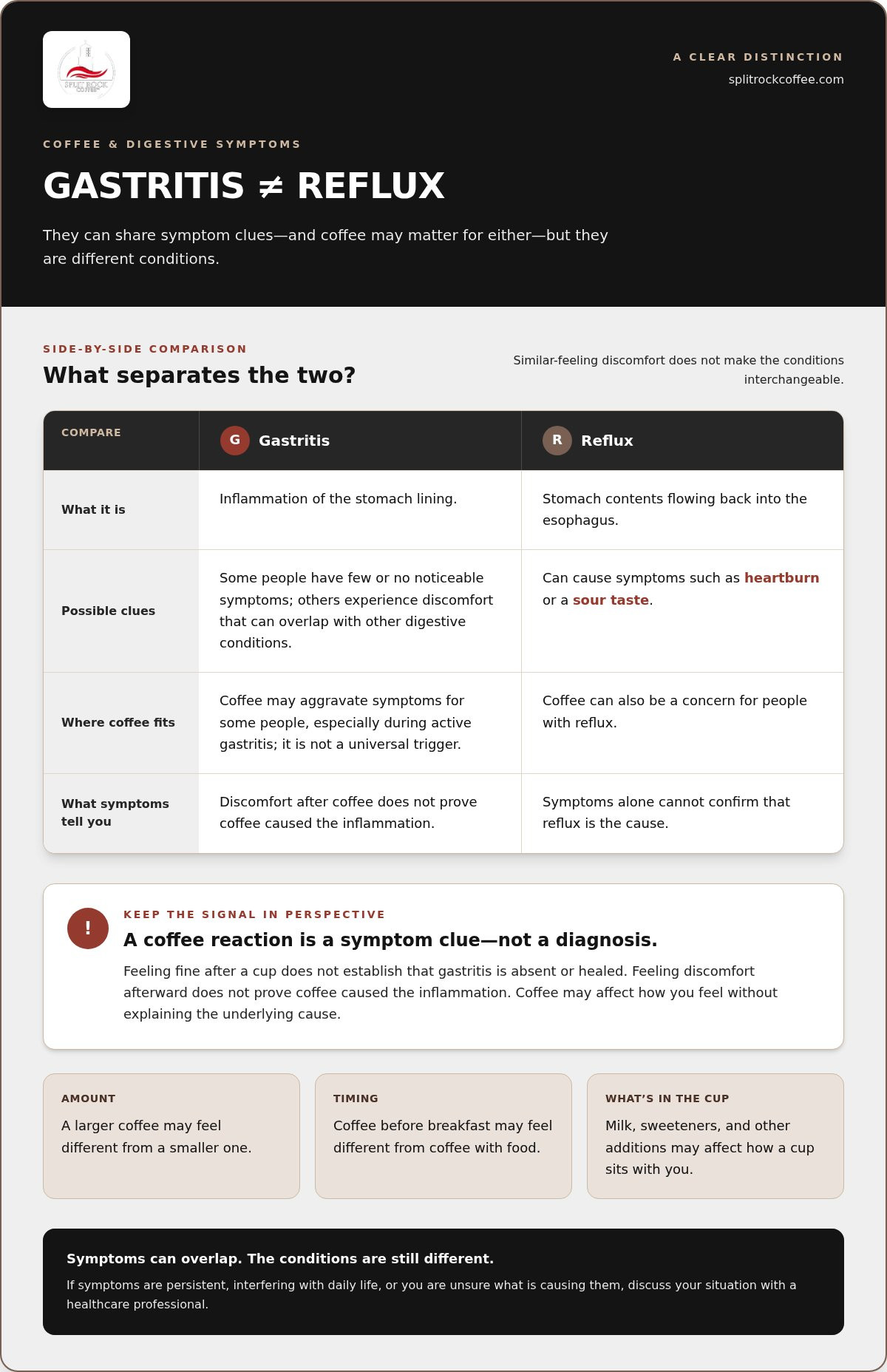
Gastritis means inflammation of the stomach lining. It can have different causes and forms, and symptoms don’t tell the whole story. Some people have few or no noticeable symptoms; others experience discomfort that can overlap with several digestive conditions. The Gastritis Wikipedia overview summarizes its types, causes, and symptoms, but a healthcare professional is the right person to assess your individual health. Feeling fine after coffee doesn’t establish that gastritis is absent or healed, just as feeling discomfort afterward doesn’t prove that coffee caused the inflammation.
A possible coffee trigger is not proof that coffee caused gastritis, and choosing a coffee you tolerate is not a treatment for the condition. Keep that distinction in view. Coffee may be relevant to how you feel without explaining why the stomach lining is inflamed or what care might be appropriate.
Why there is no one-size-fits-all coffee rule
Symptoms and personal triggers vary. One person may notice discomfort after coffee, while another may drink it without an obvious change. Even for the same person, tolerance may differ depending on symptoms and circumstances. That variation makes blanket advice unreliable: having gastritis doesn’t automatically mean you must stop coffee, and tolerating a cup doesn’t mean coffee is safe or suitable for everyone. General information can guide questions, but individualized advice should come from a healthcare professional familiar with your health.
Gastritis is not the same question as acid reflux
These conditions involve different parts of the digestive process. Gastritis is inflammation of the stomach lining; reflux happens when stomach contents flow back into the esophagus and can cause symptoms such as heartburn or a sour taste. Some symptoms may feel similar, and coffee can be a concern for people with either condition, but that overlap doesn’t make them interchangeable. Advice aimed at managing reflux shouldn’t automatically be treated as gastritis guidance, and symptoms alone can’t confirm which condition you have.
Use a measured approach rather than a rule borrowed from someone else’s experience. If you have a gastritis diagnosis, ongoing symptoms, or uncertainty about whether coffee is appropriate for you, discuss your situation with a healthcare professional. They can help interpret your symptoms and offer guidance that accounts for your health history. This is especially useful if discomfort is persistent or interfering with daily life. The goal isn’t to label every reaction, but to make a careful decision without mistaking symptom tolerance for a diagnosis or a cure.
How Coffee May Affect Gastritis Symptoms Without Treating the Cause
Coffee may aggravate symptoms for some people, but that doesn’t make it a universal cause of gastritis. The condition has underlying causes that need to be considered separately from day-to-day symptom triggers. A drink might change how you feel without causing the inflammation itself, and avoiding a trigger may ease discomfort without addressing why the stomach lining is inflamed.
Coffee may influence gastritis symptoms, but symptom relief from avoiding it is not proof that coffee caused the condition or that the underlying inflammation has been treated. Keep that distinction clear as you evaluate what you drink. If symptoms persist, a change in your coffee routine shouldn’t replace medical advice.
Caffeine, coffee, and individual symptom response
Caffeine and other coffee compounds can stimulate gastric acid production, which may be uncomfortable for some people with active gastritis. That’s a possible explanation, not a complete account of every reaction. Coffee contains more than caffeine, and people don’t all respond alike. Even decaf may bother some individuals, so removing caffeine doesn’t guarantee a symptom-free cup.
The details around a serving can also matter to your experience. A large coffee may feel different from a smaller one; drinking it before breakfast may feel different from having it with food. Milk, sweeteners, or other additions may also affect how a particular cup sits with you. These factors can help explain why one occasion feels fine and another doesn’t, but a single episode can’t establish a cause. Notice patterns without treating them as a diagnosis.
What low-acid coffee can and cannot tell you
“Low-acid” describes a coffee option, not a medical outcome. Lower measured acidity doesn’t show that a coffee will suit every person with gastritis, and it doesn’t mean the coffee treats, heals, or prevents inflammation. Other characteristics, including caffeine and individual sensitivity to coffee, remain relevant. A label can help you compare coffees, but your response is personal, not guaranteed by the wording on a bag.
If you’re curious about what the term means for coffee itself, Split Rock Coffee offers a guide to low-acid coffee. For readers who choose to keep coffee in their routine, Split Rock Coffee’s low-acid coffee blends are one option to explore, not a treatment for gastritis.
So, can I drink coffee with gastritis? The answer can’t be settled by acidity alone, or by assuming that caffeine explains every symptom. Consider what you drink, how much, when you have it, and what else is in the cup. If you’re managing diagnosed gastritis or ongoing discomfort, bring those observations to a healthcare professional. They can help you separate a possible symptom trigger from the condition’s cause and guide decisions about care.
Regular, Decaf, or Low-Acid Coffee: What Is Worth Comparing?
If you’re weighing coffee choices while asking “can I drink coffee with gastritis,” compare what each option changes, not what it promises. Regular coffee contains caffeine; decaf has less, though it remains coffee; low-acid coffee is made to be less acidic. None is medically established as the best choice for everyone with gastritis, and no label can guarantee how you’ll feel.
| Option | Relevant distinction | Evidence limitation |
|---|---|---|
| Regular coffee | Contains caffeine and other coffee components. | May bother some people, but response varies and it isn’t a universal trigger. |
| Decaf coffee | Has less caffeine than regular coffee, but still contains coffee components. | Lower caffeine doesn’t guarantee that symptoms won’t occur. |
| Low-acid coffee | Designed to have lower acidity than standard coffee. | Lower acidity doesn’t make it a gastritis treatment or ensure personal tolerance. |
Does decaf coffee make a difference?
Decaf changes caffeine content, not the fact that the drink is coffee. It may be worth comparing if you want to reduce caffeine, but it doesn’t remove every coffee compound or guarantee comfort. Research indicates decaffeinated coffee can still stimulate gastric acid, though less than regular coffee. If symptoms continue, worsen, or concern you, discuss them with a healthcare professional rather than relying on a switch to decaf alone.
Is low-acid coffee a better personal fit?
Low-acid coffee may interest you if you prefer a less acidic option, but that preference isn’t a treatment plan. Lower measured acidity doesn’t establish that the coffee will suit you or change the underlying condition. For criteria to consider when comparing beans, see this low-acid coffee bean guide. Keep the choice separate from medical care.
A practical comparison starts with one change at a time. If you switch from regular to decaf, for example, keep other parts of your routine as steady as you can and note how you feel. Don’t assume that a better day proves the coffee was responsible; symptoms can vary for other reasons, too. If you’re exploring lower-acid coffee, treat it as another option to assess, not as a promised solution.
Choose based on your preferences and observed response, not a claim that one variety is universally gentle. If coffee appears to coincide with discomfort, pause and discuss persistent or concerning symptoms with a healthcare professional. This comparison can help you make a more informed choice, but it can’t diagnose gastritis or replace care tailored to you.
How to Assess Whether Coffee Is a Personal Trigger
If you’re asking “can I drink coffee with gastritis,” a brief, steady record may help you notice whether coffee and symptoms appear to travel together. Think of it as information to discuss, not a test that proves what’s happening in your stomach. One uncomfortable morning can have several explanations, so resist making a firm judgment from a single cup or episode.
Keep a simple food, drink, and symptom record
Keep notes manageable. Record what kind of coffee you drank, roughly how much, when you had it, whether you’d eaten, what else was in the cup, and any symptoms and how long they lasted. You don’t need to log every detail of your day. A few consistent notes can be more useful than a complicated tracker you won’t keep up.
A useful symptom record notes the coffee, approximate amount, timing, food or additions, symptoms, and how long they lasted.
To make the comparison clearer, change one variable at a time rather than switching coffee type, serving size, meal timing, and creamer all at once. If you alter several things together, it’s harder to tell what may have made a difference. Don’t deliberately drink something that has caused a strong reaction just to test yourself, especially if you’re having a flare or have been advised to avoid it.
- Write down coffee type and approximate serving amount.
- Note when you drank it and whether you had food with it.
- Describe symptoms plainly, including when they started and when they eased.
- Record relevant changes, such as a different coffee, serving size, or addition.
Look for a repeated pattern, not a perfect correlation. Symptoms can vary for reasons unrelated to coffee, and a log can’t diagnose gastritis or show whether it has healed. If discomfort continues, take your notes to a healthcare professional; they may help make the conversation about your symptoms and routine more specific.
Know when to get medical advice
Arrange professional assessment for symptoms that persist, recur, worsen, or interfere with daily life. Don’t use a diary to diagnose gastritis or change prescribed treatment on your own. A clinician can assess what may be causing the symptoms and advise you based on your health history, rather than relying on a coffee experiment.
Some warning signs need urgent attention. Seek emergency medical care for vomiting blood or material that looks like coffee grounds, black or tarry stools, sudden severe abdominal pain, or fainting. These signs can indicate serious bleeding or another urgent problem; don’t wait to see whether changing your coffee helps.
Use your notes to support sound decisions, not to put your health on trial. If you’re comparing coffee options as part of your routine, explore Split Rock Coffee’s low-acid blends as a coffee choice, not a gastritis treatment. Keep medical questions and ongoing symptoms in the hands of a healthcare professional.
Choosing Coffee With Gastritis: A Cautious Next Step
There isn’t one coffee choice that works for everyone with gastritis. The practical next step is to decide based on your preferences, how you’ve felt, and any guidance from your healthcare professional. Coffee can be part of a personal routine, but it isn’t a medical intervention. A product label or a comfortable cup can’t diagnose gastritis, treat its cause, or confirm that inflammation has healed.
Match a coffee option to your preferences, not a promised health outcome
If you choose to keep drinking coffee, you can compare options for what they are rather than what you hope they’ll do. Low-acid blends are a coffee choice, not a substitute for clinical care or a promise of symptom relief. Split Rock Coffee offers low-acid coffee blends and Gold Standard Coffee Beans, with coffee selections available whole bean or ground. Choose the option and format that suit your preferences, while keeping any health decisions separate.
That distinction matters. A lower-acid label describes a coffee characteristic; it doesn’t establish that the coffee is right for every person with gastritis. Likewise, the Gold Standard Coffee Beans are a coffee option, not a medical recommendation. If you’re comparing products, focus on the stated coffee type and format, not claims that suggest a particular blend can prevent or relieve symptoms. No coffee choice should replace an assessment or care plan from a healthcare professional.
Keep your next step grounded
If symptoms continue or return, bring your observations to a healthcare professional. Notes about what you drank and when symptoms appeared can help you explain your experience, but they can’t determine the diagnosis or underlying cause. Follow the medical guidance you’ve received, and don’t stop prescribed treatment or delay care because one coffee seems easier to tolerate.
For your own decision, keep the priorities in order: address health concerns with a clinician, use your experience as one piece of information, and choose coffee according to personal preference. If you’re considering a low-acid option, explore it as coffee, not as a remedy. Split Rock Coffee’s offerings include low-acid blends, Gold Standard Coffee Beans, and whole-bean or ground choices. They’re options for people who choose to drink coffee, with no promise that any particular coffee will suit everyone.
Make the choice thoughtfully and without pressure. Explore Split Rock Coffee if you’d like to browse its coffee options.
Make Your Next Cup a Thoughtful Choice
The question “can I drink coffee with gastritis” doesn’t need a permanent, one-size-fits-all answer. Let your health needs guide the decision, and give yourself room to adjust your routine if it no longer feels right. Coffee should remain a personal choice, not a substitute for medical care or a promise of relief.
If you choose to keep coffee in your routine, Split Rock Coffee offers low-acid blends and Gold Standard Coffee Beans in whole-bean and ground formats, along with a monthly coffee subscription. These are coffee options, not treatments for gastritis, and no blend can promise to suit everyone. Founded in 2013, Split Rock Coffee is a Disabled Veteran-Owned Small Business.
Move forward with care, trust your observations, and bring ongoing concerns to a healthcare professional. When you’re ready to explore coffee options, Explore Split Rock Coffee. A considered next step is enough. You can make choices that respect both your health and your love of coffee.
Frequently Asked Questions
Can I drink coffee if I have gastritis?
Possibly, if you tolerate it and your healthcare professional hasn’t advised you otherwise. If you’re wondering “can I drink coffee with gastritis,” consider your current symptoms and any care plan rather than relying on someone else’s experience. For example, you might decide not to have coffee during a period of significant discomfort, then discuss your usual routine at your next appointment. Coffee tolerance alone can’t confirm a diagnosis.
Does coffee make gastritis worse?
It can aggravate symptoms for some people, but it doesn’t affect everyone the same way. Notice whether discomfort occurs after coffee on more than one occasion, and consider other factors such as meals or additions to the drink. A reaction may suggest a symptom association, but it can’t identify the cause of inflammation. If symptoms keep recurring, a healthcare professional can help assess them.
Is decaf coffee better for gastritis?
Decaf may be worth comparing if you want less caffeine, but it isn’t automatically easier on your stomach. It still contains coffee compounds, and some people may notice symptoms after drinking it. If you try decaf, avoid changing several parts of your routine at the same time. That makes it easier to observe your response, though the result still isn’t a medical test.
Is low-acid coffee safe to drink with gastritis?
There’s no guarantee that low-acid coffee will be comfortable or suitable for every person with gastritis. “Low-acid” describes a coffee characteristic, not proof of medical safety or a treatment effect. If you choose to try it, consider your own response and any advice from your healthcare professional. Stop treating the label as a substitute for care, especially if symptoms persist or worsen.
Should I stop drinking coffee if I have gastritis?
Not everyone needs to stop, but pausing may be sensible if coffee seems to worsen symptoms, particularly during a significant flare. Don’t force yourself to keep drinking it to prove a pattern. If you’re unsure whether to pause or resume, ask your healthcare professional for advice tailored to your diagnosis and health history. Keep taking prescribed treatment as directed unless your clinician tells you otherwise.
When should I see a doctor for gastritis symptoms?
Arrange medical advice if symptoms persist, keep returning, worsen, or disrupt eating and daily activities. Seek urgent care for signs of possible bleeding, such as vomit containing blood or material resembling coffee grounds, or black, tarry stools. Severe sudden abdominal pain or fainting also calls for urgent attention. Don’t rely on a coffee change to assess these symptoms; prompt evaluation matters.


