
Coffee and Gut Health: What the Research Says in 2026
What if coffee can shape your gut microbiome without being either a cure-all or a digestive villain? If you’ve heard conflicting claims about coffee and gut health, the uncertainty makes sense: coffee contains more than caffeine, and its effects can feel different from one person to the next.
Research published in Nature Communications in 2026 found differences in gut bacteria between habitual coffee drinkers and non-drinkers, alongside associations with mood and cognitive measures. The findings add useful detail, but they don’t prove that coffee causes those changes or that everyone will benefit. A study can point to patterns, but it can’t predict your personal response.
This article separates the evidence from broader health claims, explains what researchers know and still can’t tell us about caffeine, coffee compounds, and digestion, and explores why coffee may prompt reflux or changes in gut motility for some people. You’ll also find a practical way to assess your routine by tracking what you drink and how your body responds.
Key Takeaways
- Separate changes in gut bacteria from digestive symptoms. They’re related questions, but they aren’t the same measure of gut health.
- To understand coffee and gut health, look beyond caffeine and consider the limits of current research before drawing conclusions.
- Track serving size, timing, preparation, and symptoms, then change one factor at a time to spot patterns in your own response.
- Choose coffee based on flavor, format, and caffeine preference, not broad claims about gut benefits.
- Low-acid labeling describes a coffee characteristic, not proof that it prevents or relieves digestive symptoms.
Coffee and Gut Health: What Does the Evidence Actually Say?
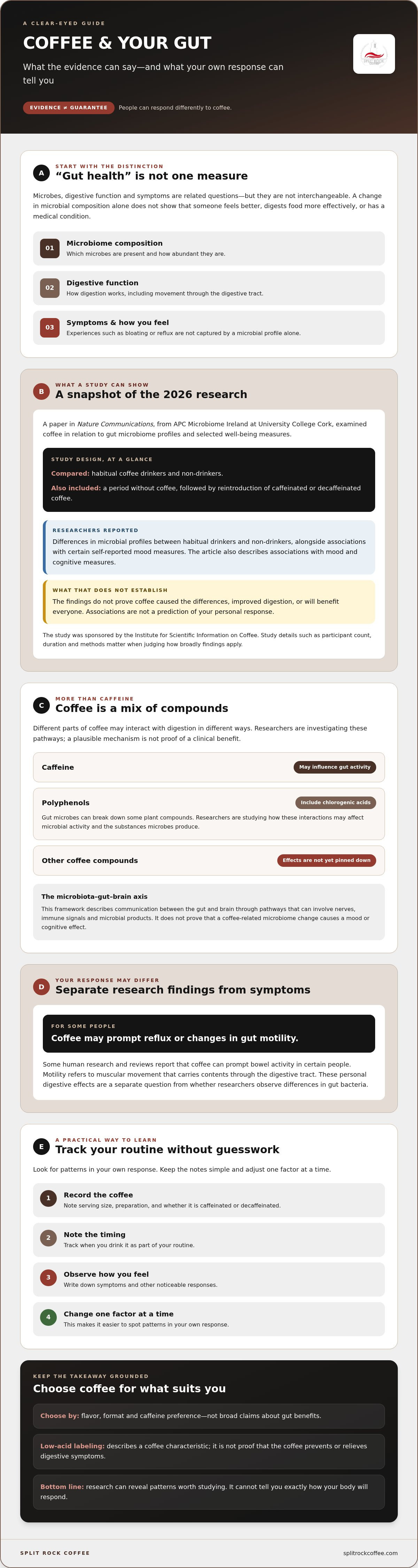
“Gut health” isn’t one test result. It can refer to digestive function, symptoms such as bloating or reflux, and the microbes living in the digestive tract. These measures can overlap, but they aren’t interchangeable. A change in microbial composition doesn’t by itself mean someone feels better, digests food more effectively, or has a medical condition.
What do researchers mean by the gut microbiome?
The gut microbiome is the community of microorganisms in the digestive system, along with their genes and interactions with one another and the body. It includes bacteria and other microbes, not simply a tally of “good” and “bad” species. For a broader introduction to the gut microbiome, keep in mind that different people can have different microbial profiles without those differences automatically signaling a problem.
Researchers can measure which microbes are present and how abundant they are. Those measurements describe composition, but they don’t directly diagnose a digestive disorder or capture the full picture of someone’s symptoms and digestive function. What’s found in a stool sample is not the same as how a person feels.
What did the 2026 coffee research examine?
A 2026 paper in Nature Communications examined coffee consumption in relation to gut microbiome profiles and selected measures of well-being. The research, from APC Microbiome Ireland at University College Cork, compared habitual coffee drinkers with non-drinkers and also included a period of coffee abstinence followed by reintroduction of caffeinated or decaffeinated coffee. The study was sponsored by the Institute for Scientific Information on Coffee.
Researchers reported differences in microbial profiles between habitual drinkers and non-drinkers. They also reported associations between coffee intake and certain self-reported mood measures; findings differed in some respects between caffeinated and decaffeinated coffee. These are observations from a specific study, not proof that coffee caused a healthier microbiome, improved digestion, or changed mood. The abstinence-and-reintroduction design adds useful evidence, but it doesn’t make every reported association causal or predict how each reader will respond.
Study duration, participant count, and detailed methods matter when judging how broadly results apply. Without those particulars in the findings summarized here, it’s better not to treat one paper as a universal verdict. The wider lesson for coffee and gut health is that microbiome research can reveal patterns worth investigating, while symptoms and individual tolerance still need to be considered separately.
How Coffee May Interact With the Gut Microbiome and Digestion
Coffee isn’t a single active ingredient. Caffeine, polyphenols, and other naturally occurring compounds may each interact with digestion in different ways. That makes a simple “coffee helps” or “coffee harms” verdict a poor fit. A proposed biological pathway also shouldn’t be mistaken for a proven health outcome.
What roles might caffeine and other coffee compounds play?
Caffeine can influence gut activity, while non-caffeine compounds offer other possible routes of interaction. Coffee contains polyphenols, including chlorogenic acids. Gut microbes can break down some plant compounds, and researchers are investigating whether those interactions affect microbial activity and the substances microbes produce. These mechanisms are plausible areas of study, not proof that coffee improves gut health in people.
Decaffeinated coffee can help researchers examine effects that may not depend entirely on caffeine. But if a study finds an association with both regular and decaffeinated coffee, that doesn’t identify which compounds are responsible or establish that every compound benefits the gut. Coffee is a mixture, and findings about one measure or group of participants can’t be applied to everyone.
The microbiota-gut-brain axis describes communication between the gut and brain through pathways that can involve nerves, immune signals, and microbial products. It gives researchers a framework for studying possible connections. It doesn’t prove that a coffee-related microbiome change causes a particular mood or cognitive effect.
A plausible biological mechanism can explain how an effect might happen; it doesn’t demonstrate a clinical benefit. No single drink, food, or microbe is a complete measure of microbiome health.
How can coffee affect bowel function?
Some human research and reviews report that coffee can prompt bowel activity in certain people. Motility means the muscular movement that carries contents through the digestive tract; secretion refers to fluid released into the gut. Caffeine may contribute, but responses to decaffeinated coffee suggest caffeine may not be the only factor. The precise mechanisms and how consistently they apply remain uncertain.
A bowel movement after coffee is a digestive response, not evidence that the microbiome has improved. Findings from cells or animals can help researchers investigate mechanisms, but they don’t establish the same effect in people. In daily life, notice whether coffee brings on urgency, discomfort, or no change, and whether that response repeats.
If you’re choosing coffee based on taste or preference for a lower-acidity product, low-acid coffee blends are one option to explore. Low-acid describes a product characteristic, not a demonstrated treatment or guarantee of digestive comfort.
Can Coffee Help or Upset Your Gut? Separate Findings From Personal Symptoms
For coffee and gut health, the clearest answer is neither “always helpful” nor “always harmful.” Research suggests coffee is associated with differences in gut microbiome profiles, but a difference in microbes isn’t automatically a health benefit. Some people also notice digestive symptoms after drinking coffee. Both can be true without applying to everyone.
Does coffee improve gut health or change the microbiome?
A 2026 study in Nature Communications reported microbiome differences between habitual coffee drinkers and non-drinkers, along with associations involving selected self-reported mood and cognitive measures. The study also examined coffee abstinence and reintroduction. These findings add to the evidence, but they don’t establish that coffee caused the changes or that a changed microbiome means better digestion or overall health. Read positive media summaries alongside the study’s actual outcomes and design, not as proof of a universal benefit.
Here’s a practical way to read such findings:
| Reported finding | Possible interpretation | What remains unknown |
|---|---|---|
| Microbiome profiles differed between habitual coffee drinkers and non-drinkers. | Coffee intake may be linked to microbial composition. | Whether coffee caused the differences, and whether they improve health. |
| Some mood or cognitive measures were associated with coffee intake in the study. | Caffeine and non-caffeine factors may merit further study. | Whether coffee produced the outcomes or whether they apply beyond the participants studied. |
| Some people experience bowel changes or discomfort after coffee. | Coffee may affect digestive function for that person. | Whether coffee is the only cause or indicates a health problem. |
Population-level findings can describe patterns, but they can’t predict an individual reader’s symptoms. A study’s average result is not a personal forecast.
Why might coffee affect people differently?
Responses can vary with how much coffee someone drinks, their sensitivity to caffeine, preparation, timing, what they add to the cup, and their broader health context. For example, note whether a symptom follows coffee with food or on its own, and whether it happens with different preparations. A change in bowel habits doesn’t on its own show that the microbiome has improved, and discomfort after coffee doesn’t identify its cause.
General digestive responses should also be distinguished from condition-specific concerns such as reflux. Symptoms may have multiple causes, so don’t use coffee response alone to diagnose yourself or rule out another explanation. If symptoms are persistent, severe, or concerning, speak with a qualified clinician. The goal isn’t to force one verdict on coffee. It’s to weigh the research carefully and take your own experience seriously.
How to Test Your Coffee Routine Without Guesswork
If you suspect coffee is affecting digestion, a simple, consistent record can help you spot patterns. It can’t prove coffee is the cause or replace clinical advice, but it’s more useful than relying on memory or changing several habits at once. Keep the record focused on details you can compare, such as the coffee, timing, preparation, and symptoms.
- Observe your usual routine. Before making changes, note how you typically drink coffee and any digestive responses you notice. Keep your routine steady enough to establish a baseline.
- Change one factor. Try adjusting only one detail, such as caffeine status, serving size, timing, or preparation. If you switch to decaf and change how you brew it at the same time, it’s harder to tell which change might matter.
- Record each cup and response. Write down the amount, time of day, preparation method, what you ate with it, and any symptoms. Be consistent, and include days when you notice no change.
- Review the pattern. Look for repeated connections rather than drawing conclusions from a single uncomfortable day. If the pattern is unclear, your notes may still help you describe your experience to a healthcare professional.
What should you record when drinking coffee?
Keep the notes practical: how much coffee you drank, when you drank it, whether you had it with food, how it was prepared, what you added, and what you noticed afterward. Preparation details matter because brewing methods can produce a different cup; this guide to brewing pour-over coffee explains one method. Where practical, keep other routine changes steady so you’re not trying to interpret several variables at once.
There’s no need to impose a universal serving limit or set an arbitrary abstinence period based on this exercise. The goal is a clear record of your own routine, not a rigid test protocol.
Should you try decaf or a different coffee?
Decaf may be one variable to consider if you want to explore whether caffeine could be relevant, but it isn’t guaranteed to feel better for your digestion. Try changing caffeine status or preparation, not both at once, then record what happens. Personal tracking can reveal patterns, but it can’t diagnose a cause. If symptoms persist or concern you, seek individualized advice from a qualified healthcare professional.
If you’re comparing coffees for taste, caffeine preference, or format, explore Split Rock Coffee options. Treat that as a coffee choice, not a proven gut-health intervention.
Choosing Coffee With Gut Health in Mind: A Practical Next Step
Use what you’ve learned about coffee and gut health to make a choice based on your preferences and experience, not sweeping promises. A clear product description can help you compare coffees, but it can’t establish how a particular coffee will affect your digestion or microbiome.
What should you look for in coffee claims?
Start with details you can evaluate: flavor, caffeine choice, format, and clearly described product characteristics. Be cautious of promises to “heal” or “optimize” your gut. Claims that a particular coffee changes the microbiome or improves a health condition require credible evidence about that product, not just general research on coffee.
Keep the terms straight. Roast and format describe aspects of the coffee; low-acid labeling describes a product characteristic. None of these descriptions, by themselves, proves a clinical digestive outcome. For more background on what low-acid means, see this ultimate guide to low-acid coffee. If you’re comparing beans, this best low-acid coffee beans guide can help with selection questions, while keeping product characteristics separate from health evidence.
How can Split Rock Coffee fit into your choice?
Split Rock Coffee offers low-acid coffee blends and Gold Standard Coffee Beans in whole bean and ground formats. Choose according to your taste and preferred preparation; there’s no basis here to say one format is healthier for the gut. A monthly coffee subscription is another option if you prefer a regular way to stock up, not a health intervention.
Before choosing, run through this simple checklist:
- Flavor: Does the coffee sound appealing to you?
- Format: Do you prefer whole bean or ground coffee?
- Caffeine: Would you rather choose caffeinated or decaffeinated coffee?
- Claims: Are product descriptions specific and verifiable, without promises to treat or prevent a condition?
There’s no need to turn a coffee choice into a medical decision. If the options fit your preferences, you can explore Split Rock Coffee and choose what suits your routine, without treating any product as a proven solution for digestive symptoms.
Choose Your Coffee With Confidence
The research on coffee and gut health points to possible links between coffee and the gut microbiome, but it doesn’t establish a universal benefit or predict how you’ll feel. Microbiome findings, digestive symptoms, and clinical diagnoses are different things. Your response matters, and a steady record of what you drink and how you feel can help you notice patterns without treating them as a diagnosis.
Choose coffee for its flavor, format, and caffeine content, and look for clear product information rather than promises to fix your gut. Low-acid describes a product characteristic, not a proven digestive outcome. If symptoms persist or concern you, seek guidance from a qualified clinician.
Split Rock Coffee offers low-acid blends and Gold Standard Coffee Beans in whole bean and ground formats, along with a monthly coffee subscription. These are coffee choices, not treatments. If they fit your preferences, explore Split Rock Coffee’s low-acid blends and choose what works for your routine.
Frequently Asked Questions
Does coffee improve gut health?
Coffee hasn’t been proven to improve gut health for everyone. Research has linked coffee drinking with differences in gut microbiome profiles, but a change in microbial composition doesn’t automatically mean better digestion or fewer symptoms. Gut health also includes digestive function and how you feel. Treat study findings as clues, not guarantees, and consider your own response alongside the limits of current evidence.
Can coffee change your gut microbiome?
Studies have found associations between coffee consumption and differences in gut microbes. A 2026 study published in Nature Communications reported microbiome differences between habitual coffee drinkers and non-drinkers. That doesn’t prove coffee caused those differences or that they’re beneficial. Diet, health, and other factors can also relate to microbial profiles, so one study can’t tell you exactly how your microbiome will respond.
Is decaf coffee better for your gut than regular coffee?
Not necessarily. Decaf contains less caffeine than regular coffee, but that alone doesn’t establish that it’s gentler on digestion or better for the microbiome. Some research findings involving decaf suggest caffeine may not explain every observed association, but they don’t prove decaf benefits everyone. If you’re curious about your own response, compare caffeinated and decaffeinated coffee while keeping other routine factors as consistent as practical.
Why does coffee make some people need to poop?
Coffee can prompt bowel activity in some people, but the response isn’t identical for everyone. Caffeine may contribute, and the effect of decaf in some research suggests other coffee components or responses may also be involved. Needing to go after coffee is a bowel response, not proof of improved gut health. Note the amount, timing, and preparation to see whether a pattern repeats.
Can coffee cause stomach discomfort or worsen reflux?
Coffee may trigger discomfort or worsen reflux symptoms for some people, though others tolerate it without trouble. A reaction doesn’t reveal the cause by itself: serving size, timing, what you add, and individual health context may all matter. Low-acid labeling doesn’t guarantee relief. If reflux or stomach discomfort is persistent, severe, or concerning, speak with a qualified healthcare professional rather than relying on coffee changes alone.
Does low-acid coffee help with gut health?
Low-acid describes a coffee characteristic, but it doesn’t prove that the coffee improves gut health or treats a digestive condition. Some people may prefer a low-acid coffee, yet individual comfort can’t be guaranteed by the label. Look for clear product information, and judge any health claim by whether it’s supported by credible evidence about the product itself. For ongoing symptoms, seek individualized clinical advice.
Should I stop drinking coffee if it upsets my stomach?
You don’t automatically need to stop, but recurring discomfort deserves attention. Consider tracking the coffee amount, timing, preparation, additions, and symptoms, then change one factor at a time to see whether a pattern emerges. You might choose to reduce or avoid coffee if it consistently bothers you, but don’t treat self-tracking as a diagnosis. Consult a qualified clinician if symptoms persist, are severe, or concern you.


