Best Coffee for GERD Sufferers in 2026: Buying Guide
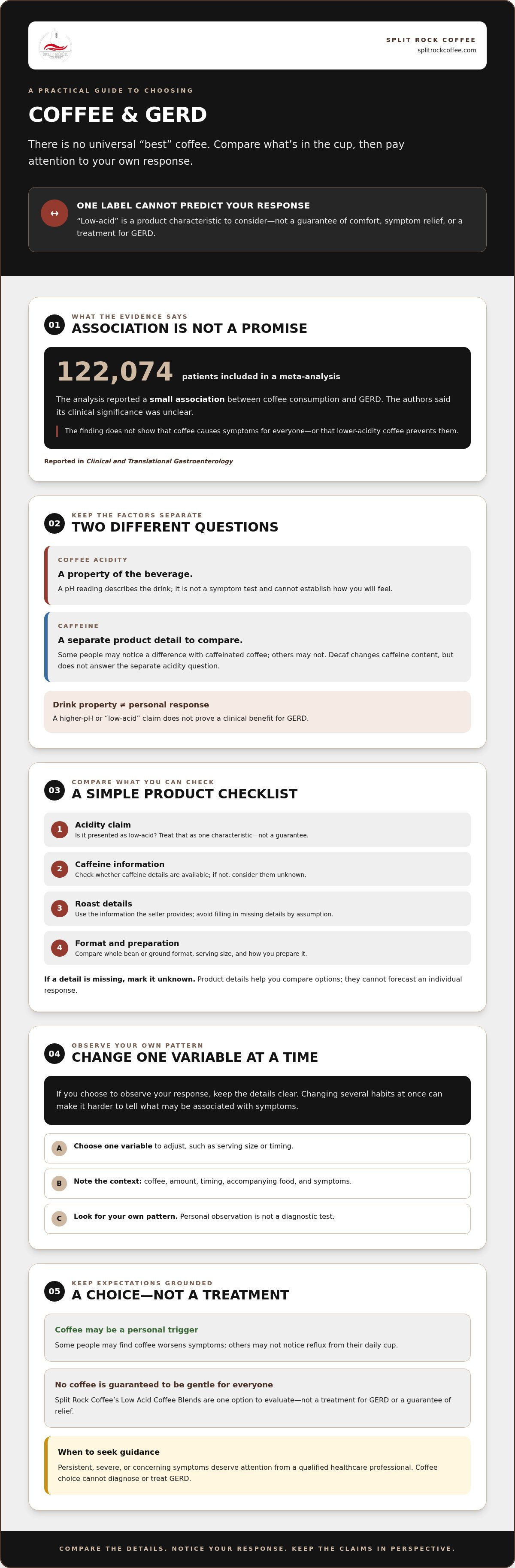
The best coffee for GERD sufferers 2026 may not be the one with the boldest “low-acid” label. A 2026 meta-analysis in Clinical and Translational Gastroenterology, covering 122,074 patients, found a small association between coffee consumption and GERD, but said its clinical significance is unclear. A label alone can’t predict how your body will respond.
If coffee is part of your daily routine, conflicting claims about acidity and reflux can make choosing a bag feel like guesswork. This guide offers a practical way to compare coffee without treating any product as a cure or assuming everyone needs to give coffee up.
We’ll look at acidity claims, caffeine, roast and format, then outline a measured way to observe your own tolerance. Split Rock Coffee’s low-acid blends are one option to evaluate, not a promise of symptom relief. Start with the product details and let your own experience guide your next choice.
Key Takeaways
- The best coffee for GERD sufferers 2026 is a personal fit, so compare product details rather than relying on a label alone.
- Coffee acidity and caffeine are separate factors to consider when choosing what to try.
- Compare available details such as caffeine information, roast and whole bean or ground format.
- When observing your response, change one coffee variable at a time, such as serving size or timing.
- Split Rock Coffee’s Low Acid Coffee Blends are an option to evaluate, not a treatment for GERD or a guarantee of relief.
Best coffee for GERD sufferers: what the choice can, and cannot, do
Coffee affects people differently. One person may enjoy a daily cup without noticing reflux, while another may find that coffee seems to bring on symptoms. That individual response matters more than a universal “best” label. The aim is to compare options thoughtfully, not to promise that a particular bag will make symptoms disappear.
Gastroesophageal reflux disease (GERD) involves repeated reflux of stomach contents into the esophagus, which can cause troublesome symptoms. Coffee may be a personal trigger for some people, but choosing a coffee is not a way to diagnose or treat GERD. Think of the best coffee for GERD sufferers 2026 as a possible personal fit, assessed through product details, careful observation and your routine.
Is any coffee guaranteed to be gentle on GERD?
No. No coffee can be guaranteed to prevent symptoms for everyone, and words such as “low-acid” or “gentle” cannot predict an individual response. Product details can help you decide what to try, but your own experience is the measure of whether a coffee suits you.
A coffee choice can help you compare what’s in your cup; it cannot diagnose or treat GERD. If symptoms persist or concern you, discuss them with a qualified healthcare professional rather than relying on a product label.
What should a GERD-aware coffee buyer compare?
Start with details you can check: whether the coffee is presented as low-acid, whether caffeine information is available, and whether the seller provides roast details. Then consider serving size and preparation, since those are part of the experience you’re evaluating. If a detail is missing, treat it as unknown rather than making an assumption.
Labels can help you compare coffees, but they can’t predict how your body will respond. A low-acid claim is one product characteristic to investigate, not a guarantee of comfort. For more background on acidity labels and brewing choices, explore this ultimate guide to low-acid coffee.
Keep the decision practical: choose a format that fits your routine, note the product details that matter to you, and avoid changing several coffee habits at once if you’re trying to understand your response. The next sections offer ways to compare options and make observations without treating a personal experiment as medical advice.
Coffee acidity, caffeine, and GERD: what the evidence can tell you
Two questions often get mixed together: how acidic a coffee is, and whether drinking it brings on reflux symptoms. They are separate considerations. A coffee’s pH describes a property of the beverage, not what happens in your body after you drink it.
The distinction matters because a higher-pH or “low-acid” label does not prove a clinical benefit for GERD. An April 2026 meta-analysis in Clinical and Translational Gastroenterology, involving 122,074 patients, reported a small statistical association between coffee consumption and GERD. The authors said the clinical significance was unclear and routine coffee avoidance needs further evaluation. The finding does not establish that coffee causes symptoms for everyone, or that choosing lower-acidity coffee will prevent them.
Does coffee acidity cause GERD symptoms?
Not by itself. Beverage acidity can’t establish whether an individual will experience reflux, and a pH reading isn’t a symptom test. Coffee pH describes the drink; your symptoms describe your personal response. Treat acidity claims as one comparison point, not a promise of comfort.
The National Institute of Diabetes and Digestive and Kidney Diseases notes that some foods and drinks, including coffee, may worsen symptoms for some people. Its guidance focuses on identifying personal triggers, not assuming everyone with GERD reacts the same way. See its overview of GERD symptoms and treatment for patient-focused information.
Could caffeine or serving size matter more to some people?
Possibly, but caffeine shouldn’t be treated as a universal cause. Some people may notice a difference with caffeinated coffee, while others may not. Decaf changes caffeine content, but doesn’t answer the separate question of beverage acidity or predict an individual’s response.
Keep the variables clear. A larger serving, a different time of day or different accompanying foods can make it harder to tell what may be associated with symptoms. If you choose to observe your own pattern, note the coffee, amount, timing, food and symptoms rather than changing everything at once. This is personal observation, not a diagnostic test.
Persistent, severe or concerning symptoms deserve attention from a qualified healthcare professional. If you’re comparing product characteristics, Split Rock Coffee’s Low Acid Coffee Blends are one option to assess by their listed details and your own experience, not a treatment for GERD.
How to compare coffee options when you have GERD
Compare what a seller actually states, not what a label might lead you to assume. For the best coffee for GERD sufferers 2026, useful details include a low-acid position, product-specific caffeine information, roast details and available formats. The National Institute of Diabetes and Digestive and Kidney Diseases advises that food and drink triggers vary. Its official dietary guidelines for GERD are a reminder to treat product details as comparison points, not predictions about your symptoms.
Which coffee characteristics are useful to compare?
Use this table to distinguish confirmed details from information that isn’t specified here. Check current product descriptions before buying, since caffeine and roast details can vary by offering.
| Coffee option | Low-acid positioning | Caffeine | Format | Roast |
|---|---|---|---|---|
| Split Rock Coffee Low Acid Coffee Blends | Confirmed offering; specific acidity measurements aren’t provided here | Not specified here | Whole bean and ground formats are offered; check the product listing for the selected blend | Not specified here |
| Split Rock Coffee The Gold Standard Coffee Beans | Low-acid positioning not confirmed | Not specified here | Whole bean and ground formats are offered; check the product listing for the selected coffee | Not specified here |
| Other coffee you’re considering | Check whether the claim is clearly stated and supported with product details | Look for reliable, product-specific information | Confirm the available format | Confirm the roast rather than guessing |
Roast level can help you choose a flavor profile, but don’t treat it as a guaranteed reflux solution. A low-acid claim is also a product detail to assess, not proof of a clinical benefit. If a detail isn’t listed, mark it as unknown rather than filling the gap with assumptions.
Whole bean or ground: which format fits your routine?
Whole beans suit people who prefer to grind coffee just before brewing and don’t mind the extra step. Ground coffee skips grinding, which can make preparation simpler and easier to repeat. Neither format is medically better for GERD. Choose based on your equipment, routine and the consistency you want from cup to cup.
Once you know which details matter to you, explore this guide to best low-acid coffee beans for another practical comparison point.
How to test a coffee choice without confusing the results
Finding the best coffee for GERD sufferers 2026 is less about running a strict test and more about noticing your own patterns carefully. If you choose to compare coffees, keep the process simple: change one variable at a time when appropriate, and don’t treat your notes as a diagnosis or a substitute for medical advice.
What should you track when trying a different coffee?
Use a brief log to record what you drank and what else was happening around that cup. Include:
- The coffee and any product details you can confirm, such as its low-acid positioning or caffeine information.
- How you prepared it, including the brewing method and any additions.
- How much you drank and when, including whether you had it with food.
- Any symptoms you noticed, when they occurred, and relevant context such as other foods or drinks.
If you want to compare two options, keep the rest of your routine as consistent as you reasonably can. For example, changing both the coffee and serving size makes it harder to tell which difference may be associated with symptoms. Don’t continue a trial if symptoms are uncomfortable. A personal log may help you spot a pattern, but it can’t confirm that coffee caused symptoms or diagnose GERD.
When should you ask a clinician instead of changing coffee?
Contact a qualified healthcare professional if symptoms persist, worsen or concern you. The National Institute of Diabetes and Digestive and Kidney Diseases provides information on GERD symptoms and treatment; consult a clinician for advice about your symptoms and care. Don’t stop prescribed treatment or replace it with a coffee change without discussing that decision with your healthcare professional.
Keep the purpose of your notes modest: they record what you noticed, not a treatment plan. If you’re ready to compare a confirmed low-acid option, explore Split Rock Coffee’s Low Acid Coffee Blends and review the product details before choosing one to try.
Choose a GERD-aware coffee you can enjoy, and buy with confidence
A confident choice starts with clear expectations. Product details can help you compare coffees, but no label can predict exactly how your body will respond. Use the facts you can verify, choose a format that suits your routine, and let your own experience guide whether a coffee earns a regular place in your cup.
- Check the product details. Look for clearly stated acidity positioning, caffeine information, roast details and available formats. Treat missing information as unknown.
- Choose a workable format. Whole bean means grinding before brewing; ground coffee skips that step. Pick the option that fits how you make coffee.
- Keep claims realistic. Low-acid positioning describes how a coffee is presented, not a promise to prevent reflux or relieve symptoms.
- Consider personal tolerance. If you decide to try a coffee, pay attention to your experience without treating it as a medical test.
That’s a practical way to approach the best coffee for GERD sufferers 2026: compare what’s known, avoid assumptions and choose based on your preferences and observations.
What can Split Rock Coffee offer a careful buyer?
Split Rock Coffee offers Low Acid Coffee Blends and The Gold Standard Coffee Beans. Assess these options by their current product descriptions, not as treatments for GERD. Whole bean and ground formats are available, so you can choose between grinding before brewing and a more ready-to-prepare option. If you find a coffee you enjoy, the monthly coffee subscription may offer a convenient way to keep it in your routine.
How do you make the next step a confident one?
Before ordering, review the current product details and confirm the available format for the coffee you’re considering. Look for information that matters to your comparison, and don’t infer caffeine content, roast or acidity measurements if they aren’t stated. A low-acid position may help you decide what to evaluate, but it can’t guarantee individual symptom relief.
Take your time and choose with care. Explore Split Rock Coffee to review the available coffee options and find one that fits your preferences.
Choose your next cup with care
The best coffee for GERD sufferers 2026 isn’t a guaranteed fix. It’s a considered choice based on clear product details and your own experience. Coffee acidity and caffeine are different factors, and a low-acid label can’t predict how you’ll feel. Compare what’s confirmed, choose whole bean or ground to suit your routine, and make personal observations without treating them as a diagnosis.
Split Rock Coffee offers Low Acid Coffee Blends and The Gold Standard Coffee Beans in whole bean and ground formats. If you find a coffee you enjoy, a monthly subscription is also available for convenience. The business is a disabled veteran-owned small business founded in 2013.
Review current product details, take your time and choose what fits your preferences. Explore Split Rock Coffee’s low-acid blends and coffee options.
Frequently Asked Questions
Is low-acid coffee better for GERD sufferers?
Low-acid coffee may be worth comparing, but it isn’t proven to prevent reflux symptoms for everyone with GERD. A coffee’s acidity and your body’s response are different things, and a low-acid label alone doesn’t establish a clinical benefit. Check what the seller confirms, then consider your own experience. If symptoms persist or concern you, seek advice from a qualified healthcare professional rather than relying on a product claim.
Can people with GERD drink coffee every day?
Some people with GERD may tolerate daily coffee, while others find that it seems to worsen their symptoms. An April 2026 meta-analysis in Clinical and Translational Gastroenterology found a small association between coffee consumption and GERD, but said its clinical significance was unclear. That evidence doesn’t mean everyone needs to avoid coffee. If you drink it regularly, observe your own response and discuss persistent symptoms with a healthcare professional.
Does dark roast coffee have less acid than light roast coffee?
Darker roasting can reduce some coffee compounds, including chlorogenic acids, but roast level alone can’t tell you whether a coffee will trigger your symptoms. “Less acid” may refer to specific compounds or beverage pH, which aren’t identical measures. Roast is useful to compare for flavor and preference, but it isn’t a guaranteed reflux solution. Check product details when available, and treat missing roast information as unknown rather than assuming.
What type of coffee is best for GERD sufferers?
There’s no single type that suits everyone. The best coffee for GERD sufferers 2026 is a personal fit, chosen by comparing available acidity and caffeine details, roast information and the format you prefer. Consider serving size and preparation, too. Split Rock Coffee offers Low Acid Coffee Blends and The Gold Standard Coffee Beans in whole bean and ground formats, but no coffee can promise individual symptom relief.
Can decaf coffee still trigger acid reflux?
Yes. Decaf has less caffeine than regular coffee, but it can still be associated with symptoms for some people. Decaffeination also doesn’t necessarily change coffee’s pH enough to predict how you’ll respond. If caffeine seems relevant to your experience, you might compare decaf with your usual coffee while keeping other factors as consistent as possible. Track what you notice, and ask a healthcare professional about ongoing or concerning symptoms.
How can I tell whether coffee is triggering my GERD symptoms?
Keep a simple log of the coffee, preparation method, serving size, timing, symptoms and relevant context such as other foods or drinks. If you decide to compare coffees, change one variable at a time when appropriate so your observations are easier to interpret. A pattern in your notes may be useful, but it can’t prove coffee caused symptoms or diagnose GERD. Seek professional advice for persistent or worsening symptoms.
Should I stop drinking coffee if I have GERD?
Not necessarily. Coffee tolerance varies, and current evidence doesn’t establish that everyone with GERD needs to avoid it. Notice whether coffee appears to be a personal trigger, and discuss dietary changes or treatment decisions with a qualified healthcare professional. Don’t stop prescribed treatment or replace it with a coffee change on your own. If symptoms are persistent, worsening or concerning, prioritize medical guidance over experimenting with products.


