Coffee for a Sensitive Palate: Which Blends and Roasts Suit You
A “low-acid” label is a starting point, not a guarantee that coffee will feel gentle. The best coffee for a sensitive palate depends on more than the words on the bag: roast, origin, brewing method, serving size, and your own response all shape the cup. If coffee seems to bring on reflux or stomach discomfort, acidity may not be the only factor.
Looking beyond a label makes sense when a sharp, bitter, or lingering cup is hard to enjoy. This guide explains how to assess low-acid claims, which origins and roast profiles may offer a smoother taste, and how brewing choices change flavor and body. It also covers what is known about coffee’s possible connection to GERD and reflux symptoms, without presenting one choice as a fix for everyone.
Start with the details you can control. Learn what a label can and can’t tell you, then take a measured approach to finding a cup that suits your palate and routine.
Key Takeaways
- Look beyond “low acid” wording and consider how origin and processing shape a coffee’s flavor.
- Choose a roast and brewing style for the cup you enjoy, not just its label.
- When reflux or stomach discomfort is a concern, notice how caffeine and your coffee routine may affect your experience.
- Change one brewing or serving choice at a time to learn which adjustments make coffee more comfortable for you.
Recommended low-acid coffee blends and origins
Start with the label, then consider origin and flavor profile. Finding the best coffee for a sensitive palate takes more than relying on “low acid” wording. A label can guide your choice, but it can’t predict how every cup will feel.
Low-Acid Labels and Comfort
“Low acid” describes coffee marketed as gentler in acidity, but the phrase alone doesn’t establish a measurable threshold. That matters when comparing stomach comfort: a 2024 study found many coffees labeled low acid still measured within the normal coffee pH range. Look for a stated pH or named standard rather than assuming the label guarantees one. If discomfort seems linked to caffeine, acidity may not be the only factor.
Acidity and Brewed pH
pH offers one way to compare acidity in brewed coffee, but it doesn’t capture every sensation. Conventional coffee averages pH 4.8-5.0, while genuinely low-acid coffee is described as pH 5.7-5.9. These figures can help assess a claim, not promise stomach comfort. Coffee flavor also comes from many compounds, and brewing temperature and exposure affect what reaches the cup. Specially processed coffee, mushroom coffee, and chicory root coffee are alternatives to explore.
Processing, Flavor, and Bitterness
Processing shapes flavor, but doesn’t establish a coffee’s pH or bitterness. Washed coffees tend toward clean, bright flavors; natural processing often brings fruity, complex notes. Honey processing can balance brightness with sweetness and a syrupy body. If sharp acidity is unpleasant, tasting notes such as cocoa, nuts, or sweetness may appeal more than citrus. These are flavor clues, not proof of comfort.
Mild Profiles and Typical Costs
Mild, smooth profiles often feature balanced sweetness, gentle nuttiness, and a rounded mouthfeel. Hawaiian coffee is described as smooth and low in acidity, with sweet, nutty hints. Origin is only a starting point: processing and roast shape the final cup, too. There’s no single typical per-pound cost for mild coffee in the United States; origin, processing, roast, and whole-bean or ground format all affect pricing. The best coffee for a sensitive palate is the one whose flavor and preparation suit your preferences.
Choosing roast level and brewing method
Roasting and brewing shape a cup’s flavor, body, and sensory impression. A darker roast isn’t automatically lower in acidity, so choose by taste and preparation, not marketing alone.
Light roasts often taste bright and tart, with floral or fruity notes. Medium roasts tend toward a robust, balanced profile, sometimes with caramel or chocolate undertones. Dark roasts bring bold, deep flavors. The measured pH gap across roast levels is roughly 4.85 to 5.1, so roast color alone won’t tell you how acidic a brew will taste. Medium-dark, rather than charred, can offer a practical middle ground if you want depth without an aggressively smoky flavor.
Match grind size to the method: coarse grounds suit French press and cold brew, while medium grounds work well in drip coffee makers. Fine grounds are recommended for espresso. Pour-over can highlight delicate notes, whereas French press emphasizes body and depth. Paper filters remove some coffee oils that may be harder for certain people to tolerate; unfiltered methods retain more oils and sediment. These differences can affect texture as much as flavor.
Cold brew is often perceived as smoother and less acidic than hot-brewed coffee because it uses slow, cold-water extraction. It may also taste less bitter, though the result depends on the coffee and preparation.
Milk softens coffee’s flavor and can mask subtle aromatics, acidity, and body. Adding water dilutes brewed coffee and makes its taste less concentrated. Neither change guarantees that the drink will feel gentler for everyone.
For a clear sensory comparison, brew the same coffee three ways and note changes in body and flavor. Keep the beans and roast constant, then switch the method. This comparison can help you notice which brewing approach or roast profile you prefer.
Coffee and GERD
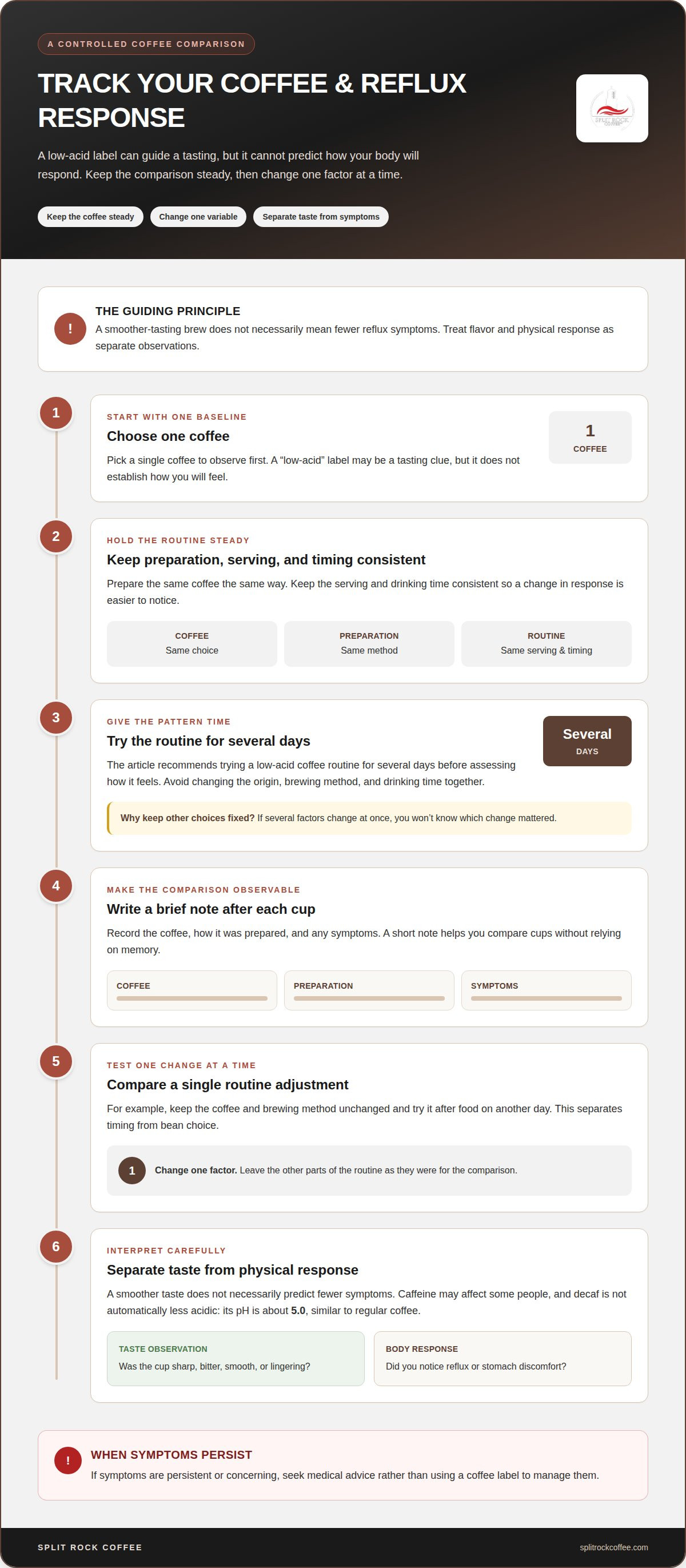
GERD and coffee don’t have a simple one-cup-fits-all relationship. A low-acid label may guide a tasting, but it can’t establish how your body will respond. Perceived acidity also differs from brewed pH, so a smoother taste doesn’t necessarily predict fewer reflux symptoms. Treat flavor and physical response as separate observations.
Caffeine can stimulate the digestive tract and may increase stomach acid secretion in some people. If drinking coffee seems connected with symptoms, consider whether caffeine, the coffee itself, or your morning routine is part of the pattern. Decaf is one comparison to try, but it isn’t automatically less acidic: decaf coffee has a pH of about 5.0, similar to regular coffee. Processing and roast may change the cup’s character without removing caffeine-related effects from regular coffee.
Keep the tasting controlled. Choose one coffee and prepare it the same way, keeping the serving and timing consistent. Try a low-acid coffee routine for several days before assessing how it feels. Avoid changing the origin, brewing method, and drinking time together; otherwise, you won’t know which change mattered. A brief note after each cup can record the coffee, preparation, and symptoms without relying on memory.
Morning habits matter when comparing cups. If coffee is usually your first intake, try it after food on another day, keeping the coffee and brewing method unchanged. This separates timing from bean choice. If a low-acid brew tastes smoother but symptoms continue, taste alone isn’t a useful measure of your response. If symptoms are persistent or concerning, seek medical advice rather than using a coffee label to manage them.
Coffee, reflux, and sensitive-stomach symptoms
Reflux, stomach discomfort, and sensory sensitivity are different experiences, so one coffee profile won’t suit everyone. A bitter cup may be unpleasant without triggering reflux; a smooth-tasting brew may still coincide with symptoms. Notice which experience occurs, then consider the coffee, serving, and circumstances together.
Caffeine can stimulate the digestive tract, and some people associate coffee with urgency, jitters, or a racing feeling. Those signs may point to caffeine as a factor, rather than acidity alone. Robusta coffee has nearly double the acidity of arabica, so bean type is another detail to consider. For a controlled comparison, use an eight-ounce serving and change one coffee-related variable at a time, such as bean type or brewing method.
Flavored coffee may contain added flavorings or sweeteners, and a prepared cup might also include milk or flavored creamer. These ingredients can change sweetness, aroma, and overall taste; individual sensitivities vary, too. To narrow down what affects your palate, compare plain coffee with a flavored version while keeping the serving and preparation consistent. Strong vanilla or syrup-like sweetness can mask bitterness, making the underlying coffee harder to assess.
Timing can shape your experience. Try coffee after a balanced meal rather than as your first intake of the day. If you’re cupping after a heavy meal, wait 90 minutes, then taste slowly and note any changes. A French press retains more oils and sediment than a paper-filtered brew, creating a fuller cup that may feel different from a smooth, filtered profile. Record symptoms separately from taste; sweetness, bitterness, and reflux aren’t interchangeable signals.
Choose a coffee profile that fits your palate, then make a measured comparison with a smoother coffee option.
Split Rock Coffee
Split Rock Coffee offers Low Acid Coffee Blends and The Gold Standard Coffee Beans for exploring different coffee choices. Choose Whole Bean or Ground Coffee to suit your brewing routine. A Monthly Coffee Subscription is an optional way to keep your preferred coffee in rotation.
Use what you’ve learned about roast, brewing method, and your own response to guide your choice. A low-acid label can be a useful starting point; your taste and comfort help shape what you prefer. Split Rock Coffee brings these options together for readers seeking a more considered cup.
For help choosing coffee that fits your palate, contact Split Rock Coffee.
Make Your Next Cup a Thoughtful Choice
Let your own palate guide the next step. Choose a coffee profile that appeals to you, prepare it in a familiar way, and notice which qualities you enjoy. Keep taste and physical symptoms separate, especially as you explore the best coffee for a sensitive palate. A smooth taste reflects preference, not how your body will respond.
When you’re ready to explore, Split Rock Coffee offers Low Acid Coffee Blends, The Gold Standard Coffee Beans, and an optional Monthly Coffee Subscription. These options give you a place to begin as you consider which coffee and format suit your routine. Take your time, stay curious, and let each cup teach you something useful.
Contact Split Rock Coffee to discuss your coffee preferences and take your next step with confidence.
Frequently Asked Questions
Is “low acid” on a coffee label trustworthy?
It’s a useful clue, but the label alone doesn’t establish a measurable acidity threshold. A 2024 study found many coffees marketed as low acid still fell within the normal coffee pH range. Treat the phrase as a description, not a guarantee of stomach comfort. A stated pH offers a more specific comparison, while tasting notes can help you anticipate the cup’s flavor.
Is dark roast lower in acid than light roast?
Not reliably. The measured pH gap across roast levels is roughly 4.85 to 5.1, so roast color alone offers little certainty about brewed acidity. Dark roasts taste deeper and bolder, while light roasts often taste brighter and tarter. If bitterness is your concern, try a medium-dark roast rather than assuming the darkest beans will taste gentlest.
What causes coffee to irritate the stomach?
Caffeine, coffee compounds, serving size, and drinking habits can all matter. Caffeine may stimulate the digestive tract and increase stomach acid secretion in some people. A large cup before breakfast, for example, combines a substantial serving with an empty-stomach routine. To identify a pattern, keep the coffee and preparation steady while changing one factor at a time.
Which coffee beans are lowest in bitterness and acidity?
Arabica is a sensible bean type to explore: robusta has nearly double the acidity of arabica. For a less sharp flavor, look for tasting notes such as cocoa, nuts, or sweetness rather than citrus. Origin and roast shape the result, too, so compare beans by their stated variety and flavor profile instead of relying on one label.
Is light, medium, or dark roast gentlest for a sensitive palate?
Medium-dark can be a useful starting point if you want depth without a charred taste. Light roasts often bring tart, floral, or fruity notes; medium roasts tend toward balanced caramel or chocolate flavors. Since roast level doesn’t reliably predict brewed pH, choose based on the flavors you prefer, then assess your own experience separately.
Which coffee origins are known for sweet, mellow, low-acid flavors?
Hawaiian coffee is described as smooth, low in acidity, and balanced, with sweet and nutty hints. Origin offers a useful flavor clue, but doesn’t determine every cup’s character. Processing and roast influence the final profile, too. Look for a Hawaiian coffee with nutty or sweet tasting notes, then compare its brewed flavor with your preferences.


