How to Bring Out Low Acid Bean Flavor at Home
A darker roast can taste less bright, but roast level isn’t the whole story. Learning how to get the most flavor from low acid beans starts with choosing a coffee you enjoy, then adjusting grind size, water, and additions to balance the cup. Small changes can bring out a smoother, richer brew without masking the coffee’s character.
If your low-acid coffee tastes flat, bitter, or less expressive than you expected, you can adjust the brew instead of settling for that first impression. Roast level influences perceived acidity, while milk, cream, or a little salt can shift the taste. Grind size and water also matter. Use these practical adjustments one at a time, taste the difference, and find a cup that suits you.
Key Takeaways
- Choose a roast that softens sharpness while still letting the beans’ distinctive flavor notes come through.
- Adjust milk, cream, or a small pinch of salt gradually to shape the cup without masking its character.
- Match grind size to your brewing method; a coarse grind is a useful starting point for cold brew and French press.
- Pay attention to your brewing water’s mineral content, since it can shift how balanced or bright the coffee tastes.
1. Roast level and perceived acidity
Acidity has two meanings in a cup: measurable pH and the flavor sensation. Black coffee typically measures between 4.85 and 5.10 pH on a scale from 0 to 14, but that number doesn’t tell you whether it tastes bright, sharp, or mellow. Flavor acidity describes how lively or tangy coffee seems on your palate, and it can vary even when pH is similar.
Roasting changes that impression. Dark roasting breaks down some natural acids, often bringing a softer, more bitter profile; medium-to-dark roasting can reduce perceived sharpness while leaving flavor character intact. Low-acid coffee beans may still offer chocolatey, nutty, fruity, or floral notes, depending on origin and roast. Brazil and Sumatra coffees are often associated with smooth, balanced profiles and little tanginess. Growing conditions, including altitude, soil pH, and bean species, also influence acidity; beans grown above 4,500 feet can develop more complex sugars and acids.
To learn how to get the most flavor from low acid beans, match the brewing method to the cup you want. Cold brew often tastes sweeter and milder, while a French press retains flavorful oils that paper filters can trap. Pour-over can taste brighter with a paper filter, and espresso’s concentrated flavor may make acidity more noticeable. Choose by taste, not pH alone.
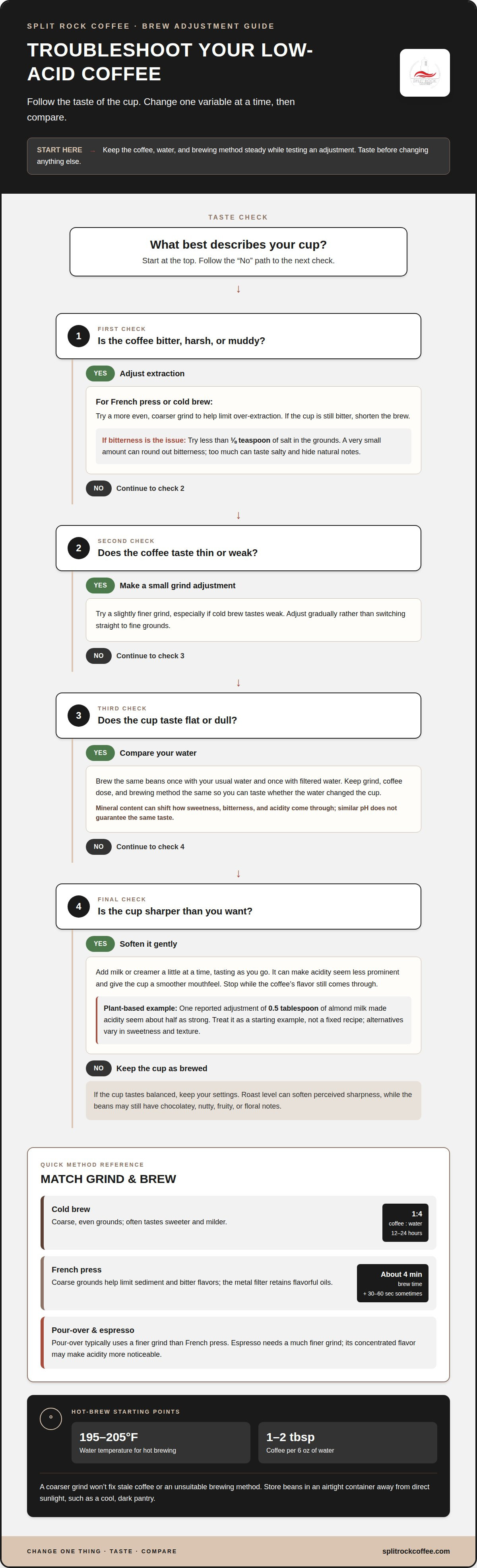
For hot brewing, use water between 195 and 205 degrees Fahrenheit. A useful starting point is one to two tablespoons of coffee per six ounces of water; cold brew can use a 1:4 coffee-to-water ratio. Cold brew typically steeps for 12 to 24 hours. French press takes about four minutes, with an additional 30-60 seconds sometimes used to soften acidity. Pour-over and espresso timing depends on the method and extraction.
Eggshells are another traditional adjustment: dry them, then add one eggshell to the grounds for every four cups of coffee before brewing. Store beans in an airtight container away from direct sunlight, such as in a cool, dark pantry. To get more flavor from low acid beans, protect them from light and air, and keep your storage routine consistent.
2. Milk, cream, and salt as flavor adjustments
To soften a cup without adding acidic ingredients, try milk, creamer, or a small amount of salt. Milk and creamer dilute coffee, which can make its acidity seem less prominent and give it a smoother mouthfeel. Add a little at a time and taste, stopping while the coffee’s flavor still comes through.
Dairy isn’t the only option. Almond milk can soften the taste too: one reported adjustment of 0.5 tablespoon made coffee’s acidity seem about half as strong. Treat that amount as a starting example, not a fixed recipe. Plant-based alternatives vary in sweetness and texture, so taste each addition in the cup rather than changing the grounds or extraction.
Salt works differently from milk. A very small amount can round out bitterness and help a dark roast taste more balanced. Try less than one-eighth of a teaspoon in the grounds, then brew and taste before adding more. Too much salt can make the coffee taste salty and hide its natural notes.
Some people also try baking soda, but use restraint: too much can flatten the coffee’s character and reduce its complexity. Change one ingredient at a time so you can tell whether milk, a plant-based alternative, salt, or baking soda improves the cup. If you’re sensitive to a sharp-tasting brew or it causes stomach discomfort, a smoother taste may be preferable. Flavor adjustments do not change the coffee’s underlying composition.
For a ready-made starting point, explore low-acid coffee blends, then fine-tune the cup with a modest addition. Keep the original brew nearby for comparison; that simple taste test helps you find the balance without covering the beans’ character.
3. Using a coarse grind
Coarse grounds expose less surface area to water than fine grounds, changing how quickly flavor compounds enter the cup. For cold brew and French press, start with coarse, evenly sized grounds. This helps limit over-extraction, which can bring out bitterness and make low-acid coffee taste harsh instead of balanced. Grind consistency matters: a mix of fine particles and large pieces can extract unevenly.
Match the grind to the brewing method. French press uses a metal filter, so coarse grounds help limit sediment and bitter flavors. Cold brew also benefits from coarse grounds during its long steep. Pour-over typically calls for a finer grind than French press, while espresso needs a much finer grind for its short, pressurized extraction. Arabica beans can have distinct flavor notes, but grind size still affects how clearly those notes emerge.
Low-acid coffee can taste flat, bitter, or dull if the grind is too fine for French press or cold brew, the grounds are uneven, or the coffee steeps too long. A coarse grind won’t fix stale coffee or an unsuitable brewing method, but it can help you manage extraction. If the cup tastes bitter, grind coarser or shorten the brew; if it tastes thin, try a slightly finer grind or adjust the method.
Change one variable at a time. Keep the coffee, water, and brewing method the same, then adjust the grind and compare cups. For example, if French press coffee tastes muddy, try a more even coarse grind before changing the water or brew time. If cold brew tastes weak, make a small grind adjustment instead of switching straight to fine grounds. This approach helps you find what brings out a fuller profile without tipping the coffee into bitterness.
4. Water hardness and mineral content
Water is more than a neutral carrier for coffee flavor. Its mineral content affects extraction, shaping how clearly sweetness, bitterness, and acidity come through. Water’s mineral content can affect how coffee tastes, so pH alone may not tell you what to expect in the cup. Two water sources with similar pH can produce different cups because their dissolved minerals differ.
Use the same water source while adjusting your recipe. Taste the same Arabica beans with your usual water, then repeat with filtered water. Keep the grind, coffee dose, and brewing method steady so you can tell whether the water changed the flavor. A flat cup may benefit from a different mineral balance, while a harsh cup may call for a brewing adjustment rather than a search for “perfect” water.
Numbers from individual coffee drinkers show why one measurement can’t serve as a universal target. One person reported drinkable, still-acidic coffee with filtered water measuring 180 ppm; another said water measuring 120 ppm made acidity overwhelming. These are personal observations, not a rule that higher ppm always produces lower acidity. Bean origin, extraction, and brewing choices also shape what reaches the cup.
Try cold brew as a useful comparison: its long steep and cool temperature can yield a naturally milder taste. Brew it with the same water you use for hot coffee, then compare the results. If you’re exploring coffee because of acid reflux or discomfort, taste preference isn’t a measure of health effects, so don’t treat water changes as a remedy. For a consistent starting point, choose whole bean coffee and keep your water source steady as you refine each brew.
For French press, heat water to around 200°F (about 93°C), keeping brewing temperature consistent while you assess how mineral balance shapes the cup.
Split Rock Coffee: Low Acid Coffee Blends
Split Rock Coffee offers Low Acid Coffee Blends for readers who want a low-acid option while refining roast, grind, and brewing choices at home. Choose Whole Bean and Ground Coffee to suit your preferred preparation, then use the adjustments in this guide to shape the cup to your taste.
The Gold Standard Coffee Beans and Monthly Coffee Subscription offer more ways to explore Split Rock Coffee’s selections. The optional subscription can be skipped, paused, or cancelled at any time, making it easy to fit regular coffee deliveries to your routine.
Build a Cup That Feels Like Yours
Think of the next cup as a chance to build your own standard, not a final test. Learning how to get the most flavor from low acid beans means noticing what you enjoy rather than forcing every brew toward someone else’s ideal. Record the taste you want to return to, whether mellow, rich, or gently sweet. Those notes can guide your next choice.
Over time, your notes can become a personal flavor map. You may find that one coffee suits a quiet morning, while another feels right beside a meal or shared conversation. Let your preferences guide the ritual. The goal isn’t to make every cup identical, but to recognize the character you value and make room for it in your routine.
When you’re ready to take that next step, contact Split Rock Coffee and explore a coffee that fits the cup you’re working toward. Keep tasting with curiosity, and let your own palate lead the way.
Frequently Asked Questions
What roast level brings out the most flavor in low-acid coffee beans?
A medium-to-dark roast can be a useful starting point if you want a softer-tasting cup without losing every distinctive note. The ideal level depends on the coffee and the flavors you enjoy. Try the same coffee at different roast levels, if available, and note whether chocolate, nuts, or fruit stand out. Choose the balance you prefer rather than relying on the roast label alone.
What grind size and brewing method work best for low-acid coffee beans?
A coarse grind suits immersion methods such as French press and cold brew, while pour-over and espresso call for grinds suited to their different extraction styles. If a cup tastes dull, change one variable at a time, such as grind consistency or brew duration. Keep the method and coffee dose steady during each comparison to see which adjustment improves the flavor.
How does water quality and mineral content affect the flavor of low-acid coffee?
Dissolved minerals in water can influence which flavors emerge during brewing, so the same beans may taste different with another water source. For a practical comparison, brew two cups using the same coffee and method, changing only the water. Note whether sweetness, bitterness, or brightness shifts. Once you find a cup you enjoy, keep the water source consistent so other adjustments are easier to assess.
Should low-acid coffee beans be stored or rested differently after roasting?
Store beans in an airtight container, away from direct sunlight, such as in a cool, dark pantry.


