
Coffee for Sensitive Stomachs: A Guide to a Gentler Cup
What if the coffee that seems gentlest on paper isn’t the one your stomach prefers? Finding coffee for sensitive stomachs can be frustrating. Advice about acidity, caffeine, and roast level often points in different directions, while your morning cup is a ritual you’d rather not give up.
If coffee leaves you uncomfortable, it makes sense to look for a clear culprit. But there isn’t one rule that works for everyone, and a “low-acid” label isn’t a promise of relief. Your response may depend on the coffee, how it’s brewed, how much you drink, and when you enjoy it.
This guide helps you sort through those factors and test changes one at a time. You’ll be better able to notice what makes a difference without sacrificing flavor or routine. We’ll look at acidity, caffeine, roast and brewing choices, plus practical ways to track your response. Low-acid blends may be one option to explore, not a treatment or guaranteed fix. Start with curiosity, make one measured change, and let your own experience lead.
Key Takeaways
- “Sensitive stomach” describes a personal experience, not a diagnosis or a regulated coffee category.
- Acidity, caffeine, serving size, timing, brewing, and add-ins are variables to consider, but none affects everyone the same way.
- Compare coffee for sensitive stomachs by changing one factor at a time, rather than treating a roast or brewing method as a guaranteed fix.
- Track your coffee, preparation, and how you feel over time. A single day may not reveal a reliable pattern.
- Low-acid coffee blends may be worth exploring, but the label isn’t a promise of digestive comfort.
Coffee for Sensitive Stomachs: What Might Be Behind the Discomfort?
A cup that feels comforting one day may leave you uncomfortable another. That can be frustrating, especially when advice points to a single culprit, such as acidity, without accounting for differences in coffee, habits, or individual response. There isn’t one explanation that fits everyone, and discomfort after a cup doesn’t prove coffee is the cause.
For this guide, “sensitive stomach” means a person’s own report of digestive discomfort they associate with coffee. It’s a practical description, not a medical diagnosis or a regulated coffee category. Coffee’s possible effects vary. This overview of the health effects of coffee offers additional context.
Can coffee affect digestion differently from person to person?
Yes. People may respond differently to the same drink, and one person’s experience can vary with the amount, timing, or additions in the cup. Acidity may be one consideration; caffeine, serving size, and drinking coffee on an empty stomach may be others to observe. These are possible variables, not proof that any one of them causes your discomfort.
Occasional mild discomfort and symptoms that keep returning are not the same situation. If symptoms are severe, persistent, or concerning, seek advice from a qualified healthcare professional rather than relying on a coffee change to explain or manage them.
Is coffee acidity the only factor to consider?
No. Acidity describes a property of brewed coffee, but a less sharp taste doesn’t guarantee greater digestive comfort. Caffeine and daily habits deserve separate attention, too. Consider how much you drink, when you drink it, how it’s prepared, and what you add, such as milk or sweetener. Changing several things at once makes it harder to tell which, if any, variable matters to you.
If you want to understand acidity and low-acid options in more detail, explore this complete low-acid coffee guide. Treat low-acid coffee as an option to compare, not a promise of symptom relief. The same measured approach applies to coffee for sensitive stomachs: observe your own pattern, and don’t assume one label or brewing choice works for everyone.
How Acidity, Caffeine, and Coffee Habits May Affect Comfort
Once you’ve noticed a pattern, separate what’s in the cup from how and when you drink it. Acidity, caffeine, portion size, timing, and add-ins can each be useful variables to observe. None explains everyone’s experience, and changing one at a time makes your observations more useful.
What does coffee acidity mean in practical terms?
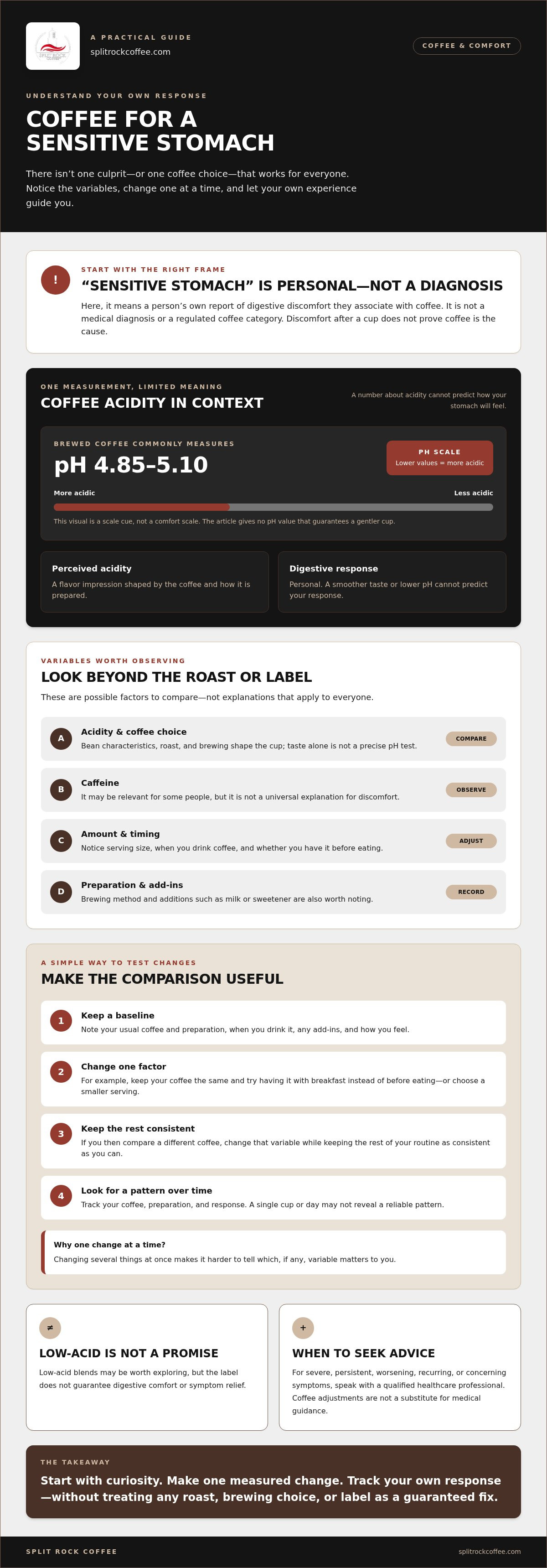
pH measures how acidic or alkaline a solution is on a scale where lower values are more acidic. Brewed coffee commonly measures around pH 4.85 to 5.10, but that number doesn’t tell you exactly how sour it will taste. Perceived acidity is a flavor impression shaped by the coffee and its preparation, while digestive response is personal. A smoother-tasting or lower-pH cup can’t predict how your stomach will feel.
Bean characteristics, roast, and brewing all shape the cup, and taste alone isn’t a precise pH test. A coffee that tastes bright may still suit you, while one that tastes mellow may not. Treat acidity as one comparison point, not a verdict about comfort.
Could caffeine, timing, or serving size matter?
Caffeine may be relevant for some people, but it isn’t a universal explanation for digestive discomfort. The Cleveland Clinic discusses how coffee can trigger acid reflux, including caffeine and coffee’s natural acids as possible considerations. That context can help you form questions, but it can’t identify what’s behind your own symptoms.
Run a simple test. Keep your usual coffee and preparation the same while observing one habit, such as drinking it with breakfast instead of before eating, or choosing a smaller serving. Note what you drank, when you drank it, and any add-ins such as milk or sweetener. If you then want to explore a different coffee, change that variable while keeping the rest of your routine as consistent as you can.
Patterns matter more than a single cup or day. If symptoms recur, worsen, or concern you, speak with a qualified healthcare professional. Coffee adjustments aren’t a substitute for medical guidance. Once you have a clearer baseline, you can explore low-acid coffee blends as one option to test, without treating the label as a promise of relief.
Which Coffee Choices Are Worth Comparing for a Sensitive Stomach?
There’s no universal “gentlest” roast or brewing method. Treat each choice as a small experiment, not a ranking: select one variable to compare, keep the rest of your routine steady, and record both flavor and how you feel. This makes the search for coffee for sensitive stomachs more personal and less dependent on broad promises.
Does roast level determine whether coffee is gentle?
Roast level strongly shapes flavor, but taste alone can’t tell you how your body will respond. Darker coffee may taste bolder or more roasted, while lighter coffee may seem brighter, but neither impression guarantees better tolerance. Claims about roast and chemical composition need evidence, and even a measured difference in a coffee doesn’t predict an individual’s symptoms. Compare roasts by enjoyment and your own observations, not by color alone.
Should you try decaf, a different serving size, or another brew?
Decaf can help you test whether reducing caffeine seems to matter, but it isn’t caffeine-free by definition or a promise of comfort. Serving size and preparation are also worth comparing. Northwestern Medicine outlines several reasons coffee can upset your stomach, but general explanations can’t identify your personal trigger.
Use this comparison as a starting point. Change one row at a time and briefly note the taste and your response.
| Variable | What to compare | What to notice |
|---|---|---|
| Roast | Light, medium, or dark | Flavor preference and your response |
| Caffeine | Regular or decaf | Whether a lower-caffeine choice seems to make a difference |
| Serving size | Your usual amount or a smaller serving | Whether amount changes your experience |
| Preparation | Your usual brew or another method | Flavor, strength, and response, while keeping other variables steady |
Don’t switch roast, caffeine level, serving size, and brew method all at once. If several factors change together, it’s harder to tell what mattered. For a focused product comparison, see this guide to choosing low-acid coffee beans. Split Rock Coffee’s low-acid blends are another option to explore, not a guaranteed solution. You can browse low-acid coffee blends as part of your own comparison.
How to Test Coffee Changes Without Guesswork
A simple log can help you spot patterns without turning every cup into a test. Begin with your usual routine, then adjust one coffee-related variable at a time. Keep prescribed treatment and medical advice in place. A coffee trial isn’t a reason to stop medication or delay care.
What should you track during a coffee trial?
Record the basics in a notebook or phone. Keep your routine as consistent as practical, but note that sleep, meals, stress, and other day-to-day changes can affect how you feel. The goal isn’t to prove cause from one cup. It’s to gather a useful record you can review or share with a clinician.
- Step 1: Set a baseline. For several usual coffee occasions, note what you drink and how you prepare it without deliberately changing your habits.
- Step 2: Choose one variable. For example, try a smaller serving while keeping your coffee, timing, preparation, and add-ins as similar as possible.
- Step 3: Observe and record. Make brief notes over multiple occasions. If you see a possible pattern, check whether it repeats before drawing a conclusion.
- Step 4: Test another change only when ready. You might compare a different coffee or adjust timing, but avoid stacking changes that make the result hard to interpret.
A quick entry could look like this: Time: morning; serving: usual mug; coffee: same blend; preparation: drip; add-ins: milk; context: with breakfast; symptoms: what you noticed and when. Describe symptoms in your own words rather than trying to diagnose them. Daily life won’t be perfectly controlled, and that’s okay. A clear, modest log can still help you explain your experience during an appointment.
When should you stop experimenting and ask a healthcare professional?
If digestive symptoms persist, become severe, worsen, or feel alarming, pause the trial and seek individualized medical advice. Don’t use a low-acid label or a change in coffee as treatment for a diagnosed condition. If you’re already receiving care, follow your clinician’s guidance and ask before making changes that could affect your plan.
Careful observation puts you in a stronger position to choose coffee for sensitive stomachs, but it can’t replace professional assessment. When you’re ready to compare options, explore Split Rock Coffee’s low-acid blends as one possible choice to test, not a guaranteed fix.
Finding a Coffee Routine That Fits: Exploring Low-Acid Options
A good routine is one you enjoy and can assess honestly. Notice patterns, test one modest change at a time, and keep what suits you. There’s no universal choice for coffee for sensitive stomachs, and a low-acid label describes how a product is positioned, not a medical outcome or a guarantee of comfort.
How can you choose coffee while keeping expectations realistic?
Start with the cup you want to drink. Consider flavor, how you brew, and whether you prefer whole beans or ground coffee. Then check the product’s current description, roast details, format, and availability before choosing. Those details help you find a coffee that fits your routine, but they can’t predict exactly how you’ll respond.
Split Rock Coffee offers low-acid blends in whole-bean and ground formats. They may be worth including in a personal comparison, without assuming they’ll relieve symptoms. For more background on what low-acid positioning can and can’t tell you, read this guide to coffee and stomach comfort.
What is a simple next step for your next cup?
Keep the next step small. Choose one change, such as trying a different coffee while keeping your usual serving size and preparation. Jot down what you drank, how it tasted, and how you felt. Look for a pattern across more than one occasion rather than treating a single cup as a final answer.
Individual responses differ. If digestive concerns continue or worsen, a healthcare professional can help you decide what deserves attention. Coffee selection isn’t a substitute for medical advice.
If you’re ready to compare options, take a calm look at Split Rock Coffee’s low-acid blends. Choose by the details that matter to your cup, then let your own experience guide what stays in your routine.
Make Your Next Cup a Thoughtful One
The search for coffee for sensitive stomachs doesn’t have to mean giving up the flavor or ritual you enjoy. Acidity, caffeine, serving size, timing, and preparation are all worth considering, but no single roast or label can promise the same experience for everyone. Notice your own patterns, change one variable at a time, and keep what works for you.
Split Rock Coffee’s low-acid blends are one option to explore, available whole bean and ground. They’re a choice to test for taste and personal fit, not a treatment or guarantee of digestive comfort. Split Rock Coffee is a disabled veteran-owned small business founded in 2013.
Explore Split Rock Coffee’s low-acid blends and choose a cup that suits your routine. Take it one thoughtful step at a time. A more enjoyable coffee habit can begin with the next cup.
Frequently Asked Questions
Is low-acid coffee better for a sensitive stomach?
Low-acid coffee may be worth trying, but its label doesn’t establish that it will prevent discomfort or work for everyone. Acidity is only one possible factor; caffeine, serving size, timing, and individual response may also matter. If you’re exploring coffee for sensitive stomachs, change one variable at a time and note what you notice. Seek advice from a qualified healthcare professional if symptoms persist.
Can coffee cause stomach discomfort even if it is low acid?
Yes. Discomfort can still happen because acidity isn’t the only possible factor. Caffeine, how much you drink, when you drink it, additions such as milk, and personal sensitivity may all be relevant, and causes differ between people. A low-acid label can’t diagnose the cause or promise a solution. Keep notes on your routine and how you feel, and contact a healthcare professional if discomfort persists or concerns you.
What kind of coffee is easiest on a sensitive stomach?
There isn’t one kind of coffee that’s easiest for everyone. You might compare a low-acid option, a smaller serving, or decaf while keeping your other habits steady. Treat each as a personal experiment, not medical advice or a guarantee of comfort. Check product descriptions for accurate details about the coffee you’re considering. If symptoms recur or trouble you, discuss them with a qualified healthcare professional rather than relying on a coffee change alone.
Does dark roast coffee have less acid than light roast?
Roast level alone can’t reliably tell you how your stomach will respond. Roast affects flavor, while perceived brightness or smoothness doesn’t predict an individual’s digestive experience. Avoid assuming dark roast is always less acidic or gentler than light roast; chemical comparisons should be based on current, reliable evidence. If you want to compare roasts, change one thing at a time and track taste and response rather than treating roast color as a health measure.
Can drinking coffee on an empty stomach make discomfort worse?
Some people notice a difference based on when they drink coffee, while others don’t. To explore whether timing matters for you, compare your usual routine with having coffee alongside food, keeping the coffee, serving size, and preparation as consistent as practical. Treat the result as an observation, not a universal rule. If symptoms are persistent or severe, seek individualized medical advice instead of relying on timing changes alone.
Is decaf coffee a good choice for a sensitive stomach?
Decaf may be worth comparing if you suspect caffeine plays a role, but it doesn’t guarantee comfort and may not be completely caffeine-free. Other coffee characteristics and personal factors can still matter. Check product information, keep your serving and routine steady, and change only the caffeine variable if practical. If digestive concerns continue, worsen, or feel troubling, ask a qualified healthcare professional for guidance.
When should I talk to a doctor about stomach problems after coffee?
Contact a healthcare professional if symptoms persist, worsen, are severe, or interfere with daily life. That doesn’t mean coffee is necessarily the cause; a clinician can offer individualized guidance. Don’t delay appropriate care while testing coffee choices, and don’t stop prescribed treatment because of an experiment. If symptoms feel urgent or alarming, seek prompt medical help based on reputable medical guidance rather than trying to manage them by changing coffee.


