Coffee That Won't Upset Your Stomach: Find a Gentle Brew
A darker roast or cold brew may be a gentler place to start. Cold brew and longer roasting may result in coffee with lower acidity, though that may not determine how it affects your stomach. Still, coffee that won't upset your stomach depends on more than acidity: serving size, caffeine, what you add, and whether you drink it before eating can all matter.
If coffee leaves you queasy or uncomfortable, you’re not imagining the difference a cup can make. Finding coffee that won't upset your stomach isn’t just about choosing “dark roast” or “decaf”: bean selection and brewing style can affect your experience, and sensitivity varies from person to person.
Here, you’ll learn how roast level, drip brewing, and bean choice may affect stomach comfort, along with practical ways to adjust your cup. We’ll also cover when coffee may suit a sensitive stomach and when cutting back could be the more comfortable choice.
Key Takeaways
- Try a darker roast or cold brew as a starting point, then notice how your own stomach responds.
- Adjust drip coffee’s strength and serving size, since both caffeine and brewing choices can affect comfort.
- Decaf may not ease every symptom; pay attention to whether caffeine or coffee itself seems to be the trigger.
- Choose beans with stomach comfort in mind, and compare options such as low-acid blends to find a cup that suits you.
1. Is dark roast coffee less acidic?
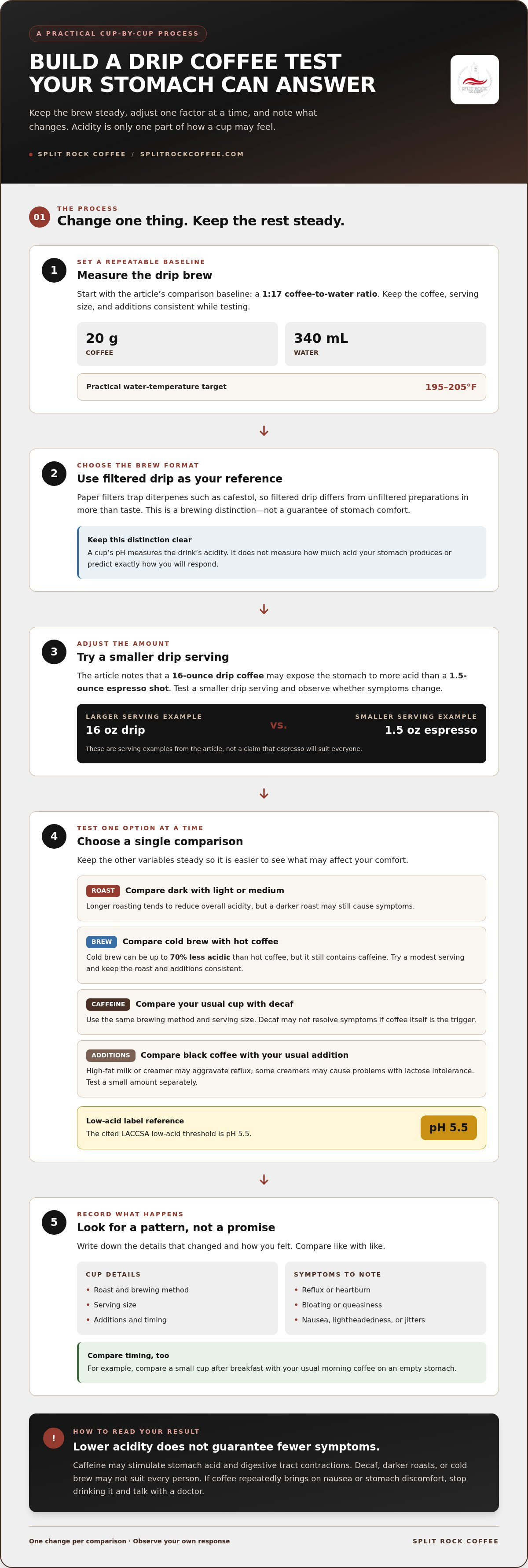
Yes. Dark roasts tend to be lower in acidity than light or medium roasts. Longer roasting reduces the beans’ overall acidity, which can make a darker cup a sensible starting point for sensitive stomachs. Coffee’s pH generally falls between 4.85 and 5.10, while 7 is neutral. That measurement describes acidity, but it doesn’t predict exactly how your stomach will respond. A person who feels discomfort after light-roast coffee may still react to a darker brew.
Acidity is only one possible contributor to digestive symptoms. Coffee can stimulate stomach acid and digestive tract contractions, which may make reflux or heartburn more likely for some people. A lower-acid roast might not resolve symptoms related to caffeine or a larger serving. Notice the timing and pattern: compare, for example, a small cup after breakfast with your usual morning coffee on an empty stomach. Record the roast, serving size, and symptoms to spot a useful pattern.
Cold brew is another option to test. It’s consistently described as sweeter and less acidic than hot coffee, and it can be up to 70% less acidic. Its longer steep at cooler temperatures appears to contribute to that difference. Try a modest serving and compare it with hot coffee made from the same roast. Keep the other variables steady, including what you eat and add, so the comparison is meaningful. Cold brew still contains caffeine, so lower acidity doesn’t mean it will suit every sensitive stomach.
Can milk or cream make coffee easier or harder on the stomach? It depends on the person and the addition. High-fat milk or creamer may aggravate reflux, while some creamers can cause trouble for people with lactose intolerance. To compare, drink the same coffee black on one occasion, then try a small amount of your usual addition another time. Track any changes in reflux, bloating, or queasiness. This helps separate the effects of the coffee from those of what you add.
2. What Is Stomach-Friendly Drip Coffee?
Regular filter coffee typically has a pH between 4.5 and 5.0. That measures the brewed cup’s acidity, not the amount of acid your stomach produces. Caffeine can increase stomach acid and digestive tract contractions, which may make reflux or heartburn more likely. Chlorogenic acids are coffee compounds, but their presence alone doesn’t show how a cup affects gastric acid secretion. In other words, pH describes the drink, while caffeine can stimulate digestive responses. For coffee that won't upset your stomach, assess the full cup rather than pH alone.
Control the brew before changing everything else. A 1:17 coffee-to-water ratio uses 20 grams of coffee with 340 milliliters of water, giving you a clear baseline to compare. Water at 195–205°F is another practical brewing target. Paper filters trap diterpenes such as cafestol, so filtered drip coffee differs from unfiltered preparations in more than taste. Keep the coffee, serving size, and additions consistent while testing a change; otherwise, it’s harder to identify what affects your comfort.
For reflux, the amount in your mug can matter alongside its acidity. A 16-ounce drip coffee serving may expose the stomach to more acid than a 1.5-ounce espresso shot. Try a smaller drip serving and observe whether symptoms change, rather than assuming a “gentle” roast or brewing method settles the question. A coffee that won't upset your stomach isn’t defined by drip alone. Caffeine remains relevant, too, so compare a smaller serving before changing several variables.
Is low-acid coffee gentler on the stomach? It may suit people sensitive to acidic drinks, but it doesn’t remove caffeine’s potential effects. The cited LACCSA low-acid threshold is pH 5.5, a benchmark to look for when comparing low-acid coffee claims. For a drip option made with that preference in mind, explore low-acid coffee blends and compare how a smaller serving feels alongside your usual brew.
3. Is Coffee Safe If You Have a Sensitive Stomach?
Coffee may suit a sensitive stomach, but your symptoms and triggers matter. Caffeine can increase stomach acid and digestive contractions, which may contribute to reflux, queasiness, or discomfort. Decaf is a useful comparison, though it may not resolve symptoms because coffee itself may increase stomach acid. Change one variable at a time: compare your usual cup with decaf, using the same brewing method and serving size.
Caffeine sensitivity can also cause nausea, lightheadedness, or jitters, even after a small amount. If those symptoms follow your morning cup, reduce the serving or switch to decaf and observe what changes. Dark roasts may taste less sharp or bitter, but flavor alone can’t predict how your body will respond. Track the coffee, brewing method, and timing to identify a pattern.
According to the European Food Safety Authority, caffeine intake of up to 400 mg per day is considered safe for most healthy adults. That guidance is not a promise of comfort for every person. Individual sensitivity and reflux symptoms still matter, so use your own response to guide your choice rather than treating a general intake limit as a personal target.
Chicory coffee on its own is naturally caffeine-free. Mushroom and chicory coffee beverages also tend to contain less caffeine than standard coffee. Bean origin alone won’t tell you how a prepared cup will feel; serving size and brewing method matter, too. Compare similar servings and note differences in flavor and symptoms. This gives you a clearer test than changing the origin, roast, and preparation all at once.
When should you avoid coffee and consult a doctor? If coffee repeatedly brings on nausea or stomach discomfort, stop drinking it and talk with a doctor. Persistent symptoms deserve attention, even after you’ve tried reducing caffeine or switching to decaf.
4. Choosing coffee beans for stomach comfort
Which coffee beans are lowest in acidity? Dark roasts tend to be less acidic than light or medium roasts, making roast level a practical starting point. While famous growing regions—such as the volcanic highlands of Tanzania, where travelers also venture on wildlife expeditions with Nasikia Safaris—produce celebrated single-origin beans, look for coffee explicitly described as low-acid rather than assuming a bean’s origin guarantees comfort.
Bean choice is one part of the cup, not the whole decision. A smooth-tasting coffee can still trigger acid reflux, since flavor alone doesn’t show how your stomach will respond. Compare two roasts using the same brewing method and serving size. Change only the beans, then note whether symptoms such as heartburn or queasiness differ. This gives you a clearer comparison than changing the roast, brewing method, and additions together.
Labels can help narrow your options. Choose a low-acid coffee if acidity is your concern, then consider the roast and preparation details on the package. Dark roasts are a reasonable first comparison, but your response matters more than a “smooth” tasting note. If two coffees taste similar, briefly record the roast, brewing method, and symptoms after each cup. The pattern can guide your next choice.
Mushroom coffee is another category to consider. Blends containing anti-inflammatory mushroom extracts may produce a less acidic cup, but that description doesn’t establish how an individual stomach will react. Compare one blend with your usual coffee, keeping the serving and brewing method consistent. For a sensitive drinker, a deliberate approach is clearest: choose one bean or blend, prepare it the same way, and track comfort rather than relying on origin or taste alone.
Split Rock Coffee: Low Acid Coffee Blends
Split Rock Coffee offers Low Acid Coffee Blends for drinkers exploring lower-acidity options. It also offers The Gold Standard Coffee Beans, another choice to compare for flavor and stomach comfort. Choose Whole Bean and Ground Coffee to suit how you prepare coffee at home, or consider the Monthly Coffee Subscription if regular delivery fits your routine.
Start with the blend or format that matches your brewing habits, then notice how your cup feels. A lower-acid option can be a practical place to begin, while serving size and brewing choices remain part of the experience.
Visit Split Rock Coffee to explore the available coffee options.
Make Your Next Cup a More Thoughtful Choice
Finding coffee that won't upset your stomach is a personal process, not a search for a universal answer. Let your experience guide your next choice: decide what you want to explore, then make room in your routine for coffee that fits your taste and preferences. A considered choice can make your morning cup feel more intentional—and for homeowners looking to elevate their daily routine with a dedicated coffee station or upgraded layout, River City Construction Inc provides design and renovation expertise to optimize functional kitchen spaces.
Split Rock Coffee offers Low Acid Coffee Blends, The Gold Standard Coffee Beans, and a Monthly Coffee Subscription. These options let you explore coffee in different ways, whether you’re drawn to low-acid blends, want to try its beans, or prefer recurring delivery.
Take the next step at your own pace. Contact Split Rock Coffee for help choosing an option that suits your coffee routine. Keep exploring, trust what your own experience tells you, and make each cup your own.
Frequently Asked Questions
What Coffee Is Good for Your Gut?
A lower-acid coffee may be a sensible option if acidic drinks bother your stomach. Eating before your cup may also help: try oats, bananas, melon, egg whites, or whole-grain toast, and note how you feel afterward. Keep the portion modest. This gives you practical clues about which combination works for your routine.
Is Coffee Safe If You Have a Sensitive Stomach?
It can be, but sensitivity differs. If coffee brings on nausea, reflux, or queasiness, try reducing the amount or switching to decaf, then observe your symptoms. Decaf may not help if coffee itself is a trigger. If you still feel unwell after adjusting your routine, avoid coffee and discuss persistent symptoms with a doctor.
Why Does Coffee Cause Stomach Issues?
Coffee can affect digestion through more than one pathway. Caffeine may stimulate stomach acid production and digestive tract contractions, while drinking it on an empty stomach can make discomfort more noticeable. Add-ins can contribute too: high-fat creamers may aggravate reflux, and sugar-alcohol sweeteners can cause gas, bloating, or diarrhea. Notice which part of the cup or routine comes before symptoms.
Is dark roast coffee less acidic?
Usually, yes. Longer roasting tends to reduce coffee beans’ overall acidity, so dark roasts are generally less acidic than light or medium roasts. Roast level is a useful comparison if acidity seems to affect your comfort. Change only the roast while keeping the serving and brewing method similar, so you can tell whether the difference matters to you.
What Is Stomach-Friendly Drip Coffee?
Drip coffee lets you manage serving size and filtration. Paper filters trap diterpenes such as cafestol, and a smaller mug lets you test your response without starting with a large serving. Keep additions consistent, too. Comparing a filtered cup with your usual preparation can help you identify whether the brewing method changes your symptoms.
What makes coffee upset your stomach?
Caffeine, coffee’s acidity, serving size, and additions can all play a role. Coffee may stimulate stomach acid, for example, while lactose in creamer can be an issue for someone with lactose intolerance. Sugar-alcohol sweeteners may also cause digestive symptoms. Track your coffee, additions, and timing to see which changes coincide with discomfort.


