Shade Grown Coffee and Acidity: What the Evidence Says
Shade alone doesn’t determine whether a coffee will be less acidic. Whether shade-grown coffee is less acidic depends on how growing conditions and processing interact, and research on green Arabica beans also finds that elevation matters.
It’s easy to assume that coffee grown beneath a canopy will taste gentler. But the evidence calls for a closer look: acidity measured in green beans isn’t the same as the flavor you notice after roasting and brewing.
This article explains what research on shade and green-coffee acidity can and can’t tell you. You’ll see how elevation and processing shape the findings, why shade-grown coffee may taste different without necessarily tasting less acidic, and which factors to consider when choosing coffee to suit your palate.
Key Takeaways
- Shade alone doesn’t determine green-bean acidity; elevation and processing also shape the results.
- Compare growing conditions and processing together to understand why coffee samples can differ.
- Separate acidity measured in green beans from the flavor you experience after roasting and brewing.
- Look beyond acidity when choosing coffee: shade-grown beans may offer distinct flavor characteristics, too.
Interactions between shade and processing
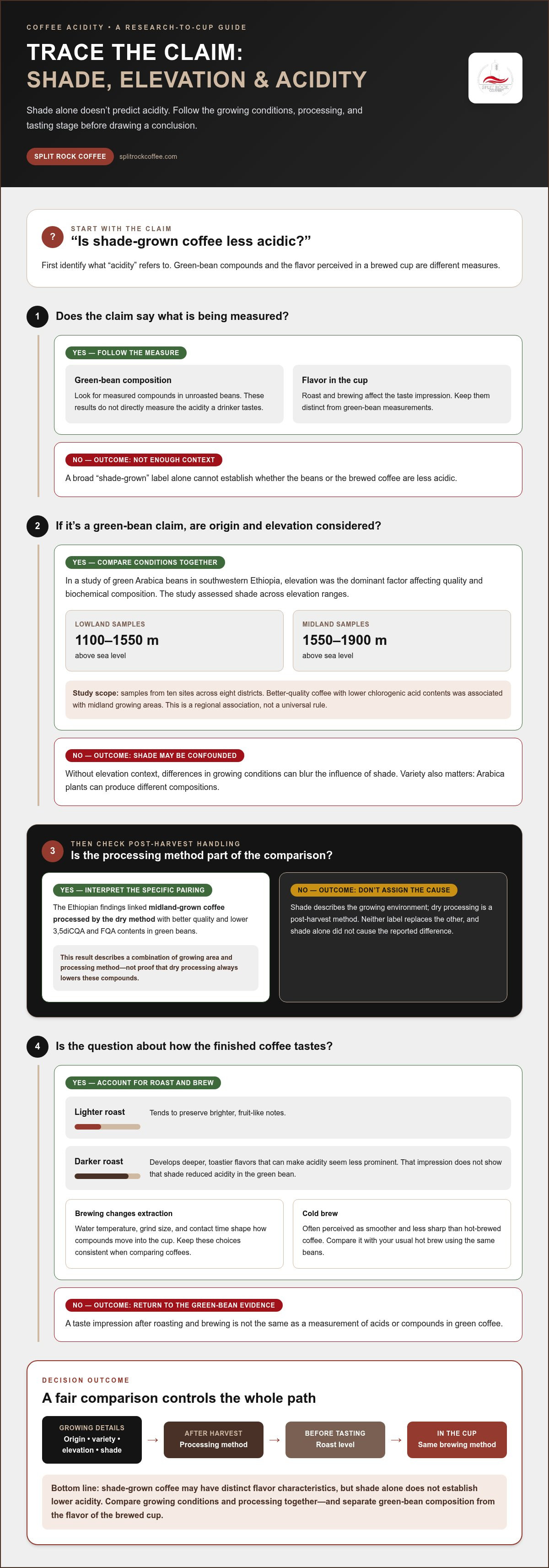
Shade and processing can influence coffee quality together, so a single growing label doesn’t explain every chemical result. In southwestern Ethiopia, researchers examined green Arabica beans from ten sites across eight districts. Their samples came from lowland areas at 1100-1550 m above sea level and midland areas at 1550-1900 m. Comparing samples across these elevation ranges helped reveal that growing conditions and post-harvest handling are connected, not interchangeable factors.
One reported result links midland-grown coffee processed by the dry method with better quality and lower 3,5diCQA and FQA contents. These are measured compounds in green beans, not direct measurements of the acidity a drinker tastes in brewed coffee. The finding therefore points to an interaction: the combination of a midland growing area and dry processing mattered in that comparison. It doesn’t establish that dry processing always lowers these compounds, or that shade alone caused the difference.
Darker roasts often taste less sharp than lighter roasts, but roast level and growing shade are separate influences. Roasting changes the bean’s chemical profile and the balance of flavors in the cup. A roast may taste less bright without showing that shade reduced acidity in the green bean. Keep the comparison clear: green-bean composition, roast character, and brewed flavor describe different stages.
To assess a claim about shade and processing, trace the comparison from growing conditions to processing method and then to the measure being reported. For example, ask whether the result describes green-bean compounds or a brewed cup. The Ethiopian findings concern green Arabica beans and distinguish lowland from midland elevations. They also identify dry processing in the midland result. These details make the findings more useful than a broad claim about all shade-grown coffee.
Processing matters because it follows harvest and can change what researchers measure in green beans. Shade describes the growing environment beneath tree cover; dry processing describes a post-harvest method. Neither label replaces the other. Consider them together, then account for roast level before drawing conclusions about the acidity perceived in a finished cup.
Shade and green coffee bean acidity
Whether shade-grown coffee is less acidic depends on more than canopy cover. In southwestern Ethiopia, researchers assessed the effect of shade on green Arabica bean acidity across elevation ranges. That distinction matters: comparing shaded and exposed plants without accounting for altitude can blur the influence of each growing condition. The findings don’t support treating “shade-grown” as a complete prediction of acidity.
Elevation was the dominant factor affecting green-bean quality and biochemical composition in the study. Better-quality coffee with lower chlorogenic acid contents was associated with midland growing areas. That finding describes an association in southwestern Ethiopia, not a universal rule for every origin, variety, or farm. Bean variety matters too, because different Arabica plants can produce different compositions. Compare coffees by origin and growing details, not shade label alone.
Which brewing methods produce less acidic coffee? Cold brew is often perceived as smoother and less sharp than hot-brewed coffee. For a gentler-tasting cup, try cold brew and compare it with your usual hot-brew method using the same beans.
Does shade-grown coffee cost more than conventionally grown coffee? There’s no single price premium for every shade-grown coffee. Price can reflect origin, processing, sourcing, and roasting, so compare the details on the bag rather than assuming shade determines cost.
How can you find shade-grown coffee in the United States, and what certifications identify it? Look for an explicit “shade-grown” claim and sourcing details on the bag. A certification label identifies shade cultivation only if its published standards specifically define that practice.
To assess whether shade-grown coffee is less acidic, compare coffees by origin, variety, elevation, processing, and roast. Then brew them the same way. This helps separate differences in green-bean composition from flavor changes introduced by roasting and brewing.
What factors determine coffee acidity, including growing conditions and roast level?
Coffee acidity starts with the bean, but the cup reflects several stages. In southwestern Ethiopia, elevation was the dominant factor affecting green Arabica quality and biochemical composition. Shade-grown plants grow beneath native trees and foliage, which shield them from harsh sunlight. That canopy is one growing condition, not a stand-alone measure of acidity. Variety, growing environment, and processing all contribute to the bean’s composition before roasting.
The Ethiopian findings associated midland growing areas with better-quality coffee and lower chlorogenic acid contents. This is a regional association, not a rule that every higher-grown coffee has less acidity. Researchers assessed shade’s effect on green-bean acidity within elevation ranges, showing why comparisons need matching context. Compare coffees from similar origins and elevations before attributing a difference to canopy cover.
Roasting then changes the bean’s character. A lighter roast tends to preserve brighter, fruit-like notes, while a darker roast develops deeper, toastier flavors that can make acidity seem less prominent. That taste impression isn’t identical to the amount or type of acids in green coffee. For a useful comparison, taste the same coffee at different roast levels rather than comparing unrelated beans and assuming roast alone explains the difference.
Brewing adds another variable. Water temperature, grind size, and contact time shape how compounds move from grounds into the cup. For example, a fine grind and longer contact time can produce a different balance from a coarse grind and brief brew. Keep those choices consistent when testing two coffees. Otherwise, a change in extraction can be mistaken for an effect of growing conditions.
Use a clear comparison: note the origin, variety, elevation, processing, roast, and brewing method. Then change one factor at a time, such as roast level, while keeping the brewing recipe steady. Shade may influence green-bean composition, but the Ethiopian evidence places elevation at the center of its findings. The cup’s perceived acidity reflects the full journey from Arabica growing conditions through roasting and brewing.
Does shade-grown coffee taste less acidic or just have different flavor characteristics?
Is shade-grown coffee less acidic? Flavor notes alone can’t settle that question. A natural canopy filters sunlight, and coffee cherries ripen more slowly beneath it. That slower ripening is associated with complex flavors, including caramel, citrus, and cocoa. These notes describe the cup’s character, not a measured acidity level. Citrus can suggest brightness, while caramel or cocoa may create a rounder impression.
Separate flavor from acidity as you taste. Acidity describes a lively, bright sensation; flavor notes identify qualities such as citrus, caramel, or cocoa. A coffee can have both. For example, citrus notes may stand out alongside sweetness, while cocoa may balance that brightness. Shade cultivation doesn’t determine which quality will dominate, since the final cup also reflects processing, roasting, and brewing.
Try a controlled tasting. Brew two coffees with the same grind, water, and method, then compare aroma, brightness, sweetness, and finish. Keep roast levels similar so roast character doesn’t become another major difference. Note whether each cup tastes sharply bright, gently lively, or more rounded. This gives your preference a practical reference point beyond a growing label.
If you’re asking whether shade-grown coffee is less acidic, distinguish what you taste from what bean analyses measure. A flavor note describes sensory experience; measured compounds describe bean composition. They relate to different aspects of coffee, but one doesn’t prove the other. Complex flavors in a shade-grown cup, for instance, don’t by themselves show lower acidity.
Choose by the experience you want: a bright citrus profile, a sweeter caramel impression, or deeper cocoa notes. Brew carefully, take a few tasting notes, and compare the result with your usual cup. If you’d like to explore coffee options for your palate, browse coffee choices.
Split Rock Coffee: The Gold Standard Coffee Beans
Split Rock Coffee offers The Gold Standard Coffee Beans for readers ready to explore coffee by flavor and brewing preference. The evidence shows why shade alone can’t predict a cup’s acidity, so let your own tasting experience guide your choice.
Choose Whole Bean or Ground Coffee to suit how you prepare your coffee, or consider the Monthly Coffee Subscription for regular deliveries. Compare each cup using the same brewing method, then note its brightness, sweetness, and finish. This practical routine helps you identify the profile you enjoy instead of relying on a growing label alone.
Explore The Gold Standard Coffee Beans and choose a format that fits your routine. Visit splitrockcoffee.com to learn more.
Choose Your Next Cup with Confidence
The question of whether shade-grown coffee is less acidic can spark your curiosity, but your palate should guide your next cup. Notice what you enjoy in each brew: a bright edge, a softer impression, or a deeper flavor. A simple tasting note can help you make a more confident choice next time.
If your priority is a gentler-tasting coffee, explore Split Rock Coffee’s Low Acid Coffee Blends. They offer a direct starting point for shoppers looking for lower-acid options, while your brewing method and preferred flavor profile help shape the experience. Choose deliberately, brew with care, and let your own cup set the standard.
For a personal next step, contact Split Rock Coffee and explore a coffee choice that fits your routine. Keep tasting, stay curious, and enjoy finding the cup that feels right for you.
Frequently Asked Questions
Does shade-grown coffee have lower acidity than sun-grown coffee?
Not consistently; the findings don’t show that shade alone makes coffee less acidic. In southwestern Ethiopia, researchers assessed shade’s effect on green Arabica bean acidity across elevation ranges, while elevation had the stronger influence on bean composition. For a useful comparison, look for coffees with similar origins and growing elevations, then consider shade as one factor, not a reliable predictor on its own.
Are there scientific studies comparing acidity in shade-grown and sun-grown coffee?
Yes. A study in southwestern Ethiopia assessed shade’s effects on green Arabica coffee acidity across elevation ranges. Researchers collected beans from ten sites across eight districts, including lowland and midland growing areas. That design helps distinguish shade effects from elevation differences, but the findings describe those Ethiopian samples. They don’t establish a universal acidity outcome for every coffee-growing region or growing system.
Is shade-grown coffee lower in chlorogenic acids or other acids?
Not necessarily because of shade alone. In the Ethiopian findings, lower chlorogenic acid contents were associated with midland growing areas; lower 3,5diCQA and FQA contents were associated with midland-grown coffee processed by the dry method. Those results connect the measured compounds with growing elevation and processing, not a blanket effect of shade. A shade-grown label alone can’t establish a bean’s acid composition.


