Does Cold Brew Have Less Acid? What the Evidence Actually Says
What if cold brew tastes less acidic without having a much lower pH? If you’ve wondered, “does cold brew have less acid,” the answer depends on what you mean by acidity. Cold brew often tastes smoother and less sharp, so the common belief makes sense. But taste and measured acidity are not the same thing.
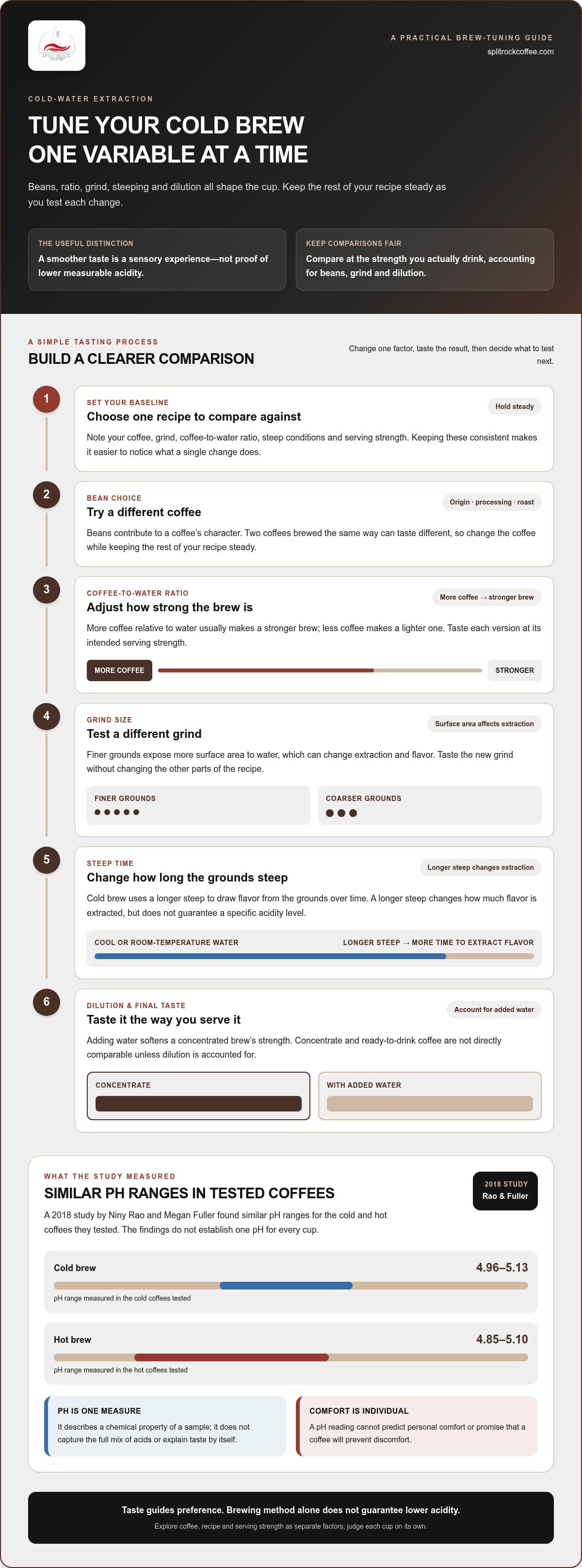
A 2018 study by researchers Niny Rao and Megan Fuller found similar pH ranges for the cold and hot coffees they tested: 4.96 to 5.13 for cold brew and 4.85 to 5.10 for hot brew. That doesn’t mean every cup tastes alike, or that cold brew will prevent stomach discomfort. It means brewing method alone doesn’t guarantee a lower-acid cup.
Here, we’ll explain what pH can and can’t tell you, why cold brew may taste gentler, and how beans, roast, and brewing choices shape your cup. You’ll also find practical ways to choose coffee that suits your taste and routine, including what to look for in coffee labeled low acid, without treating it as a promise of relief.
Key Takeaways
- Does cold brew have less acid? Its smoother taste doesn’t prove it has lower measurable acidity, so distinguish flavor from chemistry.
- Cold water and longer extraction shape a cup’s flavor, but the result also depends on the beans and recipe.
- Compare cold brew and hot coffee by preparation and taste, while remembering that differences in beans and brewing make broad comparisons imperfect.
- Adjust your coffee, water, steeping, and straining routine one step at a time to discover the flavor you prefer.
- For another option, explore coffee labeled low acid and consider bean choice and grind format alongside your brewing method.
Does cold brew have less acid than hot coffee? Start with the short answer
Short answer: cold brew often tastes smoother than hot coffee, but that doesn’t prove it has substantially lower measurable acidity. If you’re asking, “does cold brew have less acid,” the answer depends on what “acid” means and on the coffee and recipe being compared. Brewing method changes extraction, but it doesn’t make every cup predictably lower in acidity.
A 2018 study by Niny Rao and Megan Fuller, published in Scientific Reports, found similar pH ranges in the cold and hot coffees they tested. The study also found differences in total titratable acids, a measure of the amount of acids present. These measurements describe different things, so neither one alone explains flavor or predicts personal comfort.
What does “acid” mean when people talk about coffee?
In chemistry, acidity is often discussed using pH: a lower pH indicates a more acidic solution. But coffee tasting notes such as “bright,” “tangy,” or “sour” describe how a cup tastes, not its pH. Those impressions can also reflect the bean and how it was brewed. Coffee contains multiple naturally occurring acids, each contributing differently to its chemical profile and flavor.
A pH measurement isn’t a symptom forecast. It can’t guarantee that a particular coffee will feel comfortable for you, or that a higher-pH cup will prevent discomfort.
Why can cold brew taste less sharp?
Cold water extracts flavor and aroma compounds differently from hot water. The basic approach, steeping coffee grounds in cool or room-temperature water, is outlined in Cold brew coffee. Extraction varies with the beans, roast, grind, water, and recipe, so there isn’t one acidity result that applies to every batch.
Perceived smoothness comes from the whole cup. A naturally sweet impression, less bitterness, a darker roast, or added water to dilute a concentrate can soften sharp flavors. Those changes can make coffee taste gentler without proving that its pH is lower.
Smoother taste is a sensory experience, not proof of lower acidity. If you’re exploring coffee for stomach comfort, treat brewing style as one part of your personal routine, not a medical solution. Pay attention to how a specific coffee and serving work for you; individual comfort isn’t determined by pH alone.
How cold-water extraction changes the acids and flavors in coffee
Brewing is extraction: water moves through or around ground coffee, dissolving some of its soluble flavor and aroma compounds into the cup. Temperature affects how quickly and selectively those compounds dissolve. Hot water generally extracts compounds faster, while cold brew uses a longer steep to draw flavor from the grounds over time. The result isn’t simply the same coffee with less of every acid. Different compounds respond differently to temperature, time, and the coffee itself.
That’s why a fair acidity comparison needs more than two pH readings. Researchers would need to account for the beans, roast, grind, coffee-to-water ratio, steeping conditions, dilution, and measurement method. If those factors differ, a measured difference can’t confidently be attributed to brewing temperature alone.
Does cold brew have a different pH?
There’s no single pH value for all cold brew, just as there’s no fixed reading for all hot coffee. The result varies with the coffee and recipe, as well as how the sample is prepared and measured. A useful comparison looks at directly comparable brews instead of assuming every cold cup is less acidic than every hot one.
And pH is only one measure. It doesn’t capture the full mix of acids, how the drink tastes, or how it affects an individual’s comfort. A reading describes one chemical property of a sample, but it can’t promise a particular digestive response.
Which brewing variables affect the final cup?
Small changes to your setup can shift the balance of strength and flavor. Consider these variables together:
- Coffee-to-water ratio: More coffee relative to water usually makes a stronger brew; less coffee makes a lighter one.
- Steep time: A longer steep changes how much flavor is extracted. It doesn’t guarantee a specific acidity level.
- Grind size: Finer grounds expose more surface area to water, which can change extraction and flavor.
- Bean choice: Origin, processing, and roast all contribute to the cup’s character, so two coffees brewed the same way can taste different.
- Dilution: Adding water softens a concentrated brew’s strength. Concentrate and ready-to-drink coffee aren’t directly comparable unless dilution is accounted for.
For a practical experiment, change one variable at a time and taste the result at the strength you actually drink. If you’re also exploring coffee labeled low acid, low-acid coffee blends offer another bean-choice option to consider alongside your brewing routine, not a promise about health or symptoms.
Cold brew versus hot coffee: what acidity, flavor, and comfort can tell you
Cold brew and hot coffee can differ in taste, but brewing method alone can’t tell you whether a particular cup will suit your palate or feel comfortable. If you’re asking, “does cold brew have less acid,” compare like with like: the beans, grind, strength, and serving style all matter. For example, don’t compare a cold-brew concentrate with ready-to-drink hot coffee without accounting for dilution.
| Factor | Cold brew | Hot coffee | What the evidence can tell you |
|---|---|---|---|
| Preparation | Ground coffee steeps in cool or room-temperature water over an extended period. | Hot water extracts flavor from ground coffee during brewing. | Temperature and time change extraction, but the recipe also shapes the result. |
| Typical flavor impression | Often described as smooth, mellow, or less sharp. | May taste brighter or more aromatic, depending on the coffee and method. | These are sensory impressions, not direct measurements of acidity. |
| Acidity evidence | Measurements depend on the beans, recipe, and testing method. | Measurements also vary with the coffee and brewing conditions. | A fair comparison requires closely matched recipes and methods. |
Cold brew isn’t automatically low acid, and it isn’t guaranteed to be symptom-free. A smoother taste may be exactly what you enjoy, but it doesn’t establish a universal effect on health. Your own experience can guide your choices, but it doesn’t prove that the same brew will work the same way for everyone.
Is cold brew better for acid reflux or a sensitive stomach?
Responses to coffee vary, and acidity isn’t the only possible factor behind discomfort. A different brewing style may change the flavor without resolving symptoms. If you’re tracking your own response, note the coffee, serving size, strength, and timing, then look for patterns rather than drawing conclusions from one cup. Persistent or concerning symptoms are a reason to seek guidance from a clinician, not to rely on cold brew as treatment or prevention.
Does roast level matter more than brewing temperature?
Roast can change a coffee’s flavor and chemical profile, but its effects depend on the beans and how the cup is prepared. A darker roast isn’t automatically lower in acid, and roast shouldn’t be treated as a guarantee of comfort. For a closer look at roast and coffee acidity, consult the article on that topic elsewhere on the site.
How to make a smoother cold brew and test what works for you
A good cold brew comes from steady adjustments, not a hunt for one perfect recipe. Start with clean equipment and keep notes so you can tell what changes the cup. There’s no single ratio or steep time that suits every bean, grind, or taste.
- Prepare clean equipment. Wash a jar or brewing vessel and strainer before use.
- Add coffee and water. Use the amounts from a recipe you want to try, and record them so you can repeat the batch.
- Steep. Note the grind and how long the grounds sit in the water. Follow the recipe’s directions, then adjust the steep duration in a later batch if needed.
- Strain and taste. Separate the grounds, sample the brew, and add water if it’s stronger than you prefer.
For a wider look at how brewing choices compare, see our guide to coffee brewing methods. The practical lesson applies across methods: change one thing at a time, then taste before making another adjustment.
Which adjustments can make cold brew taste less harsh?
Start with grind consistency. Uneven grounds can make extraction less predictable, while very fine grounds may leave a heavier, harsher impression. If the brew tastes too intense, try diluting it before changing the beans. You can also adjust steep duration in a fresh batch or use fresher coffee if the flavor seems flat. Make one change at a time, and judge the finished drink at the strength you’d actually serve it.
Don’t chase a pH number to fix a flavor you dislike. A smoother cup is a taste result, not proof of lower acidity or a health benefit.
How can you compare cold brew with your usual coffee?
Keep the coffee choice and serving size as similar as practical, and write down the preparation method, grind, steep duration, dilution, and timing. Note the flavor and any personal response, too. This won’t establish a medical cause, but it can help you notice what you prefer and what seems to suit your routine. If symptoms persist or worsen, stop the experiment and seek guidance from a clinician.
If you’d like to explore coffee specifically labeled low acid as another part of your brewing routine, browse Low Acid Coffee Blends. Coffee choice is personal, but it isn’t a substitute for medical advice.
Choosing coffee for cold brew: a practical next step
Cold brew describes a preparation method. Low-acid coffee describes a coffee characteristic or how a product is positioned. They can overlap in your cup, but one doesn’t guarantee the other. If you’re still asking, “does cold brew have less acid,” choosing cold brew alone won’t tell you how a particular coffee will taste or feel. Consider the beans, grind, preparation, and serving style together.
Start with the flavor you want. If you enjoy experimenting, whole beans let you grind the coffee for your brewing method. Ground coffee offers a more convenient starting point. Either way, keep your recipe consistent as you test a new coffee, then adjust one brewing variable at a time. This helps you identify what changes the flavor without assuming that a smoother cup will affect symptoms.
When should you consider coffee labeled low acid?
If you’re looking for a different coffee experience, a blend labeled low acid may be one option to explore alongside cold brewing. Read the product description to understand how the coffee is presented, then choose whole bean or ground coffee based on how you like to prepare your cup. For more background on the term and what it can mean, read our guide to low-acid coffee. Coffee choice is personal, not a treatment or guarantee of relief.
How can Split Rock Coffee support your next cup?
Split Rock Coffee offers Low Acid Coffee Blends and The Gold Standard Coffee Beans in whole bean and ground formats. The Monthly Coffee Subscription is another option if you’d like to receive coffee regularly. Choose a coffee that fits your preferences, then see how it works with your cold-brew recipe or another brewing method.
Build your next cup with intention. Explore Split Rock Coffee’s selection of Low Acid Coffee Blends, The Gold Standard Coffee Beans, and the Monthly Coffee Subscription to find an option that suits your routine.
Choose your next cup with confidence
So, does cold brew have less acid? It often tastes smoother, but that sensory difference doesn’t establish a reliably lower pH or guarantee greater stomach comfort. Brewing temperature changes extraction, while the beans, roast, grind, recipe, and serving strength all help shape the cup. Your own response matters too, so make thoughtful adjustments and seek medical guidance for persistent symptoms.
If you’re looking for another option to explore, Split Rock Coffee offers Low Acid Coffee Blends in whole bean and ground formats. Split Rock Coffee is a Disabled Veteran-Owned Small Business. Choose a format that fits your routine, then brew and taste with care. A low-acid label isn’t a promise of symptom relief, but it can help you find a coffee experience worth exploring.
Explore Split Rock Coffee’s Low Acid Coffee Blends and take the next step toward a cup that suits your taste and daily ritual.
Frequently Asked Questions
Does cold brew have less acid than regular coffee?
Not necessarily. Cold brew often tastes smoother or less sharp than hot coffee, but flavor doesn’t prove lower measurable acidity. The answer to “does cold brew have less acid” depends on the coffee, recipe, and which acidity measure you mean. A 2018 study found similar pH ranges in the cold and hot brews it tested, while other measures of acidity can differ. Don’t treat brewing method alone as a guarantee.
Is cold brew better for acid reflux?
Cold brew isn’t a proven treatment or prevention for acid reflux. Some people may prefer its smoother taste, but individual responses vary, and acidity isn’t the only factor that may affect comfort. If you want to understand your own response, keep notes on the coffee, serving size, preparation, and timing. If symptoms persist or worsen, speak with a clinician rather than relying on a change in brewing method.
Does cold brew have a higher pH than hot coffee?
Not reliably. In a 2018 study, researchers found similar pH ranges for the cold and hot coffee samples they tested, rather than a clear, consistent difference. Results can vary with the beans, recipe, and measurement approach, so that finding shouldn’t be treated as a universal value for every cup. pH describes one chemical property; it doesn’t fully explain flavor or predict how a coffee will affect your comfort.
Can you make cold brew with low-acid coffee?
Yes. Cold brew is a preparation method, so you can use coffee labeled low acid to make it. Follow a recipe suited to your equipment, then adjust the grind, steeping, and dilution to match your taste. Split Rock Coffee offers Low Acid Coffee Blends in whole bean and ground formats. The label can guide your coffee choice, but it isn’t a promise of symptom relief or a medical benefit.
Does dark roast coffee have less acid than cold brew?
That comparison mixes two different things: dark roast describes how coffee is roasted, while cold brew describes how it’s prepared. Roast changes flavor and the coffee’s compound profile, but a dark roast isn’t automatically lower in acidity than every cold brew. The bean and brewing recipe matter too. To compare cups fairly, use the same coffee and serving strength where practical, then change the roast or method one at a time.
How do you make cold brew less acidic tasting?
Adjust the flavor, not a target pH. Try a consistent grind, use fresh coffee, and change steep duration in a new batch if the result tastes harsh. If the brew is too strong, dilute it with water and taste again before making another change. Keep notes and adjust one variable at a time. A smoother cup may suit your palate, but it doesn’t prove lower acidity or guarantee greater stomach comfort.
Does cold brew have less caffeine than hot coffee?
Not always. Caffeine depends on factors such as the coffee used, the amount of grounds, brewing recipe, serving size, and whether a cold-brew concentrate is diluted. A small serving of concentrate can differ substantially from a larger ready-to-drink cup, so brew temperature alone doesn’t determine caffeine content. For a useful comparison, look at the coffee and the final drink as served, rather than assuming cold brew is weaker.


