
Article: Coffee and Silent Reflux: What to Know in 2026
Coffee and Silent Reflux: What to Know in 2026
If you’re dealing with hoarseness, frequent throat clearing, a chronic cough, or a lump-in-the-throat feeling without classic heartburn, you may wonder whether your daily cup is part of the problem. The connection between coffee and silent reflux isn’t as simple as “quit caffeine.” Coffee may affect people differently, and noticing symptoms after a cup doesn’t automatically mean coffee caused them.
Silent reflux, often called laryngopharyngeal reflux (LPR), can affect the throat and voice box, while typical GERD more often involves heartburn. Research on coffee and reflux is mixed, and population-level findings can’t tell you how your own body will respond. Caffeine may play a role for some people, but it isn’t the only coffee component or habit worth considering.
This guide separates established guidance from claims that low-acid coffee prevents reflux. You’ll learn what the evidence can and can’t say, then use a trackable approach to explore your coffee habits without defaulting to an all-or-nothing rule. Low-acid coffee is one product characteristic to consider, not a treatment or a guarantee of symptom relief.
Key Takeaways
- Recognize throat and voice symptoms that can occur with LPR, even without typical heartburn.
- Separate caffeine, coffee acidity, and drinking habits instead of assuming they affect reflux in the same way.
- Learn what regular, decaffeinated, and low-acid labels describe, and why none guarantees symptom relief.
- Track symptoms and routine, then change one coffee-related variable at a time to spot personal patterns.
- Use what you learn about coffee and silent reflux to make a measured choice, including whether to explore a low-acid blend.
What Is Silent Reflux, and Why Does Coffee Come Up?
Laryngopharyngeal reflux (LPR) is the backward movement of stomach contents into the throat and voice box, areas above the esophagus. “Silent reflux” is a common name for LPR because a person may have throat symptoms without the burning chest sensation often associated with gastroesophageal reflux disease (GERD). The name can be misleading: symptoms may be noticeable, and the label alone doesn’t confirm what’s causing them. The overview of Laryngopharyngeal Reflux (Silent Reflux) describes the condition and its possible symptoms.
That distinction helps frame questions about coffee and silent reflux. A throat complaint after a cup may feel like a clear signal, but timing alone can’t establish that coffee caused reflux or that reflux caused the symptom. LPR is a medical consideration, not a conclusion to draw from a single sensation.
How Can Silent Reflux Feel Different From Heartburn?
Heartburn is a burning feeling in the chest, while LPR is often discussed in relation to symptoms centered higher in the throat or voice box. Possible complaints include hoarseness, frequent throat clearing, a persistent cough, or a sensation of a lump in the throat. Some people with LPR don’t experience heartburn.
These symptoms aren’t unique to reflux. Allergies, infections, voice strain, and other conditions can also affect the throat or voice. Even symptoms that linger or seem to follow a familiar pattern can’t diagnose LPR on their own. If they persist, worsen, or concern you, discuss them with a healthcare professional rather than relying on a coffee experiment to explain them.
Why Do People Suspect Coffee?
Coffee is part of a daily routine, so it’s natural to notice patterns: perhaps your voice feels rough after breakfast, or you clear your throat more often on mornings when you have a cup. Record those observations. They can help you ask a more focused question about your habits, but they don’t prove that coffee triggers LPR. Symptoms can fluctuate for reasons unrelated to coffee, and one episode may be coincidence.
It’s useful to distinguish a suspected personal trigger from evidence about cause. You may notice a repeatable change after coffee, but that experience alone can’t show that coffee causes LPR generally. This section offers orientation, not diagnosis or treatment. The aim is to help you understand what symptoms may mean, consider other explanations, and approach your coffee routine carefully. A structured comparison can help you look for patterns without treating any one drink as the answer.
How Coffee Could Relate to Silent Reflux: Caffeine, Acidity, and Habits
Coffee isn’t one variable. A cup contains caffeine and other compounds, has its own level of beverage acidity, and fits into a routine that may include a particular serving size, meal, or time of day. These factors are easy to bundle together when symptoms appear, but they describe different things. Separating them gives you a clearer way to interpret what you notice.
Does Caffeine Matter More Than Coffee Acidity?
Caffeine may affect the lower esophageal sphincter, the muscle that helps limit the backflow of stomach contents, and coffee may stimulate stomach acid production. These are proposed explanations for why some people notice reflux symptoms after coffee, not proof that coffee causes LPR. A 2026 meta-analysis of 40 studies found a slightly higher rate of GERD among coffee drinkers than non-drinkers, but the authors considered the clinical significance unclear. GERD findings also don’t establish a cause-and-effect link for silent reflux.
Individual responses can differ. Beverage acidity and reflux are separate concepts: the first describes a drink, while reflux involves stomach contents moving upward. A coffee’s pH can’t predict whether you’ll have a reflux episode or throat symptoms. Cleveland Clinic’s overview, Coffee and Acid Reflux: What to Know, discusses possible coffee-related factors, including caffeine and acidity. The evidence still calls for caution rather than a universal verdict.
Decaf changes caffeine exposure, but it doesn’t remove every other compound in coffee or guarantee a different symptom response. Likewise, a low-acid label describes a product characteristic. It doesn’t show that the coffee will prevent reflux or suit every person.
Which Coffee Habits Are Worth Noticing?
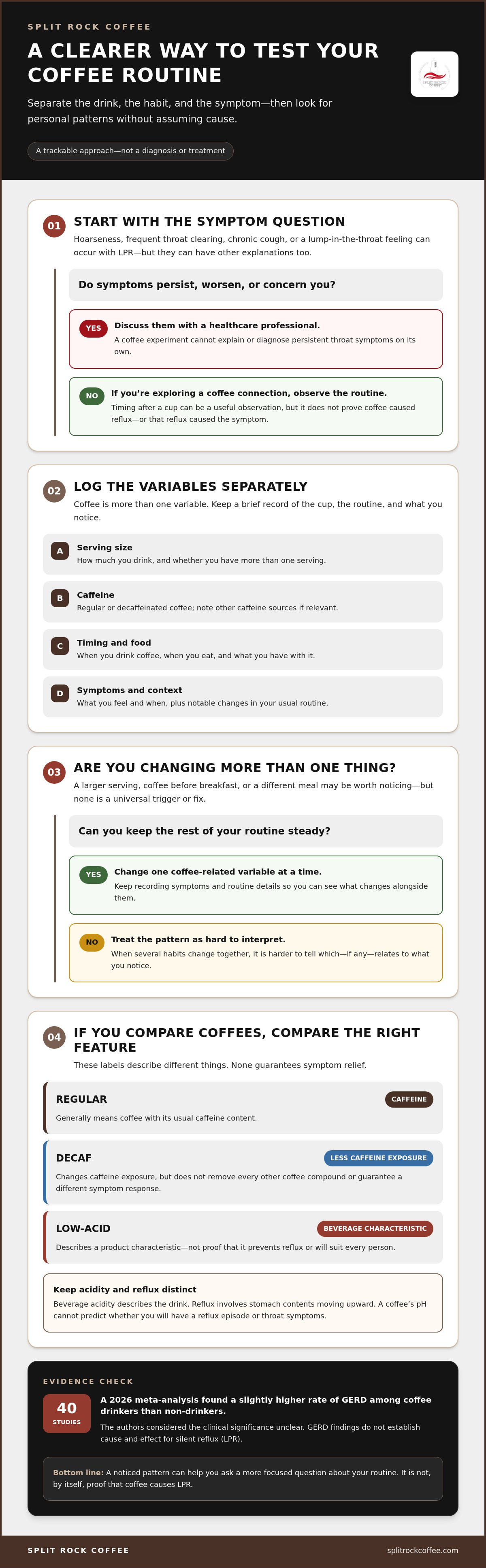
Look at the full routine, not only the drink. If you’re trying to understand coffee and silent reflux, record the details alongside symptoms rather than changing several things at once. A brief log might include:
- Serving size: Note how much you drink and whether you have more than one serving.
- Caffeine: Record whether the coffee is regular or decaffeinated, and note other caffeine sources if relevant.
- Timing and food: Write down when you drink coffee, when you eat, and what you have with it.
- Symptoms and context: Note what you feel and when, along with notable changes in your usual routine.
A larger serving, coffee before breakfast, or a different meal alongside it may be worth observing, but none is a universal trigger or fix. Keep your routine steady enough to notice patterns, then test one change at a time. If you want to try a different coffee characteristic during that process, Split Rock’s low-acid coffee blends are one option to consider, not a treatment for reflux.
Low-Acid Coffee, Decaf, or Regular: What Can You Actually Compare?
These labels describe different features, so treat them as separate comparisons. “Regular” generally means coffee with its usual caffeine content. “Decaf” means coffee processed to remove most, but not necessarily all, of its caffeine. “Low-acid” refers to a coffee marketed for lower acidity, not to a proven effect on reflux. Comparing these options can help you explore preferences, but it can’t establish a diagnosis or guarantee symptom relief.
Does Low-Acid Coffee Mean Reflux-Friendly Coffee?
No. The label describes a coffee characteristic, not a medical outcome. Beverage acidity and reflux are different: a less acidic drink doesn’t necessarily mean fewer reflux episodes or throat symptoms. Your response may also depend on factors such as portion size, timing, and other parts of your routine. For broader context on the category, see this guide to low-acid coffee, and read product descriptions as descriptions, not health promises.
| Coffee choice | What changes | What remains uncertain | Cautious takeaway |
|---|---|---|---|
| Regular | Usual caffeine content | Whether caffeine or another factor relates to your symptoms | Notice your response before drawing conclusions. |
| Decaffeinated | Caffeine is substantially reduced | Whether reducing caffeine changes your symptoms | Compare it while keeping other habits steady. |
| Low-acid | The coffee is marketed for lower acidity | Whether that characteristic affects your reflux symptoms | Consider it as a product feature, not a treatment. |
The comparison works best when you change one feature at a time. For example, switching from regular to decaf while keeping serving size and timing similar gives you a clearer way to observe whether caffeine exposure may matter to you. It still can’t prove caffeine caused a symptom, since symptoms can vary for other reasons.
Could Decaf Be Worth Comparing?
Decaf may be worth trying if you want to examine caffeine as one part of your routine. But it remains coffee, and reducing caffeine doesn’t remove every coffee compound or ensure a particular response. If you’re comparing coffee choices, record what you drink and any symptoms without assuming the result in advance. A guide to low-acid coffee beans offers product-category context, but no label can tell you with certainty how a coffee will feel for you.
How to Test Your Coffee Tolerance Without Guesswork
A consistent log can help you see whether coffee and silent reflux seem connected in your own routine. It won’t diagnose LPR or prove that coffee caused a symptom. The goal is to collect clearer observations, not to run a medical test at home.
What Should a Coffee and Symptom Log Include?
Start by recording your usual habits before changing them. Make each entry factual and specific: what you drank, when you drank it, what you ate, and what symptoms followed. Include days when symptoms don’t appear, too. Those entries help put uncomfortable moments in context.
- Set a baseline. Note your usual coffee type, serving size, whether it’s caffeinated or decaffeinated, and when you typically drink it. Record your usual meal timing and any current treatment or routine changes.
- Track symptoms and timing. Write down what you notice, such as hoarseness or throat clearing, when it begins, and how long it lasts. Avoid labeling a symptom “reflux” unless a clinician has diagnosed it.
- Change one variable. If you choose to experiment, alter a single factor, such as caffeine status or serving size, while keeping other habits as steady as practical. Changing the coffee, meal, timing, and routine together makes the result hard to interpret.
- Look for a repeated pattern. Compare entries across different days. One symptom after one cup is an observation, not proof of cause. If a change makes you feel worse, stop the experiment and seek medical advice as appropriate.
Keep the log manageable. A few notes on your phone or a simple calendar can be enough. Record relevant context, such as an unusual meal or a change in your routine, without trying to track every detail of your day.
When Is It Time to Seek Medical Guidance?
Arrange medical advice if throat or voice symptoms persist, worsen, or interfere with daily life. Symptoms associated with LPR can also have other causes, so a clinician can help assess what’s going on rather than relying on a home log or symptom checklist. Seek urgent care for severe chest pain, difficulty breathing, or difficulty swallowing. If symptoms are concerning, don’t wait for a coffee experiment to run its course.
Don’t stop prescribed medication, change its dose, or delay recommended evaluation because symptoms seem linked to coffee. Bring your notes to an appointment; they may help you describe patterns and questions clearly. This article can support careful observation, but it can’t diagnose silent reflux or replace individualized medical care.
Once you’ve established what you want to compare, you can explore Split Rock’s low-acid coffee blends as a coffee characteristic to test in your routine, not as a treatment or guarantee of symptom relief.
Choosing Coffee With Silent Reflux: A Measured Next Step
There’s no single coffee choice that suits everyone with throat symptoms. Use your own observations, understand what a coffee label describes, and avoid treating a product feature as a medical promise. If your notes suggest a pattern, treat it as a clue to discuss or test carefully, not proof that coffee caused reflux.
How to Choose a Coffee Option to Try
Start with the question you’re trying to answer. If you want to explore whether caffeine matters to your experience, compare caffeinated and decaffeinated coffee while keeping other parts of your routine as similar as you can. If you’re curious about acidity as a product characteristic, you might choose a coffee labeled low-acid, but don’t assume that the label predicts how your symptoms will respond.
Keep the comparison simple. Choose one variable, maintain a written record of what you drink and what you notice, and avoid changing several habits at once. A comfortable cup or a symptom-free day can help you understand your personal preferences, but it can’t establish that a coffee treats or prevents a medical condition. Likewise, a symptom after a cup doesn’t prove the coffee was responsible. Look for patterns across your notes, and seek medical guidance for symptoms that persist, worsen, or concern you.
Explore Split Rock Coffee Low-Acid Blends
Split Rock Coffee’s Low Acid Coffee Blends offer one coffee characteristic you may want to explore as part of a measured comparison. They’re a coffee choice, not treatment for silent reflux, and the low-acid label doesn’t guarantee that symptoms will improve or stay away. Split Rock also offers whole bean and ground coffee, so you can choose the format that fits how you prepare your cup without assuming that format changes its effect on reflux.
For more context on what low-acid coffee means as a product category, the low-acid coffee guide can help you interpret the label without turning it into a health claim.
Keep your next step steady: use what you’ve recorded, choose one characteristic to compare, and give yourself room to notice your response without jumping to conclusions. If you’re ready to explore a different coffee option, take a look at Split Rock’s Low Acid Coffee Blends and decide whether one fits the comparison you want to make.
Make Your Next Cup a Thoughtful Choice
Your next step doesn’t need to be a permanent rule about coffee. Keep learning from your own experience, stay open to other explanations for throat symptoms, and bring persistent or worrying concerns to a healthcare professional. A measured approach leaves room to enjoy coffee while making choices with care.
If a low-acid option is one you’d like to compare, explore Split Rock Coffee’s low-acid blends. They’re available as whole bean or ground coffee, so you can choose a format that suits your routine. Split Rock Coffee is a Disabled Veteran-Owned Small Business, bringing purpose to every cup without making medical promises about coffee and silent reflux.
Choose with curiosity, track what you notice, and take the next step that feels right for you.
Frequently Asked Questions
Can coffee cause silent reflux?
Coffee may contribute to reflux symptoms for some people, but evidence doesn’t establish that it causes silent reflux, or LPR, in everyone who drinks it. A symptom appearing after coffee is a reason to observe your routine, not proof of cause. If the same pattern keeps showing up, share your notes with a healthcare professional, who can consider other explanations and whether further evaluation is appropriate.
Is low-acid coffee better for silent reflux?
Low-acid coffee describes a beverage characteristic, not a proven benefit for LPR symptoms. A lower-acidity label can be one feature to compare if you’re curious, but it can’t predict how your throat will respond. For a fair personal comparison, keep your serving size and routine consistent and record what you notice. Don’t treat a symptom change as proof that the coffee prevented or treated reflux.
Can I drink coffee if I have silent reflux?
You may be able to drink coffee if it doesn’t seem to worsen your symptoms, but there isn’t one rule that fits everyone. Consider what you’ve observed across your usual routine rather than deciding based on one uncomfortable morning. If symptoms are persistent or affecting daily activities, discuss them with a healthcare professional. Don’t use continued coffee drinking, or avoiding it, as a substitute for medical advice.
Is decaf coffee a better choice for silent reflux?
Decaf can be a useful comparison if you want to see whether less caffeine makes a difference for you, but it isn’t a guaranteed solution. It remains coffee, and your response may depend on factors beyond caffeine. Compare similar servings under similar circumstances, and note any changes without changing other habits at the same time. A personal response can guide your choices, but it can’t diagnose LPR.
How can I tell whether coffee is triggering my throat symptoms?
Look for a repeated pattern, not a single episode. Record when you drink coffee, what else you ate or drank, when symptoms begin, and whether similar symptoms occur on days without coffee. Note any changes in other routines, since those details can complicate the comparison. If you choose to test a change, alter one coffee-related factor at a time. Stop if symptoms worsen and seek medical guidance when needed.
Can silent reflux happen without heartburn?
Yes. Laryngopharyngeal reflux may involve throat or voice symptoms without the familiar burning sensation of heartburn. But hoarseness, cough, or throat irritation can have causes unrelated to reflux, so symptoms alone can’t confirm LPR. If they persist, worsen, or interfere with daily life, seek medical assessment rather than relying on a symptom list or assuming coffee is responsible. A clinician can help assess possible causes.


