Is Arabica Coffee Less Acidic? What the Bean Can, and Can’t, Tell You
The bean often praised for a smoother cup isn’t a sure path to lower-acid coffee. So, is arabica coffee less acidic than robusta? It’s often described that way, but species alone can’t tell you what to expect from every bag. And if a coffee tastes bright, tart, or sour, that doesn’t automatically mean its chemical acidity is higher.
That distinction matters when you’re looking for a cup that feels gentler. This guide separates flavor acidity from pH, compares Arabica and Robusta without turning a tendency into a rule, and explains why roast, growing conditions, brewing method, and personal sensitivity can all matter. You’ll find practical ways to compare coffees instead of relying on the bean name alone. If you’re looking for a gentler-tasting cup, Split Rock Coffee’s Low Acid Coffee Blends offer another option to explore, alongside whole bean and ground coffees.
Key Takeaways
- Is arabica coffee less acidic? It may taste smoother than Robusta, but species alone can’t predict the acidity of every cup.
- Compare coffees by changing one factor at a time, such as roast level or brewing method, to find what suits your taste.
- Use flavor notes to understand how coffee tastes, not as proof of its measured chemical acidity.
- When choosing beans, look beyond the Arabica label and consider how the coffee is grown, roasted, and prepared.
- If you’re seeking a gentler-tasting cup, explore low-acid blends alongside your other coffee preferences.
Is Arabica Coffee Less Acidic? Start With the Short Answer
Short answer: Arabica isn’t automatically less acidic than every other coffee. Some comparisons describe Arabica as less acidic than Robusta, but species alone can’t tell you exactly how a particular coffee will taste or what its measurable acidity will be. A cup’s character depends on more than the bean label.
What people mean when they call coffee acidic
In tasting notes, “acidity” often describes a lively flavor, such as a bright, tart, or citrus-like quality. A coffee with lemon-like notes may taste sharp or crisp, but that describes the sensory experience. It doesn’t prove that the coffee has a particular chemical acidity.
Chemical acidity refers to measurable properties, often discussed using pH. That differs from how sour a coffee tastes, and neither a flavor note nor a measurement alone can predict how comfortable a cup will feel for an individual. People respond differently, so keep taste descriptions, chemistry, and personal experience separate.
The direct answer about Arabica beans
So, is arabica coffee less acidic? It may be described that way in broad comparisons, but Arabica isn’t a guarantee of lower chemical acidity. A Coffea arabica overview, for example, characterizes Arabica as less acidic than Robusta. That comparison offers context, but it isn’t a promise about every bean or brewed cup.
Origin, variety, processing, roast, and brewing all influence the result. Two Arabica coffees can taste quite different, and preparation can also shift a coffee’s flavor. A bright-tasting cup isn’t automatically more acidic chemically, just as a smoother taste doesn’t establish a lower pH.
The practical takeaway: Arabica can be one clue, not a verdict. If you’re looking for a gentler cup, pay attention to how a coffee tastes to you and consider its roast and preparation alongside its species. Split Rock Coffee’s Low Acid Coffee Blends are another option to explore by taste preference, without treating flavor as a medical or chemical claim.
What Determines Coffee Acidity Beyond Arabica and Robusta?
A coffee’s character takes shape long before it reaches your cup. Plant variety and growing conditions influence the bean, processing affects how it develops after harvest, and roasting and brewing shape what you taste. The National Coffee Association’s overview of Arabica and robusta coffees provides context on how the species differ, but those broad distinctions can’t account for every coffee’s growing and preparation history.
A cup’s perceived acidity reflects its variety, growing conditions, processing, roast, and brewing method, not species alone. This describes flavor perception. Those factors can also influence a coffee’s chemical composition, but tasting notes aren’t a substitute for measured acidity.
Growing conditions, variety, and processing
Coffees grown in different environments can develop different flavor profiles, and varieties within the same species can differ too. A region’s name, then, isn’t a fixed acidity rating: coffees from one origin won’t all taste alike. Processing, the steps used to prepare coffee cherries after harvest, also contributes to a bean’s character. It’s one influence among several, not a switch that guarantees a low-acid cup.
Coffee also contains chlorogenic acids, a group of naturally occurring compounds that can change during roasting. Their presence is part of coffee’s chemistry, but a flavor note or personal reaction isn’t a diagnosis. “Bright” and “citrusy” describe taste, not a medical conclusion.
Roasting and brewing change the cup
Roasting shifts a bean’s flavor balance. Lighter roasts may preserve more lively, bright notes, while darker roasts often taste deeper and less tangy. But roast color alone doesn’t establish a coffee’s exact chemical acidity or prove that it will feel more comfortable for a particular person. Treat roast as a useful tasting clue, not a health promise.
Brewing matters, too. Grind size, water, temperature, and contact time all affect extraction, which changes the flavors in the cup. If a brew tastes harsh or overly sharp, adjust one brewing variable at a time and note what changes. This gives you a clearer comparison than changing bean species and brewing method at once.
If you’re asking is arabica coffee less acidic, compare the whole cup, not just the label. For broader guidance on choosing coffee around your preferences, read our low-acid coffee guide. You can also explore Split Rock Coffee’s low-acid coffee blends as an option for a gentler-tasting cup.
Arabica vs. Robusta: Which One Tastes Less Acidic?
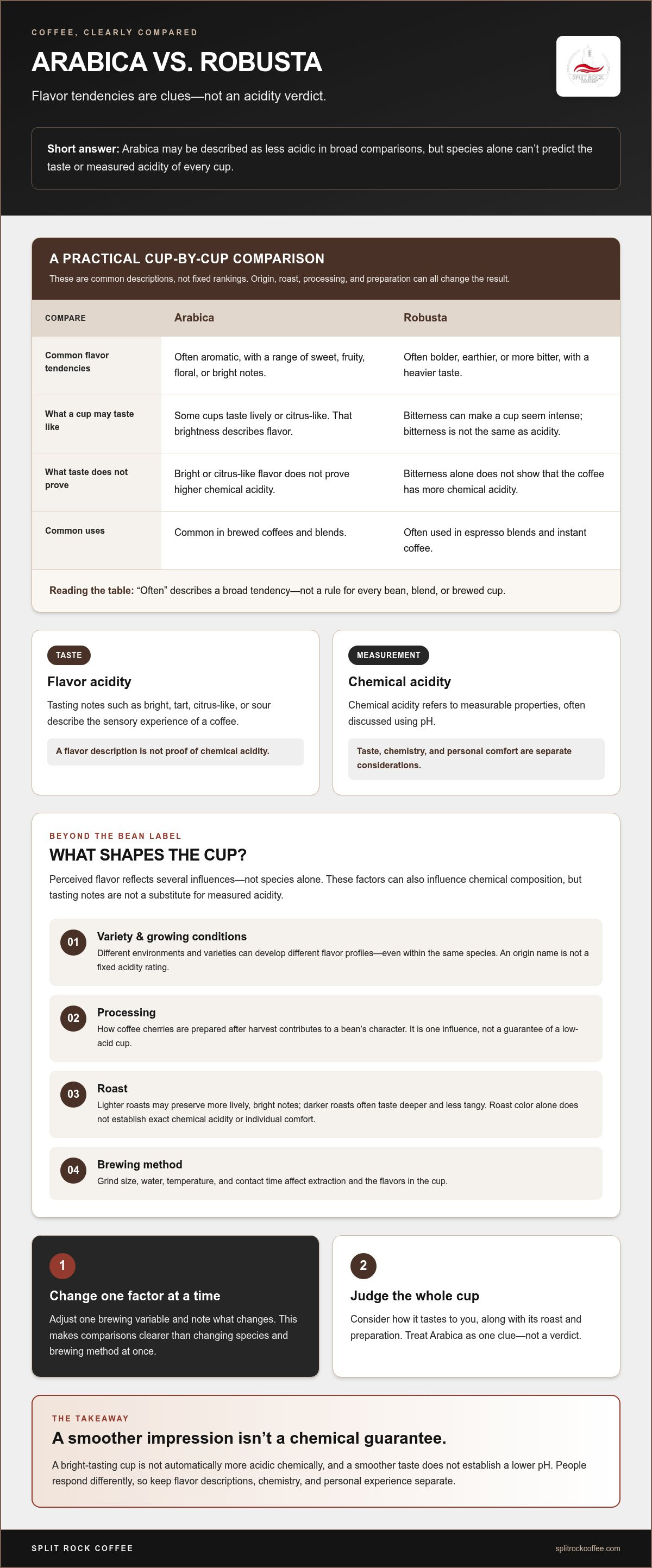
Arabica and Robusta can suggest different flavor expectations, but neither species wins in every cup. Arabica is often associated with varied, delicate flavors, while Robusta is commonly described as stronger and more bitter. These are broad tendencies, not guarantees, and bitterness isn’t the same as acidity.
How Arabica and Robusta commonly differ in the cup
Use this comparison as a tasting guide, not a fixed ranking. A coffee’s origin, roast, processing, and preparation can all change its character.
| Coffee | Common flavor tendencies | What to expect |
|---|---|---|
| Arabica | Often described as aromatic, with a range of sweet, fruity, floral, or bright notes. | Some cups taste lively or citrus-like. That brightness is a flavor impression, not proof of higher chemical acidity. |
| Robusta | Often described as bolder, earthier, or more bitter, with a heavier taste. | Its bitterness can make a cup seem intense, but bitterness alone doesn’t show that it has more chemical acidity. |
Robusta is often used in espresso blends and instant coffee, while Arabica is common in brewed coffees and blends. These are typical uses, not strict rules. A carefully prepared Robusta can taste balanced, and an Arabica coffee can be bold or sharply bright. Roastiness, bitterness, and brightness describe different parts of the flavor experience, so don’t treat them as interchangeable signals.
Why a simple species ranking can mislead
If you’re wondering is arabica coffee less acidic, species can suggest a tendency, but it can’t settle the chemistry of a brewed cup. Arabica coffees can vary, as can Robusta coffees. Roast level and brewing choices can shift the flavors you notice in either species.
Blends add another layer. A bag labeled “Arabica” may contain coffees from different origins or processing styles, while a blend can combine species. The label describes one part of the coffee, not its full flavor profile or measured acidity. No species choice guarantees that a cup will prevent reflux or other symptoms. Personal comfort varies.
For a more useful comparison, taste coffees prepared in the same way and note whether you prefer a brighter profile or a deeper, more bitter one. Then consider roast and preparation before drawing conclusions from the species name. Our best low-acid coffee beans guide offers a focused starting point for evaluating beans beyond Arabica versus Robusta.
How to Choose Coffee When Acidity Is a Concern
Choose by testing the cup, not by betting on a bean label. A consistent comparison can help you identify flavors you enjoy and whether a particular coffee seems to suit you better. It won’t diagnose a health issue, but it can make your next coffee choice more informed.
A practical cup-by-cup comparison
Start with a familiar brewing method and keep your usual serving size and routine steady. Try one coffee at a time, then note what changes. If you switch beans, roast, grind, and brewing method together, you won’t know which factor made the difference.
- Record the details: Note the coffee, roast description, preparation method, and serving size.
- Describe the flavor: Write down whether it tastes bright, citrusy, bitter, roasty, or smooth. These are taste impressions, not acidity measurements.
- Track your own response separately: Briefly record how the cup feels to you, without assuming that a flavor note explains any physical response.
Repeat the comparison with another coffee while keeping preparation as similar as possible. A short log can reveal a preference that “Arabica” or “Robusta” alone wouldn’t make clear.
What to look for on a coffee product page
Look for useful descriptions of the blend, roast, and intended flavor profile. Those details help set expectations, though they can’t guarantee how you’ll experience the coffee. Treat “low acid” as a product description, not a promise of symptom relief or a substitute for a measured chemical result.
Choose a format that fits the way you brew at home. Whole bean coffee lets you grind beans for your preparation, while ground coffee is ready to use. Split Rock Coffee offers both formats, along with Low Acid Coffee Blends for people seeking a coffee selected around a gentler-tasting cup.
When changing coffee is not enough
Coffee preferences can guide your tasting choices, but they can’t explain or treat recurring symptoms. If discomfort is persistent or concerning, speak with a qualified healthcare professional. Don’t use a flavor preference, bean label, or product description to diagnose reflux or decide on treatment.
Ready to compare options with your own routine in mind? Explore Split Rock Coffee’s low-acid coffee blends and use the cup-by-cup approach to find a profile that suits your taste.
Find Your Fit: Arabica, Low-Acid Blends, and Your Daily Cup
Arabica can taste bright, but the species name alone doesn’t settle a coffee’s acidity or tell you how the cup will suit your preferences. If you’ve been asking, is arabica coffee less acidic, keep the practical answer in view: treat bean type as one detail, then consider flavor, roast, preparation, and your own experience together.
Choose by the cup you want to drink
Start with the flavor profile you enjoy. If you like lively, fruity notes, a bright-tasting coffee may appeal to you. If you prefer a deeper, rounder cup, look for descriptions that match that preference. Product descriptions can set expectations, but your own tasting experience is the best guide to what you like.
Format matters to your routine, too. Whole bean coffee suits home brewers who want to grind the beans themselves; ground coffee is ready to use. Split Rock Coffee’s Gold Standard Coffee Beans are available in both formats. For broader context on what quality can mean beyond a single label, explore our guide to the specialty coffee standard.
Split Rock Coffee’s Low Acid Coffee Blends are another option if you’re seeking a gentler-tasting cup. The description can help guide your choice, but it isn’t a promise about chemical acidity or individual comfort. Keep your brewing method steady as you try a new coffee, and note how its flavor compares with what you usually drink.
Make the next step simple
Let your preferences lead. Consider the taste you’re after, the format that fits your home setup, and how the coffee works with your usual preparation. A brief tasting note can help: record the coffee, how you brewed it, the flavors you noticed, and your personal response. That gives you a clearer basis for choosing than relying on Arabica or Robusta alone.
If you enjoy having coffee arrive regularly, Split Rock Coffee also offers a monthly coffee subscription. It’s a way to keep your routine stocked while exploring options that fit your taste. No single bean label tells the whole story. Make your next cup a considered choice, and explore Split Rock Coffee’s selections to find a coffee that suits your daily ritual.
Choose Your Next Cup With Confidence
So, is arabica coffee less acidic? It may have a smoother or brighter-tasting profile than some coffees, but species alone can’t tell you a cup’s chemical acidity or how it will suit your preferences. Roast, origin, processing, and brewing all shape the result, and flavor brightness is not the same as measured acidity.
Choose by the cup you want to drink. Compare coffees using a familiar brewing method, notice the flavors you enjoy, and treat labels such as “low acid” as product descriptions rather than promises of symptom relief. If you’re looking for a gentler-tasting option, Split Rock Coffee’s Low Acid Coffee Blends are one place to start.
Founded in 2013, Split Rock Coffee is a disabled veteran-owned small business offering low-acid blends and Gold Standard Coffee Beans in whole bean and ground formats. Explore Split Rock Coffee’s selections and find a coffee that fits your daily ritual. A better-informed choice starts with one good cup at a time.
Frequently Asked Questions
Is Arabica coffee less acidic than Robusta?
Not necessarily. Arabica and Robusta have typical flavor tendencies, but species alone can’t predict the chemical acidity or perceived brightness of every brewed cup. Growing conditions, variety, processing, roasting, and brewing all play a part. To find what suits your taste, compare specific coffees prepared the same way. An Arabica label by itself doesn’t guarantee a less acidic-tasting cup or lower measured acidity.
Does Arabica coffee have a higher pH?
There’s no single pH value that applies to every Arabica coffee. Results depend on the particular coffee and how it’s prepared and measured, and pH doesn’t capture every part of how a cup tastes. A bright or tart flavor is a sensory impression, not a laboratory measurement. So, is arabica coffee less acidic can’t be answered by species alone, or by taste alone.
Can Arabica coffee cause acid reflux?
People can respond differently to coffee, and choosing Arabica doesn’t guarantee that symptoms will be avoided. Flavor acidity and reflux aren’t the same thing, and a bean label can’t predict an individual response. If coffee seems connected to recurring or concerning symptoms, discuss them with a qualified healthcare professional. Don’t rely on a particular coffee species, roast, or flavor description as a treatment or diagnosis.
Is dark-roast Arabica less acidic than light-roast Arabica?
Roasting can change coffee’s flavor and chemical composition, but dark roast isn’t a universal guarantee of lower acidity or greater comfort. Origin, variety, processing, and brewing also shape the final cup. For a useful taste comparison, prepare both coffees with the same method and note what you notice. Roast color can guide flavor expectations, but it isn’t a medical claim or a promise about personal response.
Does Arabica coffee taste less sour?
Not always. Some Arabica coffees have bright, fruit-like notes, while others taste more balanced or mellow. Sourness can also relate to brewing and extraction, so it doesn’t identify the bean species or reveal chemical acidity on its own. If you prefer a less bright cup, use flavor descriptions as a starting point and compare coffees brewed consistently. Your own taste is the most useful guide to preference.
How can I make Arabica coffee taste less acidic?
First, consider whether the cup tastes sour or simply bright, then keep your recipe steady while adjusting one brewing variable at a time. Grind size, water temperature, and contact time can affect extraction and flavor. You can also choose coffees with flavor descriptions that better match your preferences. A brewing adjustment or bean choice may change taste, but it shouldn’t be treated as a guarantee against symptoms.
Is low-acid coffee always made from Arabica beans?
No. “Low acid” is a product description, not another name for Arabica. A coffee’s taste and character can reflect bean selection, roasting, and brewing, among other factors. Read descriptions as guidance about the product, not a promise of symptom relief. Split Rock Coffee offers Low Acid Coffee Blends to explore by taste preference, without making a health outcome the measure of whether a coffee is right for you.


