Enjoy Coffee Without the Pain by Choosing a Gentler Coffee
The smoothest-tasting coffee isn’t always the gentlest on your stomach. To enjoy coffee without the pain, try a low-acid option or a darker roast, which tends to have slightly less acidity than a light roast. Cold brew is another lower-acid choice, though it contains more caffeine than other coffee.
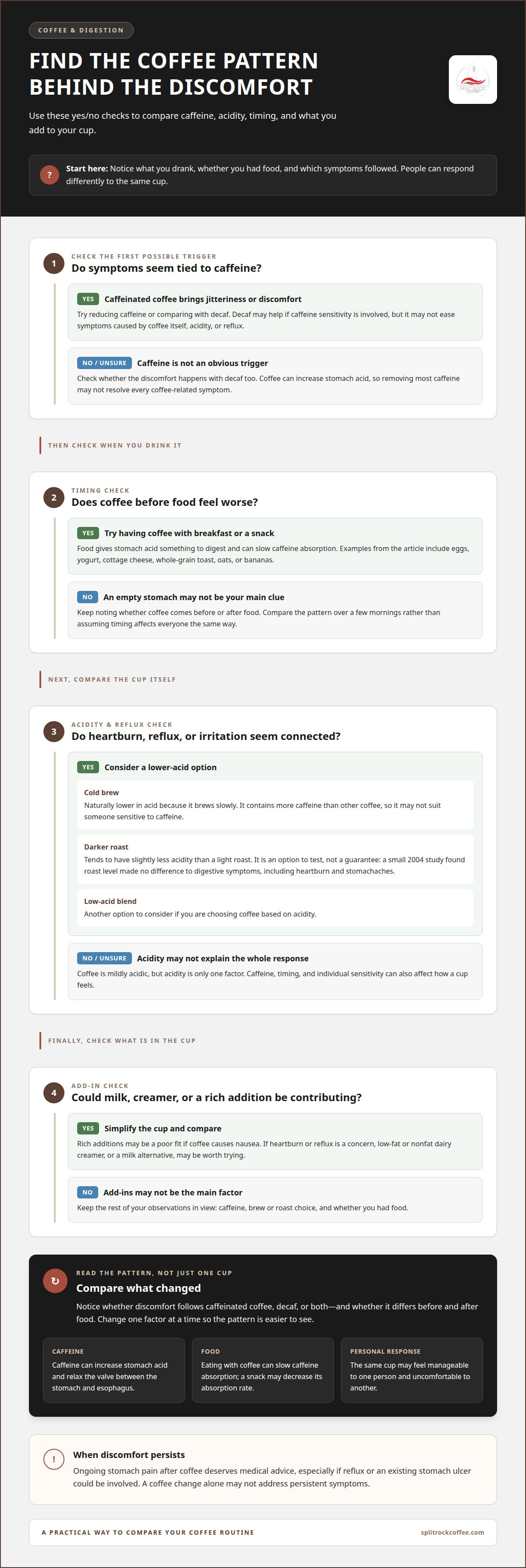
If coffee brings on heartburn, reflux, or stomach discomfort, acidity is only part of the picture. Caffeine can increase stomach acid and relax the valve between the stomach and esophagus, while drinking coffee on an empty stomach may make symptoms harder to manage. You’ll learn how roast and brewing method may affect your choice, why food can make a difference, and what to consider if reflux is part of the problem. The aim is practical: find a coffee routine that suits your digestion without giving up the cup you enjoy.
Key Takeaways
- Try a darker roast or cold brew if you’re looking for a lower-acid cup, while remembering cold brew can contain more caffeine.
- Notice whether caffeine or coffee itself seems to trigger symptoms; switching to decaf may help with caffeine sensitivity but may not ease every digestive issue.
- Having coffee with breakfast or a snack may make it gentler than drinking it on an empty stomach.
- If reflux is a concern, consider how coffee affects your symptoms and try pairing it with low-acid, high-fiber food such as oats or bananas.
What Coffee Should You Drink?
To enjoy coffee without the pain, consider whether caffeine, acidity, or timing triggers your symptoms. The FDA Dietary Guidelines for Americans describe moderate intake as three to five cups daily, or about 400 milligrams of caffeine.
Caffeine and Digestive Symptoms
Caffeine can affect digestion, contributing to symptoms such as jitteriness or an urgent bowel movement. Its effects can begin within 15 minutes, though the full impact may take up to an hour.
People respond differently: the same cup may feel manageable to one person and uncomfortable to another. Caffeine sensitivity can make symptoms more noticeable, while reflux or a stomach ulcer may also affect how coffee feels. Coffee can increase stomach acid, which may worsen symptoms for people who already have an ulcer.
Serving size matters. An 8-ounce serving is considered one serving of black coffee in the FDA Dietary Guidelines for Americans. Three to five cups daily is the stated moderate range, not a target for everyone. Track your serving size and symptoms to help identify your own response.
Decaf and Coffee-Related Pain
Decaf may help if caffeine sensitivity is behind symptoms such as feeling jittery. Reducing caffeine or switching to decaf can help you assess whether caffeine contributes to discomfort.
But decaf may not prevent coffee-related pain. Coffee itself can increase stomach acid, so removing most of the caffeine may not resolve symptoms tied to acidity or reflux. Notice whether discomfort follows caffeinated coffee, decaf, or both. That pattern can help distinguish caffeine sensitivity from a response to coffee itself.
Food can also affect caffeine’s impact. Eating with coffee slows caffeine absorption into the bloodstream, while a snack may decrease its absorption rate. If caffeine seems to hit harder on an empty stomach, try having coffee with breakfast and notice whether symptoms change. A measured approach can help you enjoy coffee without the pain.
Milk, Creamer, and Stomach Comfort
Milk or creamer may suit some people, but rich additions can be a poor fit if coffee causes nausea. Simplifying your cup and avoiding heavy creamers may help you identify whether an addition contributes to discomfort.
If you’re prone to heartburn or reflux, low-fat or nonfat dairy creamer, or a milk alternative, may be worth trying. Keep the cup simple so you can notice whether symptoms change.
Talk with a doctor if stomach pain after drinking coffee persists. Ongoing discomfort deserves attention, especially when reflux or an existing stomach ulcer could be involved. Coffee may aggravate symptoms, but it isn’t the main cause of most peptic ulcers. Persistent symptoms call for medical advice rather than relying on a coffee change alone.
Coffee acidity and stomach irritation
Coffee is mildly acidic, with a pH range of 4.85 to 5.10. It contains chlorogenic and citric acids, which can increase stomach acid and contribute to digestive discomfort. That may matter most if you already notice irritation after a morning cup. Acidity is one factor, though it doesn’t explain every person’s response to coffee.
Does cold brew have less acid than hot coffee? Yes, cold brew is naturally lower in acid because it brews slowly. That may make it easier on a sensitive stomach, though individual responses to coffee vary. If caffeine also affects your digestion, lower acidity alone may not make cold brew a comfortable choice.
Roast level offers another point of comparison. Dark roasts tend to be gentler than light roasts because they have slightly less acidity. Still, a small study from 2004 found roast level made no difference to digestive symptoms, including heartburn and stomachaches. So a darker roast is an option to try, not a guarantee that symptoms will ease.
Coffee acidity shouldn’t be confused with the cause of an ulcer. A study of more than 8,000 people in Japan found no significant link between coffee consumption and ulcer formation, even among people drinking three or more cups daily. Helicobacter pylori infection is the main cause of peptic ulcers; overusing NSAIDs such as ibuprofen and aspirin is another leading cause. If you’re choosing coffee based on acidity, low-acid coffee blends offer one option to consider alongside darker roasts and cold brew.
Digestive effects of coffee on an empty stomach
A morning coffee before breakfast is common: as many as 9 in 10 coffee drinkers start their day this way. But drinking coffee without food can make digestive effects more noticeable for some people. Food gives stomach acid something to digest, and a meal can slow caffeine’s absorption into the bloodstream. Your own response matters, so notice whether symptoms differ between coffee before and after breakfast.
Coffee can prompt bowel activity, not just stomach discomfort. Its acids may stimulate the production of gastrin and cholecystokinin, hormones that trigger digestive-muscle contractions and help move contents through the gut. This response can create an urge to use the bathroom. It’s a digestive effect, though its timing and intensity vary between people.
As many as 1 in 3 coffee drinkers report an urge to have a bowel movement after a cup. It can happen four to 30 minutes after finishing coffee. Caffeinated coffee was 23% more effective than decaf at creating a laxative-type effect in the findings described. These effects may be useful to understand if a quick bathroom trip follows your morning cup.
Pairing coffee with breakfast can change how it feels. A protein-rich choice such as eggs, yogurt, or cottage cheese may slow digestion and caffeine absorption. Fiber-rich foods, healthy fats, and protein are also suggested to address possible digestive effects. For example, try coffee alongside eggs and whole-grain toast, or yogurt with a fiber-rich topping. A snack may also decrease caffeine’s absorption rate. Keep the meal simple enough to identify what helps.
Compare the pattern over a few mornings: note whether you had coffee before food, what you ate, and which symptoms followed. If an empty-stomach cup brings discomfort but breakfast changes the experience, timing may be one factor to adjust. If coffee still causes persistent pain, discuss the symptoms with a doctor rather than treating food timing as the only explanation.
Coffee and heartburn or acid reflux
Coffee can affect reflux through more than its acidity. Coffee and caffeine can increase stomach acid and relax the valve between the stomach and esophagus. When that valve relaxes, stomach contents can move upward and trigger heartburn. If symptoms follow coffee, the timing and the cup itself are useful clues. The goal is to identify your triggers rather than assume every coffee affects you the same way.
Cold brew may be a gentler option for some people, though coffee can affect reflux differently from person to person. That trade-off matters if caffeine is also part of your reflux pattern. Adjusting your coffee and food choices may help you enjoy coffee without the pain: try low-acid, high-fiber foods before your cup. Bananas or oats are examples; whole-grain toast and steel-cut oatmeal provide fiber that can absorb coffee in the stomach and help neutralize stomach acids.
If you’re prone to heartburn or reflux, try low-fat or nonfat dairy creamer, or a milk alternative. Keep additions simple, then notice whether symptoms change. A rich coffee drink can make it harder to identify the trigger, so focus on the coffee and one adjustment at a time. If symptoms persist, discuss them with a doctor.
What are the risks of antacids or acid reducers for coffee-related pain? The key concern is relying on them to cover recurring symptoms instead of discussing persistent reflux with a doctor. Focus on identifying coffee and food triggers, and discuss recurring symptoms before changing how you use medicine. If heartburn repeatedly follows your morning cup or wakes you from sleep, take that pattern seriously and seek medical guidance.
For a lower-acid option, explore low-acid coffee blends as you work toward enjoying coffee without the pain. Pair a cup with food, pay attention to your reflux pattern, and bring persistent symptoms to a doctor.
Split Rock Coffee
Split Rock Coffee offers coffee options to suit your preferences and routine. If you’re weighing whole bean against ground coffee or want coffee delivered through a Monthly Coffee Subscription, these offerings give you a practical place to begin.
The Gold Standard Coffee Beans offer another option as you decide what you enjoy drinking and how you prepare it. Consider what you’ve learned about caffeine, acidity, and having coffee with food when choosing what fits your day. Coffee preferences are personal, and a change in beans alone may not address persistent digestive symptoms.
For help exploring these coffee options, contact Split Rock Coffee.
Choose Your Next Cup with Purpose
A more comfortable coffee routine starts with listening to your body, not forcing yourself to finish a cup that feels wrong. Let enjoyment guide your next choice: think about the flavor you want, how you prepare coffee, and the habits that make your morning feel steady. Exploring dependable home appliances from Rohnson can also help you fine-tune your brewing setup to match your routine. Small, thoughtful choices can help you enjoy coffee without the pain becoming the price of your ritual.
You don’t need to make coffee complicated. Keep your priorities clear, choose a cup that suits them, and give yourself room to adjust your routine as you learn what feels right. If you’d like help exploring your coffee choices, contact Split Rock Coffee.
Keep the ritual. Make it your own, one satisfying cup at a time.
Frequently Asked Questions
The coffee and cortisol relationship: Does coffee cause stress?
Coffee doesn’t automatically cause stress, but caffeine may make some people feel jittery or notice palpitations. That response can feel like stress, particularly if it disrupts your usual morning routine. Cortisol levels typically peak from 7 to 8 a.m., and continue rising for about 30 to 45 minutes after waking. If coffee leaves you feeling unsettled, consider whether caffeine affects you that way at other times, too.
Why does coffee cause stomach pain or acid reflux?
Coffee may contribute to discomfort by increasing stomach acid, while caffeine can relax the valve between the stomach and esophagus. Reflux symptoms may follow when stomach contents move upward. Pain can also reflect an underlying issue rather than coffee alone. Helicobacter pylori infection is the main cause of peptic ulcers, and overusing NSAIDs such as ibuprofen or aspirin is another leading cause.
How can I reduce coffee-related heartburn and stomach irritation?
Start by changing one part of your coffee routine at a time, such as the amount, timing, or additions. Keeping a brief note of what you drank and when symptoms appeared can help reveal a pattern. If you suspect caffeine, try reducing it; if rich additions seem to upset your stomach, simplify the cup. Persistent symptoms warrant a conversation with a doctor.
Should I drink coffee with food or on an empty stomach?
If coffee on an empty stomach seems uncomfortable, try having it with a meal or snack instead. Food slows caffeine absorption, and a protein-rich breakfast can be a practical choice. For example, pair your cup with eggs or yogurt, then notice how you feel compared with drinking coffee before eating. Your response can help you decide which routine fits best.


