
Finding a coffee you can drink again without jitters
Coffee doesn’t have to be an all-or-nothing choice. Finding a coffee I can drink again may start with a smaller serving and noticing whether caffeine, acidity, timing, or added ingredients affect how you feel. A lower-caffeine option can also be a gentler place to begin.
If coffee has left you jittery, unsettled, or awake when you’d rather be sleeping, it makes sense to approach it carefully. Learn how coffee may affect anxiety, digestion, sleep, and energy, and narrow down what seems to trigger discomfort. Practical adjustments to your routine can help you make a more informed choice without assuming every cup affects everyone the same way.
Key Takeaways
- Notice how coffee affects your anxiety, digestion, sleep, and energy; the pattern can help you identify what to adjust.
- Consider how caffeine amount, drinking time, and what you add to coffee may contribute to discomfort.
- Make changes gradually and pay attention to how your body responds instead of assuming every type of coffee will feel the same.
- Learn how low-acid coffee blends may fit into your search for a coffee routine that feels more comfortable.
Reported changes in anxiety, digestion, sleep, and energy
People describe different reactions when coffee returns after a break. One person’s elimination diet lasted about 6 months, and coffee was the only food or drink that made them feel ill when reintroduced. That experience shows why a symptom diary can be useful: note the drink, timing, amount, and what followed, rather than assuming every coffee causes the same response.
Anxiety and sleep can shift together. One coffee drinker reported feeling anxious after two cups on the first day back. That night, they lay awake for 2-3 hours before falling asleep, compared with their usual 15-20 minutes when caffeine-free. The account doesn’t prove coffee caused every symptom, but the timing gives a practical clue: record anxiety and sleep alongside each serving.
Digestion deserves the same attention. In the elimination-diet account, feeling ill followed coffee’s reintroduction, but the report doesn’t identify a specific digestive symptom or prove a cause. If nausea or discomfort follows a cup, note whether it happens consistently and whether anything else changed, such as the drink’s additions or when you had it.
Energy is not always as simple as “more coffee, more energy.” A cup may feel welcome at first, while anxiety or disrupted sleep later affects your day. Compare coffee days with caffeine-free days, noting when you drink coffee and how rested you feel the next morning. This pattern can help distinguish a short-lived lift from a routine that leaves you unsettled.
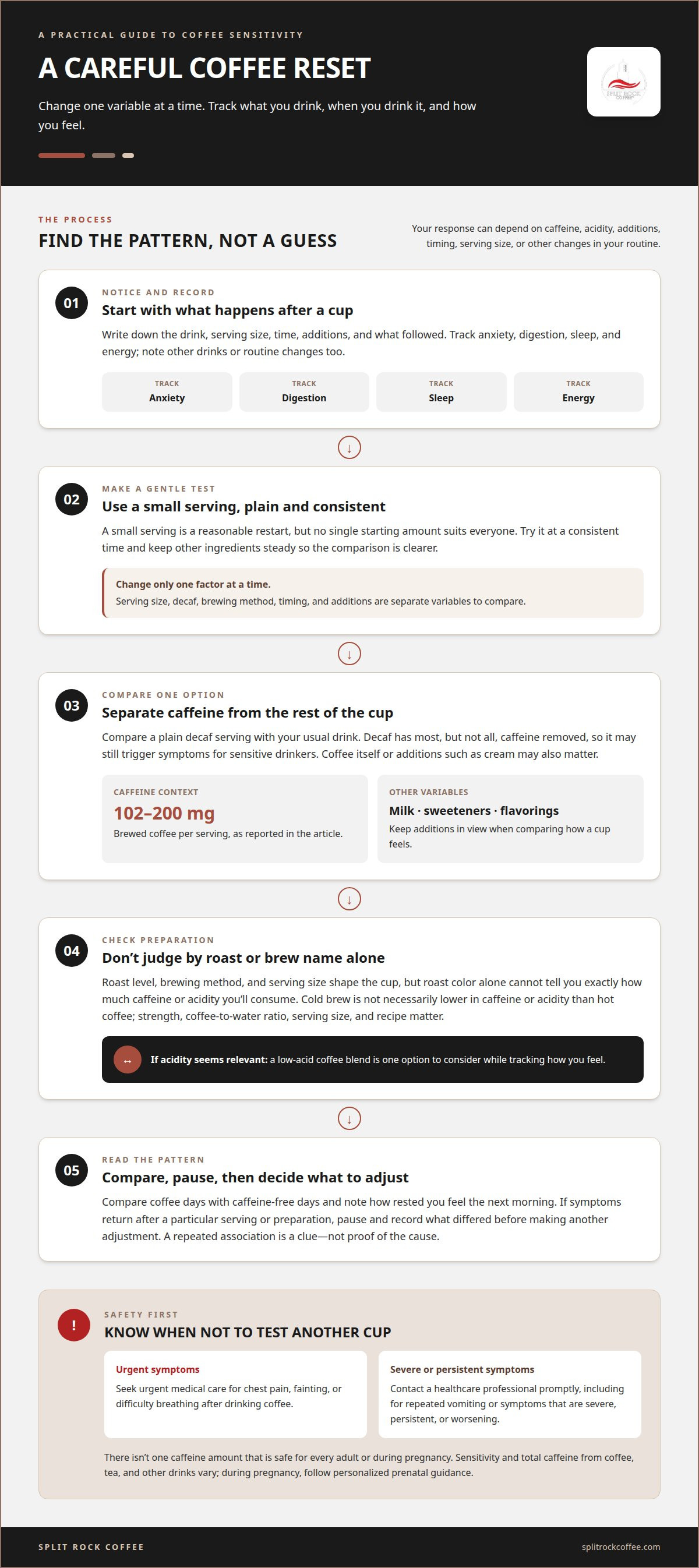
Seek urgent medical care for symptoms such as chest pain, fainting, or difficulty breathing after drinking coffee. For severe or persistent symptoms, including repeated vomiting, contact a healthcare professional promptly instead of testing another cup.
There isn’t one caffeine amount that is safe for every adult or during pregnancy. Effects depend on individual sensitivity and total caffeine from sources such as coffee, tea, and other drinks. During pregnancy, follow personalized prenatal guidance rather than relying on your own tolerance as a safety measure.
Reducing jitters and digestive discomfort
Change one variable at a time to see whether serving size, decaf, or brewing method makes a difference. Keep other ingredients steady while comparing how each cup feels.
Decaf and Coffee-Related Symptoms
Decaf is coffee with most, but not all, caffeine removed, so it may still trigger symptoms in sensitive drinkers. Discomfort may also relate to coffee itself or additions such as cream. One commenter had switched to decaf about 1.5 years earlier, an example of an adjustment rather than proof that decaf suits everyone. Compare a plain decaf serving with your usual drink to see whether the difference matters for you.
Possible Sources of Coffee Intolerance
Caffeine, acidity, additives, and health conditions can all be possible factors, and symptoms alone don’t identify the cause. Brewed coffee contains about 102 to 200 mg of caffeine per serving, so choosing a smaller serving can reduce the amount you consume. Milk, sweeteners, and flavorings add variables. If acidity seems relevant, a low-acid coffee blend is one option to consider while you track how you feel.
Roast, Brewing, and Serving Effects
Roast level, brewing method, and serving size shape the coffee in your cup, but roast color alone can’t tell you exactly how much caffeine or acidity you’ll consume. Cold brew isn’t necessarily lower in caffeine or acidity than hot coffee: strength, coffee-to-water ratio, and serving size matter, and recipes differ. Brewed coffee provides about 102 to 200 mg of caffeine per serving, a broad range that makes preparation worth recording.
A reasonable restart is a small serving rather than a full mug, though no single starting amount suits everyone. Try it plain and at a consistent time of day, changing only one factor at a time. If symptoms return after a particular serving or preparation, pause and note what differed before making another adjustment.
Why might coffee suddenly cause nausea, heartburn, anxiety, or other symptoms?
A changed response can follow a changed routine, not necessarily a new coffee allergy. After 10 months without coffee, one former drinker resumed it, then stopped again after two days. A long break may make a familiar serving feel different; previous tolerance doesn’t guarantee the same experience now. That account suggests a useful distinction: the return of symptoms after coffee is a clue, not proof of the cause.
Serving size and timing can shift together. Someone who once drank 4-5 large dark-roast cups daily may react differently when returning to that routine than when trying a smaller cup. Note the amount, time, and preparation alongside symptoms. Also record whether you drank coffee before eating, since the timing of a drink and a meal can help reveal a pattern without assuming either caused discomfort.
Ingredients create another variable. A latte, for example, includes milk, while black coffee does not; sweeteners and flavorings add further differences. If nausea or heartburn appears after one version but not another, compare the ingredients while keeping serving size and timing similar. Change one factor at a time to spot a repeatable association rather than blaming the coffee bean, caffeine, or acidity without evidence.
Health changes can also affect how a familiar drink fits into your day. A new medication, a change in sleep, or an existing digestive concern may coincide with symptoms, so note those changes rather than treating coffee as the only possible explanation. Keep a short record of each cup and any symptoms that follow. For persistent, severe, or worsening symptoms, discuss the pattern with a healthcare professional, especially if it disrupts sleep or daily activities.
Individual accounts can also point to differences in dose and context. One commenter said 1 caffeinated cup did not cause anxiety, but more than one cup affected them adversely. The original poster reported drinking two tall cans of alcohol daily, each at 9% alcohol, during a period of high anxiety. These reports do not establish what caused anyone’s symptoms, but they underline why it helps to record other drinks and circumstances alongside coffee, rather than assuming that a symptom appearing around the same time identifies its cause.
Could coffee intolerance be caused by caffeine, acidity, additives, or a medical condition?
“Coffee intolerance” describes symptoms linked to drinking coffee, but it doesn’t identify the trigger. Caffeine is one possibility, especially if jitters or restlessness follow a caffeinated drink. One commenter had stopped caffeine two years earlier and still occasionally drank a latte. That example doesn’t establish a cause, but it shows why symptoms alone can’t prove caffeine is responsible. Finding a coffee I can drink again starts with identifying possible triggers, not assuming every coffee affects me the same way.
Acidity may matter if you notice discomfort after coffee, while additives create separate variables. A latte contains milk, and sweeteners or flavored syrups change the drink further. Compare plain coffee with a version that includes additions, keeping serving size and timing similar. If symptoms differ, the pattern may help narrow what to discuss with a healthcare professional, but it doesn’t establish a diagnosis.
A medical condition can also affect how someone experiences coffee. Nausea or heartburn may have causes beyond the drink, especially when symptoms occur at other times or continue after coffee is removed. Note whether discomfort consistently follows coffee, appears with particular ingredients, or happens independently. These distinctions can make finding a coffee I can drink again a more informed process.
Separate the possibilities with a simple record. Write down the drink, its ingredients, serving size, time consumed, and any symptoms that follow. Then adjust one factor at a time, such as removing milk or choosing a caffeine-free version. Changing several things together makes results harder to interpret. If symptoms persist, worsen, or interfere with daily life, share the record with a healthcare professional instead of repeatedly testing suspected triggers.
If acidity seems like a factor, explore low-acid coffee blends as one option to consider. Keep the rest of your routine steady while you assess how a different coffee fits.
The author says he quit caffeine cold turkey after realizing he could not remember a day in his adult life without it. One commenter said they sometimes mixed caffeinated coffee grounds into decaffeinated grounds at home.
Split Rock Coffee
Split Rock Coffee offers options for readers exploring a more comfortable coffee routine. If you’re comparing how different coffees fit your preferences, The Gold Standard Coffee Beans and Whole Bean and Ground Coffee offer formats to consider. The Monthly Coffee Subscription is another way to make coffee part of your routine.
Use what you’ve learned about serving size, ingredients, and timing to guide your choice. Keep your preparation consistent as you try a coffee, so you can focus on how it feels without changing several variables at once. Coffee affects people differently, and no product can diagnose or resolve persistent symptoms.
If you’d like to explore Split Rock Coffee’s offerings as you consider your next cup, contact Split Rock Coffee.
Take Your Next Cup at Your Own Pace
Finding a coffee I can drink again doesn’t mean forcing your way back into an old routine. Treat each choice as a chance to learn what fits: keep your approach steady, notice what changes, and let your comfort guide the next step. If symptoms persist or interfere with daily life, speak with a healthcare professional rather than relying on coffee changes alone.
Split Rock Coffee offers Low Acid Coffee Blends, The Gold Standard Coffee Beans, and a Monthly Coffee Subscription. Explore these options to find coffees that suit your preferences, without expecting a particular effect on symptoms.
Contact Split Rock Coffee for help as you consider your next cup. Move forward thoughtfully, one choice at a time.
Frequently Asked Questions
How can I safely reintroduce coffee after taking a break?
Choose a calm day and keep your first trial separate from other caffeinated drinks, such as tea or energy drinks. Use a familiar preparation so you’re not also testing a new brewing method or ingredients. Notice how you feel through the day and whether your sleep differs that night. If the same troubling reaction returns, stop the trial instead of increasing your intake to push through it.
Which coffee types are lower in acidity or gentler on the stomach?
If acidity is a concern, choose coffee explicitly described as low-acid. The label describes the coffee but can’t guarantee that it will feel comfortable for everyone. Dark roast or cold brew alone shouldn’t be treated as proof of lower acidity or better tolerance. Compare product descriptions and keep preparation simple so added ingredients don’t complicate your experience.


