Find Coffee That Tastes Good Black by Flavor and Bean Type
Light-roast coffee is a useful starting point if you’re looking for coffee that tastes good black. Its flavors can shine without milk or sugar, though the best choice depends on whether you prefer bright, fruity notes or a smoother, deeper cup.
If black coffee has tasted too sharp or bitter, the beans may not have suited your palate, or the brewing method may have drawn out more bitterness than you like. You don’t have to settle for a cup you need to disguise.
This guide will help you match flavor and acidity to your preferences, choose beans with confidence, and adjust your brewing when bitterness gets in the way. Start with the flavors you enjoy, then fine-tune the cup.
Key Takeaways
- Match a coffee’s flavor notes and perceived acidity to the kind of cup you enjoy drinking plain.
- Use bean selection clues, including roast date and tasting notes, to narrow down options that suit your palate.
- Adjust grind size, water temperature, and brew time to address bitterness before reaching for milk or sugar.
- Compare roast levels to find the balance of brightness, sweetness, and depth you prefer in a black cup.
- Choose whole bean or ground coffee to fit your routine, then refine your brewing method as you taste.
1. Coffee acidity and stomach sensitivity
In tasting notes, acidity describes a coffee’s lively flavor, not necessarily how it feels in your stomach. A cup with citrus-like brightness may taste sharp, while another tastes round and smooth. Those sensory impressions don’t diagnose how your body will respond. If coffee feels uncomfortable, note the brew, preparation, and whether you drank it with food. Comparing those details may help reveal a pattern, without treating flavor as a medical label.
Try a practical tasting comparison: brew the same coffee two ways, then notice its brightness, body, and aftertaste. A medium roast from one origin may taste balanced as drip coffee but more concentrated as espresso. Origin and roast level can change the flavor, but a tasting description such as “low acidity” doesn’t guarantee a particular response. Use those words to guide your flavor choice, then pay attention to your own experience.
Caffeine is another factor to consider separately from acidic flavor. The U.S. Food and Drug Administration states that the maximum daily caffeine amount is 400mg, which it equates to about 4 x 10oz cups of coffee. Caffeine amounts vary by serving and preparation, so count all your coffee across the day rather than judging strength by taste alone. A smooth cup can still contain caffeine, and a bright-tasting cup isn’t automatically stronger.
For a careful comparison, change one brewing choice at a time. Try a smaller serving, or have the same brewed coffee with breakfast instead of on an empty stomach. Keep the beans and preparation consistent. If you change the origin, roast, serving size, and timing together, it’s hard to tell which change mattered. A simple note such as “medium roast, after breakfast” gives you a clearer record than relying on memory.
Choose beans for their flavor, and consider stomach comfort separately as a personal measure. If you want to avoid sharp-tasting coffee, sample a smoother profile and compare it with a brighter one under similar conditions. Don’t assume that espresso, hot or cold brewing, or a specialty label alone predicts comfort. Track how you respond to each cup and adjust the amount or timing if needed. Persistent or concerning symptoms deserve attention from a health professional, because coffee flavor alone can’t explain them.
2. Black coffee flavor profiles
Flavor notes offer a practical way to choose beans for drinking black. A cup described as citrusy or berry-like may appeal if you enjoy lively, bright flavors. Chocolate, toasted nuts, and caramel suggest a rounder profile. These notes aren’t ingredients added to the coffee; they describe aromas and tastes you may notice. Use them as a starting point, then decide which profile suits your palate.
Think in contrasts. A coffee with lemon-like brightness can seem crisp beside one with cocoa depth, while a fruit-forward cup may taste sweeter than a roast with smoky notes. Neither profile is automatically more balanced. The balance you enjoy depends on how acidity, sweetness, bitterness, and body come together in the brewed cup. If you’re new to drinking black coffee, describe the first sip using familiar flavors, such as orange peel, dark chocolate, or almond.
Roast level can shape that impression, but it doesn’t tell the whole story. A medium roast may retain a clear sense of origin while adding roasted depth for a rounded cup. A light roast can highlight delicate fruit or floral qualities. A darker roast may emphasize toast, cocoa, or a heavier finish. Compare tasting notes across origins, but treat them as clues, not promises. Your brewing method and palate affect what stands out.
Try this simple tasting routine before adding anything to your coffee:
- Smell the freshly brewed cup and name the first aroma that comes to mind.
- Take a small sip, then notice whether brightness, sweetness, roast, or bitterness leads.
- Let the coffee cool slightly, then taste again for changes in its balance and finish.
- Write down one preferred flavor and one flavor you’d choose less often.
This comparison helps separate flavor preference from caffeine strength. A bold-tasting cup doesn’t necessarily contain more caffeine; preparation and serving size matter. Focus first on whether you prefer a clean, bright finish or a richer, deeper one. Finding coffee that tastes good black is easier when you can describe the cup you want, rather than choosing by roast name alone.
Use those tasting notes to guide your next bean choice, then adjust your brewing to bring the preferred qualities forward. If you’re ready to explore, browse coffee choices by flavor and look for notes that match the profile you’ve identified.
3. Causes and fixes for bitter coffee
A bitter cup can result from the beans, grind, or brewing choices. Change one variable at a time, then taste again. If a chocolate note turns harsh or a bright flavor disappears, examine extraction before deciding the coffee itself isn’t right for you. Keeping the same beans while adjusting your method makes each comparison more useful.
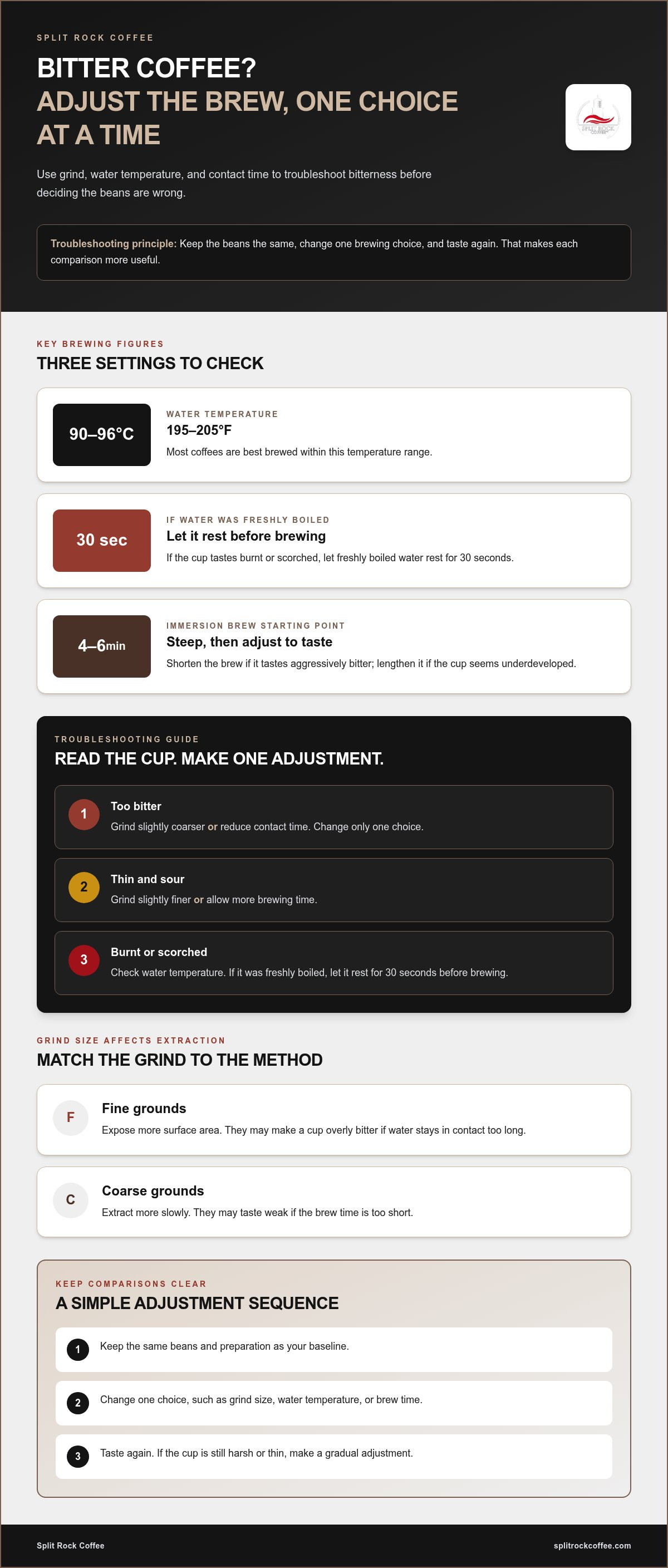
Grind size affects how quickly water extracts flavor from coffee. Fine grounds expose more surface area, so they may produce an overly bitter cup if water stays in contact too long. Coarse grounds extract more slowly and may taste weak if the brew time is too short. Match the grind to your method, then adjust it gradually if the coffee tastes harsh or thin.
Water temperature and steep time deserve a close look. Most coffees are best brewed with water between 90 and 96 degrees Celsius, or 195-205 degrees Fahrenheit. If freshly boiled water makes a cup taste burnt or scorched, let it rest for 30 seconds before brewing. For immersion methods, steeping coffee for 4-6 minutes is a useful starting point. Shorten the brew if the result tastes aggressively bitter, and lengthen it if the cup seems underdeveloped.
Use this troubleshooting sequence to isolate the cause:
- Too bitter: Grind slightly coarser or reduce contact time, changing only one choice.
- Thin and sour: Grind slightly finer or allow more brewing time.
- Burnt or scorched: Rest freshly boiled water for 30 seconds before pouring.
- Flat after storage: Open a fresher bag; coffee can taste flat and bitter after three months.
Cold brew offers a different route for coffee drinkers who find hot coffee too sharp. Steep coarse coffee grounds in cold water for 12-24 hours, then strain. Its flavor can feel smoother and less bright than a hot cup, though the beans and brewing choices still shape the result. Try it with a coffee whose tasting notes suggest chocolate or a rounded finish.
Keep a brief brew log. Record the grind, water temperature, and steep time for each tasting. For example, note whether changing from fine to medium-coarse grounds softened bitterness while preserving sweetness. This comparison helps you adjust the method without masking the cup with sugar or milk.
4. Coffee bean selection
Choose beans for the flavors you want, then use origin and roast details to narrow your options. Fruity notes can signal a brighter profile, while caramel, cocoa, or toasted-nut descriptions suggest sweeter, rounder impressions. These tasting terms help you compare bags, but not every drinker will experience them the same way. If you’re drinking coffee black, start with a flavor profile you already enjoy in food.
No coffee origin is guaranteed to taste sweet, smooth, or low in bitterness. Look for specific tasting notes on the bag, such as caramel or ripe fruit, and compare descriptions across origins. Roast and brewing method also shape the result. A region name provides context, but it can’t replace a description of the flavor.
Check the roast date when choosing a bag. Coffee is generally at its best within a few weeks of roasting, so use the date to compare freshness rather than relying only on a vague “fresh” claim. Once opened, protect the beans from air, light, heat, and moisture by sealing the bag or placing them in an airtight container in a cool, dry cupboard. Keep storage consistent so changing conditions don’t cloud your tasting comparisons.
Whole beans give you more control over preparation because you can grind them shortly before brewing. For convenience, ground coffee skips that step, but choose a grind suited to your equipment. Either way, buy an amount you can use while the coffee is near its best, rather than leaving an opened bag unused for a long time.
Roast level offers another useful clue. Light and medium roasts often show more origin character, while dark roasts tend to emphasize roast-driven flavors. If you prefer caramel-like sweetness, compare medium-roast bags with those notes against darker options described as chocolatey. Taste one variable at a time rather than changing origin, roast, and brewing method together.
Specialty coffee is described as coffee rated 80 or higher by the Specialty Coffee Association. That threshold can help identify coffees evaluated for quality, but it doesn’t tell you whether a particular profile matches your palate. Read the tasting notes, roast date, and origin together. Then record which bag tastes balanced when brewed without additions. Those details build a practical guide for your next purchase, whether you favor fruity brightness or deep, roasted flavors.
5. What roast level is best for drinking coffee black?
Light roast is a useful starting point for black coffee. It can preserve more of a bean’s distinct flavor, making fruit, floral, or citrus notes easier to notice. This is a shortcut, not a rule for every palate. If you enjoy cocoa, toasted nuts, or a deeper finish, a medium roast may satisfy you more. Choose for the flavors you want, not the roast label alone.
A light roast can taste lively and delicate beside the fuller profile of a medium roast. Dark roasts often bring roast-forward flavors, such as toast, smoke, or bittersweet chocolate. These are broad tendencies, not guarantees: origin and brewing choices influence the cup too. For example, compare a light roast with berry notes against a dark roast described as chocolatey. Notice which tastes balanced without additions.
Use a simple tasting plan to identify your preferred roast. Brew the same amount of coffee using the same method, changing only the roast level. Taste each cup plain, first while warm and again as it cools. Record whether fruit, sweetness, roast, or bitterness stands out. This gives you a clearer comparison than changing beans, grind settings, and brew methods all at once.
Let flavor guide your next step. If a light roast seems too sharp, try a medium roast with caramel or nut notes. If a medium roast tastes muted, sample a light roast with a clearer fruit profile. If you enjoy deep, roasted flavors, dark roast can still work black. Adjust brewing separately if the cup turns bitter, since roast level isn’t the only influence on taste.
Roast names can vary between roasters, so use the bag’s tasting notes alongside its roast label. Look for descriptions that match your preference, such as bright fruit, balanced sweetness, or bold chocolate. Keep the brewing method consistent as you compare. A light-roast recommendation can narrow your search, but your own tasting notes should make the final call.
Ready to put that comparison into practice? Explore coffee beans for black brewing and choose a roast profile that matches the flavors you want to taste.
Light-roast coffee is a useful first filter for finding coffee that tastes good black, but tasting your own brew confirms whether its flavor suits you.
Split Rock Coffee: The Gold Standard Coffee Beans
Split Rock Coffee gives you a clear next step after you’ve identified the roast and flavor profile you prefer. Explore The Gold Standard Coffee Beans as you put your black-coffee preferences into practice, choosing between Whole Bean and Ground Coffee to suit your brewing routine. If you’d like coffee delivered on a recurring basis, the Monthly Coffee Subscription is another option. Start with the format that fits your method, then use the tasting notes and brewing adjustments from this guide to refine your cup. For more information, contact Split Rock Coffee or visit the Split Rock Coffee website.
Make Your Next Cup a Deliberate Choice
Your next black coffee can be a small experiment, not a blind guess. Choose one flavor you want to notice, brew with care, and let your palate set the standard. This simple habit helps you find coffee that tastes good black for you, rather than chasing someone else’s idea of the perfect cup.
For a starting point, Split Rock Coffee offers Low Acid Coffee Blends, The Gold Standard Coffee Beans, and an optional Monthly Coffee Subscription. Choose the option that fits what you’re looking for, then keep exploring until the cup tastes right to you. Good coffee is worth approaching with curiosity and care.
Contact Split Rock Coffee to take your next step. Your preferred cup is yours to discover.
Frequently Asked Questions
What is the best tasting coffee to drink black?
The best choice is the coffee whose flavor you enjoy without additions. A light roast can suit drinkers who like fruit or floral notes, while a medium roast may appeal if you prefer caramel or cocoa. Try a bag with clear tasting notes, then brew it consistently before deciding. Finding coffee that tastes good black starts with your palate, not a universal “best” label.
What’s the best brewing method for black coffee?
Pour-over is a good choice if you want control over the pour and an easy way to notice distinct flavors. French press suits a fuller-bodied cup, while drip brewing works well for a straightforward daily routine. Try one method with the same beans before comparing another. This keeps the brewing method, rather than a change in coffee, at the center of your tasting test.
What coffee beans taste best black without milk or sugar?
Choose beans with tasting notes that match flavors you already like, such as cocoa, nuts, caramel, or fruit. A medium roast can offer a balanced starting point, while a light roast may show more brightness. For a straightforward comparison, brew two coffees using the same method and note which you prefer plain. Split Rock Coffee offers The Gold Standard Coffee Beans in whole-bean and ground options.
What are the best coffee brands for drinking black in the United States?
No single brand suits every palate, so compare roast descriptions, tasting notes, and bean format. Split Rock Coffee offers The Gold Standard Coffee Beans, Low Acid Coffee Blends, and an optional Monthly Coffee Subscription. These options give you different ways to choose coffee for your routine. Focus on the flavor profile you enjoy rather than assuming a brand’s reputation guarantees a perfect cup.
When choosing whole-bean coffee, consider the listed price, weight, roast date, and tasting notes together. For black coffee, a clear profile such as cocoa or fruit can help you judge whether the beans suit your taste. Compare the cost per ounce using the listed price and weight to make a fair budget comparison. Split Rock Coffee offers whole-bean coffee, so compare its current options with your spending limit.
Which brewing methods make black coffee taste smoother and less bitter?
Cold brew can taste smoother because coarse grounds steep in cold water rather than brewing hot. French press can also make a rounded cup, while pour-over lets you adjust the flow and extraction. If bitterness persists, change one brewing variable at a time instead of switching methods and beans together. This makes it easier to identify which method suits your coffee.
What coffee-to-water ratio and water temperature work best for black coffee?
Start with 1 gram of coffee for every 16 grams of water. Brew most coffees with water between 90 and 96 degrees Celsius, or 195-205 degrees Fahrenheit. Weighing coffee and water helps keep each test consistent, especially when comparing beans. If you use a French press, a common starting ratio is 1:15. Adjust to taste while keeping the method consistent.
What causes black coffee to taste bitter or sour, and how can it be fixed?
Bitter coffee can result from over-extraction, while sourness often points to under-extraction. Check the grind first: make it coarser if the cup tastes harsh, or finer if it tastes sharp and weak. Keep the dose and water temperature steady for your next brew. Make one adjustment at a time and record the result so you can repeat what improves the cup.


