Coffee for Acid Reflux: Compare Low-Acid, Cold Brew, and Decaf Options
Low-acid coffee isn’t acid-free, and no single cup suits everyone with reflux. The best coffee for acid reflux may be a medium or dark roast, cold brew, or decaf made with low-acid beans, depending on which factors trigger your symptoms. Each option can change the cup, but none removes every natural coffee acid.
If coffee leaves you with heartburn, it makes sense to look beyond the label: roast, brewing method, caffeine, serving size, and what you add can all matter. You’ll learn how those factors may affect reflux and how to compare your options without assuming that “low-acid” means symptom-free.
This guide compares low-acid coffee, cold brew, and decaf, then covers practical ways to try a gentler cup, from choosing a roast to drinking coffee with food. The goal is to help you make an informed choice while paying attention to how your own body responds.
Key Takeaways
- Low-acid coffee still contains natural acids, so roast level alone can’t predict how your body will respond.
- Cold brewing can extract fewer acids than hot brewing, offering a different way to prepare your usual beans.
- Caffeine may play a role in reflux, but switching to decaf doesn’t address every possible trigger.
- Compare roast, brewing method, serving size, and what you add to your coffee to find a more comfortable routine.
- Notice how your symptoms respond to each change, and use that pattern to guide your next cup.
1. What is the Best Coffee for Acid Reflux and GERD?
Medium or dark roasts may suit people seeking coffee less likely to trigger acid reflux. Dark roast is a practical starting point because roasting reduces some naturally occurring coffee acids. But low-acid coffee isn’t acid-free, and roast alone can’t predict your response. Caffeine, serving size, and brewing method may matter, too.
Research offers a reason to compare roasts. In a study of nine healthy volunteers, a dark-roast blend stimulated less gastric acid secretion than a medium roast, despite similar caffeine levels, according to the study authors. Dark roasts also contain less chlorogenic acid than lighter roasts, as well as N-methylpyridinium, a compound that may help limit excess stomach acid production.
Roast affects taste as well as acidity. Darker beans often bring deeper, more toasted flavors, while lighter roasts can taste brighter and fruitier. Those differences don’t predict how a particular cup will affect reflux. Espresso may also be less acidic than standard coffee because it brews quickly. Still, serving size matters: a small espresso and a large drip coffee aren’t equivalent.
Lucy Jo's Coffee Roastery is one name shoppers may encounter while comparing low-acid options. Treat a brand’s low-acid description as a starting point, not a guarantee of symptom relief. There are no industry-wide certifications or standards for low-acid coffee. A pH reading offers context, but coffee acidity varies, and a label alone can’t establish how your stomach will respond.
What types of coffee are least likely to trigger acid reflux? Start with a medium or dark roast, then compare a small espresso with your usual drip coffee. Cold brew and decaf are other options to consider, though brewing method and caffeine affect the cup differently.
What alternatives to coffee are less likely to trigger acid reflux? Chicory and mesquite drinks are coffee alternatives. Chicory is naturally caffeine-free, while mesquite is naturally caffeine-free and low-acid. Chicory contains inulin, which can cause gas if introduced too quickly, so start with a small amount if your gut is sensitive.
Is low-acid coffee better for acid reflux, and what does research say? A study of dark roast found less gastric acid secretion than medium roast, but it involved nine healthy volunteers. It doesn’t prove that everyone with GERD will feel better. Low-acid coffee still contains natural acids and can remain a trigger.
What are the risks of relying on low-acid coffee to manage GERD? A low-acid label can’t guarantee symptom control or replace care for frequent or severe reflux. Try one change at a time, such as switching roasts, and track whether symptoms follow that cup.
2. Cold brew and acidity
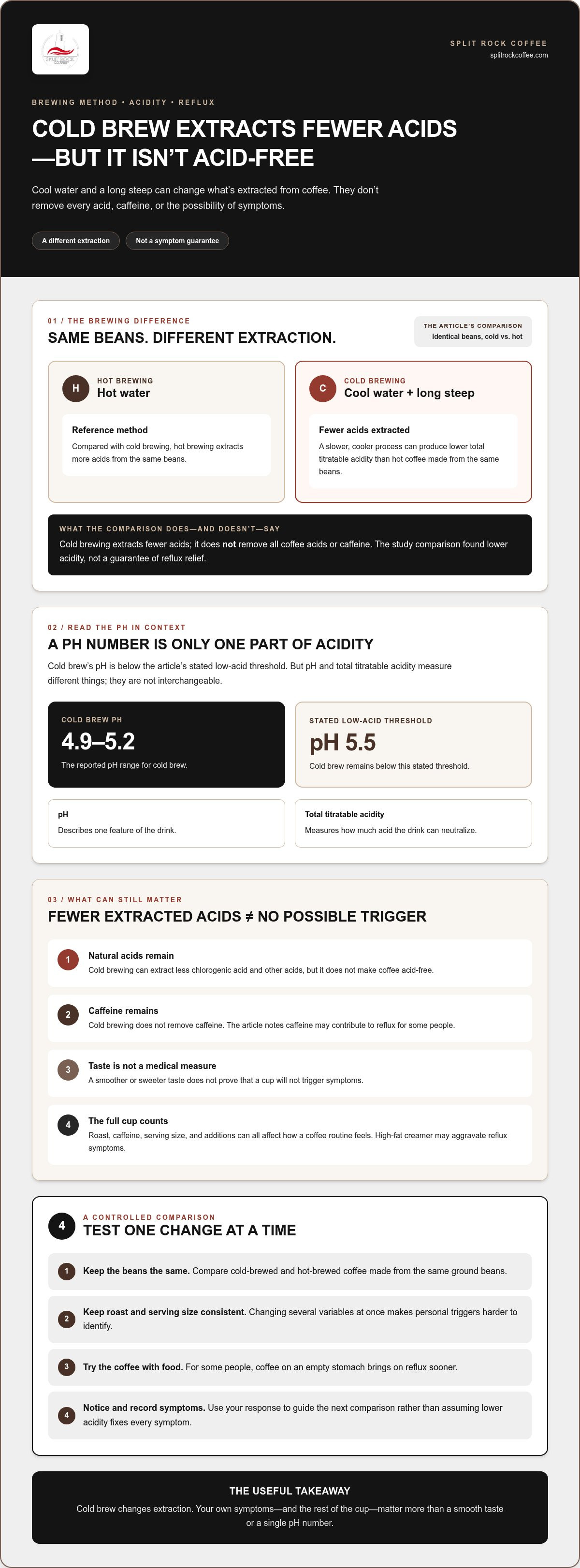
Cold brew extracts flavor from ground coffee differently. Instead of hot water, it uses cool water and a long steep. This slower, cooler process extracts fewer acids than hot brewing, even when both methods use the same beans. A study comparing cold and hot coffee made from identical beans found lower total titratable acidity in the cold brew.
That difference may matter if coffee acidity contributes to your stomach discomfort. Chlorogenic acid is a natural coffee acid that can raise stomach acidity and trigger reflux symptoms in some people. Cold brewing can extract less of this and other acids, but it doesn’t remove all coffee acids or caffeine. A smoother, sweeter taste also doesn’t prove a cup won’t trigger symptoms.
Cold brew’s pH is typically 4.9–5.2, which remains below the stated low-acid threshold of pH 5.5. The pH number describes one feature of the drink, while total titratable acidity measures how much acid it can neutralize. Those measures aren’t interchangeable. A lower total titratable acidity can make cold brew less acidic than hot coffee without making it acid-free.
Brewing method is one variable to test. Immersion brewing, used for cold brew, extracts fewer acids than hot brewing. Try preparing the same ground beans as cold brew and hot coffee, then compare taste and symptoms. Keep roast and serving size consistent; changing several variables at once makes it harder to identify a personal trigger.
For some people, drinking coffee on an empty stomach brings on reflux sooner. Try cold brew with food rather than before breakfast, and note whether that changes your experience. A large serving may affect you differently from a smaller one, so adjust the amount separately. The point is to observe a pattern, not assume lower acidity resolves every symptom.
Cold brew is not automatically low-acid by the pH threshold above, and a “smooth” flavor is not a medical measure. When comparing options, consider how the coffee is brewed, along with its roast, caffeine, portion, and additions. High-fat creamer can aggravate reflux symptoms, so compare a plain cup before adding rich ingredients.
For a simple trial, choose one coffee, brew it cold, and drink it with a meal; record any symptoms and repeat the same routine before changing another factor. If you’re exploring beans intended for a gentler cup, low-acid coffee blends are one option to compare alongside cold brewing. This keeps the focus on the full cup, not a single label.
3. Caffeine and the lower esophageal sphincter
Caffeine may affect reflux even when coffee tastes smooth. The lower esophageal sphincter is a muscle that helps keep stomach contents from moving upward. Coffee’s caffeine can relax it, making it easier for stomach acid to flow into the esophagus. If you notice heartburn after coffee, consider caffeine alongside acidity and serving size.
Coffee may also influence stomach activity. Caffeine can increase gastric acid and digestive-tract contractions, potentially making reflux or other digestive symptoms more likely in some people. Coffee also triggers gastrin, a hormone that stimulates the stomach to produce acid. These mechanisms may help explain why a particular cup bothers you, but they don’t mean everyone reacts the same way.
A review of studies on coffee and the gastrointestinal tract reported increased gastric acid secretion of 10–40%, although findings were inconsistent. That range describes study results, not a forecast for one cup or one person. Coffee contains many compounds besides caffeine, so switching to a lower-acid roast doesn’t necessarily remove caffeine’s potential effects.
In practice, low-acid coffee and low-caffeine coffee are different choices. A darker roast may contain less chlorogenic acid, but roast level alone doesn’t establish how much caffeine is in your serving. Decaf reduces caffeine, while other coffee compounds remain. If symptoms persist after changing roast, try changing caffeine exposure separately rather than altering several factors at once.
Run a simple comparison. Keep your usual serving size, meal timing, and brewing method steady, then compare regular coffee with decaf on separate occasions. Note whether heartburn appears and how soon after drinking. Also track temperature: piping-hot coffee can amplify stomach irritation. A symptom log can help distinguish a possible caffeine response from other routine triggers.
For broader context, the European Food Safety Authority considers caffeine intake of up to 400 mg per day safe for most healthy adults. That general safety benchmark is not a reflux limit or a guarantee against symptoms. Your total intake includes caffeine from other drinks and foods, so consider your whole day when evaluating a cup.
Use the pattern, not one uncomfortable morning, to guide your next step. If regular coffee repeatedly precedes symptoms, compare a smaller serving or decaf while keeping other variables steady. If symptoms continue, caffeine may not be the only trigger. Roast, brewing, food, and individual sensitivity can all shape how a cup feels.
4. Decaffeinated coffee
Decaf reduces caffeine exposure while keeping coffee’s roasted flavor and familiar brewing method. That distinction matters because caffeine can relax the lower esophageal sphincter, while other coffee compounds can affect digestion. Choosing decaf addresses caffeine, not every possible reflux trigger. A decaffeinated medium roast, for example, still contains natural coffee acids.
One trial offers a useful finding. In patients with reflux disease, decaffeinated coffee reduced the time esophageal pH stayed below 4 from 17.9% to 3.1%, according to Trial authors. The result shows a change in measured esophageal acidity during that trial. It doesn’t establish that every person will have the same response or that all decaf coffee has identical effects.
Decaf also isn’t automatically low-acid. Conventionally roasted decaf coffee typically has a pH range of 4.5–5.0, so it remains acidic. A low-acid decaf combines two distinct choices: reduced caffeine and a coffee selected for lower acidity. If reflux follows regular coffee, compare decaf and regular versions with the same roast and brewing method to isolate caffeine as a factor.
Half-caff is another step between regular coffee and decaf. It combines caffeinated and decaffeinated coffee, reducing caffeine exposure compared with a fully caffeinated cup. The actual caffeine content depends on the blend, so the label alone can’t tell you how your body will respond. Keep serving size and brewing method consistent while comparing half-caff with your usual coffee.
Try a controlled switch. Drink decaf with food, use your usual serving size, and record symptoms afterward. Keep additions such as cream or sweetener unchanged during the comparison. If you also change roast, temperature, and meal timing, you won’t know which adjustment coincided with a difference in heartburn or other digestive symptoms.
Cleveland Clinic recommends decaffeinated coffee as an option that may reduce the chance of heartburn. That addresses caffeine, but it doesn’t mean decaf is symptom-free or acid-free. The distinction is practical: decaf changes caffeine, while roast and brewing method affect other parts of the cup. Choose the combination that best matches the trigger you’re trying to reduce.
Use your notes to guide the next trial. If decaf still brings symptoms, compare a lower-acid decaf rather than assuming caffeine explains everything. If half-caff feels different from regular coffee, keep the same meal and portion while repeating the comparison. Frequent or severe reflux needs medical attention. Coffee choices are one part of managing symptoms, not a replacement for care.
5. Coffee options for acid reflux and GERD
There isn’t one coffee bean that suits everyone with GERD. Reviews show mixed findings: fifteen studies found no association between coffee and reflux risk, two reported a protective effect, and eleven linked coffee intake with increased risk. That spread points to individual sensitivity, not a universal rule. Choose a gentler cup by testing one change at a time.
Start with the factors you can control. Try medium or dark-roast coffee, a smaller serving, or a different brewing method. Lower-altitude beans from Brazil and Sumatra are less acidic than high-grown beans, while washed, or wet-processed, coffee often tastes smoother and less acidic. These traits can guide your comparison, but they don’t make coffee acid-free.
Build a simple trial around your routine. Drink coffee with food instead of on an empty stomach, and keep the serving size steady while testing one roast or brewing change. If symptoms follow a large drip coffee, compare a smaller espresso rather than changing beans, milk, and timing together. In people with GERD or dyspepsia, drinking more than four cups per day was associated with worsening reflux symptoms.
What you add matters, too. High-fat milk or creamer may aggravate symptoms; lower-fat milk or a dairy alternative such as almond or soy may help avoid that trigger. Too much simple sugar may worsen reflux, while excess sugar alcohols can cause gas, bloating, and diarrhea. Note additions alongside each cup to distinguish a coffee response from an ingredient response.
Organic labeling doesn’t establish that coffee is low-acid. There are no certifications or industry standards for low-acid coffee, and a label can’t show how a sensitive stomach will respond. Low-acid coffee still contains natural acids in smaller amounts. Judge the cup by its roast, origin, processing, brewing method, serving size, and your symptom pattern, not by one label.
Keep practical limits in view. If you tolerate caffeine and acidity, the guidance in this article suggests limiting coffee to 1–2 cups daily. Avoid lying down for 2–3 hours after drinking it, and note whether symptoms appear after a cup. Frequent or severe reflux deserves medical attention; choosing coffee is one part of managing GERD.
Ready to compare a coffee option made for a gentler cup? Explore low-acid coffee options and use the same steady, one-change-at-a-time approach at home.
Split Rock Coffee: Low Acid Coffee Blends
Split Rock Coffee offers Low Acid Coffee Blends for coffee drinkers who want to compare lower-acid options. Use them alongside your notes on roast, brewing method, serving size, and symptoms. Low-acid coffee still contains natural acids, so let your experience guide the next cup.
You can also choose The Gold Standard Coffee Beans, Whole Bean and Ground Coffee, or a Monthly Coffee Subscription. These options let you select a format and routine that suit how you prepare coffee at home. Compare one change at a time, and pay attention to how the cup tastes and how you feel afterward.
Visit splitrockcoffee.com to explore Split Rock Coffee’s coffee options.
Make Your Next Cup a Deliberate Choice
Finding the best coffee for acid reflux is a personal process, not a search for a perfect label. Make your next cup a useful experiment: choose one option, keep your routine steady, and notice what feels right. That thoughtful approach can help you build a coffee habit that balances comfort with daily enjoyment—and if refreshing your home coffee nook helps set a calmer morning mood, adding wall art from Panther Print can bring warmth to the space.
Split Rock Coffee’s Low Acid Coffee Blends and The Gold Standard Coffee Beans give you options as you refine your routine. A Monthly Coffee Subscription can make those choices part of your regular coffee ritual. You don’t need to overhaul everything at once. Start with a cup that fits your preferences and take the next step at your own pace.
Contact Split Rock Coffee for help choosing where to begin. Here’s to a better-informed cup, and to finding a rhythm that works for you.
Frequently Asked Questions
Is low acid coffee completely acid-free?
No. Low-acid coffee still contains naturally occurring acids, just in smaller amounts than some other coffees. That matters if you’re choosing it to manage reflux or protect tooth enamel: lower acidity doesn’t mean no acidity or no possible irritation. Treat the label as a description of the coffee, not a promise about how it will feel. Serving size and preparation can shape the experience, too.
What is the Best Coffee for Acid Reflux and GERD?
A reasonable starting choice is a medium or dark roast, prepared as a small serving and paired with food. If caffeine seems tied to your symptoms, compare decaf; if acidity seems more relevant, try cold brew or coffee sold as low-acid. Change one factor at a time and briefly note the coffee, meal, and symptoms. That gives you a clearer basis for choosing the best coffee for acid reflux for your routine.
Why Does Coffee Cause Stomach Issues?
Coffee can affect stomach acid production and digestive activity, which may contribute to discomfort in some people. Caffeine, naturally occurring coffee compounds, an empty stomach, and rich additions can all be relevant. For example, heartburn after a large coffee with high-fat creamer may have more than one possible trigger. Compare a smaller plain serving with your usual cup rather than assuming acidity alone explains every stomach symptom.
Does decaf help with reflux?
Decaf may help if caffeine contributes to your heartburn, but it still contains coffee’s natural acids and other compounds. Try it as a separate comparison: keep your usual roast, serving size, and meal timing, then switch only to decaf. If symptoms continue, caffeine may not be the only factor. A decaf coffee that is also lower in acidity may be worth comparing.
Does Caffeine Cause Acid Reflux?
Caffeine can contribute to reflux because it may relax the lower esophageal sphincter, making it easier for stomach contents to move upward. Coffee can also stimulate acid secretion, though people don’t all respond alike. To test caffeine as a trigger, compare regular coffee with decaf under similar conditions. Keep other caffeine sources in mind, since coffee may not be the only source in your daily routine.
What’s the least acidic coffee available?
There isn’t one universally least-acidic coffee for every brewing method and bean. Cold brew generally extracts less total acidity than hot brewing, while low-acid coffee is another option to compare. For a practical test, use the same beans and serving size, then compare cold brew with your usual hot preparation. A smoother taste alone doesn’t establish acidity, so judge by the brewing approach and your own response.
Why Does Coffee Hurt So Much?
Heartburn can feel intense when triggers overlap, such as drinking coffee on an empty stomach, choosing a large serving, or adding high-fat creamer. Caffeine and coffee acids may also contribute. Note what you drank, what you ate with it, and when discomfort began. If symptoms are frequent or severe, seek medical advice instead of relying only on coffee changes.
Why Is Some Coffee Lower in Acid Than Others?
Acidity varies with the bean and how it’s processed, roasted, and brewed. For example, lower-altitude beans from Brazil and Sumatra are less acidic than high-grown beans, and washed coffee often tastes smoother. Brewing also changes which compounds enter the cup. These factors can point you toward options worth comparing, but no single origin or roast profile determines how everyone will react.


