High quality whole bean coffee options and prices
To choose high quality whole bean coffee on Amazon, start with 100% Arabica beans from a roaster that identifies the coffee’s origin and flavor profile. Match the roast style and whole-bean format to your preferred taste and brewing routine. A clear, specific label gives you a firmer basis for comparison than polished product photography alone.
Not sure where to start? Amazon listings can make origin, roast, freshness, decaf options, and price hard to compare because the details are often scattered. A few careful checks can help you separate useful information from sales language and choose high quality whole bean coffee that suits your cup.
This guide explains what to look for on labels, how roast styles and origins can shape your choice, and what to consider when comparing decaf and prices. You’ll also learn how to assess Amazon listings, so you can make an informed choice instead of relying on the bag’s appearance or star rating.
Key Takeaways
- Learn how to read sustainability claims and distinguish meaningful label details from broad marketing language.
- Match roast style, origin, and decaf choice to the kind of cup you enjoy and how you brew it.
- Compare Amazon listings by looking beyond star ratings to the information that helps you judge the beans and the seller’s description.
- Use freshness, bean condition, and clear product details as practical signals when assessing quality.
- Explore Split Rock Coffee’s whole bean and ground coffee, The Gold Standard Coffee Beans, and Monthly Coffee Subscription as options for your routine.
What Are the Best Coffee Beans?
Start with 100% Arabica and a roaster description that names the coffee’s origin and flavor profile. For freshness, look for a printed roast date, then compare dates and choose the most recently roasted option available.
Arabica Content and Roaster Descriptions
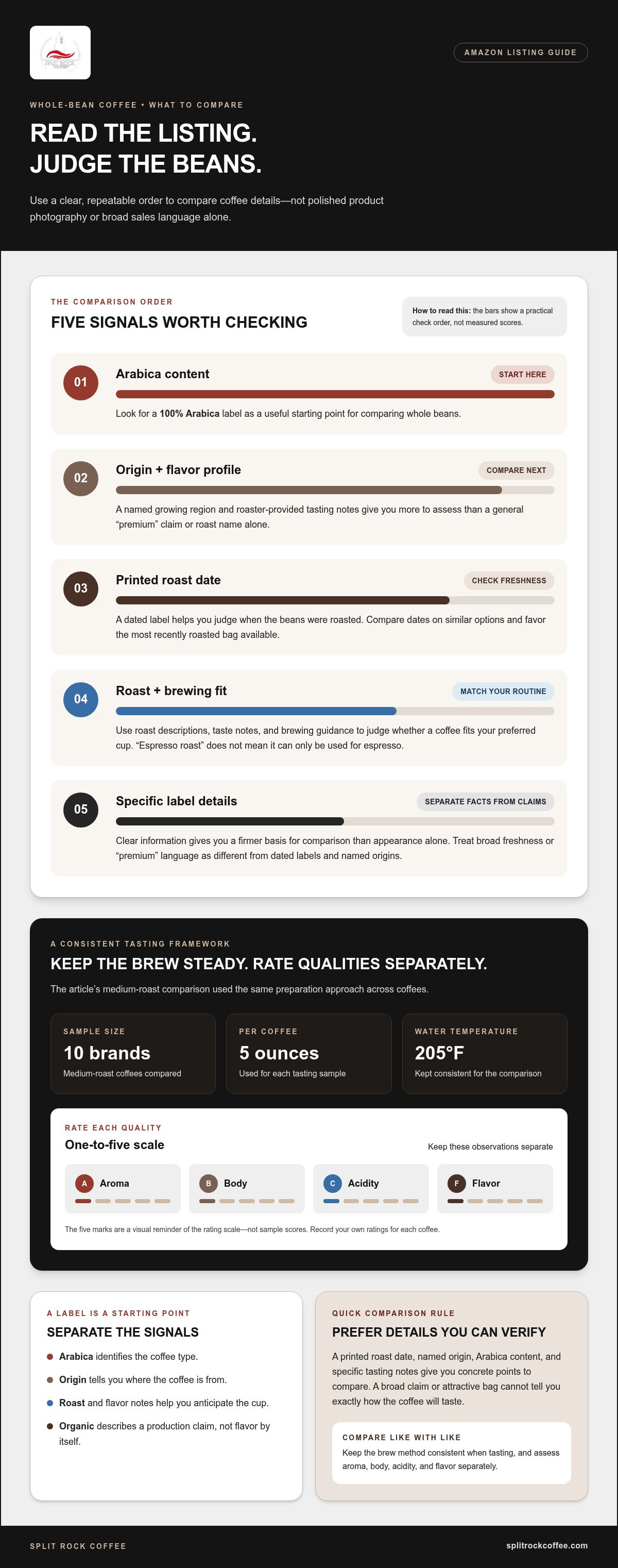
Check the bag or Amazon listing for the Arabica percentage; a 100% Arabica label is a useful starting point. Then look for an origin and a flavor profile from the roaster, such as a named growing region and tasting notes. Those details help you compare beans by more than a broad “premium” claim.
A roaster’s description should offer practical clues about the cup. Use the origin and stated flavor notes to judge whether the coffee sounds right for you, then compare those details across bags. If one listing identifies Arabica content, origin, and flavor while another gives only a roast name, the first offers more to assess.
Medium-Roast Flavor Characteristics
Medium roast can suit you when you want a cup between a lighter roast’s brighter character and a darker roast’s more pronounced roasted notes. The exact flavor depends on the beans and the roaster’s profile, so look for specific tasting notes rather than assuming every medium roast tastes alike.
Compare aroma, body, acidity, and flavor as separate qualities. A tasting test of medium-roast coffees from 10 brands used five ounces of each coffee and brewed them at 205°F. It rated each coffee on a scale from one to five across those four criteria, a practical framework for describing what you taste.
Featured Roast Options
Use product names to identify the roast style each listing signals. Bulletproof Coffee Original Medium Roast names a medium roast, while San Francisco Bay Coffee Espresso Roast identifies an espresso roast. Downeast Coffee Roasters Supreme Crema is a named blend, but its title alone doesn’t tell you its specific flavor profile.
Compare each listing’s Arabica content, origin, and roaster-provided flavor notes before deciding. “Espresso Roast,” for example, doesn’t mean the coffee can only be used for espresso. Check the listing’s brewing guidance and taste details. The name is a starting point, not a substitute for the full description.
Quality and Freshness Checks
Assess whole beans using the details the roaster provides: Arabica content, origin, flavor profile, and roast date. A printed date helps you judge when the beans were roasted. Compare dates across similar options and favor the fresher bag. A vague freshness claim isn’t the same as a dated label.
For a more disciplined tasting, keep the brew method consistent and record aroma, body, acidity, and flavor separately. The 10-brand comparison used five ounces per coffee, water at 205°F, and a one-to-five rating scale. That approach helps distinguish personal preference from differences in preparation, and gives you a clearer basis for choosing your next bag.
Organic and other sustainability labels
An organic label describes a production claim, not the flavor in your cup. Consider it alongside origin, roast, and tasting notes. For example, Colombia, La Magdalena, Tolima - Certified Organic names a coffee and connects the claim to a specific origin. That gives you more to compare than a bag labeled only “organic.”
Read the full label before deciding. Look for the word “organic,” a certification mark, and information about the coffee’s origin or producer. Compare those details with the roaster’s description. A clear label helps you understand the claim, while a separate flavor profile helps you judge whether the beans sound appealing. Neither alone tells you exactly how the coffee will taste.
Organic versus non-organic is a choice about a product’s stated production claims, not a shortcut for ranking cup quality. Compare the same details on each bag: origin, roast style, Arabica content, and flavor description. If an organic bag offers little information about its beans while a non-organic option names its origin and tasting notes, weigh the production claim separately from the sensory details.
“Specialty-grade organic Arabica” combines distinct signals, so assess each one rather than treating the phrase as a guarantee. Organic refers to a label claim, Arabica identifies the coffee type, and “specialty-grade” describes how the seller presents the coffee. Look for a named origin and specific flavor notes to learn more about the beans. For example, the Colombia, La Magdalena, Tolima listing pairs an organic claim with a place.
Organic espresso beans aren’t automatically a separate bean variety. Espresso describes a preparation style, while organic describes a production claim. For espresso, compare roast descriptions and flavor notes suited to the concentrated cup you want. For drip coffee, consider the same origin and taste details, then choose a grind and brewing method that fit your equipment. The label alone doesn’t determine acidity or flavor.
Follow a consistent comparison process: identify the exact claim, note the origin, then assess the roast and flavor details. Treat acidity as a taste preference, not proof of organic status. If organic coffee is your priority, choose a bag with a clear claim and enough information about the beans to assess the likely cup. If taste comes first, compare flavor profiles and treat the label as another selection factor.
Choosing dark, medium, single-origin, or decaf coffee
Choose according to roast, bean style, and caffeine preference, then match the coffee to your brewing method. A dark roast, a single-origin bag, and decaf meet different needs, so compare each label on its own terms.
Coffee Types and Formats
Blends combine beans from multiple sources, while single-origin coffees identify a particular growing region or source. Decaf is processed to remove most of its caffeine and can be either a blend or a single origin. Check the package for all three details: type, origin, and roast. That makes it easier to compare the coffee with your preferred cup.
Roast level is another useful point of comparison. Dark roasts generally emphasize deeper, roast-forward flavors, while medium roasts can preserve more of the coffee’s distinct character. Choose by taste, not by a rule about quality. If you use an espresso machine, look for brewing guidance and a roast profile suited to the concentrated drink you want.
Single-Origin and Blend Differences
Single-origin coffee gives you a more focused sense of where the beans were sourced. A blend brings beans together for a combined flavor profile. Neither is automatically better. Choose single origin if you want to explore a particular source, or a blend if you prefer the roaster’s composed balance.
For a clear comparison, brew each option the same way and note its aroma, flavor, and finish. A blend may offer the familiar espresso profile you’re looking for, while a single origin can highlight qualities associated with its stated source. Check the roaster’s description to understand the intended profile, then let your own tasting guide your choice.
Include decaf in your comparison. Look for a clear decaf label and the same useful details you’d expect on other coffee: origin, roast, and flavor notes. If you want a darker cup without caffeine, compare dark-roast decaf; if you prefer a lighter profile, look for medium-roast decaf. The roast and source still shape the cup.
Origins and Tasting Notes
Origin names add context to tasting notes, but they don’t guarantee the same cup from every roaster. A coffee labeled Ethiopia, for instance, may be described with fruit or floral aromas, while another Ethiopia coffee may have a different profile. Treat tasting notes as the roaster’s guidance and compare the details across bags.
Choose a tasting goal before buying: sweetness, brightness, body, or complexity. Then use the origin and roast description to narrow your options. Brewing method matters too: a coffee prepared for drip may taste different as espresso. Keep your grind and brewing routine consistent when comparing, so changes in preparation don’t cloud your judgment of the beans.
Choosing high-quality coffee beans on Amazon
Amazon listings can make bags look alike even when their descriptions offer very different levels of detail. Compare the product information first, then use reviews and tasting language as supporting clues, not replacements for clear details about the beans.
Use this checklist while comparing a short selection:
- Check whether the listing identifies 100% Arabica or another bean composition.
- Look for a named origin, roast level, and specific flavor notes.
- Find a roast date or other clear freshness information on the listing or package.
- Match the format and roast to your brewing method, such as drip coffee or espresso.
- Read the full product description for bag size, decaf status, and certification claims.
Product details matter more than polished photos. A close-up of glossy beans won’t tell you their origin, freshness, or flavor. Compare a listing that names its origin and describes a bright, fruit-forward cup with one that says only “smooth and rich.” The first gives you more useful information for making an informed choice.
Read reviews for specific details, not just the overall rating. A reviewer’s comments about caramel notes, a clean finish, or a particular brewing method add context to their experience. One person’s impression can’t guarantee how your cup will taste, but repeated, detailed comments can show how buyers describe the coffee.
Check that reviews refer to the same product option selected on the page. A listing may group different roast styles, formats, or sizes together. If a review describes dark roast but you’ve selected medium, the comment may not reflect the bag you’re considering. Check the selected option’s label and description directly.
Read certification claims just as carefully. If a listing says “certified,” identify which claim it refers to and whether the product description names the certification. Keep that separate from taste: an organic claim doesn’t tell you whether the coffee will taste bright, chocolatey, or balanced. Look to origin and tasting notes for those clues.
Before buying, narrow your choice to the listing that best answers three questions: what are the beans, where are they sourced, and how does the roaster describe the cup? Then confirm that the selected roast and format suit your machine and routine. A clear, consistent listing makes comparisons more practical than a badge, image, or star rating alone.
What makes whole bean coffee high quality?
High quality whole bean coffee has clear sourcing details, careful roasting, sound beans, and a cup that suits your taste. No single label proves all of these qualities. Assess the bag as a whole: check its origin, roast description, bean condition, and how it performs with your brewing method. A detailed listing gives you more to judge than a premium-sounding claim alone.
Start with the beans. Look for a reasonably consistent appearance, allowing for roast level: dark-roasted beans naturally look darker than medium-roasted ones. Note broken beans, debris, or a wide mix of sizes, then consider those signs alongside the roaster’s description. Visual inspection can inform your decision, but it can’t reveal the full flavor or replace tasting the brewed coffee.
Next, match the roast information to your routine. A clear roast date helps you compare bags, while the roast level offers a starting point for expected flavor. Think about the cup you want: a darker profile for roast-forward notes, or a medium roast for a different balance. Keep the bag details, grinder setting, and brewing method consistent when comparing.
Brewing is the practical test. Prepare the coffee using your usual method, whether drip or espresso. Notice aroma, flavor, body, acidity, and finish separately instead of judging from one impression. A cup, for example, may smell aromatic but taste flatter than expected. Record what you notice, then change one brewing variable at a time, such as grind size.
Use this quick check before choosing a bag:
- Read the origin and flavor description together.
- Compare roast information and the printed date.
- Look over the beans for visible inconsistencies or debris.
- Brew a familiar recipe before changing your grind or method.
- Write down the cup’s aroma, body, acidity, flavor, and finish.
These steps separate useful product details from claims that don’t explain the coffee. If you want to put the same standards to work with a specific option, explore The Gold Standard Coffee Beans and compare its product details with what matters in your cup.
Split Rock Coffee: The Gold Standard Coffee Beans
Split Rock Coffee offers The Gold Standard Coffee Beans as a next step when you’re choosing whole bean coffee. Consider this option once you’ve compared roast, origin, and flavor details and are ready to choose beans for your routine.
If you want flexibility in how you prepare your coffee, Split Rock Coffee offers both whole bean and ground coffee. For a regular coffee routine, you can also choose the Monthly Coffee Subscription. Consider which format fits your equipment and habits, then choose accordingly.
Use the same careful approach: compare product information with your preferences for roast and preparation. For help deciding, contact Split Rock Coffee.
Make Your Next Cup a Deliberate Choice
Let your next purchase reflect what matters most in your daily coffee routine. The right choice isn’t only about tasting notes; it’s also about the routine you want, from choosing beans for a familiar morning brew to finding an option you’ll want to return to.
Split Rock Coffee offers Low Acid Coffee Blends for readers exploring that category, The Gold Standard Coffee Beans, and a Monthly Coffee Subscription for a regular coffee routine. These options offer a practical next step in your search for high quality whole bean coffee, with your preferences at the center of the decision.
Bring your priorities to the next step: consider the cup you enjoy, the format that suits your brewing habits, and whether you’d rather choose each time or subscribe. Contact Split Rock Coffee to explore its coffee offerings. A thoughtful choice today can make tomorrow’s brew feel that much more your own.
Frequently Asked Questions
What are the best-rated whole bean coffees in the United States?
Look for whole bean coffees with detailed customer feedback and product descriptions that identify the beans, roast, and flavor profile. Star ratings alone don’t tell you whether buyers enjoy the same qualities you do. Search reviews for comments about bitterness, aroma, or how the coffee performs with a particular brewing method. The best fit for you is a coffee whose details and tasting feedback align with your preferences.
Which whole bean coffee brands are best for light, medium, and dark roasts?
Choose a brand that clearly labels the roast and describes its expected flavor. Bulletproof Coffee Original Medium Roast is a named medium-roast option. For light or dark roasts, compare the roast labels and the roaster’s tasting notes rather than assuming a brand’s whole range follows one profile. Match the notes to your preferences, such as a brighter cup or deeper, roast-forward character.
How much does high-quality whole bean coffee cost per pound?
The typical market range for whole-bean coffee is $25 to $29, with a median of about $28, based on market samples collected October 20, 2026. That range isn’t a per-pound figure. To compare by pound, divide a bag’s listed price by its weight in pounds. This gives you a consistent way to compare package sizes without mistaking a larger bag’s higher total price for a higher unit cost.
Which whole bean coffees are best for espresso, drip, and French press?
Choose beans for the cup you want and the way your brewing method extracts flavor. Espresso drinkers may prefer a roast described as suited to a concentrated, full-bodied cup, while drip coffee can showcase a wider range of tasting notes. French press lets you explore body and texture. Start with the roaster’s method-specific guidance, then prepare each option consistently when comparing.
What certifications and sourcing practices indicate quality in whole bean coffee?
Look for a clearly named certification claim and sourcing details that identify the coffee’s origin or producer. An organic label describes a production claim, while origin information tells you where the beans come from. These details answer different questions, and neither guarantees a flavor you’ll enjoy. Read the full product description and consider tasting notes separately when choosing beans for your routine.
Where can you buy high-quality whole bean coffee online or locally?
Compare whole bean options through online listings or at local coffee retailers. When shopping online, review the selected roast and package details carefully, since a product page may group different options together. Split Rock Coffee offers The Gold Standard Coffee Beans in whole bean and ground formats. If shopping nearby, apply the same criteria to the bag or shelf label.
What are the best whole bean coffees for different budgets and taste preferences?
Set the amount you want to spend, then compare package weights so you’re assessing similar quantities. Choose roast and flavor notes that suit your taste: medium roasts for a balanced profile, or dark roasts for more pronounced roasted character. If you’re exploring, start with a smaller package before settling on a regular choice. A tasting note you enjoy matters more than an elaborate label.


