
How can sipping less and rinsing after coffee limit stains?
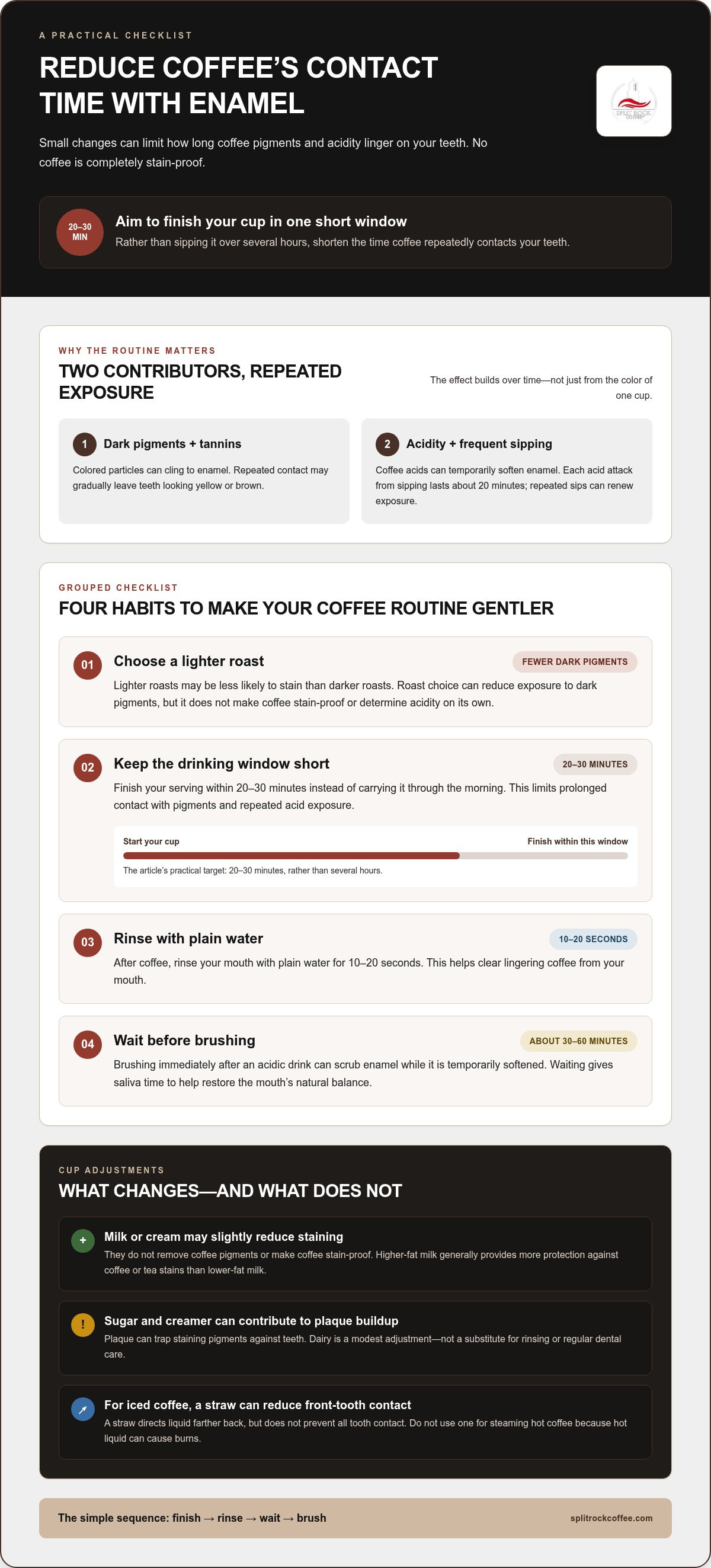
The best coffee to prevent teeth staining may be a lighter roast, which has fewer dark pigments, but no coffee is stain-proof. Finish your cup within 20–30 minutes, rinse with plain water afterward, and wait about 30 minutes before brushing. These small habits help limit how long coffee’s pigments and acidity linger against your teeth.
It’s frustrating when a daily coffee habit leaves visible stains, especially when switching drinks doesn’t seem like a simple fix. Learn why coffee stains teeth and how roast, milk, sipping pace, and rinsing can make a difference. We’ll also compare coffee with tea and cold brew, so you can make a practical choice without giving up the ritual you enjoy.
Key Takeaways
- Choose a lighter roast to reduce exposure to dark pigments, while remembering that no coffee is completely stain-proof.
- Milk or cream may slightly reduce coffee’s staining effect, but neither removes it; added sugar can contribute to plaque buildup.
- Finish your coffee within 20–30 minutes instead of sipping it for hours to limit prolonged contact with your teeth.
- Rinse with plain water for 10–20 seconds after drinking, and wait about 30 minutes before brushing.
- Cold brew may be less acidic than hot coffee, but it can still stain; black tea can stain as much as or more than coffee.
1. Why does coffee stain your teeth?
Coffee stains build through repeated contact between dark pigments and tooth enamel. Tannins, naturally occurring compounds in coffee, help colored particles cling to enamel instead of rinsing away immediately. Over time, regular drinking can leave teeth looking yellow or brown. The effect depends on repeated exposure, not just the color of one cup.
Acidity adds another factor. Coffee’s acids can temporarily soften enamel, making the tooth surface more vulnerable to staining compounds. That doesn’t mean one cup will visibly damage your teeth, but frequently sipping acidic drinks means repeated exposure. Pigments create the color, while acid can make stains easier to set.
Roast affects the pigment side of the equation. Lighter roasts contain fewer dark pigments and may be less likely to stain than darker roasts. That makes a lighter roast a practical choice if you’re looking for the best coffee to prevent teeth staining, though it won’t remove the effects of tannins or make coffee stain-proof. Roast alone also doesn’t determine a coffee’s acidity; the beans and preparation influence the cup’s character.
Protect enamel after drinking. Rinse your mouth with plain water, then wait 30–60 minutes before brushing. Brushing immediately after an acidic drink can scrub enamel while it’s temporarily softened. Waiting gives saliva time to help restore the mouth’s natural balance. If you brush twice daily and floss nightly, you can also limit plaque that may trap pigments between cleanings.
Whitening toothpaste can help lift surface stains when it contains gentle abrasives or hydrogen peroxide. Professional whitening can produce noticeable results after one or two treatments, depending on the cause and severity of discoloration. These approaches address existing discoloration; choosing a lighter roast and rinsing after coffee focus on reducing new exposure.
Stain-resistant coffee products shouldn’t replace rinsing and careful brushing. Follow toothpaste directions and choose a product intended for dental use, since ingredients and directions determine how it should be used. A stain-prevention claim alone doesn’t explain how a product works. Keep the steps simple: rinse with water after coffee, wait before brushing, and maintain your regular dental routine.
Dark pigments, including tannins, cling to enamel and can cause yellowing over time. Regularly consuming staining foods and drinks can gradually discolor teeth. The page advises waiting about one hour after staining drinks before brushing.
2. Black coffee compared with coffee containing milk or cream
Black coffee delivers its full color and flavor without added ingredients. Its dark pigments and tannins contact enamel directly, so staining compounds remain present in every sip. Adding milk or cream may slightly reduce coffee’s staining effect, but it doesn’t remove the pigments or make coffee stain-proof. Think of dairy as a modest adjustment, not a shield.
Milk lightens coffee’s color and adds dairy proteins. These changes may reduce the impact of staining compounds on teeth, but a pale latte still contains coffee. A splash in your morning cup can help, while prolonged sipping still gives pigments more opportunities to settle on enamel. The number of sips and the time spent drinking matter, as does what you add to the cup.
Cream can also soften coffee’s staining effect. Higher-fat milk generally provides more protection against coffee or tea stains than lower-fat milk. That doesn’t mean adding extra cream is a dental strategy; it describes how milk fat relates to staining. Choose an amount that suits your drink, then use practical habits such as rinsing with water when you finish.
Tea follows a similar principle. Adding milk may offer some protection against tea stains, and higher-fat milk generally provides more protection. But tea’s color and tannins remain. Black tea can stain teeth as much as or more than coffee, so switching to tea isn’t automatically a way to avoid discoloration. Milk may change the effect, but it doesn’t cancel it.
Pay attention to what else goes into your cup. Sugar and creamer can contribute to plaque buildup, and plaque can trap staining pigments against teeth. A sweetened coffee with flavored creamer may trade a small reduction in staining from dairy for ingredients that encourage plaque. Check the ingredients and consider whether plain milk better suits your routine.
For a straightforward comparison, try your usual black coffee on one morning and a milk-added version on another. Keep the roast and drinking pace similar, then notice the taste and how each fits your habits. This isn’t a precise test of tooth color; visible changes depend on repeated exposure and oral care. The useful takeaway is simple: milk or cream can slightly reduce staining, but rinsing and consistent dental care still matter. If you’re choosing beans or grounds for your routine, explore coffee options alongside these habits.
3. Limiting coffee contact time and avoiding slow sipping
How long coffee stays in your mouth matters as much as the cup itself. Each acid attack from sipping coffee lasts about 20 minutes, so repeatedly taking small sips can renew exposure before your mouth has recovered. A mug carried through a long morning may keep teeth in contact with coffee far longer than a cup finished in one sitting. Shorten the drinking window.
A practical target is to finish coffee within 20–30 minutes rather than stretching it over several hours. Set the cup down between tasks, or enjoy it with breakfast instead of returning to it throughout the morning. This limits repeated contact with tannins and dark pigments, which can cling to enamel. The goal isn’t to rush; it’s to avoid making one serving an all-morning habit.
Straws can reduce direct contact between coffee and your front teeth by directing liquid farther back in your mouth. They don’t prevent all tooth contact, and they aren’t suitable for steaming hot coffee because hot liquid can cause burns. For iced coffee, a straw can be one useful step, along with finishing your drink promptly.
How much you drink also matters. Reducing coffee from three cups to one or two a day may make a measurable difference to staining. If you’re concerned about yellow discoloration, count how often you refill instead of focusing only on roast or color. Replacing one serving with water is a straightforward way to reduce contact with coffee’s staining compounds.
Use a simple routine: choose the serving you most enjoy, drink it within 20–30 minutes, and avoid carrying a half-finished cup between rooms. If you usually drink three cups, try one or two instead. Then rinse your mouth with water after the last serving. These steps reduce both the number of exposures and the time coffee remains around teeth.
Stain prevention also depends on consistent care outside coffee breaks. Brush twice daily and floss nightly to manage plaque that can trap pigments. Regular dental cleanings help address buildup that home care leaves behind; most people schedule a checkup and cleaning once every six months. Keep your routine steady, especially if frequent sipping is part of your day.
4. Rinsing with water after coffee
Plain water is a simple way to clear some coffee residue after drinking. Rinsing may help wash away remaining tannins and acid before they linger around your teeth. It won’t erase discoloration that’s already there, but it’s a practical step after your cup. Keep water nearby so rinsing becomes part of your coffee routine, not another task to remember.
After you finish, swish water around your mouth for 10–20 seconds, then spit or swallow as you normally would. Move the water across your teeth rather than taking one quick sip. This brief rinse helps wash away residual pigments from the surfaces coffee touched. Use plain water; the point is to clear residue without adding another strongly colored drink.
What can you do while drinking coffee to prevent teeth staining? Sip water between coffee sips to rinse away pigments and help neutralize coffee’s acidity. This is especially useful if you drink slowly, as it adds small rinses throughout your serving. Water won’t prevent every stain, but alternating sips reduces uninterrupted contact between coffee and teeth.
Timing matters after the final sip, too. Rinse with water, then wait about 30 minutes before brushing. Coffee’s acidity can temporarily soften enamel, so brushing immediately may be rough on the tooth surface. Set a reminder or finish coffee before beginning another part of your morning routine. The sequence is easy to remember: finish, rinse, wait, then brush.
If water isn’t nearby, rinsing with milk after a staining drink is another option. Plain water remains a straightforward everyday choice because it leaves no added sugar or dark pigments behind. Don’t treat rinsing as a replacement for brushing and flossing. Maintain your regular dental routine, even when you rinse after each coffee.
Make the routine consistent: keep a glass or bottle of water beside your coffee, take occasional sips, and rinse after your last one. If discoloration remains despite these habits, mention it at your next dental appointment. Most people schedule a checkup and cleaning once every six months. A dentist can assess whether surface staining or another cause is affecting your teeth.
After a staining drink, water or milk can be used to rinse your mouth if you aren’t brushing. Rinsing with plain water immediately after coffee may help remove some remaining tannins and acid. A rinse is an option both after a staining drink when brushing is skipped and directly after coffee.
5. Coffee-stain prevention compared with tea and cold brew
Cold brew is generally less acidic than hot-brewed coffee, but lower acidity doesn’t mean stain-free. It still contains tannins and chromogens, compounds that can contribute to tooth discoloration. Choose cold brew if acidity matters to you, but keep rinsing and limiting contact time in your routine.
Black tea isn’t an automatic escape from stains. It can discolor teeth as much as or more than coffee because it contains high levels of tannins. Adding milk may slightly reduce tea’s staining effect, but it doesn’t remove those compounds. Switching from coffee to black tea may simply change the drink, not the staining challenge.
Red wine and soda can also contribute to tooth staining. There isn’t one useful ranking for everyone: pigments, acidity, frequency, and contact time all matter. Red wine, dark soda, and slowly sipped coffee differ in composition, but each can expose teeth to staining substances. Rinse with water after drinking any of them.
What brewing methods produce coffee with fewer staining compounds? Lighter roasts have fewer dark pigments and may be less likely to stain, while cold brew is generally less acidic but still contains tannins and chromogens. Choose based on what you want to manage: roast influences dark pigments, and cold brewing reduces acidity without eliminating stain-related compounds.
How much does coffee stain teeth compared with tea, red wine, and soda? Black tea can stain as much as or more than coffee, while red wine and soda are also recognized as staining drinks. The practical comparison is exposure: how often you drink them, how long each serving contacts your teeth, and whether you rinse afterward.
Build a routine that works across drinks. Finish coffee or tea within 20–30 minutes instead of sipping for hours, rinse with plain water, and wait about 30 minutes before brushing after acidic drinks. For existing surface discoloration, prevention habits can help limit further staining, but they may not address stains that are already there. Keep regular brushing and flossing steady, too.
Compare coffee options with your priorities in mind, including roast and acidity, then pair your choice with simple prevention habits. Explore coffee options as you decide which cup fits your routine.
Split Rock Coffee: The Gold Standard Coffee Beans
Split Rock Coffee offers The Gold Standard Coffee Beans for readers choosing beans for their daily coffee ritual. Your coffee choice can complement stain-conscious habits, such as finishing a cup promptly and rinsing with water. Keep those steps in place; the beans themselves aren’t a substitute for dental care.
Choose whole bean or ground coffee to suit how you prepare your cup. A Monthly Coffee Subscription is another option for making coffee part of your regular routine. Consider your preferred format and brewing habits as you decide what fits your day.
For coffee options that fit your routine, contact Split Rock Coffee.
Make Your Next Cup a Deliberate Choice
Your next step isn’t giving up coffee. Choose a routine you can maintain, then select a cup that suits your taste and priorities. The best coffee to prevent teeth staining isn’t a guaranteed fix; your coffee choice is one part of a broader daily habit. A mindful approach lets you enjoy the ritual while staying attentive to your oral health.
If acidity is one of the qualities you consider, Split Rock Coffee offers Low Acid Coffee Blends, alongside The Gold Standard Coffee Beans and an optional Monthly Coffee Subscription. Choose based on your preferences, not on a promise that any coffee will prevent stains. Small, steady decisions can make your daily ritual feel more intentional.
Ready to explore your options? Contact Split Rock Coffee and take the next step toward a coffee routine that feels right for you.
Frequently Asked Questions
Why does coffee stain your teeth?
Coffee’s dark pigments and tannins can cling to enamel, gradually causing visible discoloration with repeated exposure. Its acidity can temporarily soften enamel, making stains easier to set. For example, several coffees sipped across the morning expose teeth repeatedly, rather than in one brief occasion. Rinsing and consistent brushing help manage residue and plaque, but they don’t change the pigments already present in coffee.
Does the type of roast matter?
Yes. Lighter roasts have fewer dark pigments and may be less likely to stain teeth than darker roasts. Roast choice is one factor, not a guarantee: coffee still contains tannins and pigments, and frequent exposure can contribute to staining. If you prefer a darker roast, pay attention to your drinking habits and oral-care routine as well as the roast.
How long should you wait to brush after coffee?
Wait at least 30 minutes after coffee before brushing; guidance also gives a 30–60-minute window. This pause matters because coffee’s acidity can temporarily soften enamel, which may be more vulnerable to abrasion from brushing. Rinse with water after your cup, then brush when the waiting period has passed. Keep your usual brushing routine rather than skipping a session.
Should you rinse with water after coffee?
Yes. Swish plain water for 10–20 seconds after your last sip to help wash away residual pigments. If you’re drinking coffee during a commute or at your desk, keep water within reach for an easy rinse afterward. Water is a practical choice because it adds no dark coffee pigments. Continue regular brushing and flossing for plaque control.
Should you use a straw?
A straw can limit coffee’s direct exposure to your front teeth by directing liquid farther back in your mouth. It won’t prevent all contact with teeth, so pair it with other sensible habits. Avoid using a straw with steaming hot coffee, since hot liquid can cause burns. For iced coffee, it can be convenient, especially if front-tooth staining concerns you.
Which coffee types and roasts stain teeth the least?
Lighter roasts may be less likely to stain because they contain fewer dark pigments. Adding milk or cream may slightly reduce coffee’s staining effect, though neither removes it. When comparing options, consider the roast, whether you add milk, and how long you sip each serving. No coffee is stain-proof, so rinsing and regular oral care still matter.
Does cold brew stain teeth less than hot coffee?
Cold brew is generally less acidic than hot-brewed coffee, but it can still stain teeth because it contains tannins and chromogens. Lower acidity doesn’t remove the pigments responsible for discoloration. If you choose cold brew for its acidity profile, keep your usual stain-conscious routine: avoid prolonged sipping and rinse your mouth with water after finishing.
Do low-acid or light-roast coffees cause less tooth staining?
Light roasts may be less likely to stain because they have fewer dark pigments. Lower acidity addresses a different part of the issue: acidic drinks can temporarily soften enamel, while pigments and tannins contribute color. Don’t assume low-acid coffee is stain-free. Consider both acidity and pigment exposure, then pair your coffee choice with rinsing and regular dental care.


