Coffee Subscription for Two People: Compare Costs and Bag Sizes
A coffee subscription for two people can be worth it when the bag size and delivery rhythm match how much you brew. If you share one mug a day, one bag lasts about 15.5 days; share two mugs a day, and it lasts about 7.7 days. The right choice isn’t simply the biggest bag or the lowest delivery frequency. It’s the coffee you’ll use while it’s at its best.
It’s easy to focus on cost and overlook the choice that shapes every cup: whole bean or ground. Freshly roasted whole beans reach their flavor peak roughly 5-14 days after roasting, while pre-ground coffee should be used within 1-2 weeks of its grind date. That difference can matter when two people drink at different rates or use different brewing methods.
This guide explains how household coffee use affects bag size and delivery timing, then compares subscription costs, customization, grind options, and brewing needs. You’ll learn how to choose a coffee subscription that suits both people’s preferences, keeps coffee fresh, and fits your daily routine.
Key Takeaways
- Estimate how quickly you’ll use a bag from your household’s combined daily coffee habit, then align delivery timing with that pace.
- Choose bag size around your brewing routine: a shared pot uses coffee differently from individual pour-over cups or espresso.
- Compare the full value of subscription options by weighing bag size, delivery frequency, and shipping together.
- Use customization to balance two people’s preferences and make room to discover coffees you both enjoy.
- Choose whole bean or ground coffee based on your grinder, brewing method, and how quickly you’ll use each bag.
Are coffee subscriptions worth it?
A subscription can be worthwhile when deliveries match your household’s coffee use and freshness preferences. Compare its recurring cost with grocery-store coffee by looking at bag size, delivery frequency, shipping, and the coffee you actually want. The lowest shelf price alone doesn’t tell the whole story.
Consumption provides a practical starting point. The estimates below use 10 grams of coffee for a 6-ounce cup, so your brewing dose and mug size can change how quickly a bag runs out.
Delivery Cadence and Household Consumption
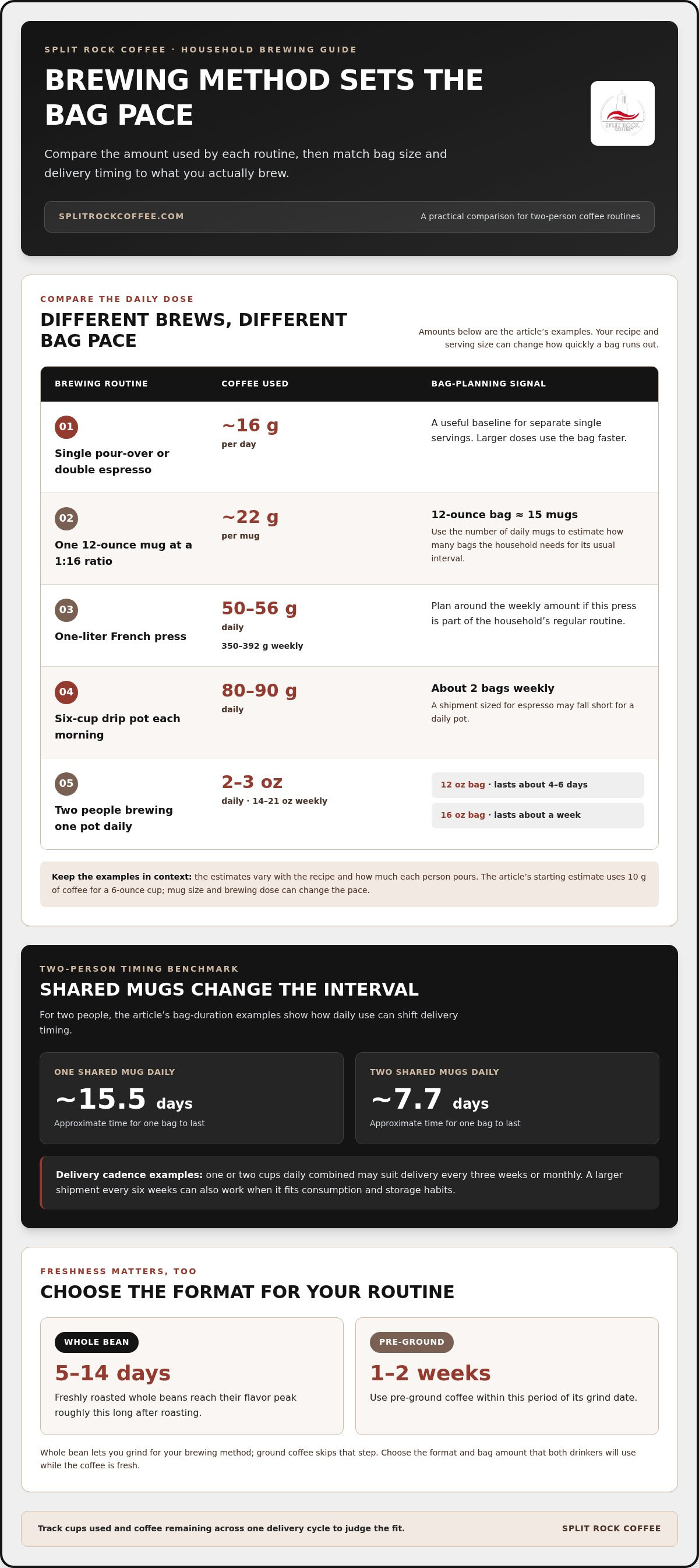
Delivery cadence sets how often fresh coffee arrives, while bag size determines how much arrives each time. For two people sharing one mug daily, a bag lasts about 15.5 days; sharing two mugs, about 7.7 days. At higher daily consumption, a bag runs out more quickly, so deliveries may need to be more frequent.
Households that drink one or two cups a day combined may prefer delivery every three weeks or monthly. Larger shipments every six weeks can also work, provided they fit your consumption and storage habits.
| Delivery option | Household use | Best fit |
|---|---|---|
| Every three weeks | One or two cups daily combined | Smaller, steady use |
| Monthly | One or two cups daily combined | A regular routine with a longer interval |
| Every six weeks | Varies by bag size and use | Households choosing larger shipments |
Choose the interval by tracking cups used and remaining coffee across one delivery cycle.
Delivery and Cancellation Flexibility
Delivery timing determines whether coffee arrives before your supply runs low, while cancellation terms determine how easily you can end a recurring order. Before enrolling, compare the schedule and cancellation terms with your expected use. A fixed monthly shipment differs from a plan that lets you adjust upcoming deliveries, so choose based on the terms offered.
Note each delivery date and when you finish the bag. This makes it easier to see whether the next shipment would arrive too early or too late.
Changing Coffees Between Deliveries
Changing the coffee between deliveries lets two drinkers explore a new origin, roast level, or specialty coffee without committing to one favorite indefinitely. This is different from changing the delivery schedule: the schedule determines when coffee arrives, while the selection determines what’s in the bag.
If one drinker prefers a familiar roast and the other wants variety, alternate selections between orders when your subscription allows it. Choose an amount you’ll both finish, then store unopened coffee sealed and away from heat, light, and moisture. Use coffee within two to three weeks of its roast date for peak freshness.
Coffee subscriptions for different tastes and brewing needs
Your brewing method affects how quickly two people finish a shipment. Compare your daily use, preferred coffee styles, and bag size before choosing a recurring order. A bright coffee one drinker loves may not suit someone who prefers a medium roast, so choose a selection that works for both.
If one person drinks decaf or you want different coffees in one shipment, choose a subscription with decaf and settings for separate selections. That can suit one decaf drinker and one regular-coffee drinker without requiring them to choose the same coffee.
A single pour-over cup or double espresso uses about 16 grams daily. How long a bag lasts depends on the brewing method and the amount of coffee used. That estimate offers a useful baseline when both drinkers make separate single servings, though larger doses use the bag faster.
A six-cup pot of drip coffee each morning calls for around 80-90 grams daily, or about two bags weekly. A one-liter French press needs 50-56 grams daily, which totals 350-392 grams weekly. These brewing routines use coffee at different rates, so a shipment sized for espresso may fall short for a daily pot.
For another comparison, a household of two brewing one pot daily typically uses 2-3 ounces per day, or 14-21 ounces weekly. A 12-ounce bag lasts about 4-6 days; a 16-ounce bag lasts about a week. The actual fit depends on the recipe and how much coffee each person pours.
Serving size matters, too. A 12-ounce mug brewed at a 1:16 coffee-to-water ratio uses roughly 22 grams. A 12-ounce bag makes about 15 mugs at that dose. If each person drinks a mug daily, use that example to estimate how many bags the household needs for its usual interval.
Whole bean coffee lets you grind for the brewing method, while ground coffee skips that step. Choose the grind to suit your equipment and routine, then compare each format against your preferred dose. For a practical look at coffee options for home brewing, consider what both drinkers will reach for each morning.
Before choosing a shipment, write down each person’s brewing method, daily servings, and preferred roast. Comparing the notes will help you decide whether one shared coffee works or separate choices better suit your household.
Comparing subscription prices and bag sizes
Compare the amount delivered, delivery schedule, and shipping before judging a subscription’s value. A lower charge per order may not mean lower monthly spending if deliveries arrive more often. For a fair grocery comparison, match the coffee type and total amount, then compare the full cost for that quantity.
A larger monthly shipment provides more coffee at once, while a smaller option limits the amount in each delivery. Compare the sizes with your household’s actual use, especially if one drinker favors espresso and the other brews larger servings.
Delivery frequency can change the total without changing the monthly quantity. A 12-ounce bag every two weeks costs about the same monthly as a 6-ounce bag weekly. The trade-off is shipment size and timing: one option brings more coffee less often, while the other delivers smaller amounts more frequently.
To compare options, note the bag weight and full recurring charge, including any shipping fee. Divide the total charge by the amount delivered to compare equivalent quantities. Then compare that result with a grocery-store bag of similar weight and coffee style. This prevents bag-size differences from hiding the true cost.
Compare shipping separately. A subscription with shipping included has a different total cost from one that adds a fee to every order, especially when deliveries are frequent. Consider the full monthly total, not just the listed bag price. For similar coffees, the delivery terms and amount per shipment can help you assess value.
Price is only one consideration. A specialty coffee subscription may offer variety in origin, roast level, or tasting experience that a basic grocery selection doesn’t match. Decide whether that variety matters to both drinkers. If you prefer the same coffee each morning, a consistent bag may be a better fit than paying for variety you rarely use.
Before subscribing, record the bag weight, delivery interval, shipping terms, and monthly total. Check that the amount suits your household’s brewing routine. A smaller shipment can suit those prioritizing freshness, while a larger one may fit steady use and shared preferences.
Subscription customization and coffee discovery
Customization helps two drinkers balance familiar flavors with new coffees. Start with a shared profile: note each person’s preferred roast level and brewing method, and whether either wants decaf. Then choose a subscription that lets you adjust selections or delivery frequency, rather than locking every shipment to one coffee. The right settings keep a favorite in rotation while leaving room to explore.
Try a three-bag discovery plan as a tasting exercise, not as a special subscription offer. Choose three distinct coffees, such as a familiar blend, a coffee from a new origin, and a different roast level. Brew each with the same method and recipe. Compare aroma, flavor, and how well each suits both drinkers before choosing a regular selection.
Keep a short tasting record for the three bags. Note each coffee’s name, roast profile, brewing method, and both drinkers’ reactions. One person may prefer a bright cup, for example, while the other favors a fuller-bodied blend. These notes make your next choice deliberate instead of relying on memory or packaging.
Manage delivery frequency and quantity together. If your household enjoys variety but drinks coffee slowly, smaller shipments can help prevent several open bags from competing for attention. If both drinkers regularly finish the same coffee, a recurring selection can simplify the routine. Use your tasting notes to decide whether the next shipment should repeat a favorite or introduce a new profile.
Discounts can influence the decision, but compare the offer’s conditions with your actual routine. Some subscriptions advertise a 20% Subscribe and Save offer. A percentage discount matters only if the selected coffee, shipment size, and frequency suit your household. Review whether the offer applies to recurring deliveries and whether you can change or cancel the subscription under its terms.
Before subscribing, compare three details: whether you can choose specific coffees, change delivery frequency, and cancel. These settings determine how much control you have over each shipment. A flexible subscription can make discovery easier for two people with different tastes; a fixed selection may suit a household that agrees on one dependable coffee.
Let the first three coffees guide the next order. Keep the profile both drinkers enjoy, adjust the selection when preferences differ, and use freshness as a practical reason to avoid ordering more than the household can use.
Choosing whole bean or ground coffee
Choose between whole bean and ground coffee based on freshness, equipment, and how you both brew. Whole beans let you control the grind size, while ground coffee skips that step. If you have a grinder and use several brewing methods, whole beans offer more flexibility. Pre-ground coffee can simplify a busy morning routine.
Freshly roasted whole beans reach their flavor peak roughly 5-14 days after roasting. Grinding just before brewing lets you match the grind to your equipment, such as a coarser grind for a French press or a finer one for espresso. That control helps when the household switches between brewing methods. Check the roast date, then choose a bag size both drinkers can use while the coffee is fresh.
Pre-ground coffee should be used within 1-2 weeks of its grind date. The shorter window makes shipment timing and household pace important: a bag opened for occasional weekend brewing may sit longer than one used each morning. Check the grind date and match the bag to your actual routine, not just the number of cups you hope to make.
Use a simple test before settling on a format. First, list each person’s brewing equipment. Then decide whether you’ll use the same coffee and grind, and consider who will grind the beans and when. A household using a grinder for morning pour-over may prefer whole beans, while someone making coffee quickly before work may favor ground coffee.
Your taste matters, too. If one drinker wants to explore a seasonal selection and the other prefers a steady daily cup, consider whether both can use the same format and bag. Whole beans can be freshly ground for each method; ground coffee is ready to brew, but note when it was ground. Choose the option that fits both people’s habits.
Store either format in a sealed container away from heat, light, and moisture, and avoid opening several bags at once. With whole beans, grind only what you need for each brew. With ground coffee, close the package promptly and track when it was ground. These steps help you use each bag while it’s fresh.
Choose whole beans if grind control and multiple brewing methods matter most; choose ground coffee if convenience fits your routine better. Compare whole bean and ground coffee to find the format that suits your daily preparation.
Split Rock Coffee: The Gold Standard Coffee Beans
Split Rock Coffee offers The Gold Standard Coffee Beans for households looking for a dependable daily coffee. Its Whole Bean and Ground Coffee options let you choose the preparation style that suits your equipment and routine.
A Monthly Coffee Subscription can make coffee deliveries part of your household routine. First decide how much you both drink, which format suits your brewing method, and whether recurring delivery fits your needs. Then choose coffee that matches your preferences rather than ordering a bag that doesn’t suit your routine.
Explore Split Rock Coffee’s coffee selection and choose the format that works for your household.
Set a Coffee Rhythm That Works for Both of You
The best coffee routine is one you can share without forcing identical tastes or habits. When choosing a coffee subscription for two people, focus on what works for your mornings: a coffee you both enjoy, different options for different preferences, or a dependable delivery rhythm. Let that guide your choice.
Split Rock Coffee offers Low Acid Coffee Blends, The Gold Standard Coffee Beans, and a Monthly Coffee Subscription. Consider which fits how you and your household enjoy coffee, then choose what suits your routine.
Ask Split Rock Coffee about subscriptions and explore an option for your shared coffee ritual. Here’s to finding a cup you’ll look forward to brewing together.
Frequently Asked Questions
How do you set it up, step by step?
Start by recording what each person drinks and how they brew it. Choose a coffee format that suits your equipment, then estimate how much you use between deliveries. Select a shipment quantity and interval that match that estimate. Before ordering, review the delivery, selection-change, and cancellation options. Note the first delivery date and when you open the bag to guide your next adjustment.
How much coffee should you order?
Base the order on your actual brewing dose, not simply the number of people. For example, a 12-ounce mug brewed at a 1:16 coffee-to-water ratio uses roughly 22 grams, and a 12-ounce bag makes about 15 mugs at that dose. Count how many mugs you both make, then choose enough coffee for your intended delivery interval. Adjust after tracking one shipment’s use.
Mini-reviews: which subscription actually fits your needs?
A fixed-coffee subscription suits two drinkers who agree on a favorite. A rotating selection suits a pair who enjoy tasting different origins and profiles. A format-focused subscription works best when whole beans or ground coffee are the main consideration. Ask what you want to vary: the coffee, the preparation format, or neither. Your answer will help narrow the options.
Which coffee should two people start with?
Start with coffee suited to the brewing method you share most often, then consider whether you both prefer similar roast profiles. If your preferences differ, choose a familiar everyday coffee first and record each person’s reaction. Notes such as “too bright” or “prefer a fuller cup” make your next selection more useful. Split Rock Coffee offers The Gold Standard Coffee Beans and Low Acid Coffee Blends.
Which schedule fits a household of two?
Match delivery timing to how quickly you finish each shipment. A household drinking one or two cups daily combined may prefer delivery every three weeks or monthly. Some households choose larger shipments every six weeks. To find your own rhythm, note when a bag arrives and when it runs out. Use that pattern to choose an interval that keeps your cupboard stocked without accumulating unopened bags.
Which subscription should you actually choose?
Choose a plan that fits your shared routine, preferred format, and appetite for variety. If you both want the same coffee, a recurring selection keeps things simple. If your tastes differ, prioritize options that let you change the coffee between orders. Split Rock Coffee’s Monthly Coffee Subscription provides regular delivery, and you can skip, pause, or cancel it.
What coffee subscriptions offer plans for two people?
Many subscriptions can serve two people through the shipment quantity and delivery schedule, rather than a special “two-person” label. Estimate your combined use and choose an order that matches it. Split Rock Coffee offers a Monthly Coffee Subscription, with Whole Bean and Ground Coffee options. Choose the format and amount that work for both drinkers.
How much do coffee subscriptions for two people cost per month?
Your monthly total depends on how much coffee you order, how often it arrives, and whether shipping is added. Compare subscriptions over the same period: add the cost of each shipment scheduled that month, including shipping. Then compare the total with the amount of coffee delivered. This helps you decide whether a smaller, more frequent order or a larger shipment better suits your household budget.


