Is a Premium Coffee Subscription Worth the Cost?
A coffee subscription is worth the cost when having coffee at home fits your routine better than repeated café stops. For a coffee subscription for busy professionals, the value is not just in the beans: it is coffee on hand when the day moves fast, without another stop.
It’s fair to weigh that convenience against the cost of your usual café habit. The right choice depends on how often you buy coffee out, how much you brew at home, and whether whole-bean, ground, or single-serve coffee suits the way you work.
This guide helps you compare subscription coffee with café spending, match a delivery rhythm and coffee format to your routine, and decide whether the convenience is worth the cost. A subscription should supply coffee you’ll use, not deliveries that pile up in the cupboard.
Key Takeaways
- Match delivery frequency and bag size to how much coffee you actually brew to avoid running short or building up a surplus.
- Choose whole-bean or ground coffee based on the balance you want between freshness and a faster morning routine.
- Compare what you spend on café coffee with the cups a bag makes to judge whether brewing at home fits your budget.
- Weigh convenience alongside cost: a dependable supply can make busy mornings easier, but the best fit is the one that suits your habits.
1. Cost-Benefit Analysis: Is a Premium Coffee Subscription Worth It?
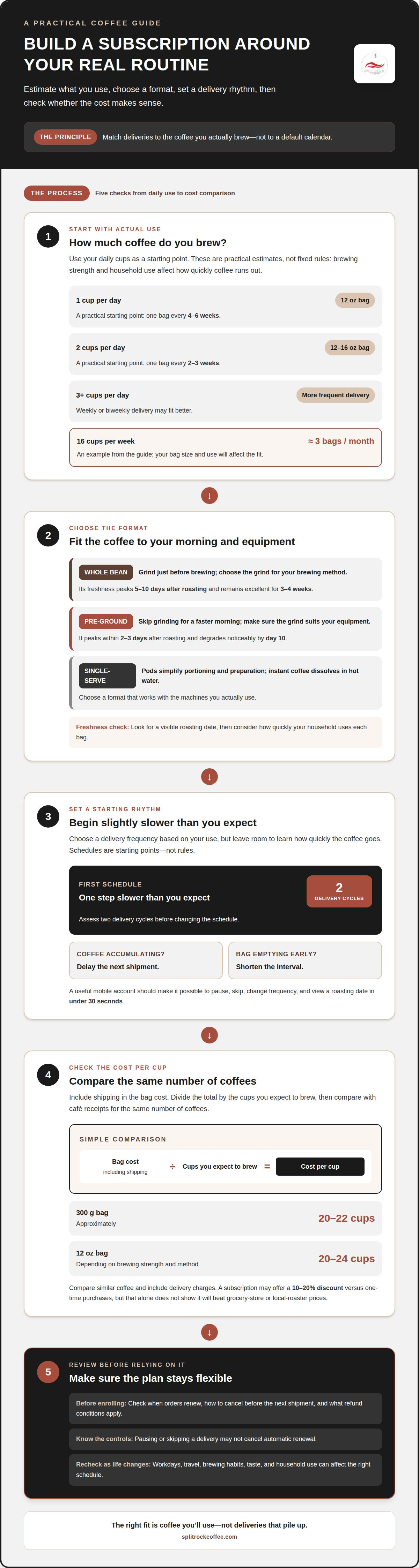
A coffee subscription for busy professionals should follow actual use, not a default calendar. Someone drinking 16 cups per week may need 3 bags monthly. For one daily cup, a 12-ounce bag every 4-6 weeks is a practical starting point. Two daily cups point toward a 12-16-ounce bag every 2-3 weeks. At 3+ cups per day, weekly or biweekly delivery may fit better. These are starting points, not fixed rules; brewing strength and household use affect how quickly coffee runs out.
A provider should let you adjust delivery frequency as your routine changes. Set the first schedule one step slower than you expect, then assess two delivery cycles before changing it. If coffee is accumulating, delay the next shipment; if the bag empties early, shorten the interval. A useful mobile account should make pausing, skipping, changing frequency, and viewing a roasting date possible in under 30 seconds. That matters before travel or when workdays shift.
Taste, convenience, variety, and value depend on the coffee and format, not a universal ranking of subscriptions. Check whether the selection suits your preferred flavor and brewing method, whether deliveries help prevent last-minute shortages, and whether you can adjust them easily. Ground coffee saves a step in the morning; whole beans let you grind just before brewing.
Freshness depends partly on roast timing. Whole-bean coffee peaks 5-10 days after roasting and remains excellent for 3-4 weeks. Pre-ground coffee peaks within 2-3 days and degrades noticeably by day 10. Look for a visible roasting date, then consider how quickly your household uses each bag. Shipping timing and roast schedules differ, so a clear date helps you judge freshness on arrival.
Renewal and refund policies vary among subscriptions. Before enrolling, review when orders renew, how to cancel before the next shipment, and what refund conditions apply. Pausing or skipping a delivery may not cancel automatic renewal, so understand what each account control does before relying on it.
How coffee subscription providers supply whole-bean, pre-ground, or single-serve coffee
A coffee subscription supplies coffee for your own brewing equipment, while a managed coffee service may also coordinate coffee and office supplies. These models suit different routines. Someone who brews espresso before work may prefer whole beans to grind just before brewing; someone focused on speed may choose ground coffee. The key is whether what arrives suits your setup.
With whole-bean coffee, you choose when and how to grind. A grinder lets you adjust the grind for your brewing method, from espresso to drip, and grinding just before brewing can help preserve coffee’s character. Pre-ground coffee removes that step for a faster morning routine, but the grind must suit the equipment: espresso requires a finer grind than many drip methods.
Single-serve pods simplify portioning and preparation, while instant coffee dissolves in hot water. These formats can suit workplaces where employees use different equipment or need coffee without a shared grinder. Match the format to the machines people actually use: roasted beans will not help someone whose only office option is a pod brewer.
Can you choose the roast level, origin, grind, or flavor? That depends on the subscription’s available selections. A preference profile can help you find a preferred roast or origin, while grind options matter if the provider supplies ground coffee. Check whether you can change selections between deliveries, especially if your brewing method or tastes shift.
Freshness also depends on format and timing. Whole-bean coffee peaks 5-10 days after roasting and remains excellent for 3-4 weeks; pre-ground coffee peaks within 2-3 days and degrades noticeably by day 10. Grinding roasted beans immediately before brewing can help preserve their character. A subscription should match bag format and shipment timing to how quickly you use it, not simply send the same amount automatically. That alignment helps limit stale coffee and unused stock.
3. Comparing subscription costs with café habits
Start with what you actually buy, not a generic monthly estimate. A 300g bag makes approximately 20-22 cups, while a 12-ounce bag makes about 20 to 24, depending on brewing strength and method. Divide the bag’s total cost, including shipping, by the cups you expect to brew. Then compare that figure with your café receipts for the same number of coffees.
Are subscriptions cheaper than grocery stores or local roasters? Not automatically: the result depends on bag size, shipping, coffee style, and any recurring-order discount. Subscriptions typically offer discounts of 10-20% compared with one-time purchases, but that doesn’t establish that every plan beats a grocery-store or local-roaster price. Compare similar coffee, such as specialty beans with a similar flavor profile, and include delivery charges.
Ordering coffee for home can change the balance between convenience and spending. If café stops are part of your workday, count how often you buy coffee there and how many cups a bag could replace. Brewing at home may suit someone who drinks several cups, while café visits may remain worthwhile for occasional treats or a particular preparation method. Include equipment costs in your comparison.
Office delivery, bulk orders, and multiple-address shipping are plan-specific features, not universal subscription benefits. For an office, compare the cost per cup with the current supply method, including retail pods; a managed subscription is estimated to reduce business coffee costs per cup by 20% to 40% versus retail pods. That estimate applies to the stated comparison, not every workplace or buying arrangement.
Check how shipping affects the total, whether orders can go to your office, and whether the subscription supports multiple addresses. For a team, delivery to one kitchen may simplify ordering; separate addresses may suit distributed staff if available. Compare delivery costs with renewal and cancellation timing, and focus on what you spend on coffee you actually use.
4. Benefits of coffee subscriptions for busy professionals
For a busy professional, the strongest benefit is fewer decisions during a packed day. A planned delivery means coffee is on hand before the morning rush, instead of requiring a café stop. Employees may spend 20 minutes leaving the office for a nearby café, time that a workplace coffee setup can keep closer to the desk. The gain is practical: coffee is ready where the workday begins.
What are the best coffee subscriptions for busy professionals in the US? The best fit matches your preferred flavor, brewing method, and delivery routine, with clear ways to adjust shipments. Someone who brews espresso at home may prioritize whole beans, while an office with a shared drip machine may need ground coffee.
Variety can keep a reliable routine from becoming monotonous. Trying coffee from different origins can introduce new flavor profiles without changing your brewing method or searching for another bag. If you prefer dark roast, look for options that match; if you are still exploring, try different origins and note which cups you enjoy most. The aim is more choice with less effort.
Convenience depends on whether deliveries match how much coffee you use. Regular shipments can prevent an empty shelf, while pause and skip controls help avoid excess during travel or schedule changes. Choose a delivery plan that suits your household or office, and adjust it if coffee remains unused before the next order. A useful schedule matters more than a fixed one.
A subscription earns its place when it protects time without forcing a format or flavor that doesn’t fit. If dependable coffee at home or work would simplify your routine, explore coffee options for your routine.
Split Rock Coffee: Monthly Coffee Subscription
Split Rock Coffee offers a Monthly Coffee Subscription for professionals who want regular coffee deliveries without adding another shopping task to the week. It can suit you once you know your preferred delivery rhythm and want a regular supply for home or work.
Choose The Gold Standard Coffee Beans or Whole Bean and Ground Coffee to suit your brewing setup. Whole beans suit people who grind before brewing; ground coffee removes that step from a busy morning. Choose a format you will use consistently, so coffee does not sit unused.
If you’re ready to make a subscription part of your routine, contact Split Rock Coffee.
Build a Coffee Routine That Works for You
Choose a coffee routine that works through changing workdays, travel, and shifting tastes. A coffee subscription for busy professionals should support your day, not add another commitment to manage. Start with a flavor and format you enjoy, then use your habits to decide what belongs in your regular rotation.
Split Rock Coffee offers smooth artisan selections, premium whole coffee beans, and a convenient Monthly Coffee Subscription. These options give you a starting point for choosing coffee that suits your preferences and routine. Consider what you want from the cup that starts your day, and use that to guide your choice.
Contact Split Rock Coffee to discuss options. Take the next step toward a coffee routine that feels considered, consistent, and ready for the work ahead.
Frequently Asked Questions
Cost-Benefit Analysis: Is a Premium Coffee Subscription Worth It?
A premium plan is worthwhile when its coffee and convenience suit your priorities. During a week of early meetings, having coffee ready at home may matter more than trying new varieties. If a café visit is part of how you enjoy your day, keeping that ritual may matter more. Judge a plan by how well it fits your routine, not by the word “premium.”
How much do popular US coffee subscriptions cost per month, including shipping?
There is no single monthly total for US coffee subscriptions: the amount depends on the plan, shipment size, delivery frequency, and shipping charges. To compare options, add shipping to the subscription charge and consider how many deliveries arrive during a billing period. Then check whether the quantity suits your household. A low plan total can still be poor value if coffee goes unused.
Which coffee subscriptions offer flexible delivery schedules and easy skipping or pausing?
Look for account controls that make it easy to change a shipment, and understand the difference between pausing and canceling. Split Rock Coffee’s optional subscription can be skipped, paused, or canceled at any time. Pausing can help when you are away from home; canceling ends the recurring arrangement.
Can coffee subscriptions deliver whole bean, ground, pods, or ready-to-drink coffee?
Subscription formats vary: plans may include whole-bean or ground coffee, pods, or ready-to-drink options. Split Rock Coffee offers Whole Bean and Ground Coffee to suit different equipment and preparation habits. If a shared office relies on pod machines, a bag of beans will not fit that setup; choose a format that works with the brewer people actually use.
What should busy professionals look for in a coffee subscription provider?
For a coffee subscription for busy professionals, prioritize a provider whose coffee format fits your brewer and whose delivery schedule works with your calendar. Consider how you will use the coffee at home or work, whether you prefer variety or a familiar selection, and whether subscription controls suit your plans. A good fit should simplify your routine without changing how you like your coffee.
How do the top coffee subscriptions compare on taste, convenience, variety, and value?
Taste, convenience, variety, and value depend on the coffee and format. Compare flavor and brewing-method fit, delivery reliability, how easily you can pause or change shipments, and total cost per cup, including shipping.


