Best Roast for Sensitive Stomach: Which Coffee Is Easiest
Last Updated: November 16, 2026
Quick Summary
For a sensitive stomach, a dark roast is usually the easiest place to start, because it tastes smoother and feels less acidic than light or medium roasts. Roast is only one factor, though, so test one change at a time, starting with a single cup of dark roast in place of your usual coffee.
- Dark roast tends to taste smoother and heavier, with lower perceived acidity than light roast.
- Low-acid is a marketing term; all coffee contains acids, and perceived acidity varies.
- Start with one cup of the new roast and watch how your stomach responds.
- Change one variable at a time: roast, serving size, food timing, brew method or caffeine.
- Coffee changes are not a treatment for reflux; see a doctor if symptoms are frequent or severe.
Table of Contents
- Why Roast Level Changes How Coffee Feels on Your Stomach
- Low-Acid Coffee: What the Term Means and What It Doesn't
- Does Low-Acid Coffee Help Reflux? What the Evidence Suggests
- Roast Level Comparison: Light, Medium and Dark Options
- Best Instant Coffee for Sensitive Stomach: Our Top Picks
- Coffee for Sensitive Stomach K Cups and Single-Serve Options
- Test Your Tolerance and Pick Your Roast
- Frequently Asked Questions
Why Roast Level Changes How Coffee Feels on Your Stomach
If your stomach reacts to coffee, the roast you choose matters more than most people expect. The choice of roast is a practical decision you can act on today.
Many coffee drinkers assume that darker roasts are gentler. That is often true in feel, but it is not the whole story. Roasting changes the beans' chemistry, and the difference shows up in the cup as smoothness, bitterness and body.
Here is the short version: lighter roasts tend to taste brighter and more acidic, while darker roasts tend to taste heavier and smoother. Brewing strength and serving size also change how the cup feels, so roast is only one lever.
Low-Acid Coffee: What the Term Means and What It Doesn't
Low-acid coffee is a marketing term rather than a standard measurement. It generally refers to coffee that tastes smooth and mellow rather than sharp or tangy. It does not mean the coffee is free of acid.
Every coffee contains acids. Perceived acidity is what your palate notices, and it depends on the bean origin, the roast and how the coffee is brewed. This is why two coffees with similar chemistry can feel very different to drink.
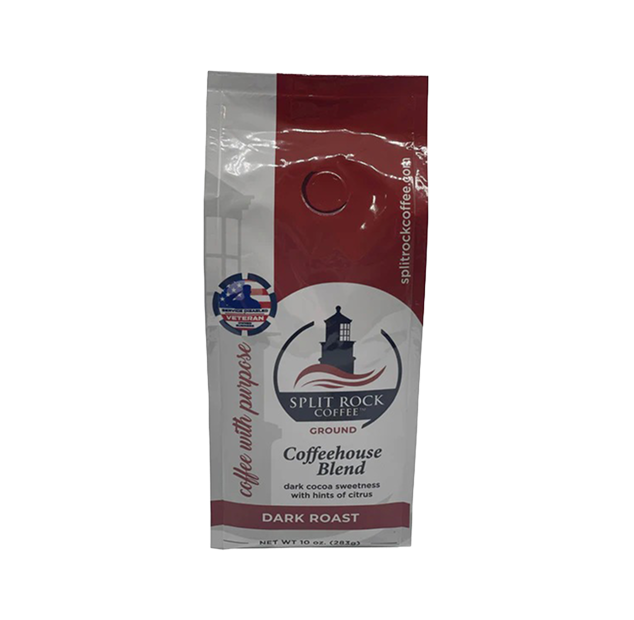
Split Rock Coffee's Dark Roast is described as smooth and extremely low in acidity, with dark cocoa sweetness and hints of citrus. For readers who want a mellow cup, that profile is a useful starting point.
Does Low-Acid Coffee Help Reflux? What the Evidence Suggests
Many people with acid reflux wonder whether a low-acid coffee will prevent heartburn. The honest answer is that the research is limited, and results vary from person to person.
Reflux is influenced by many factors, including meal size, timing, body weight and caffeine. Changing your coffee may help some people, but it is unlikely to solve reflux on its own. If your symptoms are frequent or severe, talk with a doctor or registered dietitian before making big changes to your diet.
A practical approach is to change one thing at a time. Try a smoother roast, keep the serving size modest and note how you feel over a week or two.
Roast Level Comparison: Light, Medium and Dark Options
Roast level is the clearest lever you control when choosing coffee for a sensitive stomach, but the guidance online is genuinely contradictory. Some sources say dark roast is gentler because roasting destroys acids; others say medium roast is gentler because dark roast creates bitter compounds that irritate the stomach. Both claims contain a grain of truth, and understanding why requires separating three different ideas that get lumped together as "acidity."
pH, titratable acidity and perceived acidity are not the same thing. pH measures the concentration of free hydrogen ions in a liquid, a lower number means a more acidic solution. Titratable acidity measures the total amount of acid present, including acids that are bound and do not register strongly on a pH meter. Perceived acidity is what your palate actually notices: the bright, tangy, mouth-watering sensation on the sides of your tongue. Roasting changes all three in different directions. As beans roast darker, some organic acids degrade, which can lower titratable acidity, while new bitter and smoky compounds form that many drinkers experience as "smoother" even though the pH may not move much. That is why a dark roast can taste mellower than a light roast without being meaningfully less acidic on paper.
What the research actually shows. Studies on roast level and stomach comfort are limited and mixed. Some work suggests darker roasts produce compounds that are less likely to stimulate gastric acid secretion, while other work points to dark-roast bitterness and caffeine as separate triggers. No single roast level has been shown to be universally gentler. The honest takeaway is that roast is one variable among several, and individual tolerance varies enough that a personal test beats any blanket recommendation.
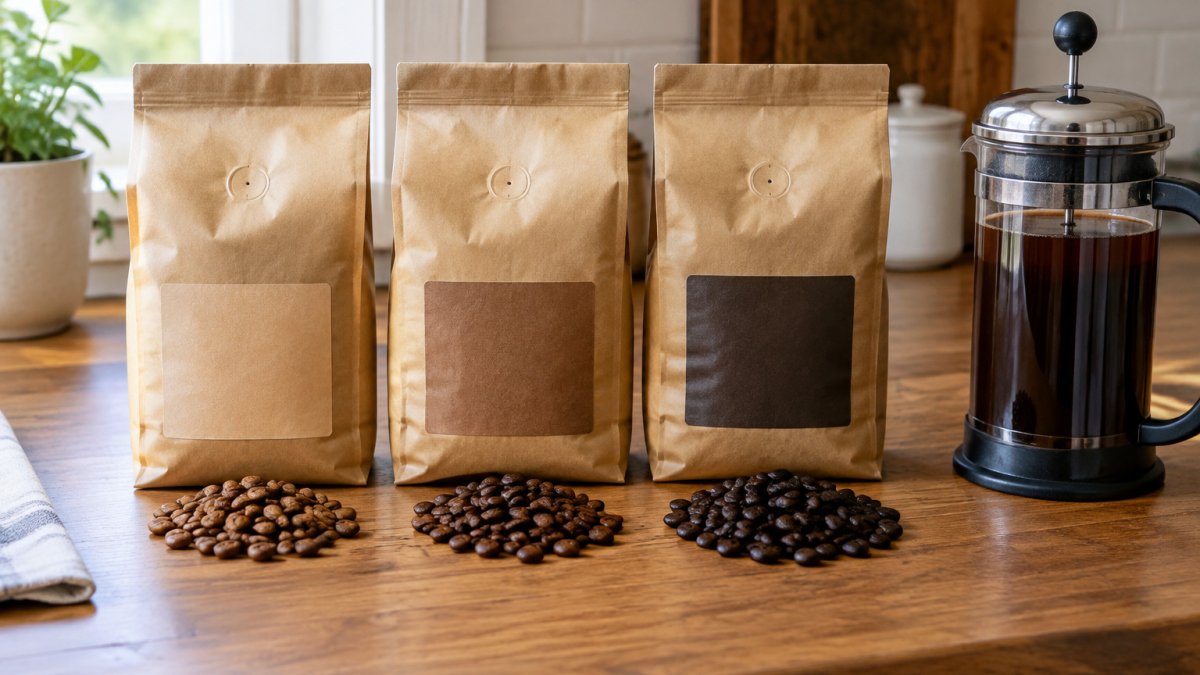
The table below compares the three Split Rock Coffee options on flavor, perceived acidity and the drinker each one tends to suit.
| Roast | Flavor Profile | Acidity Feel | Best For |
|---|---|---|---|
| Light (100% Colombian) | Milk chocolate, toasted nuts, tropical note | Brighter, livelier | Drinkers who like a crisp, clean cup |
| Medium (Breakfast Blend) | Sweet chocolate, dark cherry finish | Balanced, mild | Everyday drinkers and cold brew fans |
| Dark (Coffeehouse Blend) | Dark cocoa, citrus hints | Smoothest, lowest perceived acid | Sensitive stomachs and all-day sipping |
Pros and cons at a glance:
- Light roast: Pro: lively, complex flavor with the most origin character. Con: brighter perceived acidity may bother sensitive stomachs, and lighter roasts often need a finer grind and hotter water to extract well.
- Medium roast: Pro: balanced and versatile, forgiving across brew methods. Con: some drinkers still notice its acidity, and the middle ground can feel like a compromise rather than a solution.
- Dark roast: Pro: smoothest of the three in perceived acidity, with a heavier body that many sensitive drinkers find easier. Con: less of the bright fruit character that light roasts offer, and the bitter compounds that develop in dark roasting can bother a different subset of drinkers.
Why the medium-versus-dark question has no single answer. If your symptoms track with bright, tangy sensations, a dark roast is usually the better first test. If your symptoms track with bitterness, heaviness or caffeine, a medium roast at a smaller serving size may suit you better. The only way to know which pattern you fall into is to change one variable at a time, which is exactly what the tolerance test later in this article walks you through.
Watch out: if you switch from a light roast to a dark roast, do not increase the number of cups overnight. Start with one cup and see how your stomach responds, because a smoother taste does not guarantee a calmer stomach.
Best Instant Coffee for Sensitive Stomach: Our Top Picks
Instant coffee is not the only convenient option, but it is one many readers ask about. The Medium Roast (Breakfast Blend) Filter Packs offer a rich chocolate and caramel flavor with a slight cherry finish.
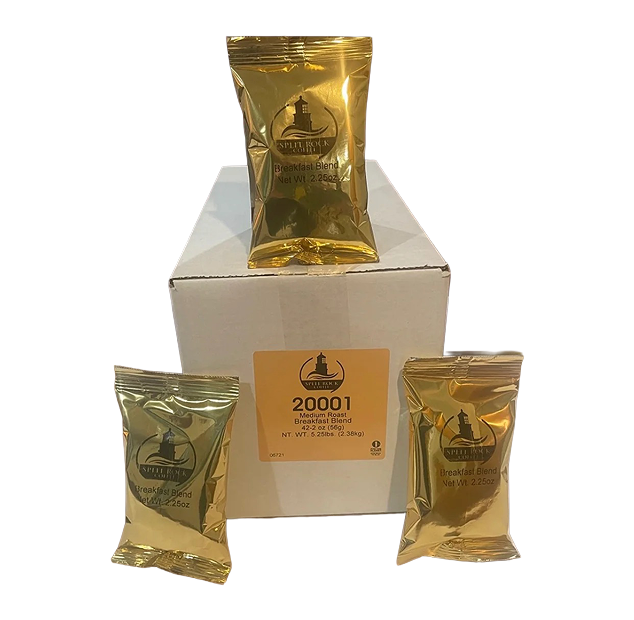
These packs are also designed for cold brew. Fill a glass container with 3 cups of purified water, add one filter pack, and refrigerate for at least 12 hours.
At $121.99 for a case of 200, these packs are listed as a special-order item.
Coffee for Sensitive Stomach K Cups and Single-Serve Options
Single-serve options make it easy to test a roast without committing to a large bag. Split Rock Coffee's Frac Packs each brew 12 cups, so you can compare roasts side by side.
For a smooth single-serve experiment, the Dark Roast Frac Pac Case of 42 is priced at $79.99. For a lighter comparison, the Light Roast Frac Pack Case of 42 is also $79.99. Buying one of each lets you test your tolerance directly.
Test Your Tolerance and Pick Your Roast
Most articles tell you to "try a gentler roast and see how you feel." That advice fails because it changes several variables at once. If you switch from a light roast to a dark roast, add cold brew, and start drinking on an empty stomach in the same week, you have no idea which change helped or hurt.
Step 1: Establish a baseline. For three to four days, drink your current coffee exactly as you normally do, same roast, same brew method, same cup size, same time of day. Note symptoms on a simple 0-3 scale (0 = none, 1 = mild, 2 = moderate, 3 = severe) at one hour and two hours after each cup. This baseline is what every later change gets compared against.
Step 2: Change roast level only. Keep everything else identical, same brew method, same cup size, same time of day, same food pairing. Switch to a single roast for four to five days. A practical starting point is the Dark Roast 10 oz. ground coffee at $14.99, since dark roast is the most common first test for sensitive stomachs. Log symptoms the same way.
Step 3: Change serving size and concentration. Return to your baseline roast and cut the cup size roughly in half, or brew the same amount of coffee with more water. Caffeine dose and concentration scale with serving size, and many people who react to coffee are reacting to dose rather than to acidity. A smaller, weaker cup of the same coffee often tells you more than a full cup of a different roast.
Step 4: Change food timing. With your baseline coffee and serving size restored, drink one cup with a meal and one cup on an empty stomach on separate days. Coffee on an empty stomach is a common trigger because there is no food buffer to slow gastric emptying. If the with-food cup is clearly better, timing is your lever and you may not need to change roast at all.
Step 5: Change brew method. The Medium Roast (Breakfast Blend) Filter Packs can be used for cold brew: fill a glass container with 3 cups of purified water, add one filter pack, and refrigerate for at least 12 hours. Compare a cold-brew cup against your baseline hot cup at the same serving size.
Step 6: Test caffeine separately. If none of the changes above move the needle, caffeine may be the trigger rather than acidity or roast. Try a decaffeinated coffee at your usual serving size for four to five days. If symptoms disappear on decaf, you have identified caffeine as the likely cause and can decide whether to switch, blend regular and decaf, or simply limit serving size.
Reading your results. A meaningful improvement is a consistent drop of at least one point on your 0-3 scale across several days, not a single good morning. Most people find one or two variables matter and the rest do not. Once you know your lever, roast, dose, timing, brew method or caffeine, you can stop guessing and buy accordingly.
A note on medical caveats. Coffee tolerance varies widely, and none of this is a treatment for acid reflux, GERD or gastritis. Coffee changes may affect comfort for some readers, but they are not a substitute for medical advice. If your symptoms are frequent, severe, or include difficulty swallowing, unintended weight loss, or pain that wakes you at night, talk with a doctor or registered dietitian before making further dietary changes.
Mayo Clinic guidance on acid reflux and diet
National Institute of Diabetes and Digestive and Kidney Diseases on GERD
MedlinePlus overview of heartburn and GERD
Choosing the right roast is about finding what your stomach tolerates best. Split Rock Coffee offers light, medium and dark roasts with a low-acid focus, so you can test options and find a cup that suits you. Veteran-owned and roasted to order, our coffee also supports programs for disabled veterans, active-duty military and first responders.
Frequently Asked Questions
What coffee roast is best for a sensitive stomach?
Dark roasts are described as smooth and extremely low in acidity, though individual tolerance varies. Split Rock's Dark Roast 10 oz. Ground Coffee is priced at $14.99 and is described as extremely low in acidity. Medium roasts such as the Breakfast Blend are a good middle option if dark roast tastes too bitter. Start with a small cup and see how you feel over several days before deciding.
Does dark roast coffee have less acid than light roast?
Generally, yes. Roasting longer breaks down more of the acids that give light roasts their bright, sharp character, so dark roasts usually taste less acidic. That said, perceived acidity also depends on bean origin, brewing method and brew strength. Split Rock's Dark Roast is a blend of Central American and Indonesian beans, which the listing describes as a good balance of body and acidity rather than a sharp, tart cup.
Does low-acid coffee help with reflux?
Some people with reflux find low-acid coffee easier to tolerate, but the evidence is limited and reflux triggers differ from person to person. Caffeine and other compounds can also affect the stomach, so acidity is only one factor. If you have frequent heartburn, talk with a doctor before changing your coffee habits. Testing one roast at a time and tracking symptoms is a practical way to see what works for you.
Is cold brew easier on a sensitive stomach?
You can make cold brew at home with a medium roast such as the Medium Roast Filter Packs, which are designed for cold brew: steep one pack in 3 cups of purified water in the refrigerator for at least 12 hours, then remove the pack and enjoy.


