The Least Acidic Coffee: A Disciplined Guide to Pain-Free Mornings
That bitter, charred aftertaste in your mug isn't a sign of strength. It's a symptom of a roasting process that has failed both your palate and your gut. For many, the search for the least acidic coffee ends in a frustrating compromise between a brew that tastes like burnt toast and a morning ruined by the sharp sting of heartburn. You deserve a morning routine that acts as fuel, not a liability. We understand that your daily cup is more than just a beverage; it's the sustenance required to face the day's challenges with a clear head and a steady stomach.
It's time to stop guessing and start relying on disciplined sourcing and precision craft. While the global coffee market continues to grow, reaching $222.62 billion by the end of 2026, the lack of official regulation on low-acid claims has left many consumers in a state of confusion. This guide will help you navigate the variables you can control, from bean origin to roasting benchmarks. You'll learn the science-backed factors that define a truly gentle brew so you can enjoy a rich, full-bodied experience without the burn. We're going to break down how to find a smooth cup that honors your health and your high-performance standards.
Key Takeaways
- Learn how chlorogenic acids impact your stomach and why a slight shift in pH can change your entire morning routine.
- Discover why low-elevation beans from regions like Brazil and Sumatra are naturally predisposed to be the least acidic coffee available.
- Master the roasting discipline required to break down harsh compounds while preserving the rich, complex flavors you expect.
- Identify specific brewing techniques and water chemistry adjustments that can reduce acidity by as much as 70 percent.
- Understand how a mission-focused approach to sourcing creates a new Gold Standard for both digestibility and daily performance.
The Science of pH: What Defines the Least Acidic Coffee?
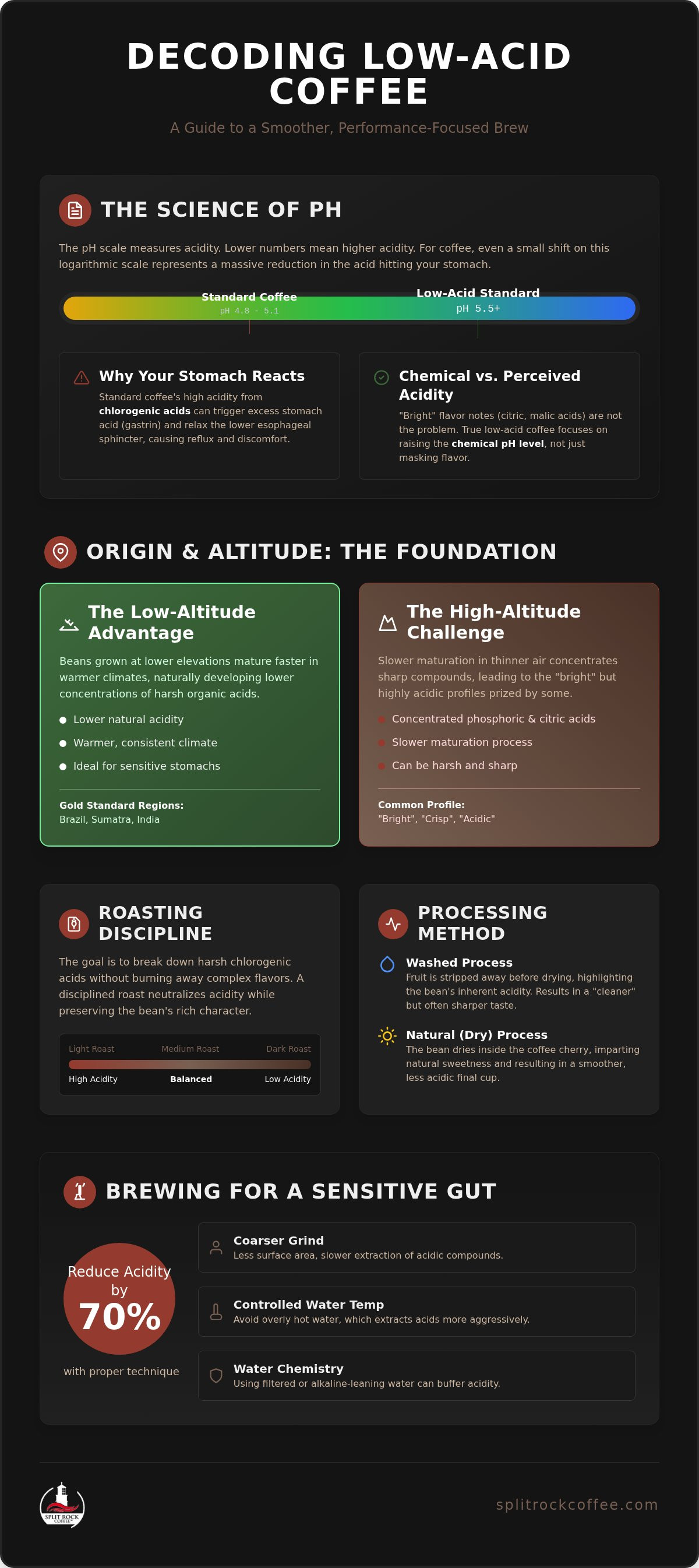
Discipline starts with data. Most people think "acid" is just a flavor profile, but for those with sensitive guts, it's a chemical reality that dictates their entire morning. Standard coffee usually falls between 4.8 and 5.1 on the pH scale. This range is acidic enough to cause significant discomfort for many. Finding the least acidic coffee requires looking beyond the marketing and focusing on the actual measurement of the brew. Securing the least acidic coffee means understanding the chemical makeup of the bean before it ever hits the roaster.
When defining low-acid coffee, we focus on the concentration of hydrogen ions. This shift might seem small on paper, but on a logarithmic scale, it represents a massive reduction in the concentration of acid hitting your stomach lining.
A true low-acid coffee is defined as a brew with a pH of 5.5 or higher.
Chemical vs. Perceived Acidity
Bright flavor doesn't always mean high acidity. Perceived acidity is a flavor trait driven by organic acids like citric or malic acid. Chemical acidity is different; it's the actual pH level. While "acid-free" coffee is a myth, "low-acid" is a measurable standard. You can enjoy a smooth, rich cup that protects your gut while still tasting excellent.
These organic acids are what give coffee its character. Citric acid provides a hint of lemon, while malic acid can taste like crisp apple. These aren't the culprits for your heartburn. The real issues stem from chlorogenic acids that break down into harsher compounds. By focusing on the chemical reality, we can preserve the taste you love without the physical toll.
Why Your Stomach Reacts to Standard Brews
Standard brews trigger gastrin production, which signals your stomach to create more acid. High acidity also relaxes the lower esophageal sphincter, causing reflux. Our mission is about sustained performance. We believe you shouldn't have to choose between your morning fuel and your physical comfort. Reducing chlorogenic acids ensures your coffee supports your day instead of derailing it.
This isn't just about avoiding a stomach ache. It's about the discipline of the craft. We scrutinize every batch because we know that for our community, coffee is the literal sustenance that powers a legacy of service and hard work. When the chemical balance is right, your coffee acts as a reliable partner in your daily mission rather than a hurdle you have to overcome.
Origin and Altitude: Where the Least Acidic Beans are Grown
Excellence in your mug is a matter of geography, and identifying the least acidic coffee starts with the map. While the industry often chases high-altitude beans for their sharp, bright profiles, our mission requires a different level of scrutiny. Lower elevations produce beans that mature quickly in warmer climates, naturally developing lower concentrations of the organic acids that trouble the gut. This is the foundation of the least acidic coffee. We look to regions like Brazil, Sumatra, and India. These locations provide the environmental discipline necessary to grow a bean that offers sustenance without the sting.
The species you choose dictates the chemical baseline of your brew. While Arabica is favored for its premium flavor profile, it typically contains higher levels of acidity than Robusta. However, simply switching to Robusta isn't the answer, as its high caffeine content can still trigger gastric distress. According to a UC Davis meta-analysis on coffee acids, the chemical makeup of these species varies significantly based on their environment. We bridge this gap by sourcing specific Arabica varieties grown in alkaline-leaning soils that naturally buffer the bean's pH.
The Low-Altitude Advantage
High-altitude coffee is a battleground of phosphoric and citric acids. At elevations above 4,000 feet, the air is thinner and the maturation process slows down, allowing these sharp compounds to concentrate. Brazilian beans remain the Gold Standard for those seeking a gentler start. Grown on lower plateaus, these beans bypass the intense acid development found in mountain-grown varieties. It's a calculated choice to prioritize your performance over the trendy "brightness" of high-mountain crops.
Processing Methods: Washed vs. Natural
The journey from the farm to the roastery includes a critical fork in the road: the processing method. Washed coffees are stripped of their fruit immediately, which highlights the bean's inherent acidity. In contrast, the natural or "dry" process allows the bean to dry inside the coffee cherry. This method imparts a natural sweetness and, more importantly, can reduce the perceived sharpness that irritates the stomach. Fermentation plays a vital role here; a controlled, disciplined fermentation process ensures the final pH remains within our strict benchmarks. Sourcing transparency means we know every step of this journey, ensuring that the sustenance we provide is clean and consistent. If you're ready to experience the difference that origin and processing make, you can explore our Low Acid Coffee Blends to see how we apply these principles to every bag. We believe that quality is a mission to serve those who need fuel without the physical toll.
Roasting Discipline: Neutralizing Acid Without Sacrificing Flavor
Roasting is where the potential of the bean meets the fire of discipline. It is a transformative process that requires a steady hand and a clear mission. To create the least acidic coffee, we must master the thermal breakdown of chlorogenic acids. High heat isn't just for flavor; it's the catalyst that decomposes the compounds responsible for your morning burn. We view the roaster as a tool for service, ensuring that every bag of our Low Acid Coffee Blends meets a standard of excellence that honors your daily grind.
Traditionally, dark roasts have been the primary choice for those seeking relief. As the bean spends more time in the roaster, its chemical structure fundamentally changes. We focus on the Gold Standard balance. This means roasting long enough to neutralize acidity without crossing the line into a charred, lifeless product. Our approach uses precision to ensure every batch provides the sustenance you need to perform at your peak. We don't settle for "burnt" because we know you don't settle for mediocre.
The Dark Roast Defense
Dark roasting does more than just remove acid; it creates a protective compound called N-methylpyridinium (NMP). This specific chemical is generated during the intense heat of a dark roast and actually helps block the stomach's production of hydrochloric acid. Reaching the "Second Crack" in the roasting cycle is the benchmark for this development. It's a delicate timing game. If you pull the beans too early, the harsh acidity remains. If you wait too long, you lose the rich oils and sweetness that define a premium brew. We avoid the "burnt" trap by monitoring the temperature with surgical precision, ensuring the result is smooth and effective.
Precision in the Roastery
The method of heat transfer matters. Convection roasting, which uses hot air to circulate around the beans, provides a more even breakdown of acids compared to conduction. This prevents the "scorched" spots that can lead to bitterness and digestive irritation. Our quality control involves testing batches for consistency and mission-readiness. A slow, steady roast profile allows for a more thorough decomposition of chlorogenic acids throughout the entire bean, not just the surface. This level of scrutiny is what separates a generic low-acid claim from a true Gold Standard product. We roast with a sense of duty, understanding that the results serve a community that relies on high-performance fuel every single morning.
Brewing Strategies for a Sensitive Gut: Beyond the Bean
Sourcing the right bean is only the start of your mission. To truly secure the least acidic coffee experience, you must apply the same discipline to your brewing method as we do to our roasting. Extraction is a chemical reaction. Heat acts as a catalyst that pulls both flavor and acid from the grounds. By manipulating variables like temperature, time, and water chemistry, you can further neutralize the physical toll on your gut. Our goal is to ensure your morning cup provides sustenance, not a setback.
Cold brew is a tactical advantage for the sensitive stomach. Because it uses time instead of heat, it results in roughly 60 to 70 percent less acid than standard hot drip methods. This isn't just a trend; it's a measurable reduction in the compounds that trigger reflux. When you remove high-temperature water from the equation, many of the harsher oils and acids remain trapped in the grounds.
Mastering the Cold Extraction
Use a coarse grind to ensure a slow, steady extraction. Steep your grounds for 12 to 24 hours in filtered, room-temperature water. If you want to preserve more aromatic complexity, try the "Hot Bloom" method: saturate the grounds with a small amount of hot water for 30 seconds before adding cold water for the long steep. This releases the flavor without the sustained acid extraction of a full hot brew. Remember that cold brew is a concentrate. Dilute it properly to avoid an unintentional caffeine spike that can irritate the lower esophageal sphincter. For those who demand high performance without the burn, our least acidic coffee options are designed to withstand various brewing methods while remaining gentle on the stomach. You can browse our Low Acid Coffee Blends to find the perfect fuel for your morning routine.
Hot Brewing with Precision
Hot brewing requires precision to avoid over-extraction. Use a French Press or a Pour Over setup to maintain control. A coarse grind is essential here as well; fine grounds have more surface area, which leads to a faster release of harsh acids. Use alkaline water to buffer the pH if you find your tap water is too soft. Filter selection also plays a role. Paper filters are superior at trapping diterpenes and specific oily acids that can contribute to digestive upset, whereas metal filters allow these compounds to pass through into your cup. Clean your equipment after every use. Stale coffee oils oxidize and turn acidic, which can taint even the highest quality beans. This level of equipment discipline ensures your daily brew remains a reliable partner in your mission.
Choosing Your Daily Fuel: The Split Rock Low Acid Mission
Coffee is more than a morning ritual. It is the fuel that powers your mission, the sustenance that allows you to face the day's challenges with resilience. At Split Rock Coffee, we treat the production of the least acidic coffee as a solemn duty. Founded in 2013, our identity as a Service-Disabled Veteran-Owned Small Business (SDVOSB) informs every decision we make. We understand the weight of responsibility. We know that when you reach for a cup, you aren't just looking for a flavor; you're looking for a reliable partner that won't let you down with a sudden strike of heartburn or digestive fatigue.
Our commitment to The Gold Standard Coffee Beans means we scrutinize every variable. From the low-elevation farms in Brazil to the precision of our roasting profiles, we aim for a benchmark of excellence that balances flavor, ethics, and digestibility. This isn't just about removing acid. It's about preserving the rich, complex soul of the bean while ensuring it remains gentle on your system. Choosing whole bean over ground coffee is a tactical decision for those who want to maintain the integrity of the least acidic coffee possible. Whole beans have less surface area exposed to oxygen, preventing the rapid oxidation that can cause even the best roasts to turn sharp and "stale" over time. Grind only what you need to protect the mission-readiness of your brew.
Our Low Acid Coffee Blends
We crafted our Low Acid Coffee Blends for the resilient. Many people assume that a gentle cup must be a weak one, but we've proven that low-acid doesn't mean low-flavor. Our profiles are deep, rich, and full-bodied, designed to provide the high-performance energy you require without the physical toll. This is the SDVOSB difference. Every batch is backed by a legacy of service and a commitment to quality that refuses to cut corners. We roast for those who lead, those who serve, and those who understand that quality is a non-negotiable requirement for success.
Joining the Mission
Consistency is the backbone of any successful operation. Our Monthly Coffee Subscription is designed for those who demand a steady supply of high-quality fuel without the friction of constant reordering. It's about discipline. By automating your supply, you ensure your mornings remain pain-free and focused on the tasks at hand. Having the Gold Standard delivered directly to your door means one less variable to manage in your high-stakes routine. We invite you to join a community that values craft, heritage, and the pursuit of a better morning. Secure your Low Acid Coffee Blends today and experience the difference that a purposeful, disciplined approach to roasting can make for your gut and your goals.
Secure Your Morning Mission
Reclaiming your morning starts with a commitment to quality and a refusal to settle for a brew that works against you. You now understand that finding the least acidic coffee isn't a matter of luck; it's a result of disciplined sourcing from low-elevation origins and precision roasting that prioritizes your gut health. By mastering your brewing technique and choosing beans that meet rigorous Gold Standard Quality Benchmarks, you've taken control of your daily fuel. You've traded the burn of standard roasts for the sustained energy required to face your challenges head-on.
Since 2013, we've operated with a clear sense of duty as a Service-Disabled Veteran-Owned Small Business. We believe that every cup should honor your hard work and support your physical well-being. Don't let high acidity dictate the pace of your day or compromise your focus. It's time to elevate your standards and join a community that values excellence in every pour. Fuel your mission with our Gold Standard Low Acid Coffee Blends and experience the resilience of a truly smooth morning. You've earned a cup that works as hard as you do.
Frequently Asked Questions
Is dark roast coffee always the least acidic?
Dark roasts are typically the most effective at reducing acidity because the prolonged heat decomposes chlorogenic acids more thoroughly. This process also generates N-methylpyridinium, a compound that helps prevent stomach cells from producing excess acid. While darkness is a strong indicator, true low-acid quality depends on disciplined roasting techniques that avoid the "burnt" trap. We focus on a precise thermal breakdown to ensure every batch meets our Gold Standard benchmarks for digestibility.
Does adding milk to coffee reduce its acidity?
Milk acts as a buffer rather than a neutralizer. The calcium in dairy can slightly raise the pH level, while proteins like casein bind to the coffee's chlorogenic acids. This prevents some of the acid from reacting with your stomach lining immediately. While it offers temporary relief for some, it doesn't solve the underlying chemical acidity of the bean. For a truly pain-free morning, it's more effective to start with a naturally low-acid blend.
Can I drink low-acid coffee if I have severe GERD or acid reflux?
Many individuals with gastrointestinal sensitivities find that switching to a low-acid option allows them to enjoy coffee again. By reducing the chemical triggers that stimulate gastrin production, these blends are much gentler on the gut. However, caffeine itself can relax the lower esophageal sphincter, which may still cause issues for those with severe GERD. We recommend starting with a small serving of our specialized roasts to test your personal tolerance and resilience.
What is the pH level of the least acidic coffee?
Standard coffee typically registers a pH between 4.8 and 5.1. In contrast, the least acidic coffee options aim for a pH level of 5.5 or higher. Because the pH scale is logarithmic, this seemingly small numerical shift represents a massive reduction in actual acid concentration. Our mission is to provide a brew that sits comfortably in this higher pH range, ensuring you receive the sustenance you need without the physical toll of high acidity.
Does decaf coffee have less acid than regular coffee?
Decaffeination can slightly lower acidity because the process often removes some of the organic acids along with the caffeine. Additionally, caffeine is a known stimulant for stomach acid production. By removing it, you eliminate one of the primary biological triggers for reflux. However, the roast level and bean origin still play the most significant roles in determining the final pH. A decaf light roast may still be more acidic than a caffeinated dark roast.
Is cold brew the only way to get a low-acid cup?
Cold brew is a powerful tool for acid reduction, but it isn't the only solution. You can achieve a low-acid cup through hot brewing by selecting the right beans and maintaining equipment discipline. Using a French Press with a coarse grind and alkaline water can produce a smooth, gut-friendly result. Our least acidic coffee options are designed to withstand various brewing methods while remaining gentle on the stomach regardless of whether you prefer a cold extraction or a traditional hot pour.
What are the best coffee beans for a sensitive stomach?
The best beans for a sensitive stomach are those grown at lower altitudes in regions like Brazil or Sumatra. These beans naturally develop fewer chlorogenic acids during maturation. When combined with a disciplined dark roast, these beans provide a rich flavor profile that is chemically predisposed to be easier on the digestive system. We prioritize these specific origins to ensure our customers receive a Gold Standard experience that supports their high-performance morning routine without irritation.
Are there any 'no-acid' coffees available?
"No-acid" coffee is a marketing myth. All coffee is inherently acidic to some degree because of its biological makeup. However, "low-acid" is a measurable, science-backed standard that identifies brews with a significantly higher pH than standard options. We avoid misleading claims and focus on the disciplined craft of reduction. Our mission is to provide the most digestible fuel possible by targeting the specific acids that cause discomfort while preserving the premium quality of the bean.


