Troubleshooting bitter coffee taste through brew ratio and water flow
A bitter cup doesn’t always mean bad beans. Some bitterness is normal, but a dry or burnt taste that lingers at the back of your tongue can point to over-extraction. For troubleshooting bitter coffee taste, start with the brew ratio: a common starting point is 1 gram of coffee for every 15 to 17 grams of water. If water drains slowly, a fine grind or restricted flow may also be pulling harsh flavors into the cup.
You may know the frustration: the beans look good and the brew seems familiar, yet each sip ends sharp and dry. The fix is to adjust carefully, not overhaul everything at once. This guide explains how to recognize bitterness, balance coffee and water, and identify how slow water flow can prolong extraction. Whether you brew pour-over, French press, or espresso, you’ll have a practical starting point and a way to judge each change by taste.
Key Takeaways
- Track how grind size changes the pace of extraction, then adjust it gradually to find a smoother cup.
- Measure coffee and water consistently so you can tell whether the brew’s strength is shaping its taste.
- If water drains slowly, inspect the grind and brewing process; a longer contact time can draw out harsher flavors.
- Taste for a lingering, dry finish and compare it with the coffee’s roast character before changing your method.
1. What is bitter coffee?
Some bitterness is part of coffee, even in specialty-grade beans. A warning sign is a dry, burnt flavor that lingers at the back of your tongue after each sip. Bright acidity, especially in lighter roasts, tastes sharper and livelier. It is not the same as a harsh, drying finish. Notice where the flavor lands before changing your brewing routine.
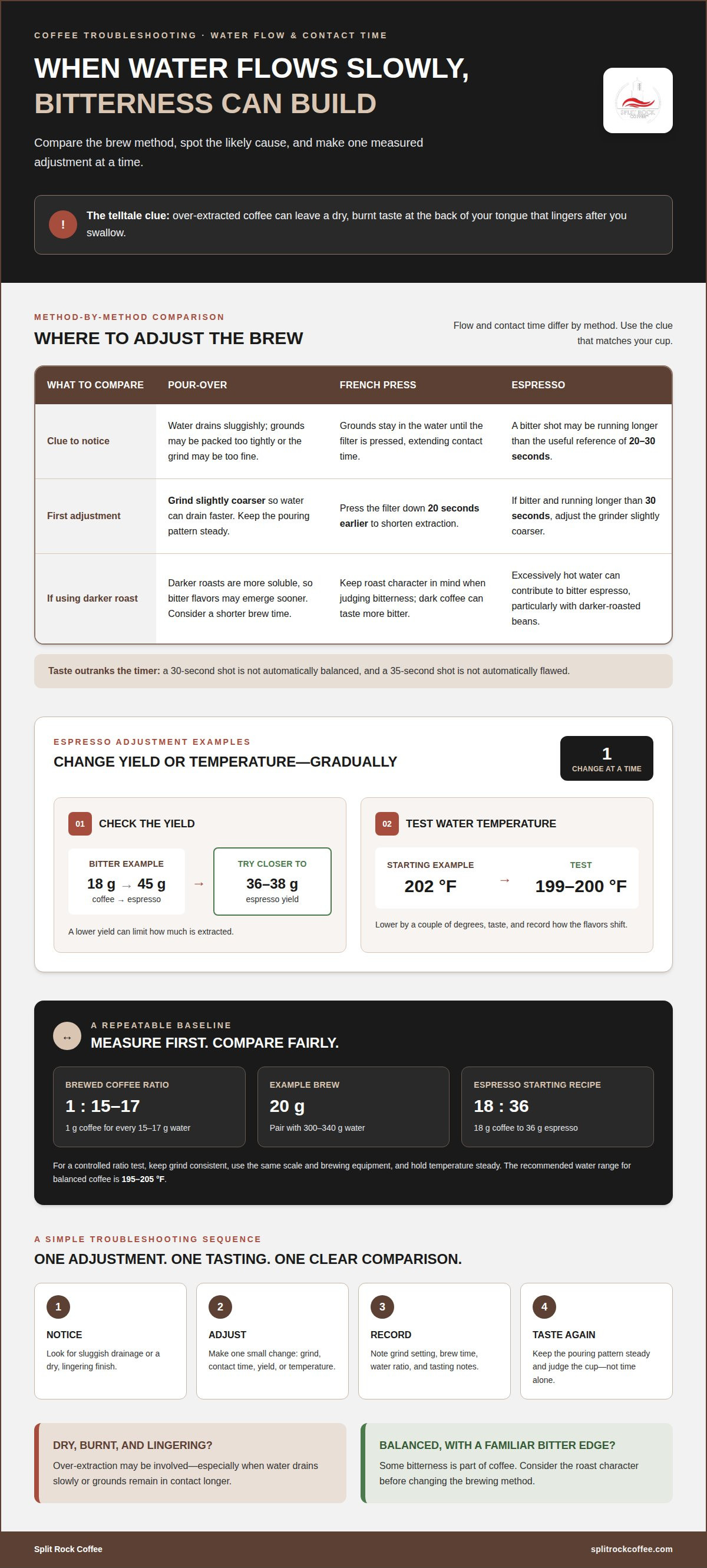
Grind size affects extraction because finer grounds expose more surface area to water. If espresso tastes bitter and runs longer than 30 seconds, adjust the grinder slightly coarser, then pull another shot. A 20–30-second shot is a useful reference while dialing in, but taste matters more than time alone. Change one variable at a time, and keep the water ratio consistent so you can judge the grind adjustment.
Clean equipment can also protect the flavor of each brew. Rinse coffee equipment after every use, then give it a deeper clean every few weeks. If you make 3–4 espresso shots per day, backflush about once a week. Run a grinder-cleaning product through the grinder every couple of months, or more often with heavier use; clean the burrs occasionally, depending on use.
To make bitter coffee taste better without sugar, try a little salt, milk, or plant-based milk. These can soften perceived bitterness and round out the cup. Add a small amount, taste, and adjust only if needed.
For a repeatable test, note the grind setting, brew time, and water ratio alongside your tasting notes. If the cup tastes drying and drains slowly, make the grind slightly coarser. If it tastes balanced but still has a familiar bitter edge, that may be part of the roast’s character. This routine helps distinguish a grind issue from the coffee itself.
2. Coffee-to-water ratio
A useful starting point for brewed coffee is 1 gram of coffee grounds for every 15 to 17 grams of water. That ratio gives you a repeatable baseline for tasting, rather than relying on scoops that can vary with grind size. For example, 20 grams of coffee pairs with 300 to 340 grams of water. Weigh both ingredients, then keep the amount steady while you assess flavor. A measured baseline makes troubleshooting bitter coffee taste more methodical.
Ratio affects perceived strength, body, and richness, but it doesn’t work alone. More coffee grounds can make a cup feel fuller and more flavorful; too much coffee for the water can also make it taste overly concentrated. For espresso, a common starting recipe is 18 grams of coffee to 36 grams of espresso. If that shot tastes harsh, adjust one factor at a time and note the result.
Use the same scale and brewing equipment for each comparison. Record the coffee weight, water weight, and brew time, then change only the ratio for the next tasting. Keep the grind consistent: a grind that is too fine can slow brewing and make the comparison less clear. Let balance, not strength alone, guide your next adjustment. This systematic approach makes troubleshooting bitter coffee taste more useful, because each tasting gives you a clear comparison.
Water quality can affect flavor even when the ratio stays the same. Filtered water may help reduce bitterness, while softened water can add sodium and create a salty taste. Bicarbonate in hard water can bring out bitter notes, even when the coffee is brewed properly. If the same beans and ratio taste different with another water source, water composition may be influencing the cup.
Hold temperature steady during a ratio test: water between 195 and 205 degrees is recommended for balanced coffee. Change the ratio first, then consider water quality or grind size if bitterness remains. For a controlled brew, whole bean coffee lets you keep the grind adjustment in your hands while testing your measurements.
3. Over-extraction from restricted water flow
Brewing methods differ in how long water contacts the grounds and how evenly it flows through them. Slow drainage can prolong extraction and draw bitter flavors into the cup. If a pour-over drains sluggishly, the grounds may be packed too tightly or the grind may be too fine. Contact time, flow, and evenness all shape bitterness. If coffee tastes harsh despite good-quality beans, over-extraction may be the cause.
For pour-over, try a slightly coarser grind so water drains faster and extracts less from the grounds. Make a small adjustment, then keep your pouring pattern steady for the next brew. Darker-roast coffee is more soluble than lighter-roast coffee, so bitter flavors may emerge sooner. If a dark roast tastes harsh, shorten the brewing time before changing other parts of the recipe. Roast solubility and water flow both shape the cup.
Brewing methods affect bitterness because they control water contact differently. A French press holds grounds in water, so pressing its filter down 20 seconds earlier can shorten extraction. With espresso, compare your shot’s yield and taste: if 18 grams of coffee produces 45 grams of espresso and tastes bitter, try a yield closer to 36 or 38 grams. A lower yield can limit how much is extracted.
Temperature matters, too. Excessively hot water can contribute to bitter espresso, particularly with darker-roasted beans. If your espresso is brewing at 202 °F, test 199 °F or 200 °F, lowering the temperature by a couple of degrees to see how the flavors shift. Water temperature can affect how brewed coffee tastes, so adjust it gradually if the cup seems bitter. Make one adjustment, taste the result, and record the change; a 30-second shot isn’t automatically balanced, and a 35-second shot isn’t automatically flawed.
4. What bitter coffee tastes like
Take a small sip and notice where the flavor lingers. Over-extracted coffee often leaves a dry, burnt taste at the back of your tongue that stays after you swallow. That persistent finish differs from brief, pleasant bitterness balanced by other flavors. Focus on the aftertaste, not just the first impression.
Roast character matters, too. An over-roasted dark coffee may taste more bitter than a light roast, and dark-roast coffee can seem burnt or charred to someone who dislikes that style. Those notes do not automatically mean the brewing method failed. Consider the beans’ roast character before changing the grind or ratio.
Taste the coffee straight before adding milk or anything else. Take a sip, pause, and notice whether bitterness fades or becomes a lingering, drying sensation. If the same flavor appears in each cup, note the beans, grind setting, and method. This simple record helps distinguish a persistent taste from a one-time brewing change.
Ground size and water flow affect the result, but bitterness can have several causes. A slow-draining pour-over, for example, may taste harsher because the water stays in contact with the grounds longer. A naturally bitter roast can have a similar edge, even when the brewing process is consistent. Change one part of the method at a time, then compare the next cup with your notes.
The clearest takeaway: judge bitterness by its quality and finish, not its presence alone. A dry, burnt aftertaste that hangs on is a stronger clue than a brief bitter note. If you want to compare how different coffee beans taste in your own brewing routine, explore coffee options and keep your tasting notes close.
Split Rock Coffee: The Gold Standard Coffee Beans
Split Rock Coffee offers The Gold Standard Coffee Beans as a consistent starting point while you refine your brew. Once you’ve identified whether bitterness comes from grind size, water flow, or your preferred roast character, use the same coffee as you adjust your method. Keep measurements and tasting notes consistent, changing one brewing variable at a time. That makes it easier to tell whether an adjustment improves the cup or simply changes its character.
Choose Whole Bean and Ground Coffee to suit your brewing method. If you want a regular supply, Split Rock Coffee’s Monthly Coffee Subscription is an optional choice. Explore the coffee selection at splitrockcoffee.com.
Make Your Next Cup a Deliberate Choice
Let each brew teach you something. Keep a short note about what you enjoy and use it to guide your next choice of beans or brewing approach. With a consistent method, troubleshooting bitter coffee taste becomes less like guesswork and more like shaping a cup to your preference.
One distinction can help: acidity and bitterness are different flavor qualities. Split Rock Coffee offers Low Acid Coffee Blends, but low acidity alone does not mean a coffee will taste less bitter. Choose according to the character you want in your cup, and keep tasting with an open mind.
When you’re ready to explore coffee options, contact Split Rock Coffee. Keep making thoughtful adjustments, trust your palate, and enjoy the craft of finding a cup that feels right to you.
Frequently Asked Questions
What is bitter coffee?
Bitter coffee can taste pleasantly cocoa-like or harshly drying. The difference is whether bitterness balances sweetness and aroma or dominates the finish. Take a small sip and notice whether the aftertaste feels rounded or burnt. Compare it with another brew made from the same beans. If bitterness overwhelms the other flavors, adjust the brewing method before deciding the beans are at fault.
How to Fix Your Grind Size and Timing Fast?
For a bitter espresso shot, make a small adjustment to a coarser grind, then pull another shot and taste it. Keep the dose and yield unchanged so the grind is the only variable. If the shot still tastes harsh, check for restricted flow and make sure the machine’s basket is clean. Note the setting and result to create a reliable reference for your next adjustment.
Why Roast Level Gets Blamed Unfairly?
Roast level influences flavor, but it is not the only reason a cup tastes bitter. Darker-roast beans are more soluble, so their flavors can extract more readily; brewing conditions still shape the final taste. A lighter roast may have brighter acidity, which some drinkers mistake for harshness. Taste the coffee after it cools slightly, then consider roast character alongside the brewing method before changing beans.
Why is My Espresso Shot So Bitter?
A bitter espresso shot can result from prolonged extraction, excessive heat, or restricted flow through the coffee bed. Check that the basket is clear and water moves evenly through the machine before changing your recipe. If the shot tastes burnt despite steady flow, test a lower brew temperature. Compare the next shot with the first, changing only that setting so you can identify the cause of any difference.
What causes coffee to taste bitter?
Over-extraction, a dark or over-roasted profile, and water composition can all contribute to bitterness. Cold brew offers another useful example: steeping it for 24 hours or more can make the result bitter. If a cup tastes harsh, consider both the beans and the brewing conditions. Note the method and steeping duration, then adjust one factor for the next batch instead of changing several things together.
How does over-extraction make coffee bitter?
As water extracts flavor from coffee grounds, the cup can shift toward harsher, bitter notes. Restricted flow can prolong contact between water and grounds, while uneven flow can make extraction inconsistent across the coffee bed. For pour-over, watch whether water drains freely through the grounds. If it stalls, adjust the grind coarser and compare the next brew.


