Smooth Coffee Brewing Methods: Which Cup Suits You
For a smoother cup with a mellower taste, cold brew is a good place to start, making it a compelling choice if you’re looking for the best brewing method for smooth coffee. Steeping coffee in cool water creates a different profile from brewing it hot and serving it over ice. But smoothness can also mean less bitterness, a cleaner finish, or fuller body.
That’s why the brewing method matters. The same beans can taste bright and delicate in a pour-over, rich and textured in a French press, or clean and mellow when steeped cold. The right cup depends on the flavors you enjoy and the process that fits your routine.
Here, we compare five home methods, cold brew, pour-over, French press, drip, and AeroPress, by flavor, acidity, and brewing process. You’ll see what each brings to the cup and how to choose a smoother brew to suit your taste.
Key Takeaways
- Choose AeroPress when you want a quick, clean cup with a rich flavor and a straightforward brewing process.
- Match grind size and water temperature to your brewing method to shape extraction and the cup’s final character.
- Use cold brewing when you prefer a mellow, sweet-tasting coffee with lower acidity than hot-brewed coffee served iced.
- Compare the five methods by flavor, texture, and effort to find the approach that best fits your taste and routine.
AeroPress flavor and brewing process
The AeroPress can produce a dark, smooth, rich cup with very low bitterness. The AeroPress can be a compact option for a deliberate but quick coffee routine. It typically uses around 0,5 bars of pressure, far less than espresso. That gentle pressure is part of its distinctive brewing process, not a reason to expect espresso-style coffee.
For a straightforward brew, add ground coffee and water to the AeroPress, let them steep for 20-40 seconds, then press the coffee through its filter. Grind size and preferred strength affect the steeping time, so adjust those together: a different grind changes extraction, while a longer steep can build a stronger taste. Some instructions include letting the coffee and water sit for 10 seconds before plunging. Follow one recipe consistently before changing a variable.
A dark roast suits this method if you enjoy deep, bold flavors. Start with a shorter steep within the 20-40-second range for a less intense cup; extend it when you want more strength. The AeroPress’s paper microfilter helps catch fine particles, producing a clean, full-flavored result without the grit that can remain in French press coffee. The filter shapes texture, while the beans and extraction influence the taste.
The AeroPress is also practical for travel. It’s designed for making coffee for one or two people, and its compact size keeps the routine simple. Pack the brewer and filter, add coffee and water, steep, then press into a cup. Unlike a Chemex setup, the AeroPress uses pressure in the final step.
| Option | Process | Cup character |
|---|---|---|
| AeroPress | Steep, then press through a microfilter | Dark, smooth, rich, low bitterness |
| Chemex | Pour water through a bonded-paper filter | Clean, smooth cup with fine particles filtered out |
Choose the AeroPress for a compact, press-brewed cup; choose Chemex when you prefer a clean pour-over finish.
Go Deeper: What’s the Correct Temperature for Brewing Coffee?
There’s no single coffee-to-water ratio that guarantees a smooth cup. The ratio affects strength, while grind size and steeping time shape extraction. Start with a balanced recipe, then adjust the amount of coffee or water to make the result milder.
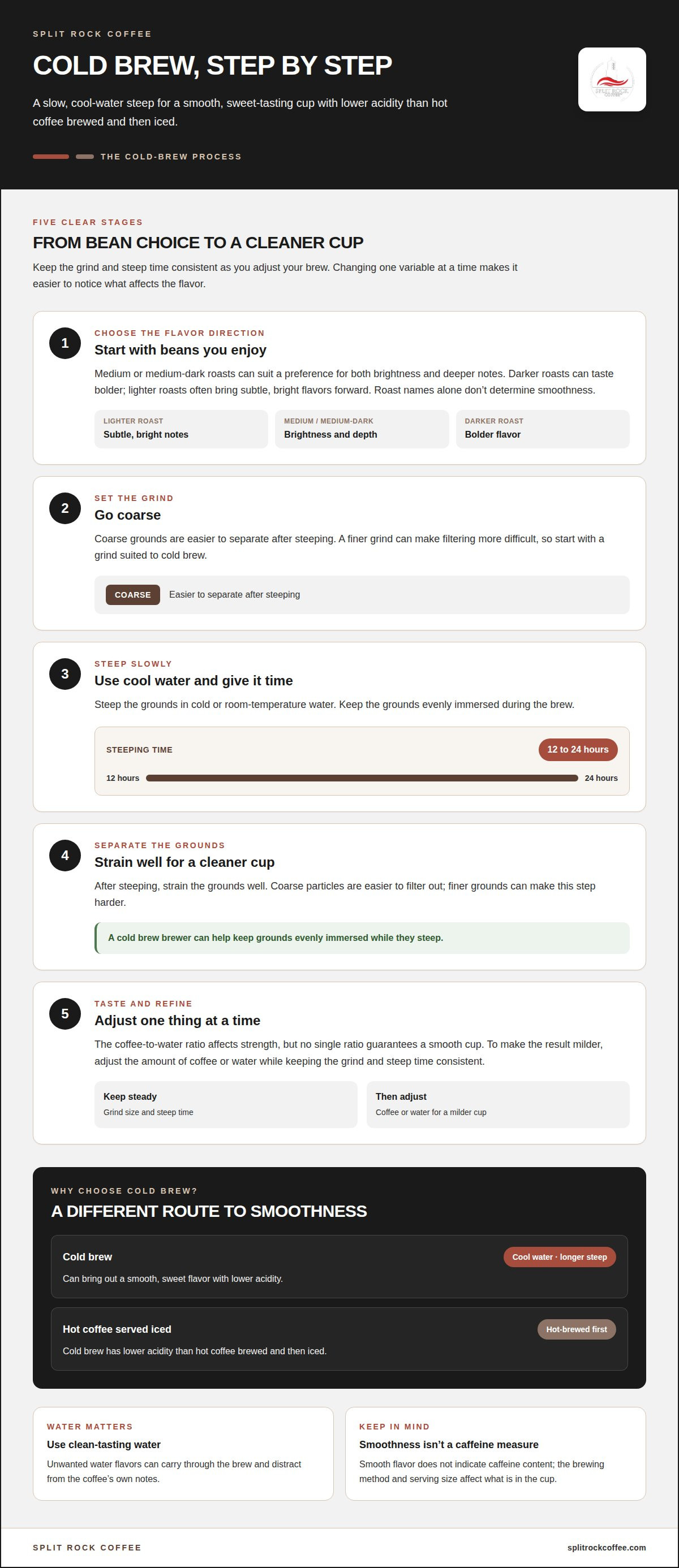
For cold brew, choose beans whose flavor you enjoy without heat-driven brightness, then grind them coarse. Steep the coffee grounds in cold or room-temperature water for 12 to 24 hours. Coarse particles are easier to separate after steeping, while a finer grind can make filtering more difficult. Keep the grind and steep time consistent as you adjust the coffee-to-water ratio, so you can tell which change affects flavor.
Grind size also controls flow in a Chemex. Coarser grounds let water pass through faster; finer grounds slow the flow. If a pour-over drains too quickly, try a finer grind. If water lingers and the cup tastes over-extracted, go coarser. Change one variable at a time to identify what improves the cup.
Espresso needs a fine grind because water passes through the compact coffee bed under pressure. Espresso machines commonly brew at 9 bars, producing a concentrated drink. A grind that’s too coarse can let water move through too quickly, weakening extraction; too fine can restrict flow. Adjust the grind in small steps and observe the espresso’s flow and taste.
Temperature matters alongside grind. Manual pour-over water is heated to 200°F, French press water should be between 195 and 200°F, and automatic drip machines brew with water at 195-205°F. Cold brew takes a different path, using cool water and a longer steep instead of hot extraction. Remember that temperature, grind, and contact time work together, so avoid changing all three while troubleshooting.
Grinding fresh helps you control particle size for each method. Use coarse grounds for French press and cold brew, a medium grind for drip machines, and a finer grind for espresso. For a smoother result, start with the grind suited to your brewer, then adjust based on flow and taste.
No single coffee-to-water ratio guarantees smooth coffee. Start with a balanced recipe and adjust the coffee or water to make the cup milder, while keeping grind and steeping time consistent.
Cold brew’s smooth, sweet flavor and lower acidity
Cold brew steeps coffee grounds in cold or room-temperature water for 12 to 24 hours. That slow extraction can bring out a smooth, sweet flavor, with lower acidity than hot coffee brewed and then iced. Choose coarse grounds, then strain them well for a cleaner cup. A cold brew brewer works best when the grounds stay evenly immersed during steeping.
For a balanced flavor, try medium or medium-dark roast beans if you enjoy both brightness and deeper notes. A darker roast can taste bolder, while lighter roasts often bring subtle, bright flavors forward. Roast names alone don’t determine smoothness; the beans’ flavor and your preferences matter.
To reduce bitterness, use coarse grounds for French press and cold brew, then avoid extending steep time unnecessarily. French press grounds steep for four to five minutes before pressing; cold brew takes 12 to 24 hours. For either method, keep the grind and time consistent while adjusting one variable at a time.
Water affects the flavor in your cup. Use clean-tasting water, since unwanted flavors can carry through the brew and distract from the coffee’s own notes. Smooth flavor also doesn’t indicate caffeine content; the brewing method and serving size affect what’s in the cup.
For French press, add medium-to-coarse grounds, pour water heated to 195-200°F, steep for four to five minutes, then press slowly. For pour-over, wet the grounds briefly, then pour steadily and let the brew drain at its own pace.
Choose a brewer to suit the flavor you want. Pour-over methods such as Chemex can highlight bright, subtle notes with a clean finish. Cold brew tends to taste mellow, while an espresso machine makes concentrated coffee with a different balance of intensity and texture. Match the method to the beans, then taste and adjust.
Comparison of five home brewing methods
Cold brew, pour-over, French press, drip, and AeroPress each create a different kind of smoothness. The best brewing method for smooth coffee depends on whether you want a mellow taste, a clean finish, or fuller body. Start with the quality you value most, then choose a process that brings it forward.
Compare how each brewer brings water and grounds together. Cold brew and French press use immersion, while pour-over and drip pass water through the grounds. AeroPress steeps coffee before pressing it through a paper filter. These differences shape texture and clarity, even when you use the same beans.
| Method | Process | Cup character | Good fit if you prefer |
|---|---|---|---|
| Cold brew | Steep in cool water for 12 to 24 hours | Mellow, sweet, lower acidity than hot coffee served iced | A less bright cup |
| Pour-over | Pour water through grounds over 3 to 5 minutes | Clean, sweet, clear flavors | Subtle flavor notes |
| French press | Steep, then press after four to five minutes | Full-bodied, with oils and fine particles remaining | Rich texture |
| Drip | Automatic water flow through medium-ground coffee | A familiar, straightforward brew | A simple daily routine |
| AeroPress | Steep, then press through a paper filter | Dark, smooth, rich, and low in bitterness | A compact, filtered brew |
Let your taste decide. If bright flavors feel too sharp, test cold brew; if you want clarity, try pour-over. Choose French press for more body or AeroPress for a quick filtered cup. To find the best brewing method for smooth coffee for your palate, keep the coffee constant and compare one method at a time.
Once you’ve chosen a favorite, make the brewing process repeatable by keeping your grind and method consistent. Explore coffee for your next brew and put your favorite method to work.
Split Rock Coffee: The Gold Standard Coffee Beans
Split Rock Coffee offers The Gold Standard Coffee Beans for readers ready to pair their preferred brewing method with a considered bean choice. The method shapes texture and extraction, while the coffee you start with also influences flavor. Use the same brewer and recipe while trying a new coffee so you can notice what changes.
Choose whole bean or ground coffee to suit your routine. Whole beans let you grind for your chosen method, while ground coffee keeps preparation simple. If you want coffee as a regular part of your routine, the Monthly Coffee Subscription is another option.
Let your taste guide your next brew, whether you prefer cold immersion, a clean pour-over, or a fuller French press cup. Visit splitrockcoffee.com to explore Split Rock Coffee’s coffee offerings.
Make Your Next Cup Your Own
Finding the best brewing method for smooth coffee is less about choosing a universal winner and more about deciding what “smooth” means to you. It might mean a gentle finish, a softer impression of acidity, or less bitterness. Identify the quality you want first, then let that preference guide your next brew.
Give your palate a simple reference point: note what you enjoy in the aroma, first sip, and finish. This habit helps turn trial and error into a repeatable choice, whether you’re refining a familiar routine or exploring a different coffee. A brief note can reveal patterns that one tasting might miss, especially as you compare coffees over time. If lower-acid coffee is part of what you’re seeking, Split Rock Coffee offers Low Acid Coffee Blends.
When you’re ready to choose coffee for your next experiment, contact Split Rock Coffee. Keep exploring, trust your taste, and build a cup that feels right to you.
Frequently Asked Questions
So, What’s the Best Way to Make Coffee?
The best method is the one that gives you the flavor and texture you enjoy, using a process you’ll stick with. For a lighter, clearer cup, try pour-over; for more body, choose immersion. Keep the beans, grind, and water consistent while testing a method, then adjust one element at a time. This makes it easier to tell what changed the cup.
Paper or metal filtration?
Paper filtration creates a cleaner cup by catching fine particles, while metal filters let more oils and fine material through. Choose paper if you prefer a lighter texture and clear finish; pick metal if you enjoy a richer mouthfeel. To compare fairly, use the same coffee and recipe in both brewers, then notice the differences in texture and lingering flavor.
Percolation or Infusion?
Percolation sends water through a bed of grounds, as in pour-over and drip brewing. Infusion lets grounds steep in water, as with French press. Choose percolation when you want clarity and distinct flavor notes; choose infusion for more body. The method changes how water contacts the coffee, so match it to your preferred texture.
How do pour-over, French press, AeroPress, and cold brew compare for smoothness?
Pour-over can taste clean, while French press feels fuller because more oils and particles remain. AeroPress offers a filtered cup with a richer profile, and cold brew suits those seeking mellow flavor. For a practical comparison, brew the same coffee with each method and taste them side by side. Focus on the finish and texture, not just strength.
What water temperature is best for smooth-tasting coffee?
For hot brewing, use the temperature range suited to your method rather than treating one temperature as universal. Pour-over water at 200°F is a useful starting point; French press calls for 195-200°F, while automatic drip uses 195-205°F. If the cup tastes harsh, adjust grind or contact time before changing several brewing variables at once.
Does cold brew have less acidity or bitterness than hot coffee?
Cold brew is described as less acidic than coffee brewed hot and then iced. Acidity and bitterness are different parts of flavor, though, so lower acidity doesn’t automatically mean a less bitter cup. Bean choice and extraction also shape bitterness. If you want a gentler-tasting drink, compare cold brew with hot coffee made from the same beans and note which qualities you prefer.


