
Gentle Coffee for Your Stomach: What to Look For and Try
A coffee labeled “low-acid” may seem like the obvious answer, but the label alone can’t tell you whether it will feel like gentle coffee for stomach comfort. The best choice depends on your own response.
If coffee is followed by discomfort or digestive symptoms, it’s understandable to wonder whether a different roast, brewing method, or blend might suit you better. You don’t have to give up a cup you enjoy based on broad promises, or assume one solution works for everyone.
This guide explains why coffee may bother your stomach and how to explore alternatives thoughtfully. You’ll learn what “low-acid” labels do and don’t tell you, how to observe your personal tolerance, and when it’s wise to seek guidance from a healthcare professional.
Low-acid coffee blends are one option to consider, not a treatment or guaranteed fix. Make changes carefully, pay attention to how you feel, and let your own experience guide you.
Key Takeaways
- “Gentle” is a personal description, not a promise that a coffee will prevent discomfort or suit everyone.
- Acidity, pH, caffeine, serving size, and digestive response are different factors. No single label predicts how you’ll feel.
- To explore gentle coffee for stomach comfort, compare one factor at a time and notice your own response rather than relying on broad claims.
- Low-acid coffee blends are one category to consider, including Split Rock Coffee’s blends, without expecting a guaranteed result.
- If symptoms are persistent, severe, or concerning, seek guidance from a healthcare professional.
Why Can Coffee Feel Harsh on Your Stomach?
Coffee doesn’t affect everyone the same way. One person may enjoy a cup without trouble, while another notices discomfort or changes in digestion. That difference doesn’t mean symptoms are inevitable, or that one particular roast or label will suit everyone.
“Gentle coffee” is a consumer description for a coffee someone finds easier to drink. It isn’t a medical term or a guarantee of symptom relief. If you’re looking for gentle coffee for stomach comfort, treat the phrase as a starting point for comparison, not proof that a coffee will prevent or resolve symptoms.
What might contribute to discomfort after coffee?
More than one factor may be involved, and a coffee label alone can’t identify the cause. Caffeine can affect digestive activity in some people, and other coffee compounds may also play a role. Responses vary: a cup that feels fine to one person may not feel the same to another. For background on caffeine’s physiological effects, see Caffeine.
The way you drink coffee may matter, too. A larger serving, drinking it quickly, or having it on an empty stomach could coincide with discomfort for some people, though these patterns don’t establish a cause. Timing, what else you’ve eaten or had to drink, and an individual health condition may also shape how symptoms show up. Perceived sourness, measured acidity, caffeine content, and digestive response are related questions, but they aren’t interchangeable.
Does stomach sensitivity mean you must stop drinking coffee?
Not necessarily, but there’s no universal yes-or-no answer. Some people may find that a smaller serving, a different coffee, or a change in timing suits them better. Others may need to avoid coffee for a time or discuss their symptoms with a clinician. Your own pattern matters more than a broad promise on a package.
Noticing what you drink and how you feel afterward can help you describe a pattern. It isn’t a medical test and can’t diagnose or treat a condition. If symptoms are persistent, severe, or concerning, seek medical advice rather than relying on a coffee change alone.
How Coffee, Caffeine, and Acidity May Relate to Stomach Comfort
“Acidity” can mean different things in a coffee conversation. You might mean a bright, sharp flavor while sipping, or the coffee’s measured pH, a chemical measure of acidity. Neither is the same as caffeine content, and none alone tells you exactly how your digestive system will respond.
A coffee can taste bright without that sensation predicting discomfort. Likewise, a pH reading describes one property of brewed coffee; it doesn’t measure every compound in the cup or forecast an individual’s symptoms. Personal tolerance varies, so two people can drink the same coffee and have different experiences. A gentle coffee for stomach comfort can’t be identified by one number or label alone.
Is acidity the only reason coffee may bother your stomach?
No. Acidity may be one consideration, but a response can involve several factors, including the coffee’s compounds, caffeine, serving size, and how or when you drink it. A review of coffee’s effects on the digestive system describes influences on digestive secretions and gut movement, showing why coffee’s effects aren’t limited to acidity. Read this scientific review on coffee's GI effects for more context.
“Low-acid” describes a category, not a guarantee that a coffee will remove all acids or relieve symptoms. The label can be a useful feature to compare, but it can’t account for your personal response. For a closer look at what the category means, explore this low-acid coffee guide.
What role might caffeine play?
Caffeine may influence digestive activity for some people, but its effects aren’t identical for everyone. Caffeine amount is separate from flavor and measured pH, and it doesn’t explain every reaction to coffee. Decaffeinated coffee may be worth comparing if you’re curious about caffeine’s role, but it still contains coffee compounds and isn’t automatically a better fit for every sensitive stomach.
Keep the comparison practical: look at one factor at a time, such as caffeine level or serving size, and observe what changes for you. Split Rock Coffee’s Low Acid Coffee Blends are one category to consider, not a promised solution. Let your own experience guide what you try next.
Which Coffee Choices May Be Worth Comparing for a Gentler Cup?
Choose what to compare, not what to assume. A package label or roast description can help narrow your options, but neither can promise how a particular cup will feel. Use the factors below as a simple framework, changing one at a time as you observe your response.
| Factor | What to compare | What it can tell you |
|---|---|---|
| Low-acid label | How the brand describes the coffee and whether it explains or supports the claim. | A category to explore, not a clinical promise or proof of symptom relief. |
| Caffeine level | Caffeinated and decaffeinated options, if both are relevant to your routine. | Whether caffeine might be one factor in your personal response. Decaf isn’t automatically suitable for everyone. |
| Serving size | Your usual amount compared with a smaller serving. | Whether the amount you drink appears to coincide with a difference in how you feel. |
| Personal response | Your own notes on the coffee and how you feel afterward. | The most relevant signal for your choices, though it can’t diagnose a health condition. |
Do low-acid coffee labels mean a coffee will feel gentle?
No label can guarantee that result. “Low-acid” is a product description, so check what the brand means by it and whether it provides evidence or details to support the claim. Similar descriptions don’t ensure similar experiences. Your response may differ from someone else’s, even if you choose coffees marketed in the same way.
If you’re ready to compare options in this category, use this guide to best low-acid coffee beans as a place to continue your research.
Could serving size or preparation change your experience?
It may be useful to observe how much you drink and how you prepare it, without expecting a particular method to solve discomfort. Keep the comparison simple: note your usual serving, then see whether a smaller one seems different. If you add milk, sweeteners, or other ingredients, track those separately so you can tell what changed.
Roast terms such as “dark” or “light” describe aspects of coffee, but they can’t establish how it will feel for you. Cleveland Clinic discusses how coffee may trigger acid reflux in some people. If you’re comparing Split Rock Coffee’s Low Acid Coffee Blends, consider them one option among others and pay attention to your own experience.
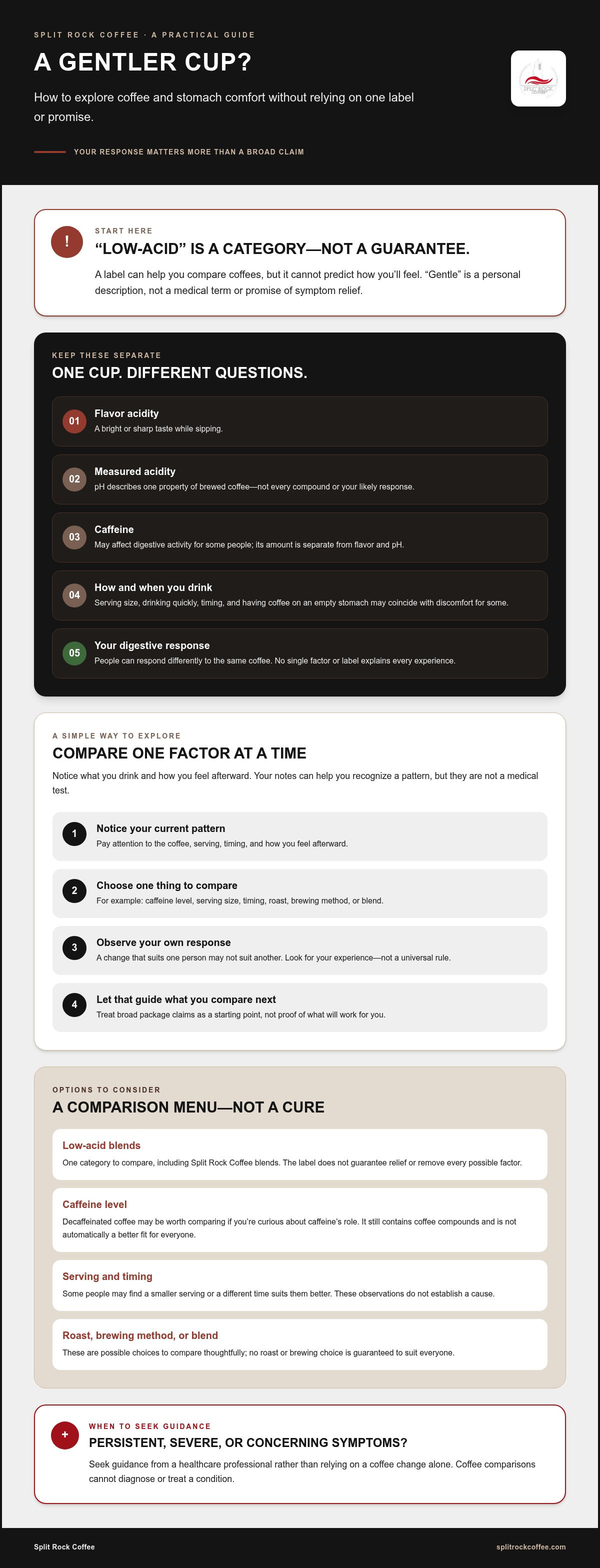
How to Test Whether a Coffee Feels Gentler for You
Finding a coffee that feels easier for you takes patience, not a pass-or-fail test. A simple record can help you spot patterns, but it can’t prove that a particular coffee caused a symptom or identify a medical condition. Keep the process low-pressure, and don’t continue a comparison that makes you feel worse.
A simple way to track your coffee response
For a clearer comparison, change one variable at a time. If you switch coffee type, for example, try to keep the serving size and usual routine steady rather than changing the coffee, preparation, and meal timing all at once. You don’t need to push through discomfort to complete a comparison.
Use a note on your phone or a small log. Record the details consistently:
- Coffee: Type or label, including whether it’s described as low-acid or decaffeinated.
- Amount and timing: Approximate serving size and when you drank it.
- Food and additions: Whether you’d eaten, plus any milk, sweetener, or other ingredients.
- How you felt: Note any symptoms and when you noticed them, using your own words.
Look for patterns across your entries rather than drawing a conclusion from one cup. Your notes can help you decide what to compare next and give you a clearer account to share with a healthcare professional if needed.
When should you ask a healthcare professional?
Stop a self-directed comparison and seek professional guidance if symptoms are persistent, severe, worsening, or worrying. Don’t rely on a coffee change to explain or manage symptoms that concern you. A healthcare professional can consider your individual circumstances; this article offers general information, not diagnosis or treatment.
Once you have a consistent way to observe your response, you can compare coffee options at your own pace. If you’d like to consider this category, explore Split Rock Coffee’s Low Acid Coffee Blends as one option, without expecting a guaranteed result. Your experience is the measure that matters.
Explore Low-Acid Coffee Without Expecting a One-Cup Cure
Once you’ve considered what may affect your response, low-acid coffee can be one more category to explore. Keep expectations grounded: a product description can help you compare coffees, but it can’t promise that a particular cup will feel comfortable or relieve symptoms. Your own experience remains the guide.
What to look for when exploring low-acid coffee
Read product descriptions carefully. Look for clear information about the coffee and its format rather than broad wellness language. If a claim matters to your choice, consider whether the description explains what it means or offers supporting details. A low-acid label alone doesn’t tell you how you’ll respond.
Choose a format that fits the way you make coffee. Whole bean may suit someone who grinds beans at home; ground coffee may fit a routine that uses pre-ground coffee. Neither format is inherently gentler. If you try a new coffee, keep other parts of your routine steady where practical and assess it as a personal preference, not a guaranteed remedy.
How Split Rock Coffee fits into the exploration
Split Rock Coffee offers Low Acid Coffee Blends in whole bean and ground formats. These are options to consider if you’re comparing the category, not a promise about digestive effects. Use the product information to decide whether the format suits your routine, then observe how the coffee feels for you.
A monthly coffee subscription is also available if you prefer regular delivery. That convenience doesn’t change how an individual may respond to coffee, so make your choice based on both your routine and your own experience.
If you’re searching for gentle coffee for stomach comfort, approach each option with curiosity and patience. Compare descriptions, choose a format that works for you, and avoid expecting one cup to settle the question. If symptoms are persistent, severe, or concerning, seek guidance from a healthcare professional instead of relying on a product change.
When you’re ready, explore Split Rock Coffee’s Low Acid Coffee Blends as one possible choice. Start with what fits your coffee routine, and let your own response shape what you try next.
Make Your Next Cup a Thoughtful Choice
Finding gentle coffee for stomach comfort isn’t about chasing a perfect label. Acidity, caffeine, serving size, and preparation are all worth considering, but your own response matters most. Compare options gradually, change one factor at a time, and keep simple notes to spot patterns without treating them as a diagnosis.
Split Rock Coffee offers Low Acid Coffee Blends in whole bean and ground formats. They’re an option to explore, not a promise of symptom relief.
If you’re curious about trying this category, explore Split Rock Coffee’s low-acid coffee options and choose a format that fits your routine. Let your experience guide what you try next. If symptoms are persistent, severe, or concerning, seek advice from a healthcare professional.
Frequently Asked Questions
Can coffee be gentle on your stomach?
Yes, coffee can feel more comfortable for some people, but no coffee is guaranteed to suit everyone. If you’re looking for gentle coffee for stomach comfort, consider more than the label: coffee type, serving size, timing, and your individual circumstances may all matter. Notice how you respond rather than assuming a product will feel the same for everyone. If discomfort persists or worries you, ask a healthcare professional for guidance.
Is low-acid coffee better for a sensitive stomach?
Low-acid coffee may be worth exploring, but its label doesn’t guarantee symptom relief or make it suitable for every sensitive stomach. Acidity is only one factor, and people may respond differently to similar coffees. Review product descriptions for clear details about what the label means, then make any comparison cautiously. If symptoms are persistent or concerning, seek guidance from a healthcare professional rather than relying on a coffee change alone.
Can caffeine make your stomach feel uncomfortable?
Caffeine may be one factor in how some people respond to coffee, but it isn’t the only possible explanation for discomfort. Sensitivity and circumstances differ, so a general article can’t determine what’s causing your symptoms. If you suspect caffeine could be relevant, note what you drink and how you feel, and discuss suitable options with a healthcare professional, especially if symptoms continue. Decaffeinated coffee isn’t automatically the right choice for everyone.
Does dark roast coffee feel gentler on the stomach?
Not necessarily. Roast level alone can’t predict how a particular coffee will feel for you, and a dark roast label isn’t a guarantee of a gentler cup. Several factors may shape your response, including serving size and personal tolerance. If you’re comparing coffees, review their descriptions and observe your own experience rather than relying on roast terms to tell you what to expect.
Can drinking coffee with food help it feel gentler?
It may change your experience, but there’s no universal rule that drinking coffee with food will prevent discomfort. Some people notice a difference in timing, while others don’t. If you want to explore this factor, keep the coffee and serving size consistent and change only whether you drink it with food. Note what you observe without treating one instance as proof. Seek professional advice for persistent or worrying symptoms.
What should I try first if coffee bothers my stomach?
Start by noting your usual coffee, approximate serving size, timing, and any additions before changing your routine. If symptoms are mild, adjusting one factor at a time may help you notice patterns, but this isn’t a medical test. Don’t keep drinking coffee if it makes you feel unwell. Contact a healthcare professional if symptoms are persistent, severe, or concerning, and ask for individualized advice about what may be appropriate for you.
Is low-acid coffee safe for everyone?
A low-acid label doesn’t establish that a coffee is suitable for every person or health circumstance. Tolerance is individual, and product descriptions aren’t medical advice or a guarantee about how you’ll feel. If you have a diagnosed condition, ongoing symptoms, or questions about how coffee fits your diet, ask a qualified healthcare professional. Their guidance can account for your needs in a way that general information and product labels can’t.


