Best Low Acid Coffee Beans in 2026: The Disciplined Guide to Gut-Friendly Fuel
For many of us, the morning ritual has become a calculated risk where the reward of alertness is weighed against the certainty of a burning chest. You shouldn't have to choose between your digestive health and the rich, complex flavors of a premium roast. It's a frustration we understand deeply. Missing out on the camaraderie of coffee culture because of a sensitive stomach feels like a betrayal of your daily drive. We've applied a disciplined, science-backed approach to help you identify the best low acid coffee beans that deliver high-energy sustenance without the compromise.
This guide cuts through the noise of unregulated marketing labels and confusing health claims that saturate the 2026 market. We'll explore why the roasting process, specifically longer times at lower temperatures, is the primary determinant of gut comfort rather than the bean's origin alone. You'll learn how to select fuel that honors your body and your high standards. We're looking at the Gold Standard of coffee craft to ensure your mornings are defined by focus and resilience, not by the search for an antacid. It's time to reclaim your cup with a mission-focused mindset and find a brand that treats your health as a duty, not an afterthought.
Key Takeaways
- Master the science of slow roasting, where disciplined temperature control breaks down harsh acids to ensure your coffee serves as fuel rather than a source of discomfort.
- Identify the best low acid coffee beans by sourcing from specific low-altitude regions that naturally produce a smoother, chemically balanced profile.
- Refine your brewing strategy by matching your equipment to your gut health needs, ensuring every pour-over or press meets the highest standards of excellence.
- Learn why the Gold Standard of coffee requires a craftsman’s precision, blending high-end quality with the mission-driven values of a veteran-owned business.
The Mission for a Better Brew: Why We Seek Low Acid Coffee Beans
Coffee serves as the fuel for a disciplined life. It’s the quiet ritual that prepares us for the day’s mission. But for many, that ritual is compromised by the sharp sting of heartburn or the persistent churn of digestive distress. We believe your morning cup should be a source of strength; it shouldn't be a liability. True low-acid coffee is defined by a chemical profile that respects your gut. This involves reducing chlorogenic acids through purposeful sourcing and precision roasting. When you're hunting for the best low acid coffee beans, you have to understand the difference between flavor acidity and actual pH levels. A bean can offer bright, citrusy notes without possessing a low pH that triggers a physical burn. Achieving the Gold Standard requires a deeper commitment to science than a simple label can provide.
Understanding the Burn: Coffee and Acid Reflux
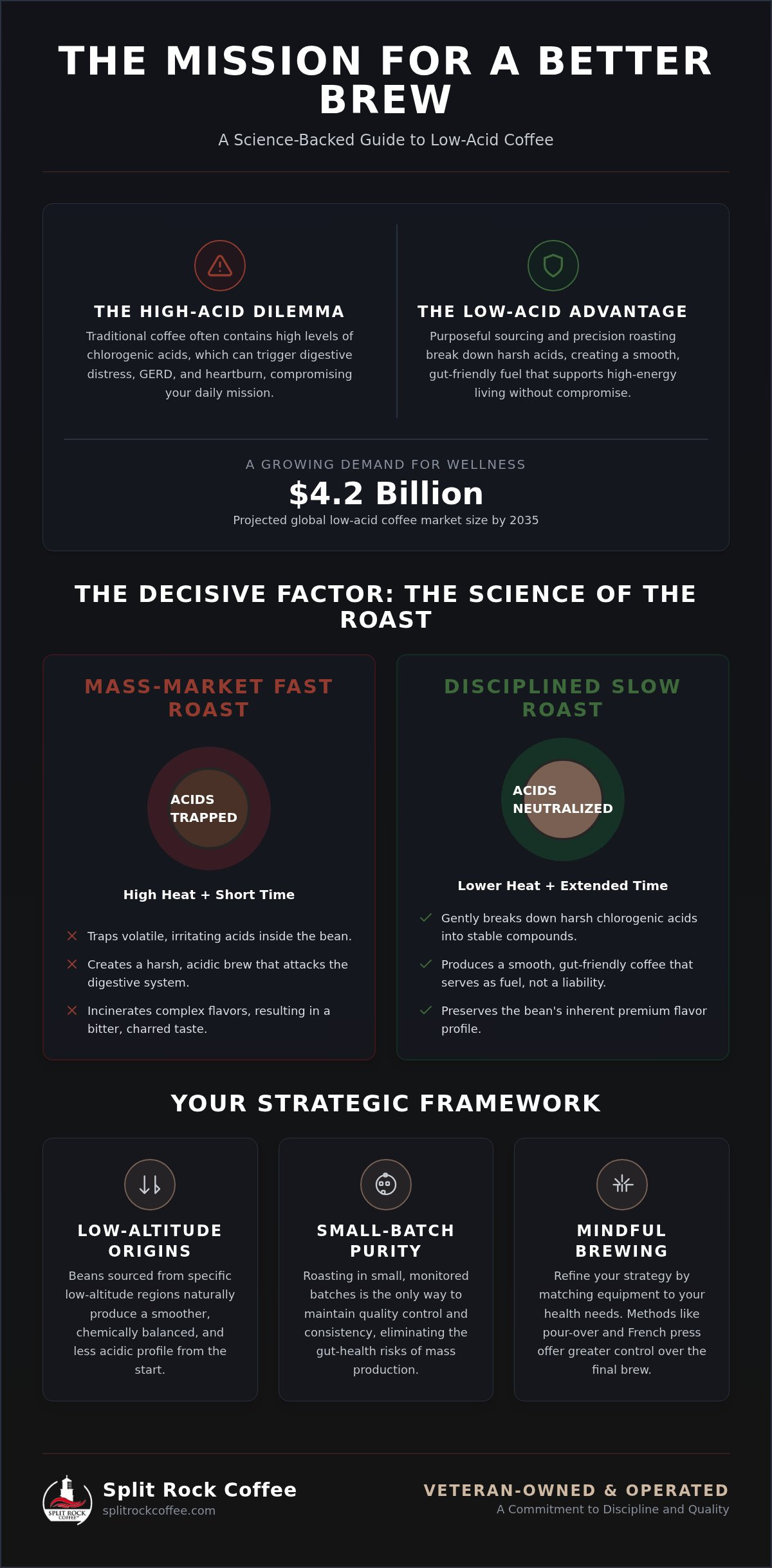
Traditional roasts often carry high concentrations of compounds that trigger Gastroesophageal Reflux Disease (GERD). These acids signal your body to produce excess gastric acid, leading to that familiar, painful heat. Many mass-market brands use charred dark roasts as a shortcut. They hope the high heat will burn off the acidity, but they often incinerate the flavor in the process. Scientific evidence shows that the roasting process is the primary determinant of a coffee’s pH level. A disciplined approach uses longer roasting times at lower temperatures to break down irritants naturally. This preserves the bean’s soul while protecting your stomach lining.
The Shift to Low-Acid Sustenance
The landscape of 2026 shows a significant movement toward health-conscious consumption. With the global low-acid coffee market projected to reach $4.2 billion by 2035, it's clear that drinkers are prioritizing their long-term wellness. People are moving away from mass-market acidity in favor of functional sustenance. This isn't just about avoiding a temporary stomach ache. It's about protecting your dental enamel and maintaining a balanced gut microbiome. High-energy living requires fuel that supports your body. Choosing the best low acid coffee beans is an act of resilience. It ensures you stay focused and ready for whatever the day demands.
The Science of the Roast: How Discipline Reduces Acidity
Roasting is the crucible where raw potential meets disciplined execution. While the origin of the bean matters, the roaster’s craft determines if the final brew will support your mission or irritate your stomach lining. This is where the Purposeful Craftsman earns their title. By applying a steady, controlled heat, we allow complex chlorogenic acids to break down into stable, gut-friendly compounds. It is a process of refinement that cannot be rushed. Every batch requires the vigilance of a guardian to ensure the chemical profile aligns with our standards for sustenance and service.
Time and Temperature: The Roaster's Arsenal
Mass-market producers often prioritize speed over health. They use high-intensity heat to flash-roast beans in minutes, a tactic that traps volatile acids inside the bean. This shortcut results in a cup that feels like a chemical assault on your digestive system. In contrast, a disciplined roaster understands that time is a tool. Slow roasting is a precise method of using extended heat exposure at lower temperatures to significantly reduce the coffee's total acid content, creating the best low acid coffee beans for daily performance. This transformation turns a harsh bean into high-energy fuel.
The technical choice between air-roasting and drum-roasting also plays a critical role. Drum roasting offers a traditional, conductive heat that develops deep, chocolatey notes, while air roasting uses convective heat to strip away chaff and unwanted acidic byproducts. Both methods require a keen ear for the "second crack." This is the precise moment when the internal structure of the bean changes, signaling that the most aggressive acids have been neutralized without sacrificing the premium flavor profile. Finding the best low acid coffee beans requires this level of scrutiny at every stage of the roast.
Purity in Process: Beyond the Bean
Small-batch roasting is the only way to maintain this level of quality control. When you roast in massive quantities, inconsistency is inevitable, and inconsistency is the enemy of gut health. Every batch must be monitored with the focus of a seasoned leader. Once the roast is complete, the cooling process becomes critical. Rapid cooling stops the chemical reaction at the exact pH peak we desire, ensuring we meet The Gold Standard for every bag. This commitment to detail is why our low acid coffee blends are trusted by those who refuse to let physical discomfort slow them down.
Sourcing Excellence: Best Regions for Low Acid Coffee Beans
Excellence in your cup begins long before the roast. It starts in the soil and the climate of the world's most resilient coffee-growing regions. Finding the best low acid coffee beans requires a tactical understanding of geography. While high-altitude beans are often celebrated for their sharp, complex acidity, they can be a liability for anyone managing digestive sensitivity. We look for regions that naturally produce a more balanced chemical profile. This is the first step in our mission to provide fuel that supports your body without compromise. It's about finding a source that respects your gut as much as your palate.
The Low-Altitude Advantage
Elevation plays a decisive role in a bean's density and its acid content. High-mountain air slows down the growth of the coffee cherry, leading to a dense bean packed with organic acids. For many, this density is the root of the problem. Regions like Brazil, which feature lower-altitude plateaus, produce beans that are naturally less acidic. These varieties offer a smooth, chocolatey base that is far kinder to the stomach. A scientific review on coffee's gastro-intestinal effects highlights how these natural compounds can stimulate excess gastric acid, reinforcing why sourcing from the right elevation is a health-conscious necessity. Choosing Brazilian Arabica is a disciplined move for those who need high-energy sustenance without the digestive cost.
Processing Methods: Washed vs. Natural
The journey from cherry to bean involves critical processing choices that impact the final pH level. Natural or "dry" processing leaves the fruit on the bean during drying, allowing natural sugars to permeate the seed. This often results in a lower perceived acidity and a fuller body. Sumatra is another tactical powerhouse for low-acid seekers. Farmers there often use a semi-washed process. This unique method strips away the aggressive acidic notes while maintaining a rugged, earthy flavor that stands up to any dark roast. It's a favorite for those who want a bold cup that doesn't trigger a burn. Sourcing for the Gold Standard means scrutinizing these methods to ensure every bean meets our benchmark for quality and comfort. We don't just buy coffee; we select a legacy of resilience.
The Strategist’s Guide: Choosing and Brewing for Gut Health
Choosing the right equipment and technique is the final tactical maneuver in your quest for a pain-free morning. Even the best low acid coffee beans can be compromised by poor execution. A strategist knows that extraction is a delicate balance of time, temperature, and surface area. If you extract too aggressively with boiling water, you risk pulling out the very compounds we worked so hard to reduce during the roasting process. Consistent water quality and a calibrated grind size are your primary tools for maintaining the integrity of your brew. Using filtered water prevents mineral imbalances from altering the pH of your final cup, ensuring your fuel remains as clean as possible.
Whole Bean vs. Ground: The Disciplined Choice
Integrity starts with the state of the bean. Grinding just before you brew is the most disciplined way to ensure the volatile aromatics stay trapped until the moment of extraction. This prevents oxidation, which can sour the flavor and impact the digestive experience. However, we also recognize the demands of a mission-driven morning. High-quality ground coffee, sealed immediately after processing, offers the resilience needed for a fast-paced life without sacrificing the low-acid benefits. You can explore the nuances of this decision in our guide on Whole Bean vs Ground Coffee: The Disciplined Choice.
Brewing for Resilience
Cold brewing is the tactical choice for those who require the absolute lowest acidity. By using time instead of heat, you avoid the chemical reactions that release harsh irritants into your cup. This method can reduce acidity by up to 60 percent compared to traditional hot brewing. If you prefer a hot cup, the French Press offers a rugged, full-bodied experience; just ensure you use a coarser grind to limit acid release. For those who enjoy the clarity of a pour-over, paper filters act as a secondary barrier. They trap certain oily acids and diterpenes that might otherwise trigger discomfort. Each method requires precision, but the reward is a cup that honors your health and your standards.
Consistency is the hallmark of a professional. By mastering these variables, you ensure that every cup provides the high-energy sustenance you need to lead your community. Don't leave your morning to chance. Secure your supply of The Gold Standard Coffee Beans today and experience the difference of a disciplined roast paired with a strategist’s touch.
The Gold Standard: Why Split Rock Coffee is the Ultimate Choice
Excellence isn't just a marketing label. It's a commitment forged through years of disciplined practice and a deep understanding of our community's needs. Since 2013, Split Rock Coffee has operated with a single-minded focus: providing the best low acid coffee beans for those who refuse to let physical discomfort dictate the pace of their day. As a Service-Disabled Veteran-Owned Small Business (SDVOSB), we bring a level of focus to our roasting that mass-market brands simply can't match. We don't just sell a product. We provide the essential sustenance required for your daily mission, ensuring every cup is a reliable partner in your pursuit of a high-energy life.
A Mission in Every Cup
Our roasting process is a duty we perform for our neighbors and fellow coffee lovers. We understand that for many, a morning cup is a ritual of resilience and a quiet moment of preparation for the challenges ahead. By adhering to our own Gold Standard, we ensure that every batch is scrutinized for both its premium flavor profile and its digestive safety. Our Gold Standard is a principled commitment to delivering bold, rich flavor while rigorously protecting your digestive health through scientific roasting precision. When you choose our beans, you're supporting a legacy of service and a business that understands the weight of responsibility toward the people it serves.
Your Daily Fuel, Delivered
Reliability is the cornerstone of any successful operation. To ensure your morning momentum never falters, we've designed a Monthly Coffee Subscription that delivers our craft directly to your doorstep with intentionality and care. Whether you enjoy the sensory ritual of grinding whole beans or require the tactical efficiency of our premium ground options, we provide the flexibility your high-energy lifestyle demands. We treat our whole bean and ground coffee selections with the same level of scrutiny, ensuring that the best low acid coffee beans are always ready to fuel your next objective without the fear of heartburn.
This is more than a purchase. It's a connection to a community that values craft, heritage, and the well-being of the drinker. We invite you to join us in this mission of better health and superior flavor. It's time to stop settling for a brew that works against you and start fueling your body with a roast that honors your grit. Experience the Gold Standard with Split Rock Coffee and reclaim the joy of a perfect, pain-free morning.
Reclaim Your Morning Ritual
Reclaiming your morning ritual means choosing fuel that respects your body's limits while fueling your highest ambitions. We've explored how a disciplined roasting process and strategic sourcing from low-altitude regions like Brazil and Sumatra create the best low acid coffee beans. It's a matter of precision, not shortcuts. By mastering your brewing technique and selecting beans designed for gut health, you ensure that your daily sustenance remains a source of strength rather than a liability. You deserve a cup that works as hard as you do.
As a Service-Disabled Veteran-Owned Small Business, Split Rock Coffee has upheld the Gold Standard of roasting since 2013. We're committed to your resilience, offering monthly subscription flexibility so your mission never stalls. You don't have to sacrifice the bold, sensory experience of a premium roast to protect your digestive well-being. It's time to lead with focus and comfort. Every batch we produce is a testament to our dedication to quality and our community.
Secure Your Gold Standard Low Acid Coffee Today
Your best days start with a cup that honors your drive. Stay focused, stay fueled, and lead your community with confidence.
Frequently Asked Questions
Is low acid coffee actually better for acid reflux?
Low acid coffee is specifically designed to reduce the triggers for acid reflux by lowering the concentration of chlorogenic acids. Traditional roasts often cause the stomach to overproduce gastric acid. This leads to the painful burn of GERD. By choosing the best low acid coffee beans, you provide your body with fuel that is gentler on the esophagus. It is a matter of physical pH and gastric stimulation. Reclaim your morning without the burn.
What is the least acidic coffee bean variety?
Arabica beans grown at lower altitudes are naturally the least acidic varieties available. Regions like Brazil and Sumatra produce beans with a lower density and a chemical profile that favors earthy notes. These varieties are the tactical choice for a sensitive stomach. When paired with a disciplined roasting process, they provide a smooth experience. This respects your gut health while delivering premium flavor. It is the first step in sourcing excellence for your daily mission.
Does dark roast coffee have less acid than light roast?
Dark roasts typically contain fewer organic acids because prolonged heat breaks these compounds down. However, simply burning a bean isn't enough to meet the Gold Standard. A truly gut-friendly cup requires a slow-roasting technique that targets specific irritants while preserving flavor. This disciplined approach ensures you get the benefits of lower acidity without sacrificing quality. It is about precision, not just color. We monitor every batch to ensure it meets our rigorous benchmarks.
Can you make low acid coffee with a regular coffee maker?
You can absolutely brew low acid coffee in a standard drip machine. The key to success lies in your preparation. Use a consistent grind size and filtered water to ensure a clean extraction. While methods like cold brew offer the lowest possible acidity, using a regular coffee maker with our Low Acid Coffee Blends still provides significant relief. It is a practical solution for the mission-driven morning. Consistency is the hallmark of a professional brew.
What is the difference between acid-free and low-acid coffee?
Truly acid-free coffee is a scientific impossibility. All coffee beans naturally contain organic acids. Products labeled as acid-free are often misleading or heavily processed. This strips away the coffee's character and soul. Low-acid coffee is a grounded and honest term for beans specifically sourced or roasted to reduce their pH impact. This approach maintains the excellence of the coffee. It ensures your morning fuel remains a reliable source of daily sustenance and strength.
How do I know if a coffee brand is truly low acid?
You can identify a truly low-acid brand by looking for transparency in their roasting philosophy. Reliable brands explain how their process reduces acidity. Since the FDA does not currently regulate the low acid label, you must find a provider with a proven track record. Split Rock Coffee has upheld these standards since 2013. Look for a commitment to the Gold Standard and a mission that prioritizes your health over simple marketing claims. Trust is earned.
Does adding milk to coffee reduce the acidity?
Adding milk provides a temporary buffer for the acids, but it doesn't change the inherent pH level of the coffee. For many, the fats in dairy can trigger additional digestive issues. This complicates your health goals. A more resilient strategy is to start with the best low acid coffee beans. This addresses the issue at the source. It allows you to enjoy your coffee black while protecting your stomach from the very first sip.
Why is veteran-owned coffee often associated with higher standards?
Veteran-owned businesses like ours are built on a foundation of discipline and integrity. Being a Service-Disabled Veteran-Owned Small Business (SDVOSB) means we treat every roast as a matter of duty. We apply the same level of scrutiny to our coffee that we did in our service. This ensures that our customers receive a product that is reliable and principled. We act as guardians of a specific mission, honoring our heritage through every bag.


