Gold Standard Coffee Beans Prices and Customer Ratings
Strong coffee deserves more than a polished label. A gold standard coffee beans review is most useful when it separates product-specific feedback from broader tasting results: one comparison assessed medium-roast beans from 10 brands, rating each on four criteria with a one-to-five scale.
Price matters, but it means little without context. Customer ratings and testimonials can show what people value in a cup, while tasting notes and roast preferences help you decide whether those experiences match your own. Weigh these signals together rather than letting a single score make the choice for you.
This gold standard coffee beans review explains how to assess prices, ratings, and testimonials, and which details help you decide whether the beans suit your routine and taste. It also considers how roast style and personal preference shape a review, so you can focus on what matters in your cup.
Key Takeaways
- Compare coffee prices by considering what each option includes, not just the amount shown.
- Use customer testimonials to spot recurring preferences, while treating individual experiences as personal rather than universal.
- Separate ethical-sourcing statements from certification claims, and look for clear evidence behind each.
- Explore Split Rock Coffee’s Gold Standard Coffee Beans and choose whole bean or ground coffee to suit your brewing routine.
Coffee bean prices
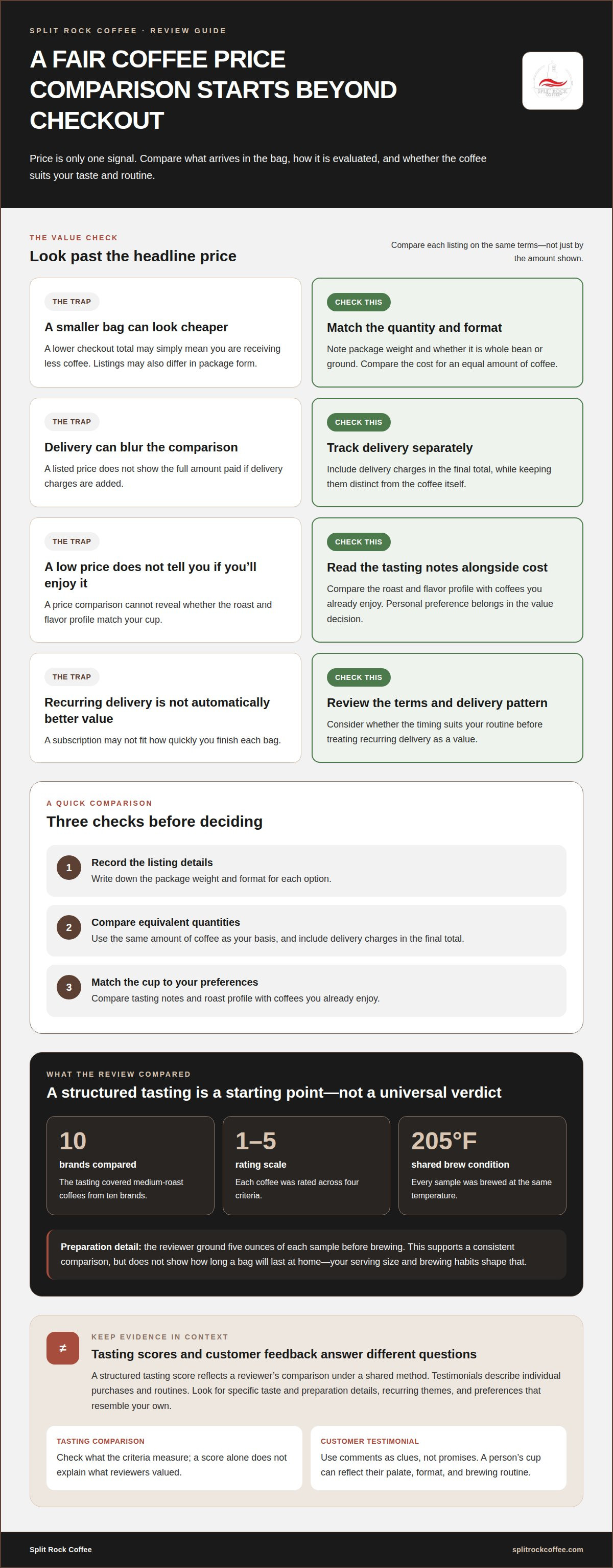
Compare the price with what arrives in the bag. Package weight, whole bean or ground format, delivery charges, and purchase frequency all affect value. Listings can look similar while offering different quantities or forms. Check the listed weight and format first; those details make comparisons fairer than headline prices alone.
For a simple comparison, note each package’s weight and compare the cost for an equal amount of coffee. A smaller bag may cost less at checkout but provide less coffee overall. This helps distinguish a lower initial spend from better value per serving. Track delivery charges separately, since they affect the total paid without changing the coffee itself.
Roast and taste preferences matter too. A price comparison cannot tell you whether a coffee’s flavor suits your cup. The tasting test brewed every sample at 205°F, giving the reviewer a shared brewing condition for judging the beans. Use tasting notes alongside cost: if a coffee’s profile matches your usual preference, the purchase may offer more practical value than a cheaper option you enjoy less.
A useful review connects price with how the coffee was evaluated. In this tasting, the reviewer ground five ounces of each sample before brewing. That creates a consistent basis for comparison, but doesn’t show how long a bag will last at home. Your brewing habits and serving size determine how quickly you use a package.
Compare purchase formats separately. Whole beans require grinding, while ground coffee is ready to brew; choose according to your routine and equipment. A monthly subscription is another option to assess by its terms and delivery pattern. Recurring delivery isn’t automatically better value, so consider whether the timing suits how quickly you finish each bag.
Try this three-step check before deciding:
- Record the package weight and format for each option.
- Compare equivalent quantities, including any delivery charge in the final total.
- Match the tasting notes and roast profile to coffees you already enjoy.
The original tasting compared medium-roast coffees from 10 brands, but that result is a snapshot of one group of samples. It doesn’t establish a universal price for every roast, package, or seller. Treat a review as a structured starting point, then assess the specific listing you’re considering. A careful comparison links the cost, quantity, format, and cup experience without mistaking any single factor for the whole value.
Customer ratings and testimonials
A tasting score and a personal account offer different kinds of evidence. Separate structured tasting results from customer feedback when deciding whether a coffee suits your preferences.
Customer Ratings
The tasting comparison rated each coffee from one to five across four criteria. This reflects a reviewer’s structured assessment, not a customer star average. Keep the distinction clear: a tasting score compares samples under a shared method, while customer ratings reflect individual purchases and routines.
Use ratings as a starting point, then find out what they measure. A high score alone won’t explain whether reviewers valued aroma, balance, or another quality. Read the explanation of the criteria rather than treating the score as a complete verdict.
Customer Testimonials
Testimonials add context that a rating can’t convey. A comment about a smooth morning cup describes one person’s experience, not a guaranteed result for every brewer. Look for concrete details about taste, preparation, and the reviewer’s usual preferences.
Look for recurring themes across several comments rather than relying on one vivid quote. If one person describes a strong flavor and another prefers a lighter cup, they may have different palates, not conflicting facts. Ask whether a reviewer’s preferences resemble yours.
To assess feedback carefully, follow a short reading process:
- Identify whether the score comes from a tasting comparison or a customer purchase.
- Read the review text for specific taste descriptions and preparation details.
- Compare those details with your own preferred roast, flavor, and brewing routine.
A testimonial that names a brewing method offers more context than a star score alone. It still describes one person’s cup, so treat it as a clue, not a promise. Comments about aroma or strength can help you anticipate the experience, but personal taste shapes the result.
Review volume and timing also affect interpretation. Recent comments may describe a different purchase experience from older feedback, while a small set offers limited perspective. Don’t assume a rating represents every buyer unless the review page explains how it’s calculated. Focus on details you can compare.
When evaluating whole bean or ground coffee, include format in your reading. A reviewer’s preparation routine may influence their experience, especially if it differs from yours. Choose feedback that reflects a similar way of brewing, then use whole bean and ground coffee as the format comparison for your own routine.
A balanced judgment combines the structured tasting score, rated from one to five, with specific customer experiences, without treating either as universal proof. Look for clear criteria, useful descriptions, and preferences that align with yours. This makes ratings and testimonials practical evidence for deciding what to try.
Are Gold Standard coffee beans ethically sourced or certified?
Ethical sourcing and certification are separate from flavor, roast, and customer ratings. A tasting score can’t establish how coffee was sourced, and a certification claim needs a clear product-level reference. In a gold standard coffee beans review, assess sourcing evidence separately from the cup’s taste.
Start with the product description and packaging. Look for a specific sourcing statement, a named certification, or information connecting the beans to their origin. A broad phrase such as “responsibly sourced” offers less detail than an explanation of the practice. Read the wording closely rather than treating an ethical-sounding phrase as proof of certification.
A certification mark should identify the standard it represents. Check whether the product information names the certifier and explains what the mark covers. Certifications can apply to different parts of a supply chain, so the exact wording matters. A logo alone may not show which practices it addresses.
Use this practical evidence check:
- Find the exact sourcing or certification statement on the product page or package.
- Identify any named standard and the practices it covers.
- Look for origin or supply-chain details that support the claim.
- Keep ethical sourcing distinct from flavor reviews and roast descriptions.
“This coffee tastes balanced” describes a cup experience; it says nothing about farming or purchasing practices. Likewise, a roast label describes how beans were roasted, not how they were sourced. Keep these claims separate when comparing coffee. A strong rating is not evidence of a social or environmental standard.
Traceability adds context when it identifies where beans came from or how they moved through the supply chain. Origin details alone don’t prove certification, but they can make a sourcing statement more specific. Compare the wording in product descriptions, distinguishing a named origin from a documented sourcing commitment.
For The Gold Standard Coffee Beans, rely on a product-level ethical sourcing or certification statement rather than inferring one from the name, taste, or rating. If a product page names a certification, consider its stated scope; if it describes sourcing practices, assess those details as a separate claim. This keeps your judgment grounded in evidence, not brand language alone.
To examine the product information directly, review the coffee details and compare any sourcing language with the evidence you value.
Split Rock Coffee: The Gold Standard Coffee Beans
Split Rock Coffee offers The Gold Standard Coffee Beans for readers ready to move from comparing reviews to choosing coffee. Select whole bean or ground coffee to suit your preparation routine, or consider the optional Monthly Coffee Subscription if recurring delivery fits how you buy coffee.
Let the details you value guide your decision. Choose the format that suits your brewing routine, or explore the subscription if you prefer regular deliveries. The right next step is the one that fits your habits and preferences.
Visit splitrockcoffee.com to explore The Gold Standard Coffee Beans.
Choose the Cup That Fits Your Routine
Let your next choice reflect what matters in your daily cup: a flavor you enjoy, a format suited to your brewing habits, and sourcing information that aligns with your priorities. A gold standard coffee beans review can narrow the field, but your own routine is the lasting measure. Identify the qualities you value most and use them to guide your choice.
Split Rock Coffee offers The Gold Standard Coffee Beans, a Monthly Coffee Subscription, and Low Acid Coffee Blends. Consider which option fits how you enjoy coffee, whether you’re choosing beans for your next brew or exploring another part of the range.
Contact Split Rock Coffee to take your next step. Choose with care, and enjoy finding a coffee that feels right for your day.
Frequently Asked Questions
What is Gold Standard coffee and who makes it?
The Gold Standard Coffee Beans are a named offering from Split Rock Coffee. The name identifies the product, not an independent certification or rating. Split Rock Coffee offers whole bean and ground coffee, so you can choose the format that suits your brewing routine. The optional Monthly Coffee Subscription suits those who prefer recurring deliveries.
How do Gold Standard coffee beans taste according to customer reviews?
Customer reviews can’t establish one taste that every drinker will experience. Treat tasting terms as personal impressions and look for specific descriptions of bitterness, smoothness, aroma, or brewing method. Compare those details with your preferences. A reviewer who enjoys a bold cup may judge the same brew differently from someone who favors a lighter taste.
How much do Gold Standard coffee beans cost in the United States?
There isn’t one price for every Gold Standard coffee purchase. The total depends on the package and whether you choose whole bean or ground coffee, as well as any charges shown at checkout. Compare the current product listing and package details before choosing. Don’t substitute prices for other blends or formats.
What are the most common complaints about Gold Standard coffee beans?
Don’t call a complaint common without repeated, specific customer reports. When assessing reviews, separate taste mismatches from product or ordering issues. One person finding a coffee too intense reflects an individual preference; repeated reports of the same issue could suggest a pattern. Check that feedback identifies the coffee and format, and avoid generalizing from a single account.


