Stomach-Friendly Coffee Brands: How to Choose in 2026
A “low-acid” label isn’t a guarantee that a coffee will sit well with you. The best stomach friendly coffee brands are worth comparing, but the wording on a bag doesn’t tell the whole story. Check what the claim means, how the coffee fits your brewing routine, and how your own body responds.
If coffee sometimes leaves you uncomfortable, it makes sense to look for a gentler option without giving up the flavor or routine you enjoy. Tolerance varies from person to person, though, and a low-acid claim can’t promise symptom relief. A thoughtful choice starts with clear product information and realistic expectations.
This guide gives you a practical way to compare brand claims, formats, and personal fit. We’ll look at options including Split Rock Coffee’s low-acid blends, available whole bean or ground, and outline a manageable way to assess a coffee by changing one part of your routine at a time. The goal is an informed choice, not a label you have to take on faith.
Key Takeaways
- Compare stomach friendly coffee brands by checking the exact wording behind their claims, available formats, and any supporting evidence.
- Keep coffee acidity and digestive symptoms in perspective: they’re related considerations, but one doesn’t predict the other for everyone.
- Match the coffee’s format and ordering options to your routine, then check current product details before buying.
- Split Rock Coffee offers low-acid blends, Gold Standard coffee beans, and whole-bean and ground formats.
- Assess personal fit by changing one variable at a time, such as the brand, serving size, or preparation method. No brand can guarantee comfort.
What Makes a Coffee Brand Stomach-Friendly? Understand the Claims First
“Stomach-friendly” sounds like a clear promise, but it isn’t. Treat it as a consumer description of coffee that may suit some people better, not a medical category or guarantee of comfort. A brand may describe a coffee as low-acid, but that label alone can’t tell you how your body will respond.
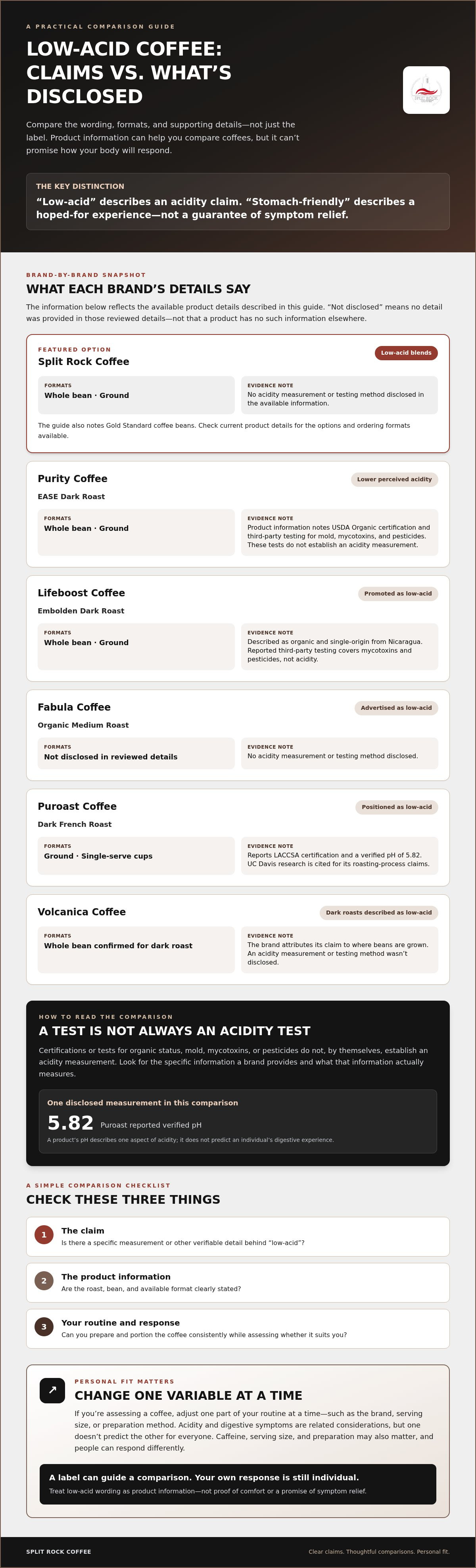
Quotable definition: “Low-acid describes a coffee’s acidity claim; stomach-friendly describes a hoped-for experience, not a promise of symptom relief.” Keep that distinction in mind as you compare stomach friendly coffee brands.
Coffee’s acidity and digestive symptoms are related questions, but they aren’t interchangeable measurements. A product’s pH, if provided, describes one aspect of its acidity; it doesn’t predict an individual’s experience. Caffeine, serving size, and preparation may also be relevant. These factors can affect people differently, so don’t treat any single label detail as proof of comfort.
Does low-acid coffee mean it will feel gentler?
Not necessarily. A low-acid claim may help narrow your options, but it can’t establish whether a particular coffee will feel gentler to you. Give more weight to specific, verifiable details than broad marketing language. Treat any stated acidity measurement as information about the product, not a forecast of your symptoms. For background on the term and factors that influence coffee acidity, see What is low-acid coffee.
If you want more context on the terminology, Split Rock Coffee’s low-acid coffee guide can help you understand the claim before comparing products. Use it as background, then pay attention to your own response.
Which coffee details are worth checking on the label?
Look for an explanation of what the brand means by “low-acid” and whether it provides supporting details. Check the roast, bean, and format information when the company supplies it, but don’t treat a roast level or format as proof of stomach comfort.
- Claim: Does the brand provide a specific measurement or other verifiable detail?
- Product information: Does it clearly state the roast, bean, and available format?
- Your routine: Can you prepare and portion the coffee consistently while you assess your response?
Clear labels make products easier to compare on the same terms. They don’t replace checking how a coffee suits you.
How to Compare Stomach-Friendly Coffee Brands Before You Buy
Use the same yardsticks for each product: the exact low-acid wording, the formats offered, and the evidence behind the claim. This helps keep confident marketing language from outweighing details you can actually compare. Transparent criteria make comparisons more useful because they show what’s documented, what’s a product claim, and what remains unknown.
| Brand | Confirmed low-acid wording | Available formats | Evidence notes |
|---|---|---|---|
| Split Rock Coffee | Low-acid blends | Whole bean and ground | No acidity measurement or testing method disclosed in the available information. |
| Purity Coffee | EASE Dark Roast is described as having lower perceived acidity | Whole bean and ground | Product information notes USDA Organic certification and third-party testing for mold, mycotoxins, and pesticides. These tests don’t establish an acidity measurement. |
| Lifeboost Coffee | Embolden Dark Roast is promoted as low-acid | Whole bean and ground | Described as organic and single-origin from Nicaragua. Third-party testing is reported for mycotoxins and pesticides, not acidity. |
| Fabula Coffee | Medium Roast is advertised as organic and low-acid | Not disclosed in the reviewed details | No acidity measurement or testing method disclosed. |
| Puroast Coffee | Dark French Roast is positioned as low-acid | Ground and single-serve cups | Reports LACCSA certification and a verified pH of 5.82. UC Davis research is cited for its roasting-process claims. |
| Volcanica Coffee | Dark roasts are described as low-acid | Whole bean confirmed for dark roast | The brand attributes its claim to where beans are grown; an acidity measurement or testing method wasn’t disclosed. |
What evidence should a brand provide for low-acid claims?
Look for a stated acidity measurement or a clear explanation of how the coffee was tested. Then separate that evidence from other product details: organic certification or contaminant testing, for example, doesn’t verify an acidity claim. Brands may use different methods, so don’t assume their results are directly comparable. Northwestern Medicine also explains why coffee can cause stomach upset, including the roles acidity and caffeine may play.
How do roast, format, and routine affect brand fit?
Compare roast details only when the product page confirms them, and don’t treat a dark roast as proof of stomach comfort. Format is simpler to assess: whole bean suits someone who grinds coffee before brewing, while ground coffee fits a routine that starts with pre-ground beans. For more bean-level comparisons, see the guide to the best low-acid coffee beans.
Use the table as a starting point, then check current product details before choosing. Split Rock Coffee lists low-acid blends and whole-bean and ground options. You can review its coffee options as part of your comparison.
Stomach-Friendly Coffee Brands Compared: Match Options to Your Needs
Your shortlist depends on what matters most: a clearly stated low-acid option, a familiar format, or the convenience of a recurring order. The brands below are compared by product information and confirmed offerings, not medical outcomes. No listing can guarantee that a coffee will suit your individual tolerance. Northwestern Medicine discusses why coffee can upset your stomach, including possible roles for acidity and caffeine. That context may help you weigh product claims without mistaking them for a prediction about your experience.
Which brands offer a clearly described low-acid option?
For a measurable claim, Puroast reports LACCSA certification and a verified pH of 5.82 for its low-acid coffee. Other brands use different language: Split Rock Coffee sells low-acid blends; Lifeboost promotes its Embolden Dark Roast as low-acid; Fabula advertises its Medium Roast as low-acid; and Lucy Jo’s offers an organic low-acid blend. Purity describes EASE Dark Roast as having lower perceived acidity. These descriptions don’t represent equivalent evidence, and none establishes how a coffee will feel for you.
- Seeking a low-acid option from Split Rock Coffee? Its confirmed lineup includes low-acid blends and Gold Standard coffee beans.
- Prioritizing a reported certification? Puroast is the option here with the stated LACCSA certification and pH figure.
- Considering a specific product description? Compare the exact claim, not the roast alone. A dark roast by itself isn’t proof of stomach comfort.
Which brand fits whole-bean, ground, or recurring orders?
Format can make a product easier to fit into your day. Split Rock Coffee offers whole-bean and ground coffee, plus a monthly coffee subscription. Purity’s EASE Dark Roast and Lifeboost’s Embolden Dark Roast are listed in both whole-bean and ground formats; Puroast lists ground coffee and single-serve cups. Check current product pages for availability and subscription terms, since options can change. For broader buying considerations, read the specialty coffee quality guide.
Choose the format that matches how you already brew, then assess your response without assuming a brand’s claim predicts the result. A useful comparison keeps product evidence, everyday convenience, and personal fit separate.
Will a Stomach-Friendly Coffee Work for You? Test Your Fit Carefully
No brand can guarantee that its coffee will prevent or relieve your symptoms. A low-acid label describes a product claim, not a promise about your personal response. Even among stomach friendly coffee brands, what feels manageable can vary with the person, serving, and way coffee fits into a routine.
If you choose to compare coffees, keep the process simple and measured. Change one variable at a time so it’s easier to tell what may be associated with a difference. This is a personal observation, not a diagnosis or treatment plan. If coffee reliably brings on symptoms, don’t feel obliged to keep testing it.
How can you compare coffees without changing everything at once?
Pick one coffee and keep your usual preparation reasonably consistent. If it’s appropriate for your established routine, try a modest serving rather than making several changes at once. If you switch the brand, brew method, serving size, and timing together, it’s harder to tell what may have affected your experience.
Keep brief notes for each occasion. A few details can make patterns easier to spot:
- Coffee: Brand or product, and whether it’s regular or decaffeinated if known.
- Amount: Approximate serving size.
- Preparation and timing: How you made it and when you drank it.
- Response: How you felt, including whether anything seemed different.
Don’t treat a small personal trial as proof that a coffee is medically suitable. If symptoms are persistent or concerning, seek guidance from a qualified medical professional rather than relying on product claims or repeated self-testing.
What other factors can influence your coffee experience?
Brand choice is only one part of the picture. Caffeine, serving size, timing, and preparation may all be worth noting, along with any other circumstances that seem relevant to you. Northwestern Medicine discusses acidity and caffeine among factors that may contribute to coffee-related discomfort, but that doesn’t mean one factor explains everyone’s response.
Keep your method steady while comparing products, then adjust only one thing if you decide to continue. Don’t assume a particular brewing method removes acidity or prevents symptoms. Unless a brand provides verifiable details, treat those claims cautiously. The aim is a clearer picture of your own experience, not a guaranteed result.
If you’d like to compare a coffee option with low-acid positioning, explore Split Rock Coffee’s low-acid blends and assess them with the same careful approach.
Why Consider Split Rock Coffee for a Stomach-Friendly Coffee Routine?
Among stomach friendly coffee brands, Split Rock Coffee is an option to compare if you’re looking for a low-acid blend and a format that fits your routine. Its confirmed offerings include low-acid coffee blends and Gold Standard coffee beans. These are two distinct product categories to consider, without suggesting that either one guarantees a particular digestive response.
Format matters for everyday use. Choose whole bean if grinding coffee is already part of your preparation routine; choose ground if you prefer coffee ready for your usual brewing setup. Split Rock Coffee offers both. A monthly coffee subscription is also available for customers who want a recurring ordering option. Review current product pages and subscription terms before deciding, since specific details and availability can change.
Which Split Rock Coffee options should readers compare?
Start with the low-acid blends if that product positioning is your main reason for considering the brand. Compare the Gold Standard coffee beans separately, based on the product information provided, rather than assuming they share the same low-acid positioning. For either category, choose whole bean or ground according to the equipment you use and the effort you want in your routine.
- Low-acid blends: Review the current product description and any specific claim details listed there.
- Gold Standard coffee beans: Consider these as a separate offering, without assuming an acidity or digestive benefit that hasn’t been stated.
- Whole bean or ground: Match the format to your existing grinder and brewing habits.
This is a product-fit comparison, not a promise of symptom relief. If you try a new coffee, keep your routine steady enough to notice how it suits you, and rely on qualified medical guidance for persistent or concerning symptoms.
How can you take a low-pressure next step?
There’s no need to commit to a new routine based on a label alone. Check current descriptions, format choices, and subscription details, then decide whether an option fits your preferences. Split Rock Coffee is a Disabled Veteran-Owned Small Business founded in 2013, company context that may matter to shoppers who also consider a business’s background when making a choice.
If you’d like to review the available options, explore Split Rock Coffee. Compare the details at your own pace and choose only if the coffee and format make sense for you.
Choose Your Next Cup with Confidence
The best stomach friendly coffee brands are the ones you can assess using clear criteria, not just a reassuring label. Check what a low-acid claim actually says, compare product details and formats, then assess your own fit by changing one part of your routine at a time. No brand can guarantee how you’ll feel, so let your experience guide the choice.
Split Rock Coffee offers low-acid blends, Gold Standard coffee beans, whole-bean and ground formats, and a monthly coffee subscription. It’s also a Disabled Veteran-Owned Small Business founded in 2013. These details can help you decide whether its options align with your preferences, while keeping expectations grounded in what’s confirmed.
Ready to compare the current options? Explore Split Rock Coffee’s low-acid blends and coffee options. Take the next step at your own pace, choose what fits your routine, and keep enjoying coffee on terms that work for you.
Frequently Asked Questions
What coffee brand is easiest on the stomach?
No brand is easiest for everyone, because coffee tolerance varies from person to person. Compare the exact low-acid wording, available evidence, and format, then pay attention to your own response. Split Rock Coffee is one option to consider: it sells low-acid blends and Gold Standard coffee beans in whole-bean and ground formats. Claims made by stomach friendly coffee brands can help you narrow choices, but they can’t guarantee comfort.
Is low-acid coffee better for acid reflux?
Low-acid coffee may be worth considering if acidity is one of your concerns, but it isn’t proven to prevent or relieve reflux for everyone. A product’s acidity claim describes the coffee, not your individual response. Caffeine, serving size, timing, and other personal factors may also matter. If reflux symptoms persist or concern you, speak with a qualified medical professional rather than relying on a coffee label.
Can coffee be stomach-friendly if it contains caffeine?
Yes, a caffeinated coffee may suit some people, but caffeine can contribute to coffee-related discomfort for others. “Stomach-friendly” isn’t a guarantee, and a low-acid claim doesn’t mean a coffee is caffeine-free. If you’re evaluating your tolerance, keep the coffee and preparation consistent, note the amount and timing, and observe how you feel. Seek medical guidance for persistent or concerning symptoms.
How can I tell whether a coffee brand is genuinely low-acid?
Look for a specific acidity measurement or a clear explanation of the testing behind the claim, rather than relying on “low-acid” wording alone. Check what was measured and whether the brand identifies its method; testing for other qualities doesn’t verify acidity. For example, Puroast reports LACCSA certification and a verified pH of 5.82. Even a documented measurement describes the coffee, not whether it will suit your stomach.
Does dark roast coffee cause less stomach discomfort?
Not necessarily. Roast level alone can’t predict whether you’ll experience discomfort, and a dark-roast label isn’t proof that a coffee is stomach-friendly. Some brands associate darker roasting with lower acidity, but roast descriptions and measured acidity aren’t interchangeable. If you want to compare roast levels, check the specific product information and change only one part of your routine at a time so it’s easier to notice your response.
Should I choose whole-bean or ground coffee for a sensitive stomach?
Choose the format that fits your equipment and routine; whole bean or ground doesn’t, by itself, establish how a coffee will affect your stomach. Whole bean works if you already grind coffee before brewing, while ground coffee may suit a routine that uses pre-ground coffee. Split Rock Coffee offers both formats. Keep your preparation consistent when trying a new coffee, and track the serving size and how you feel.
Can a coffee subscription help me find a stomach-friendly brand?
A subscription can make regular ordering more convenient, but it can’t identify a coffee that will suit your individual tolerance. Consider trying a coffee and observing your response before choosing recurring orders, and check the current subscription terms before signing up. Split Rock Coffee offers a monthly coffee subscription, alongside low-acid blends and Gold Standard coffee beans. Treat the subscription as an ordering option, not a promise of symptom relief.


