Choosing Low Acid Coffee: A Guide for Sensitive Stomachs
You pour that first cup of the day, seeking the sustenance you need to tackle your mission, but by the third sip, the familiar burn of heartburn takes hold. It's a frustrating trade-off. You shouldn't have to choose between enduring digestive discomfort and walking away from the ritual that grounds your morning. If you've been searching for how to choose a low acid coffee that actually delivers on its promise, you've likely realized that many brands taste more like paper than premium beans. We believe you deserve a cup that fuels your legacy without the fire in your chest.
Mastering your selection is about understanding the discipline of the craft. It requires a high level of scrutiny regarding bean origin, altitude, and the precise roasting techniques that preserve flavor while stripping away the harshness. This guide provides the tactical knowledge you need to reclaim your morning. We will break down the difference between treated and naturally low acid beans, explain why roast level matters, and show you how to find a reliable, high-quality blend that you can trust to perform every single day. Let's get back to the bold, pain-free coffee you've been missing.
Key Takeaways
- Distinguish between chemically treated beans and those that are naturally low in acid to ensure you are getting the highest quality sustenance.
- Prioritize beans from lower altitudes and specific regions like Brazil or Sumatra, which naturally yield a smoother profile for sensitive stomachs.
- Learn the tactical 4-step framework for how to choose a low acid coffee that meets the gold standard for both flavor and digestive health.
- Understand how the discipline of low and slow roasting effectively breaks down the specific chemical compounds that lead to heartburn and discomfort.
- Reclaim your morning ritual by choosing a mission-driven brand that provides premium, low-acid fuel designed to support your daily life.
What is Low Acid Coffee and Why Does it Matter?
Coffee is more than a beverage; it's the daily fuel that powers your mission. For many, that fuel comes with a heavy price: digestive distress that sidelines you before the day even begins. Understanding What is Low Acid Coffee is the first step in reclaiming your morning ritual. Simply put, low acid coffee refers to beans that either naturally possess or have been specifically roasted to maintain a higher pH level, moving closer to a neutral state. This shift in chemistry is what prevents the agonizing burn of heartburn or acid reflux.
When you're learning how to choose a low acid coffee, you'll encounter two main types: natural and treated. Natural low acid coffee comes from specific origins where the soil and altitude naturally produce a smoother bean. Treated coffee, on the other hand, uses mechanical or chemical processes like steaming to strip away acids. While both can work, we believe in the discipline of the craft, prioritizing beans that are inherently better for your gut. Don't fall for the myth that lower acid means a compromise on caffeine or strength. You can have a bold, high-energy cup that respects your body and your goals.
The Science of Stomach Sensitivity
The discomfort you feel isn't just in your head. It's a biological reaction to chlorogenic acids and quinic acids found in standard beans. These compounds trigger the stomach to produce excess gastric acid, which is a significant barrier for anyone dealing with GERD or general sensitivity. In technical terms, pH levels measure the acidity of your brew; for those with sensitivities, a range of 5.5 to 6.0 represents the ideal benchmark for comfort. Moving your daily cup toward this neutral zone ensures your sustenance supports your health rather than undermining it.
Flavor Profiles: Boldness Without the Bite
Many people associate acidity with "brightness" or "citrus notes" in coffee. While those might sound appealing in a tasting room, they are often red flags for sensitive stomachs. High-acid coffees tend to have a sharp, tangy bite that signals high chemical acidity. In contrast, premium Low Acid Coffee Blends offer a more grounded experience. You can expect rich, chocolatey, and nutty flavor profiles that feel smooth on the palate. It's about achieving excellence in taste without the clinical harshness of mass-market brands. By choosing beans with these deeper, earthier notes, you're selecting a profile that is naturally more compatible with a sensitive digestive system.
Evaluating Origin and Altitude: The Foundation of Selection
Selecting the right fuel begins long before the beans reach the roaster. It starts in the soil and the climate of the origin. When you're investigating how to choose a low acid coffee, you must look at the geography. Determining how to choose a low acid coffee requires a disciplined look at the label for these specific origin details. The concept of "low and slow" applies to cultivation just as much as it does to roasting. Beans grown at lower altitudes generally mature faster and develop fewer of the sharp, bright acids found in high-mountain crops. This natural chemistry provides a smoother foundation for those who need sustenance without the physical cost.
The Altitude Rule for Sensitive Guts
In the world of specialty coffee, high-altitude beans, often labeled as Strictly Hard Bean (SHB), are prized for their complexity. However, that density often translates to higher acidity. For a sensitive digestive system, this acidity can lead to irritation and discomfort. We recommend looking for beans grown at moderate altitudes, where the maturation process results in a more alkaline profile. Focus your search on these reliable regions:
- Brazil: Known for lower-altitude farms that produce nutty, low-acid profiles.
- Sumatra: Famous for earthier, heavier-bodied beans with naturally low acidity.
- Central America: Specifically regions with mineral-rich soil that balances the bean's chemical structure.
The type of bean matters just as much as where it grows. While some suggest Robusta for lower acidity, our Gold Standard Coffee Beans utilize high-quality Arabica. This choice ensures you receive a premium flavor profile without the harshness often found in lower-grade Robusta crops. It's about maintaining a high benchmark for quality while protecting your gut health. Soil composition, particularly mineral-rich or volcanic earth, fundamentally alters the bean's chemical structure, often naturally lowering the acid levels before the harvest even begins.
Processing Methods: Washed vs. Natural
The way a bean is processed after harvest dictates its final personality. The "Washed" process is common, but it often highlights the bright, acidic notes that cause trouble. Instead, seek out "Natural" or "Dry" processed beans. In this method, the fruit stays on the bean while it dries, which preserves natural sweetness and lowers the perceived acidity. This results in a cup that feels smooth and heavy, providing the rich experience you deserve. If you're ready to stop guessing and start brewing, exploring our Low Acid Coffee Blends is a tactical next step for your morning routine.
The Craft of the Roast: How Discipline Reduces Acidity
Roasting is a tactical operation. It's where the raw potential of the bean is forged into daily sustenance. When you're researching how to choose a low acid coffee, the roaster's discipline is often the missing piece of the puzzle. Time and temperature are the primary variables we control to ensure your morning doesn't end in discomfort. Longer roasting times are essential because they facilitate a chemical breakdown of the acids that trigger stomach distress. It's a slow, methodical process that cannot be rushed if you want to achieve excellence.
A critical advantage of this disciplined approach is the development of N-methylpyridinium (NMP). Unlike many competitors who focus solely on pH levels, we understand the biological impact of this compound. NMP is produced during the roasting process and has been shown to inhibit the secretion of gastric acid. It's a natural defense mechanism for your stomach. You should be wary of mass-market "flash roasts." These high-speed, industrial methods prioritize volume over quality, leaving the harsh acids fully intact and ready to sideline you before your mission even begins.
Dark Roast vs. Light Roast: The Gut's Perspective
For anyone with a sensitive stomach, dark roasts are the tactical choice. The extended heat exposure acts as a natural filter, stripping away the compounds that lead to heartburn. If you prefer more nuance in your cup, look for a "Medium-Dark" balance. This profile maintains the bean's unique heritage and flavor notes while keeping the acid profile firmly in check. To ensure the best results, you must also consider the best brewing methods for low acid coffee, as the extraction process is the final step in your mission for a pain-free cup.
Roast Consistency and Quality Control
Excellence requires absolute consistency. Our Gold Standard Coffee Beans are the result of a high level of scrutiny during every roast cycle. Without uniform heat application, a bag can contain "acid pockets," which are under-roasted beans that deliver a concentrated hit of acidity when you least expect it. Small-batch roasting is the benchmark here. It allows us to monitor every second of the process, ensuring that the integrity of our Low Acid Coffee Blends remains uncompromised from the first bean to the last. This level of care is how we honor our commitment to quality and service.
A 4-Step Framework for Choosing Your Blend
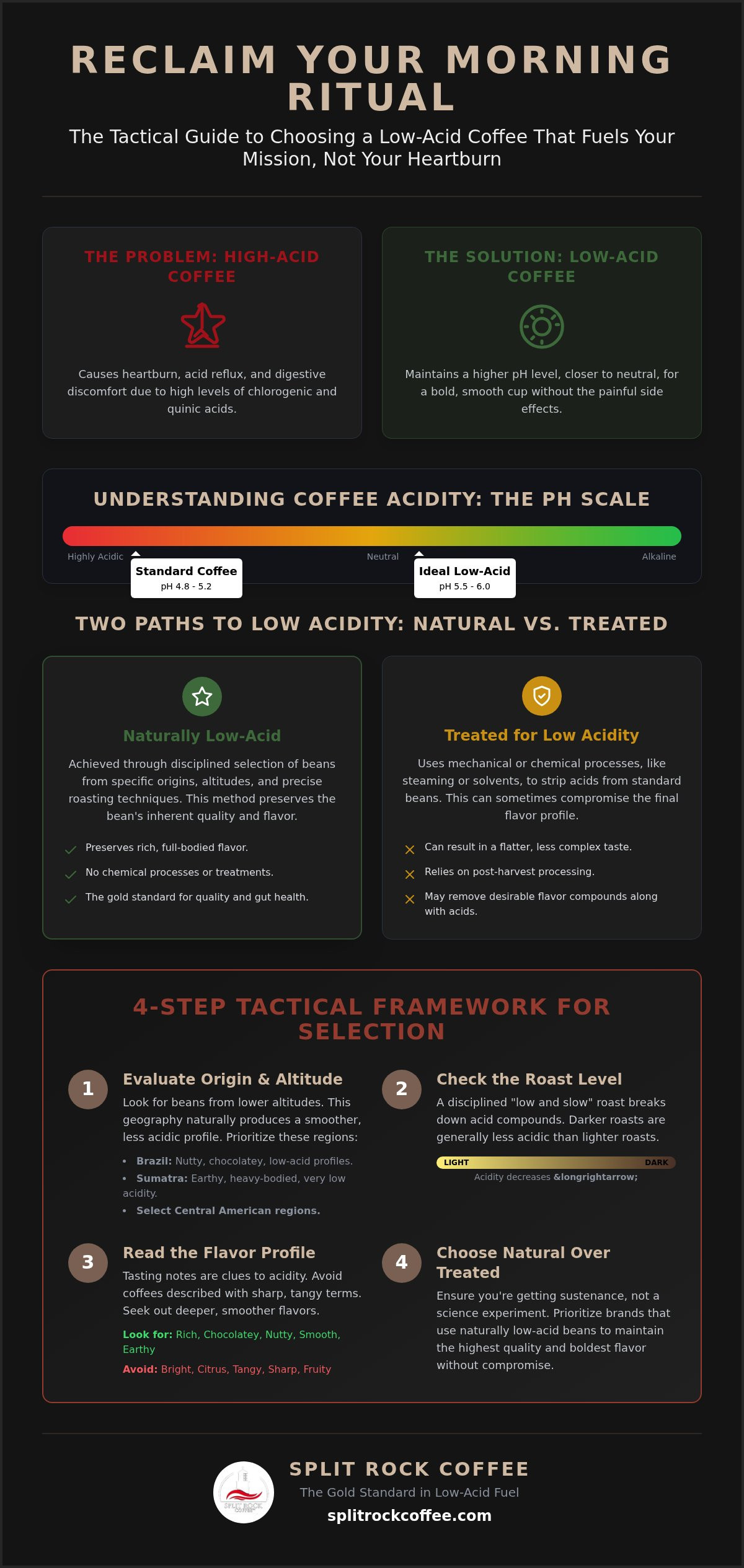
Theory is only useful when applied with discipline. Knowing the science of altitude and roasting is the foundation, but you need a tactical plan for the grocery aisle or your favorite online shop. This framework simplifies how to choose a low acid coffee into a repeatable process that ensures your sustenance never fails you. Follow these steps to secure a high-quality blend that respects your gut and your mission.
- Step 1: Check the Label for Origin. Prioritize beans from Brazil or Sumatra. These regions are the gold standard for natural low acidity. If the label lists a high-altitude African origin like Ethiopia or Kenya, proceed with caution; these are often prized for the very acidity you're trying to avoid.
- Step 2: Inspect the Roast Date. Freshness is vital, but there's a catch. Extremely fresh coffee, roasted within the last 48 hours, retains high levels of CO2. When brewed, this gas can create carbonic acid, which mimics the sharp bite of high-acid beans. Aim for beans roasted 7 to 14 days ago for the most stable, smooth experience.
- Step 3: Verify the Roast Level. Look for descriptors like "Medium-Dark" or "Dark Roast." As we've established, the roasting process is where acids are broken down. A darker roast is a sign that the beans have undergone the necessary transformation to protect your stomach.
- Step 4: Seek Brand Dedication. Choose roasters who treat low acid as a core mission. When a brand specializes in this craft, they apply a higher level of scrutiny to every batch. It isn't just a marketing tag; it's a commitment to your daily performance and long-term health.
Deciphering Coffee Label Jargon
Professional roasting has its own language. Words like "Smooth" and "Full-bodied" are your allies. They suggest a low-acid profile with a rich mouthfeel and chocolatey finish. Conversely, avoid descriptors like "Bright," "Citrusy," "Crisp," or "Wine-like." These are industry codes for high chemical acidity. Beyond selection, your technique matters. Learning how to brew pour over coffee allows you to control water temperature and flow rate, further mitigating acid extraction in the final cup.
Whole Bean vs. Ground: The Freshness Mission
Choosing whole bean coffee is the disciplined choice for those who prioritize flavor and longevity. Grinding your beans just before brewing minimizes oxidation. When coffee is pre-ground, its surface area increases, making it vulnerable to the air. This process can lead to a sour, metallic taste that many mistake for acidity. If your mission requires the convenience of ground coffee, ensure it's stored in an airtight, opaque container to preserve its integrity. Ready to upgrade your morning? Explore our Low Acid Coffee Blends and find the fuel that fits your lifestyle.
Split Rock Coffee: The Gold Standard in Low Acid Fuel
Split Rock Coffee stands as a guardian of your morning ritual. As a Disabled Veteran-Owned Small Business founded in 2013, we built our foundation on the values of discipline, duty, and service. We recognize that for those with sensitive stomachs, the search for the perfect cup is more than a preference; it's a necessity for maintaining focus on the day's objectives. We don't just sell coffee. We provide the essential fuel for your daily mission, ensuring you can perform at your peak without the distraction of digestive distress. Once you've mastered how to choose a low acid coffee, the final piece of the strategy is finding a reliable source that shares your commitment to excellence.
The "Gold Standard" is our promise to you. It represents a high level of scrutiny applied to every bean we source and every batch we roast. While other brands might treat low acidity as a marketing trend, we treat it as a technical requirement for excellence. By choosing our Gold Standard Coffee Beans, you're opting for a product that has been vetted for both flavor and gut-compatibility. This commitment to quality ensures that your sustenance is as resilient as you are, providing the energy you need without the physical cost.
Sourced with Purpose, Roasted with Precision
Our Low Acid Coffee Blends are the result of over a decade of dedication to the coffee community. Since our founding in 2013, we've refined our techniques to meet the specific needs of sensitive stomachs. We utilize precision roasting technology to achieve a consistent, gut-friendly profile that never wavers. This technical approach allows us to break down the acids that cause irritation while preserving the bold, chocolatey notes you expect from a premium roast. It's a balance of science and craftsmanship, designed to serve those who refuse to settle for less.
Join the Mission: Subscriptions and Support
Consistency is key to any successful operation. To ensure your morning fuel is never in short supply, we offer a monthly coffee subscription that caters to your specific needs. Whether you prefer the ritual of grinding whole beans or the efficiency of ground coffee, our subscription service keeps your pantry stocked and your mission on track. Every purchase you make supports a Veteran-owned small business that prioritizes community and social responsibility over corporate jargon. You're not just a customer; you're a partner in a larger cause. Reclaim your morning and Choose your Gold Standard blend today.
Reclaim Your Morning Ritual
Your morning cup should be a source of strength, not a catalyst for discomfort. By mastering the variables of origin and roasting discipline, you've gained the tactical knowledge necessary to protect your gut. Remember to prioritize moderate altitudes and look for the chemical markers of a slow, purposeful roast that develops stomach-friendly compounds. Now that you understand how to choose a low acid coffee, you can stop settling for paper-thin flavors and start enjoying the bold, chocolatey sustenance you deserve. Excellence in your cup is the foundation for excellence in your day.
At Split Rock Coffee, we apply a high level of scrutiny to every batch to ensure it meets our rigorous benchmarks. Since 2013, our Disabled Veteran-Owned Small Business has been dedicated to providing expertly crafted Low Acid Coffee Blends that fuel your daily mission without the burn. We invite you to Fuel Your Mission with Split Rock Gold Standard Coffee Beans and experience the difference that professional craftsmanship makes. You've done the research; now it's time to brew with absolute confidence. Stand tall, stay fueled, and let nothing sideline your progress.
Frequently Asked Questions
Is low acid coffee the same as decaf?
No, low acid coffee and decaf are entirely different categories. While caffeine can contribute to stomach irritation for some, low acid refers specifically to the pH level and the presence of irritating chemical compounds like chlorogenic acids. You can enjoy a full-strength, caffeinated cup of our Low Acid Coffee Blends without the digestive burn. This allows you to maintain your energy levels and focus on your mission while protecting your gut health.
Can I drink low acid coffee if I have GERD or acid reflux?
Yes, many individuals with GERD or acid reflux find that low acid options are significantly more tolerable. Traditional coffee has a high concentration of acids that trigger the stomach to produce more gastric acid. By switching to beans with a higher pH, you reduce the primary source of irritation. It's a tactical shift that helps you enjoy your morning sustenance without the painful physical cost that usually follows.
Does cold brew coffee have less acid than hot coffee?
Yes, cold brew typically contains about 60 percent less acid than traditionally brewed hot coffee. Heat is the catalyst that extracts the sharp, bright acids from the bean. By using cold water and a long steeping time, you create a smooth, chocolatey concentrate that's naturally easier on the stomach. If you're still learning how to choose a low acid coffee, starting with a cold brew method is a reliable strategy.
What is the pH level of low acid coffee?
The target pH level for a true low acid coffee is between 5.5 and 6.0. In contrast, standard commercial coffee often sits between 4.8 and 5.2 on the pH scale. Because the pH scale is logarithmic, a move from 5.0 to 6.0 represents a tenfold decrease in acidity. We apply a high level of scrutiny to our Gold Standard Coffee Beans to ensure they consistently hit these gut-friendly benchmarks.
Does dark roast coffee have more or less caffeine?
Dark roast coffee actually contains slightly less caffeine by volume than light roast. The roasting process causes beans to expand and lose mass, meaning a scoop of dark roast contains fewer beans than a scoop of light roast. However, the difference is minimal for most daily drinkers. The primary benefit of the dark roast is the breakdown of acids, providing a smoother experience that fuels your day without the crash or the burn.
How do I brew coffee to minimize acidity?
To minimize acidity, focus on your water temperature and grind size. Avoid boiling water; instead, aim for a range between 195 and 205 degrees Fahrenheit. A coarser grind and a longer steeping time, such as in a French press, can also help reduce the extraction of harsh acids. These small, disciplined adjustments to your brewing technique ensure you get the most out of your premium beans every single morning.
Can I find low acid coffee in regular grocery stores?
You can find low acid labels in many grocery stores, but quality and transparency vary significantly. Many mass-market brands use chemical treatments or steam to strip acid away, which often ruins the flavor profile. When you're deciding how to choose a low acid coffee, it's safer to trust a specialized roaster. Our monthly coffee subscription ensures you receive fresh, expertly crafted beans delivered directly to your door without the grocery store guesswork.
Why is some coffee naturally lower in acid than others?
Natural acidity is determined by the bean's environment and heritage. Coffee grown at lower altitudes, such as in Brazil or Sumatra, matures faster and develops a more alkaline profile than high-altitude crops. Soil composition also plays a vital role. Since 2013, we've focused on sourcing beans that naturally possess these smoother characteristics. This disciplined approach to sourcing is what allows us to provide a rich, bold cup that remains gentle on your system.


