
How to Make Iced Coffee: Guide to Better Summer Fuel
Most home-brewed iced coffee is an insult to the bean. It starts with high expectations but often ends as a diluted, acidic mess that leaves your stomach churning before the workday truly begins. If you are tired of watery results, learning how to make iced coffee with precision is the only way to reclaim your morning fuel. You have likely experienced the frustration of watching your sustenance disappear into a puddle of melted ice, losing its bold character and leaving behind a bitter aftertaste. It is a common struggle, but settling for inconsistent results should never be your standard.
Mastering this craft is a mission of discipline and excellence. You deserve a drink that offers both high-energy focus and a stomach-friendly experience. By choosing the right beans and following a refined process, you can eliminate the heartburn and weak flavor that plague most summer routines. This guide provides a clear path to professional-grade results at home. We will explore the techniques required to craft a flavorful, low-acid brew that honors the heritage of the craft and serves your daily mission with unwavering quality.
Key Takeaways
- Master the science of thermal extraction to eliminate the bitterness and stomach burn that often ruin standard home brews.
- Apply the precise 'Ice Math' formula to learn how to make iced coffee that stays bold and flavorful without being watered down by melting ice.
- Discover why choosing low-acid, fresh-ground beans is the essential requirement for a stomach-friendly, high-performance morning routine.
- Learn to distinguish between flash-brew complexity and cold-brew smoothness to select the right extraction method for your specific mission.
- Implement veteran-level tactics like zero-dilution ice cubes to maintain your coffee’s integrity and strength throughout the heat of the day.
The Science of the Chill: Why Most Iced Coffee Fails Your Stomach
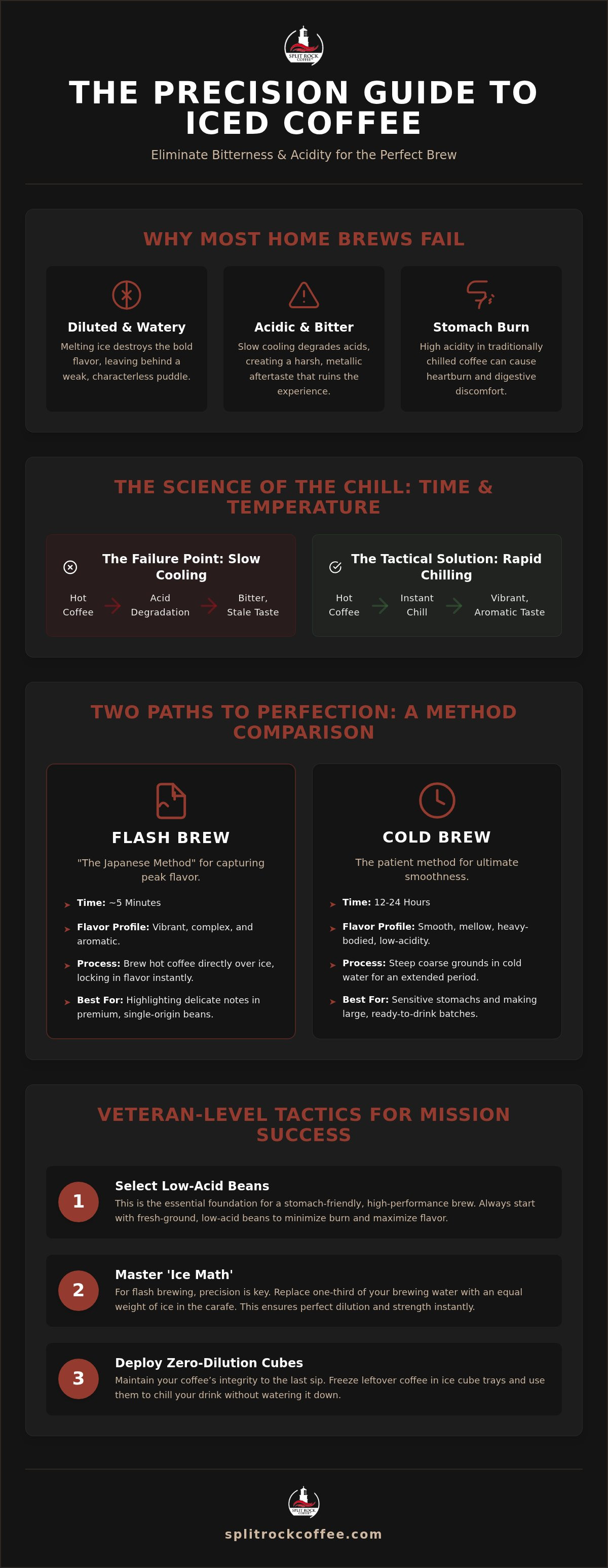
Precision is the hallmark of a master craftsman. Understanding the difference between a high-performance brew and a stomach-aching failure starts with temperature. While many people use the terms interchangeably, the history and variations of iced coffee reveal a clear distinction between cold brew and flash-chilled methods. Cold brew relies on time, steeping grounds for 12 to 24 hours at room temperature. In contrast, knowing how to make iced coffee correctly involves a rapid thermal transition. You brew it hot to unlock complex aromatics, then chill it instantly to lock those flavors in place. This is not just about a cold drink; it's about tactical preparation for your day.
The Impact of Temperature on Coffee Chemistry
When you brew with hot water, you extract chlorogenic acids. These compounds provide that bright, lively snap we love in a morning cup. However, when hot coffee cools down slowly, these acids can degrade into quinic and caffeic acids, which taste metallic and bitter. This is the "acidity trap" that ruins most home attempts. Oxidation also accelerates as coffee sits, leading to a stale profile that lacks depth. Using The Gold Standard Coffee Beans helps mitigate this risk. These beans are selected for their resilience, ensuring that the flavor integrity holds firm even when subjected to the thermal shock of ice. Rapid cooling is the secret. It traps the volatile aromatics before they can escape, preserving the soul of the bean.
Why Your Gut Rebels Against Traditional Iced Coffee
For many, the dream of a refreshing summer drink is cut short by heartburn. High-acid coffee is often the culprit. When you chill standard beans, the perceived bitterness increases, making the experience harsher on your digestive system. Learning how to make iced coffee that respects your biology is a game changer. Our mission is to provide low acid coffee that serves your body as well as your palate. By starting with Low Acid Coffee Blends, you reduce the chemical load on your stomach. This discipline in bean selection ensures your morning fuel provides sustained energy without the internal burn. It's a commitment to quality that honors your health while you pursue excellence. Don't let a poorly executed brew halt your progress when a better method is within reach.
Fundamental Methods: Iced Coffee vs. Cold Brew
Choosing between iced coffee and cold brew is a matter of tactical preference. It is a decision rooted in how you want your fuel to perform. Iced coffee, specifically the flash-brew method, is about capturing high-energy aromatics through heat and locking them down instantly. Cold brew is a test of patience. It results in a smooth, heavy-bodied concentrate that lacks the bright snap of its hot-brewed counterpart. Both serve a specific purpose in a disciplined morning routine. Understanding how to make iced coffee correctly means knowing which method honors your beans and your time.
Flash Brewing (The Japanese Method)
Professional baristas often choose flash brewing because it preserves the delicate, complex notes found in Gold Standard Coffee Beans. You brew hot coffee directly onto a bed of ice. This immediate drop in temperature is a tactical strike against oxidation. It traps volatile aromatics before they can escape into the air. To succeed, you must master the "Ice Math." Replace about one-third of your brewing water with ice in the carafe. This ensures a concentrated brew that hits the ice and dilutes to the perfect strength instantly. It requires a precision pour-over setup, but the result is a vibrant, sophisticated cup that rivals any coffee shop.
The Cold Brew Alternative
Cold brew requires a different kind of discipline. It involves a "set it and forget it" mindset, steeping coarse grounds for 12 to 24 hours at room temperature. This slow extraction bypasses the heat-induced release of certain oils and acids. While research on coffee acidity shows that hot brewing can actually extract more antioxidants, cold brew is often preferred by those with sensitive systems for its mellow, low-bitterness profile. It is a reliable, heavy-bodied fuel that stays fresh in the fridge for days, making it ideal for high-performance weeks.
Many enthusiasts find that the best brewing methods for low acid coffee often lean toward cold extraction for its forgiving finish. However, if you crave the bright complexity of a morning pour-over, learning how to make iced coffee via the flash-brew method is essential. A clean finish is non-negotiable. For cold brew, use a dual-filtration process. Start with a metal mesh to catch large particles; then pass it through a paper filter to remove fine sediment. This creates a crisp, professional-grade beverage. To ensure your mission never halts, consider a Monthly Coffee Subscription to keep your supply of premium beans ready for any method you choose.
Choosing Your Beans: Why Low-Acid is the Gold Standard for Ice
Your choice of bean is the foundation of your fuel. If you are learning how to make iced coffee, you cannot simply grab any bag off the shelf and expect professional results. The thermal shock and inevitable dilution from ice demand a bean that stands its ground. This isn't just about caffeine; it's about the quality of the sustenance you provide your body. Selecting a bean that maintains its integrity under pressure is the first step in your mission.
Roast Profiles for Chilled Drinks
Selecting the right roast is a tactical decision. Different profiles react uniquely when they hit the ice, and choosing the wrong one often leads to a flat, uninspired experience. Finding the best low acid coffee beans is the first step in building a gut-friendly summer routine. Consider how these roasts perform in a chilled environment:
- Dark Roasts: These provide a robust "punch" and smoky depth that isn't easily lost when milk or melting ice enters the equation.
- Medium Roasts: These offer a more balanced profile with subtle sweetness, making them ideal for the Japanese flash-brew method.
- Low Acid Coffee Blends: These are the essential choice for ensuring a smooth finish that doesn't irritate your system, even when concentrated.
While the National Coffee Association offers a baseline for how to make cold brew coffee, our mission is to refine that process for those who demand excellence without the digestive cost. Chilling coffee can heighten the perception of bitterness. Using a low-acid bean ensures the result remains smooth and inviting, rather than harsh on your stomach.
The Freshness Discipline
Excellence requires discipline. We follow the 15-minute rule: grind your beans no more than 15 minutes before they meet the water. Once the bean is cracked open, its volatile aromatics begin to vanish. Learning how to make iced coffee with fresh grounds ensures you capture the full spectrum of flavor before it fades into the air. Freshness is the difference between a vibrant, energizing cup and a stale, muddy one.
Whether you choose Whole Bean or Ground Coffee depends on your equipment and your commitment to the craft. Whole beans offer the ultimate control over freshness and grind size, which is critical when you're adjusting for different brewing methods. Properly stored Gold Standard Coffee Beans in an airtight, cool environment will maintain their integrity for weeks. If you find yourself running low during the heat of the season, a Monthly Coffee Subscription ensures your supply chain remains unbroken and your morning mission stays on track.
The Master Template: A Step-by-Step Mission for the Perfect Brew
Executing the perfect cup requires more than just intent; it requires a repeatable protocol. Many people fail at learning how to make iced coffee because they treat it as an afterthought, pouring leftover hot coffee over a handful of cubes. This approach guarantees a watery, bitter result that lacks the strength to fuel your day. To achieve excellence, you must treat the brewing process as a disciplined mission where temperature and ratios are non-negotiable. Precision in your measurements is the difference between a professional-grade beverage and a wasted batch of beans.
Before you begin, assemble your gear. A high-quality digital scale is your most important tool, followed by a clean dripper and fresh, filtered ice. High-quality ice is essential, as it becomes part of your final sustenance. If your ice tastes like the back of a freezer, your coffee will too. Use your Gold Standard Coffee Beans to ensure the foundation of your drink is built on quality.
The Flash-Brew Protocol
The secret to success lies in the "Ice Math." You aren't just adding ice; you are replacing a specific portion of your brewing water with it to account for melting. Follow these steps for a standard 12oz serving:
- Prepare the Vessel: Place your carafe on the scale and add exactly 170g of ice (approximately 40% of your total liquid weight).
- The Grind: Use a medium-fine setting for your Low Acid Coffee Blends to ensure optimal extraction during the shorter contact time.
- Thermal Control: Heat 250g of water (the remaining 60%) to exactly 200°F.
- The Bloom: Pour just enough water to saturate the grounds and wait 30 to 45 seconds to release trapped gases.
The strategic flash-brew ratio of 40% ice to 60% brewing water is the definitive safeguard against a watery, diluted cup. This method ensures that as the hot coffee hits the ice, it reaches the perfect drinking strength at the exact moment it reaches the ideal temperature.
The Pour Over Technique
Refining your pour over coffee skills is essential for the iced mission. Once the bloom is complete, begin pouring the remaining water in slow, concentric circles. Avoid hitting the sides of the filter; keep the stream focused on the coffee bed to ensure even extraction. Your total brew time should land between three and four minutes. If the water passes through too quickly, your grind is too coarse; if it stalls, go coarser next time. This level of scrutiny ensures every gram of flavor is captured. To keep your morning routine disciplined and your pantry stocked, secure your supply with a bag of Gold Standard Coffee Beans today.
Beyond the Brew: Sustaining Your Iced Coffee Mission
Mastering how to make iced coffee is only half the battle; the other half is maintaining the discipline to execute that process every single day. A true craftsman doesn't just build; they sustain. To keep your morning fuel at its peak, you need a long-term strategy that prevents dilution and ensures your supply chain never breaks. One veteran tactic for the dedicated drinker is the use of coffee ice cubes. By freezing a batch of your favorite Low Acid Coffee Blends in trays, you create a zero-dilution environment. As these cubes melt, they reinforce the flavor instead of weakening it. This keeps your sustenance bold from the first sip to the last, even in the peak of summer heat.
Customization should never be an excuse to mask poor quality. While some suggest heavy, store-bought syrups to hide bitterness, we believe in enhancing the natural profile of The Gold Standard Coffee Beans. If you require sweetness, choose natural options like honey or maple syrup, or craft a simple syrup at home where you control the purity. For those who prefer a creamier cup, opt for low-acid milk alternatives like oat or almond milk. These choices maintain a gut-friendly experience without compromising the hard work you put into the brew itself.
Elevating the Experience
The quality of your water is as critical as the quality of your bean. Since coffee is 98% water, using filtered water is a non-negotiable requirement for a clean finish. Tap water often contains minerals and chemicals that clash with the delicate notes of a professional flash brew. Consistency is the goal. Utilizing a monthly coffee subscription allows you to explore different profiles without the risk of running out of fuel. It is a tactical advantage that ensures your mission continues uninterrupted, providing fresh Whole Bean or Ground Coffee exactly when you need it most.
Gear Discipline
Excellence requires constant maintenance. A disciplined cleaning routine for your pour-over dripper and carafe prevents the buildup of old oils that can turn a fresh brew rancid. Rinse your equipment with hot water immediately after use and perform a deeper clean weekly. This ensures that when you set out to apply your knowledge of how to make iced coffee tomorrow morning, your tools are as ready as you are. Your morning routine is a reflection of your commitment to quality and purpose. Don't settle for mediocre, watered-down results when professional-grade fuel is within your reach. Join the mission with Split Rock Coffee and elevate your daily grind.
Reclaim Your Morning Mission
Mastering the craft of a superior chilled brew is about more than just temperature; it is about the discipline of selection and the precision of the pour. You now have the tactical knowledge to apply "Ice Math" and choose beans that protect your gut while delivering bold, high-performance flavor. By understanding how to make iced coffee with a focus on low acidity and rapid cooling, you eliminate the bitterness and digestive burn that often derail a productive day. This isn't just about a cold drink. It is about providing your body with the superior sustenance it deserves to meet every challenge head-on.
As a veteran-owned business since 2013, we have spent over 10 years perfecting our roasting excellence to serve those who demand more from their morning routine. Our blends are specially formulated for sensitive stomachs, ensuring your mission never halts due to heartburn or irritation. Join the Mission: Subscribe to Split Rock Low-Acid Coffee Today and secure the gold standard for your summer fuel. Stay focused, stay fueled, and keep your standards as high as your ambitions.
Frequently Asked Questions
Is iced coffee more acidic than hot coffee?
Perceived acidity can be higher if you brew hot and cool the coffee slowly. Standard hot extraction releases chlorogenic acids that can taste harsher when chilled. However, using specifically formulated Low Acid Coffee Blends ensures a smoother experience regardless of the temperature. We have spent over 10 years perfecting roasting techniques that protect your stomach, providing balanced fuel that honors your health and your morning mission.
How do I make iced coffee without it being watery?
The definitive solution is applying "Ice Math" by replacing a portion of your brewing water with ice. When learning how to make iced coffee, you must account for the dilution that occurs during the flash-chill process. We recommend a 60/40 water-to-ice ratio. Another veteran tactic is using coffee ice cubes made from our Gold Standard Coffee Beans, which reinforce the flavor as they melt instead of weakening your sustenance.
What is the best roast for iced coffee?
Dark and medium roasts are the tactical choice because they possess the structural integrity to cut through ice and milk. Dark roasts offer a smoky depth that remains prominent even when diluted. Medium roasts preserve the complex aromatics of the bean. Our Gold Standard Coffee Beans are roasted to excel in both hot and cold applications, ensuring your iced fuel remains bold and flavorful rather than flat or uninspired.
Can I use regular ground coffee for iced coffee?
Yes, you can use any high-quality ground coffee, but freshness is the requirement for excellence. While we offer Ground Coffee for convenience, grinding whole beans just before brewing captures more volatile aromatics. If you use pre-ground beans, ensure they are stored in an airtight container. Using our Low Acid Coffee Blends in a medium-fine grind works perfectly for the flash-brew method, providing a smooth finish without the digestive burn.
How long does iced coffee stay fresh in the fridge?
Flash-brewed iced coffee is best consumed within 24 hours to maintain its flavor integrity. Unlike cold brew, which can last up to a week, hot-extracted coffee oxidizes faster. As it sits, the bright notes fade and the profile can become stale or metallic. To ensure you always have a fresh supply of fuel, our Monthly Coffee Subscription keeps your pantry stocked with premium beans ready for a new mission every morning.
Is cold brew the same as iced coffee?
No, they are distinct methods defined by their thermal extraction process. Iced coffee is brewed hot and chilled instantly, while cold brew steeps in room temperature water for 12 to 24 hours. Iced coffee preserves the complex, bright aromatics of the bean, whereas cold brew results in a smoother, lower-acid profile with a heavier body. Both serve a purpose, but knowing how to make iced coffee gives you a more vibrant, high-energy cup.
What is the best way to sweeten iced coffee at home?
Use a simple syrup or a natural liquid sweetener like honey to ensure it dissolves evenly in a cold beverage. Granulated sugar often sinks to the bottom, leaving your drink inconsistent. We recommend crafting a homemade syrup to control the purity of your fuel. This allows you to enjoy the premium profile of our Low Acid Coffee Blends without the artificial additives found in commercial syrups that often mask the quality of the bean.


