Mastering the Ritual: Making Turkish Coffee with Low Acid Beans in 2026
The ancient art of Turkish coffee is often dismissed by modern drinkers because the intense acidity is simply too much for the gut to handle. You crave the ritual; the fine grind, the copper cezve, and that thick, velvety foam that defines a perfect morning. But if that second cup leads to a familiar, burning regret in your chest, you aren't alone. Many dedicated coffee lovers have abandoned this tradition to avoid the digestive toll. As a Service-Disabled Veteran-Owned Small Business, we believe you shouldn't have to choose between a disciplined morning routine and your physical comfort.
Making turkish coffee with low acid beans is the solution that bridges the gap between heritage and health. You can reclaim this bold tradition without the chemical aggression that usually follows. This guide will show you how to select the right Gold Standard Coffee Beans for an ultra-fine grind and execute a brewing process that respects both your palate and your well-being. We will cover everything from roast selection to heat management, ensuring your next cup provides the sustenance you need without the burn you fear. It's time to master a repeatable, stomach-friendly ritual that honors the legacy of the craft.
Key Takeaways
- Discover why the unfiltered nature of the ibrik often causes heartburn and how switching to low acid blends preserves the tradition while protecting your stomach.
- Master the precise 1:10 brewing ratio for making turkish coffee with low acid beans, ensuring a bold, energized fuel that doesn't sacrifice flavor.
- Learn how to select the right roast profile from our Gold Standard Coffee Beans to achieve that signature velvety foam without over-extraction.
- Understand the science of the ultra-fine grind and why high-quality beans are necessary to withstand the intense heat of a traditional copper cezve.
- Build a sustainable, gut-friendly morning ritual that honors a legacy of service and disciplined craftsmanship.
The Challenge of the Ibrik: Why Turkish Coffee Can Be Hard on the Stomach
Traditional Turkish coffee preparation is a ritual of patience and precision. It involves simmering an ultra-fine, flour-like grind in a small, long-handled pot known as a cezve or ibrik. Unlike drip or pour-over methods, this process is entirely unfiltered. The grounds remain in the cup, creating a dense, potent liquor topped with a thick layer of foam. While this provides an unmatched depth of flavor, it also presents a significant challenge for those with sensitive digestive systems.
The "burn factor" in Turkish coffee is real. Because the coffee is heated slowly and the grind size is the finest in the coffee world, extraction is maximized. This massive surface area pulls every compound from the bean. For many, this leads to immediate acid reflux or heartburn. As a Service-Disabled Veteran-Owned Small Business, we believe you shouldn't have to abandon your morning ritual to stay in the fight. Making turkish coffee with low acid beans is about choosing a path that respects both the craft and your body's limits.
The Unfiltered Reality of Turkish Brewing
In a standard paper-filtered brew, many oils and organic compounds are trapped before they reach your cup. In an ibrik, everything stays. This includes diterpenes like cafestol and kahweol, which contribute to the rich mouthfeel but can also be heavy on the stomach. Traditional recipes often call for extremely dark roasts, which are frequently associated with high levels of perceived bitterness. When you're dealing with a sensitive gut, the choice of the bean becomes the most critical part of the mission. You need a bean that can withstand the intense extraction of the ibrik without releasing the harsh compounds that cause distress.
Acidity vs. Bitterness: Knowing the Enemy
It's vital to distinguish between the bright, pleasant acidity found in high-altitude specialty beans and the stomach-irritating acids that trigger reflux. Chlorogenic acids are the primary culprits here. During the roasting process for our Low Acid Coffee Blends, we focus on reducing these specific irritants while maintaining the bold profile required for a successful Turkish brew. It's a disciplined balance. You want the strength of the coffee without the "sour" or "burnt" profile that often results from over-extracting inferior beans. To dive deeper into how we achieve this, see our The Ultimate Guide to Low Acid Coffee. By focusing on the science of the roast, we provide fuel that sustains your day rather than disrupting it.
The Science of Extraction: How Low Acid Beans Handle the Ultra-Fine Grind
To understand why making turkish coffee with low acid beans is a tactical necessity, you have to look at the physics of the grind. Turkish coffee requires a powder so fine it feels like flour. This creates an immense surface area. When water hits these microscopic particles, it doesn't just rinse them; it penetrates and extracts almost instantly. The Science of Extraction shows that this rapid release of compounds can significantly impact gastric health. Traditional beans, which haven't been roasted specifically for low acidity, dump their chemical payload all at once. This often results in a cup that tastes unpleasantly sour or metallic.
Our low acid roasting process changes the engagement. By carefully managing the heat during the roast, we create a more stable bean that can withstand the intense environment of a cezve. Low acid beans maintain structural integrity during the Turkish boiling process. This stability prevents the bean from chemically shattering under high heat, giving you a smoother profile even with the finest grind. It's about providing fuel that sustains your mission without causing internal disruption.
Surface Area and Chemical Release
While an espresso grind is fine, the Turkish grind is on another level of intensity. In a standard two-minute brew cycle, the water pulls everything it can from the bean. If you're using anything less than "The Gold Standard Coffee Beans," you're risking a chemical spike that ruins the ritual. Making turkish coffee with low acid beans ensures that the rapid release of flavors stays within the range of chocolate and nuttiness rather than harsh, irritating acids. It is a disciplined approach to a high-extraction method.
Heat Management in the Cezve
Precision is duty. In Turkish brewing, you aren't just pouring water; you're managing a slow, deliberate rise in temperature. Traditional beans have a very narrow window before they over-extract and become bitter or "burnt." Our beans offer a more forgiving brew window. This allows the purposeful craftsman to focus on building that perfect layer of foam without worrying about the brew turning into a gut-irritant. If you're ready to upgrade your morning fuel, consider starting with our Gold Standard Coffee Beans to experience the difference for yourself.
Selecting Your Fuel: Roast Profiles and Bean Quality for Turkish Brewing
Every mission requires the right equipment. In the world of Turkish coffee, your equipment starts with the bean. You can't achieve excellence with subpar raw materials. This is why "The Gold Standard Coffee Beans" are our baseline. We've spent years refining our roasting process to ensure every batch meets a high benchmark of quality. When you're making turkish coffee with low acid beans, you're making a disciplined choice for your long-term health. Sourcing matters. As a Service-Disabled Veteran-Owned Small Business, we approach bean selection with the same scrutiny we applied in the field. We don't just sell coffee; we provide the sustenance that keeps our community moving forward.
The Roast Profile Hierarchy
The traditional choice for an ibrik is often a dark, oily roast. While this provides a smoky intensity, it can also be heavy on carbon and bitterness. Research into Roast Profiles and Bean Quality indicates that darker roasts actually lose some of the complex chemical structures found in the green bean. For a low acid profile, a medium roast is often the sweet spot. It retains enough natural sugars to balance the strength of the brew without the "burnt" aftertaste. This balance is critical when the extraction is as intense as it is in a cezve. Light roasts are typically too bright and acidic for this method. Unless they've been specifically treated to lower their pH, light roasts will likely trigger the very reflux you're trying to avoid.
Grinding for Success
Excellence in the cup requires discipline in the grind. Turkish coffee requires a powder so fine it feels like flour. Most standard home grinders simply can't reach this level of precision. If your grind is too coarse, the coffee will be watery. If it's inconsistent, you'll get a muddy, sour mess. You need a tool that can handle the job. The best way to maintain control is by purchasing Whole Bean Coffee and using a dedicated Turkish mill. Grinding fresh right before you brew ensures the volatile oils stay intact. These oils are what create the signature foam that defines the experience. Making turkish coffee with low acid beans is only half the battle; the other half is preserving that quality through proper storage and fresh grinding. Keep your beans in a cool, dark place. Treat your fuel with respect, and it will sustain you through the longest days.
The Disciplined Brew: Step-by-Step Guide to Low Acid Turkish Coffee
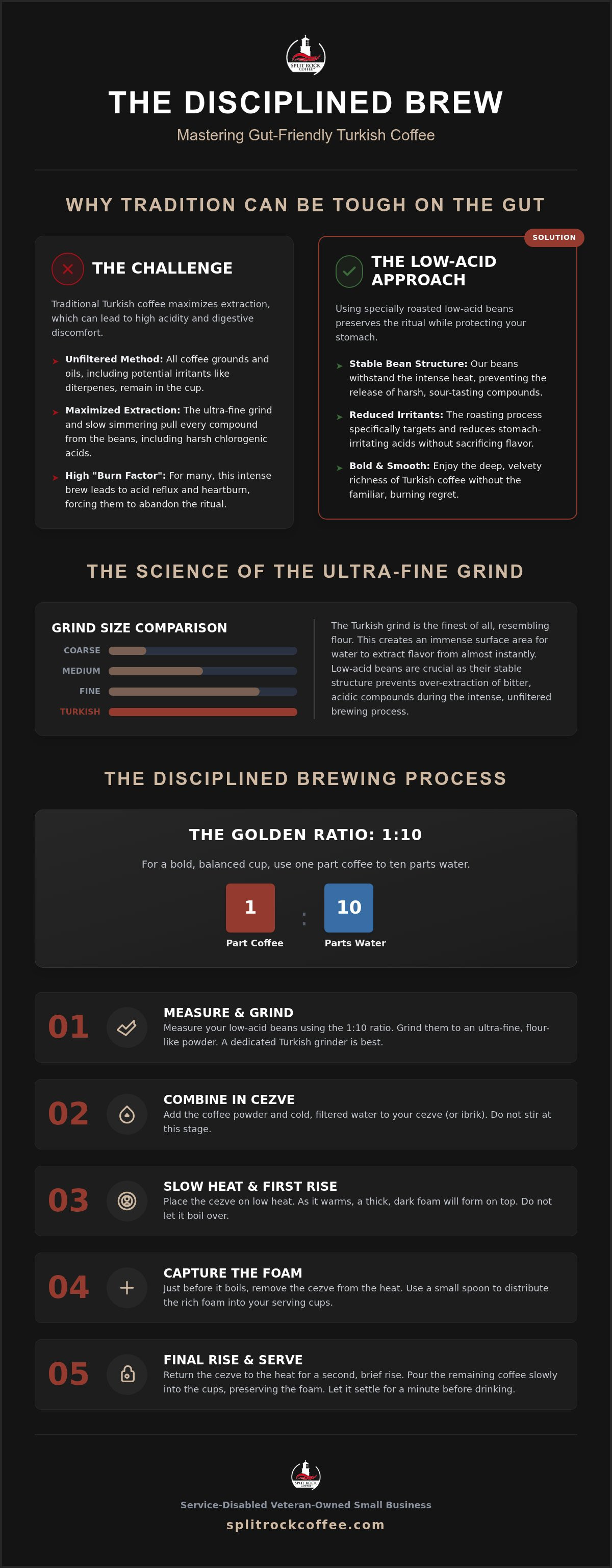
Mastering the ritual of the ibrik requires more than just the right ingredients; it demands a tactical approach to heat and time. When you are making turkish coffee with low acid beans, your goal is to extract the deep, chocolatey essence without triggering the chemical aggression that leads to heartburn. This isn't just about a morning drink. It's about preparing the sustenance you need to face the day with a clear head and a settled stomach. Gathering your equipment is the first step in this mission. You will need a copper cezve (ibrik), ultra-fine ground low acid beans, fresh cold water, and a precise 1:10 coffee-to-water ratio.
The ratio is non-negotiable for a purposeful, strong fuel. For every 10 grams of coffee, use 100 milliliters of water. This concentration provides the body and "köpük" (foam) that defines the tradition. Starting with cold water is a strategic choice. It slows down the extraction process, ensuring that the water doesn't shock the grounds and cause a premature release of chlorogenic acids. This patience is what separates a craftsman from a casual drinker.
Step-by-Step Execution
Execution is where discipline meets craft. Follow these steps to ensure a perfect, gut-friendly cup every time:
- Step 1: Add your ultra-fine ground low acid coffee to the cold water inside the ibrik. The texture should be like powdered sugar.
- Step 2: Stir the mixture only once. Use a small spoon to incorporate the grounds, then do not disturb the mission thereafter. Constant agitation leads to over-extraction and bitterness.
- Step 3: Place the ibrik on the lowest heat setting available. Slow, gradual heat is essential for developing the thick foam without scorching the delicate oils.
- Step 4: Watch the brew closely. As the foam begins to rise toward the rim, remove the ibrik from the heat just before it reaches a rolling boil. Boiling destroys the flavor and increases acidity.
Serving with Purpose
Once the brew is complete, pour it gently into a small demitasse cup. You must allow a "rest" period of approximately two minutes. This discipline allows the fine grounds to settle at the bottom, resulting in a smoother finish and a cleaner palate. Never stir the coffee after it is poured. Doing so would kick up the sediment and ruin the velvety texture you worked so hard to create. For those looking to expand their tactical brewing knowledge, explore our guide on the Best Brewing Methods for Low Acid Coffee. Ready to begin? Secure your supply of Low Acid Coffee Blends and reclaim your morning ritual today.
Sustaining the Mission: Elevating Your Morning with Split Rock Coffee
At Split Rock Coffee, we understand that a morning ritual is more than a caffeine fix; it's a moment of tactical preparation for the challenges ahead. Founded in 2013, our company was built on the values of service, discipline, and community. We don't just roast beans. We engineer solutions for coffee lovers who refuse to let digestive discomfort dictate their day. Making turkish coffee with low acid beans is a commitment to quality that mirrors our own approach to roasting. Every batch of our Gold Standard Coffee Beans undergoes rigorous scrutiny to ensure it meets the high benchmarks our community expects. This is fuel designed for those who lead, serve, and persevere.
Our mission as a Service-Disabled Veteran-Owned Small Business (SDVOSB) is woven into every bag we ship. We take immense pride in our status, viewing our work as a bridge between high-end craftsmanship and social responsibility. When you choose our Low Acid Coffee Blends, you aren't just buying a premium product. You're supporting a business that actively gives back, donating a portion of its proceeds to veteran programs. This is coffee with a purpose, roasted by people who understand the weight of duty and the value of a reliable cup of sustenance.
The SDVOSB Difference
Honoring a heritage of service means never cutting corners. We apply a level of scrutiny to our roasting process that most commercial roasters simply can't match. We treat our low acid blends with the same focus and precision required in the field. This ensures that when you brew your morning ibrik, the result is consistent, bold, and entirely gut-friendly. It's a legacy of excellence that you can taste in every velvety sip, providing the energy you need without the burning regret of high-acid alternatives.
Never Miss a Morning Ritual
A disciplined routine requires a reliable supply chain. Our Monthly Coffee Subscription is designed to ensure your ritual never halts. You can customize your order for whole bean or ground coffee, ensuring you have the exact fuel you need delivered directly to your door. In 2026, convenience shouldn't come at the cost of quality. Join the Split Rock community and secure your Gold Standard today. It's time to elevate your morning and sustain your mission with coffee that honors your health and your heritage.
Reclaim Your Morning Ritual
The ancient tradition of the ibrik doesn't have to be a source of digestive regret. By understanding the science of extraction and the necessity of an ultra-fine grind, you've gained the tactical knowledge to master this craft. You now know that making turkish coffee with low acid beans is the bridge between a bold heritage and a gut-friendly lifestyle. It's about choosing the right fuel and applying the discipline of a cold start to preserve the delicate oils that create that perfect, velvety foam.
Since 2013, our mission as a Service-Disabled Veteran-Owned Small Business has been to provide high-end craftsmanship for those who need reliable sustenance. We've delivered thousands of stomach-friendly mornings to a community that refuses to compromise on quality. Every bag we roast contains Gold Standard Coffee Beans, ensuring that your morning fuel is as principled as your mission. Don't let acidity halt your progress any longer. It's time to join a community that honors both the bean and the person drinking it. Join the Mission: Shop Split Rock Gold Standard Coffee Beans and start your day with the strength you deserve.
Frequently Asked Questions
Is Turkish coffee naturally high in acid?
Turkish coffee is not inherently more acidic by nature, but the preparation method extracts more compounds than filtered brews. The ultra-fine grind creates a massive surface area that releases acids rapidly. Without a paper filter to trap oils, these compounds reach your stomach directly. Using our Low Acid Coffee Blends mitigates this effect, allowing you to enjoy the strength without the typical digestive burn or regret.
Can I use regular ground coffee for the Turkish method?
Standard drip or espresso grounds will not work for this ritual. Turkish coffee requires a powder-like consistency similar to flour or confectioner's sugar. Regular grounds are too coarse to create the signature thick foam and will result in a gritty, watery cup. For the best results, start with The Gold Standard Coffee Beans in whole bean form and use a dedicated manual mill for precision.
Do low acid beans change the taste of Turkish coffee?
Low acid beans actually enhance the traditional profile by removing the harsh, sour notes often found in mass-market roasts. You will notice a smoother, more chocolate-forward flavor with a clean finish. This allows the natural sweetness of the coffee to shine through. It's a disciplined choice that prioritizes flavor clarity and physical comfort over the chemical aggression often found in standard, high-acid coffee beans.
How much caffeine is in a low acid Turkish coffee?
A standard demitasse of Turkish coffee contains roughly 50 to 65 milligrams of caffeine. While the volume is small, the concentration is high because the grounds remain in the water. Low acid roasting targets chlorogenic acids rather than caffeine content. You still receive the high-energy fuel you need for your mission, just without the stomach-irritating side effects that often accompany strong, unfiltered coffee brews.
What is the best grinder for Turkish coffee at home?
A traditional manual brass mill is the gold standard for home brewing. Most electric grinders struggle to achieve the flour-fine powder required for an authentic ibrik brew. If you prefer convenience, we offer our Low Acid Coffee Blends in formats tailored for your needs. However, grinding whole beans fresh remains the most disciplined path to excellence. It ensures the volatile oils stay intact for a superior foam.
Why does my Turkish coffee taste sour instead of bold?
Sourness is usually a sign of under-extraction or using beans with a high natural pH level. Making turkish coffee with low acid beans solves this problem by providing a more stable, balanced base. If your brew is still sour, try increasing your heat more slowly. A gradual rise in temperature allows the water to pull the deep, nutty flavors from the grounds before the foam rises.
Is Turkish coffee safe for people with acid reflux?
Many people with acid reflux find that making turkish coffee with low acid beans allows them to enjoy the tradition again. As a Service-Disabled Veteran-Owned Small Business founded in 2013, we roast our beans specifically to be stomach-friendly. Traditional unfiltered coffee often triggers heartburn, but our process reduces the specific compounds that cause distress. We recommend starting with a small serving to test your own tolerance levels.
How long should I boil my Turkish coffee to keep it low acid?
You should never let your Turkish coffee reach a rolling boil. Boiling causes the grounds to over-extract, releasing bitter tannins and increasing the perceived acidity of the cup. The goal is to heat the water slowly until the foam rises to the top of the cezve. Remove it from the heat immediately at that peak. This preserves the delicate oils and maintains a stomach-friendly, disciplined profile.


