What Are the Best Coffee Brewing Methods and Their Differences? A Disciplined Guide
Brewing a cup of coffee is a tactical operation where the method must match the chemistry of the bean to protect both flavor and gut health. You've likely felt that familiar burn of acid reflux or the sharp disappointment of a bitter, over-extracted roast that leaves your stomach in knots. It's a common struggle, but your morning ritual shouldn't be a compromise between energy and comfort. By mastering the specific mechanics of extraction, you can enjoy a rich, full-bodied experience without the physical toll.
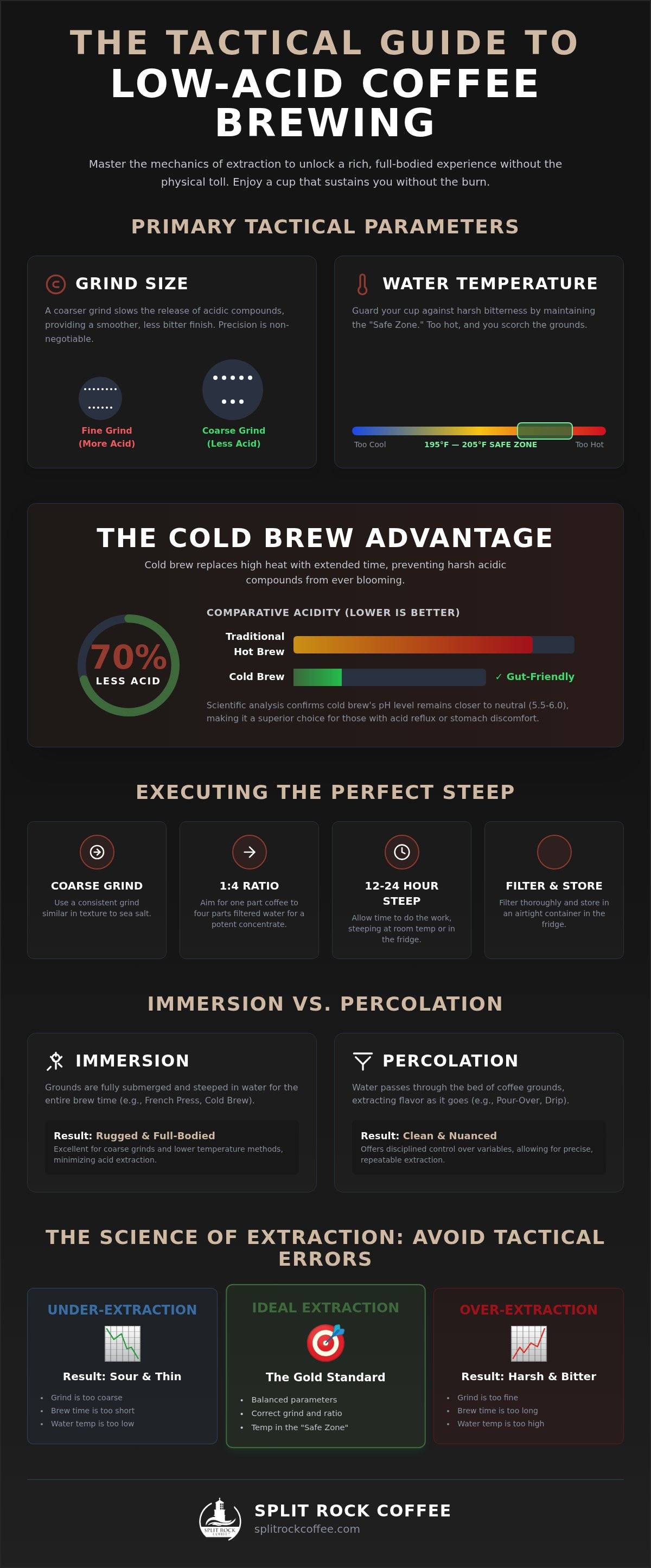
This guide will teach you how to identify and execute the best brewing methods for low acid coffee, ensuring every pour is smooth and intentional. We'll break down the science of immersion versus percolation, explore the 70% acidity reduction found in cold brew, and provide the exact parameters needed to turn The Gold Standard Coffee Beans into your daily fuel. It's time to build a repeatable ritual that respects your body and honors the craft. Through disciplined technique and the right equipment, you can finally reclaim the joy of a morning cup that sustains you without the burn.
Key Takeaways
- Master the tactical parameters of extraction to unlock the full potential of your beans while safeguarding your gut health.
- Identify the best brewing methods for low acid coffee, including how cold brew uses time to eliminate up to 70% of typical acidity.
- Compare the rugged, full-bodied results of immersion brewing with the clean, nuanced clarity of a disciplined pour-over method.
- Guard your cup against harsh bitterness by maintaining the 195°F to 205°F "Safe Zone" during the heating process.
- Build a repeatable morning ritual that matches your lifestyle, whether you have five minutes for a press or 24 hours for a slow steep.
The Mission of Low-Acid Brewing: Why Your Method Matters
Brewing coffee is a tactical operation. Your mission is to extract the essential oils and complex flavor notes while leaving behind the harsh, stomach-churning acids that ruin a morning. Finding the best brewing methods for low acid coffee requires a fundamental shift in mindset. It's not just about convenience; it's about precision. When you approach your brewer with discipline, you protect your gut health and unlock the true profile of the bean. This isn't just a drink. It's the fuel that sustains your day.
Grind size and water temperature are your primary tactical parameters. A coarser grind generally slows down the release of acidic compounds, providing a smoother finish. Temperature is equally critical. We aim for a specific window between 195°F and 205°F to ensure we don't scorch the grounds or pull unnecessary bitterness. By controlling these variables, you move beyond the "hit or miss" results of a standard pot and toward a consistent, high-performance cup.
The Science of Extraction
Bitterness is often the result of a tactical error known as over-extraction. This happens when water stays in contact with the grounds for too long or at a temperature that is too high. Conversely, under-extraction leaves your cup sour and thin. Achieving the balance required for The Gold Standard Coffee Beans means finding the middle ground where clarity and body coexist. Don't overlook water quality either. Since coffee is mostly water, using filtered water is the silent partner in your brewing mission. It ensures the minerals don't interfere with the delicate chemistry of your beans.
The Low-Acid Advantage
The method you choose can either mitigate or exacerbate naturally occurring acids. For example, Cold brew coffee uses time instead of heat to create a concentrate that is significantly smoother. While roasting plays a massive role in the final pH level, your equipment is the final line of defense. Utilizing a disciplined method is the only way to truly honor the quality of low acid coffee. By matching the right gear with a proven strategy, you create a cup that provides sustenance without the physical toll. This is how we respect the craft and the community we serve.
Cold and Slow: The Tactical Advantage of Cold Brew
Cold brew isn't just a summer novelty; it's a strategic maneuver for anyone prioritizing gut health. While standard methods rely on high heat to extract flavor, cold brew replaces thermal energy with time. This 12 to 24 hour immersion process is one of the best brewing methods for low acid coffee because it prevents many of the harsh acidic compounds from ever blooming. Heat is the enemy here. Time is your ally. You're left with a smooth, chocolatey concentrate that serves as your daily fuel for the week ahead. This method allows you to prepare a large batch in one sitting, streamlining your morning ritual without sacrificing quality. It's efficient. It ensures you always have a high-performance beverage ready to go.
The 70% Acid Reduction
Research indicates that cold brew can be up to 70% less acidic than traditional hot coffee. A scientific analysis of brewing temperature and acidity conducted by researchers at Thomas Jefferson University reveals that higher temperatures extract more titratable acids. By keeping the water cold, you ensure the pH level remains closer to neutral, typically between 5.50 and 6.00. This makes it a superior choice for those battling chronic acid reflux or stomach discomfort. If you prefer a warm cup, simply dilute the concentrate with hot water. Since the acids weren't extracted during the initial steep, adding hot water now won't re-introduce that characteristic burn or the sharp bitterness often found in over-extracted roasts. It's a clean extraction.
Executing the Perfect Steep
Precision in your grind is non-negotiable. You need a coarse, consistent grind, similar to sea salt, to allow water to flow freely around the particles without over-extracting fine dust. This is why using the best brewing methods for low acid coffee requires the right tools and a steady hand. Aim for a ratio of one part coffee to four parts water for a mission-ready concentrate. Once the 24-hour steep is complete, filter the grounds thoroughly through a fine-mesh sieve or paper filter to achieve maximum clarity. Discipline doesn't end at the filter. Store your concentrate in an airtight glass container in the refrigerator immediately. It stays fresh and potent for up to two weeks. It provides a reliable source of sustenance that respects your body. To start your journey with the right foundation, consider stocking up on our Low Acid Coffee Blends.
Immersion vs. Percolation: Finding the Gut-Friendly Balance
Selecting your equipment is a deliberate choice in your pursuit of a balanced cup. In the field, we categorize most brewers into two camps: immersion and percolation. Immersion methods, like the French Press, fully saturate the grounds for a set duration. Percolation, seen in pour-overs, involves water passing through a bed of coffee. Both rank among the best brewing methods for low acid coffee, yet they offer distinct profiles for your morning ritual. Choosing the right one depends on whether you value a heavy, resilient body or a clean, nuanced finish.
The French Press Masterclass
The French Press is a rugged, reliable tool that produces a heavy body and rich mouthfeel. This immersion technique is ideal because it protects the delicate oils found in the best low acid coffee beans, which can be stripped away by paper filters. However, this method requires a strict 4-minute discipline. If you leave the grounds to steep too long, you risk over-extraction and the return of that bitter, acidic bite that we aim to avoid.
Maintenance is part of the mission. Always disassemble your press and scrub the mesh filter after every use. Residual oils from previous brews can turn rancid, compromising the legacy of flavor you've worked to build. A clean machine is a prerequisite for a gut-friendly cup. When you treat your gear with respect, it rewards you with a consistent, high-performance brew every single morning.
Precision with Pour Over
If you prefer a clean, tea-like clarity, percolation is your path. This method offers unparalleled control over every tactical parameter. It begins with the bloom, which involves saturating the grounds with a small amount of water to release trapped carbon dioxide. This step is vital to ensure the water can extract the flavor evenly without being blocked by gas. You can master this technique with our guide on how to brew pour over coffee.
The choice of filter matters for sensitive stomachs. Paper filters are excellent at removing sediment and certain oils, resulting in a lighter body that many find easier on the digestion. Metal filters allow more oils through, providing more sustenance but potentially more grit. If your goal is the absolute lowest acidity, a high-quality paper filter often provides the smoothest, most refined experience.
Tactical Versatility: AeroPress and Moka Pot
For the modern traveler or the person on the move, the AeroPress is a versatile, tactical tool. It combines immersion with pressure, allowing for a fast, clean extraction that is remarkably low in acid. It’s nearly indestructible and fits easily into any pack. Conversely, the Moka Pot offers a traditional, intense experience. While it uses higher pressure, using pre-heated water and a shorter brew time can help you achieve that bold intensity without the high-acid sting. Each tool has its place in a disciplined coffee routine, serving as a bridge between high-end craftsmanship and your daily needs.
The Science of Heat: Protecting the Gold Standard
Heat is the engine of extraction. When water hits the grounds, it initiates a chemical reaction that releases flavor, but it also releases the compounds that cause stomach burn. Boiling water is a blunt instrument. It aggressively pulls quinic and citric acids from the bean, leading to a cup that bites back. To utilize the best brewing methods for low acid coffee, you must operate within the 'Safe Zone' of 195°F to 205°F. This specific temperature range is high enough to extract the full profile of The Gold Standard Coffee Beans without triggering the release of harsh, stomach-irritating acids.
Thermal stability is your next objective. The material of your brewing vessel, whether it's ceramic, glass, or stainless steel, dictates how well heat is maintained during the four-minute mission. If the temperature drops too fast, extraction stalls and leaves you with a sour, thin result. Conversely, if you attempt to re-heat a cold cup, you're essentially cooking the coffee twice. This alters the chemical profile and significantly increases acidity. It's better to brew a fresh batch or use a high-quality thermal carafe to sustain the heat. Discipline in temperature management is what separates a professional extraction from a mediocre one.
Temperature Control Tactics
Precision requires the right gear. A gooseneck kettle isn't just for show; it allows for surgical water placement and better thermal management. Remember that altitude affects your boiling point. If you're brewing at high elevations, your water might boil at 200°F, meaning you're already in the safe zone. Always pre-warm your brewer and your mug with hot water before you start. This simple discipline prevents thermal shock and keeps your extraction consistent from the first drop to the last. It ensures the water temperature stays steady as it works through the grounds.
Filtering for Purity
Your choice of filter is the final line of defense for your gut. Paper filters do more than catch grounds; they trap diterpenes like cafestol and kahweol. These oily compounds can sometimes affect cholesterol levels and sensitive digestions. For those seeking extreme clarity and the lowest possible acidity, the double-filter method-using two thin papers-can strip away even more sediment and oil. Always rinse your filters with hot water before adding coffee. This removes the "paper" taste and ensures the only thing you're drinking is the pure essence of the bean. Ready to experience the difference that precision makes? Secure your supply of The Gold Standard Coffee Beans and start your disciplined brewing mission today.
Executing Your Daily Ritual: Matching Method to Lifestyle
Your morning ritual is the foundation of your day. It is a mission that requires both the right equipment and the right fuel to be successful. Selecting the best brewing methods for low acid coffee isn't just a technical decision; it is a lifestyle choice that determines how you sustain your energy. Whether you are a professional on a tight schedule or a weekend enthusiast who enjoys the slow craft of a pour-over, your gear must align with your commitment. Efficiency and quality are not mutually exclusive when you approach the process with discipline and the right tactical mindset.
Consider the flavor profile you require for your daily mission. Do you need heavy fuel with a robust, resilient body? An immersion method like the French Press is your best ally. If you prefer a light, tea-like cup that highlights nuanced notes, a pour-over is the superior choice. Your environment also dictates your gear. A compact AeroPress offers a small footprint and high portability for those who travel, while a dedicated cold brew system might occupy a permanent station in a kitchen focused on long-term preparation. Every tool in your arsenal should serve a specific purpose in protecting your gut health.
The Daily Driver Framework
The Busy Professional needs efficiency without compromise. For you, the AeroPress or a high-quality drip machine is mission-critical. These tools provide a fast, reliable extraction that fits into a five-minute window, ensuring you don't start your day behind schedule. If you are a Weekend Enthusiast, you have the luxury of time. This is when you master the art of the slow Pour Over, focusing on the bloom and the steady stream of water to unlock the full potential of your beans. For the Health-Conscious Drinker, the Cold Brew and French Press mandate is clear. These methods prioritize the preservation of beneficial oils and the maximum reduction of harsh acids, ensuring your coffee respects your body every single day.
Never Run Out of Fuel
A disciplined routine fails without a consistent supply of premium beans. A Monthly Coffee Subscription ensures your brewing discipline never wavers, providing a steady stream of sustenance to your doorstep. You shouldn't have to scramble for fuel when your reserves are low. Choosing between whole bean and ground coffee depends on your specific method and your commitment to the grind. Whole beans offer the freshest flavor for those with a dedicated grinder, while our precision-ground options provide immediate readiness for your brewer of choice. Pairing your tactical gear with our Low Acid Coffee Blends is the final step in securing a balanced, high-performance cup. It’s about building a legacy of quality and health in every pour.
Experience the Gold Standard-Shop Our Low-Acid Blends
Secure Your Morning Mission
Reclaiming your morning starts with a firm commitment to excellence. You've learned that precise heat management and intentional method selection are the tactical keys to a gut-friendly cup. Whether you choose the significant acidity reduction of a slow cold brew or the rich, resilient body of a disciplined French press, you now possess the knowledge to protect your health. Mastering the best brewing methods for low acid coffee is only the first objective; the ultimate goal is a repeatable ritual that sustains you without the burn.
At Split Rock Coffee, we operate as a Veteran-Owned & Operated team with over 10 years of roasting excellence. We understand that your daily fuel must be reliable and high-performing. Our beans are specifically crafted for sensitive stomachs to ensure you never have to compromise your well-being for a premium experience. It is time to lock in your routine and eliminate the guesswork from your kitchen. Secure Your Mission-Ready Low-Acid Coffee Subscription and join a community driven by purpose and craft. Your next great cup is waiting for you.
Frequently Asked Questions
What is the easiest coffee brewing method for beginners?
The French Press is the most accessible starting point for a disciplined morning ritual. It requires minimal gear and follows a straightforward immersion process. You simply add grounds, pour water, and wait four minutes. This simplicity makes it a reliable choice for those new to manual brewing, providing a full-bodied cup without the need for complex pouring techniques or expensive electronic equipment. It is a rugged, foolproof way to start your journey.
Which coffee brewing method has the most caffeine?
Cold brew typically contains the highest caffeine concentration because it uses a higher coffee-to-water ratio and a much longer extraction time. While standard drip coffee extracts quickly with heat, the 12 to 24 hour cold steep pulls a dense amount of caffeine into the concentrate. If you need maximum fuel for your mission, cold brew is the tactical choice for sustained energy that lasts throughout the day.
Is cold brew really less acidic than hot coffee?
Yes, cold brew is significantly less acidic, often showing up to a 70% reduction compared to hot-brewed coffee. Because cold water doesn't extract the same quinic and citric acids that boiling water does, the resulting pH is much higher. This makes it a superior option for protecting your gut health while still enjoying the rich, chocolatey notes of your favorite beans without the sharp stomach burn.
Can I use regular ground coffee for a French Press?
You shouldn't use standard drip ground coffee for a French Press because it is too fine for the mesh filter. Using a fine grind leads to over-extraction and a gritty, bitter cup. For the best results, you need a coarse grind similar to sea salt. This ensures the water can circulate properly and the filter can effectively separate the grounds, leaving you with the clean, smooth finish you deserve.
Why does my coffee taste bitter even with a good brewing method?
Bitterness is usually a sign of over-extraction, often caused by water that is too hot or a steep time that is too long. If your water exceeds the 205°F "Safe Zone," it scorches the grounds and releases harsh compounds. Even the best brewing methods for low acid coffee will fail if you don't maintain discipline with your timer and thermometer. Precision is the only way to avoid tactical errors in flavor.
What is the best brewing method specifically for low acid coffee beans?
Cold brew and the French Press are the best brewing methods for low acid coffee beans because they utilize immersion to gently extract flavors. These methods allow you to control variables like time and temperature more effectively than automated machines. By using a coarse grind and staying within the 195°F to 205°F range, you maximize the gut-friendly benefits of specialized roasts like our Low Acid Coffee Blends.
How often should I clean my coffee brewing equipment?
You must clean your equipment after every single use to prevent old oils from turning rancid. Residual coffee buildup can ruin the flavor of even the highest quality beans and introduce unwanted bitterness. A disciplined maintenance routine ensures your gear remains mission-ready. For deeper cleaning, use a dedicated coffee descaler or vinegar solution once a month to remove mineral deposits that can interfere with thermal stability and extraction consistency.
What is the difference between a coffee maker and a pour over?
An automatic coffee maker prioritizes convenience, while a pour over focuses on precision and control. Standard machines often fail to reach the optimal 195°F to 205°F temperature range, which leads to uneven extraction. A pour over allows you to manage the flow rate and the bloom personally, resulting in a cleaner, more nuanced cup. It turns a mechanical process into a meaningful, manual ritual that honors the quality of the craft.


