
Coffee That’s Easy on the Digestive System: What to Choose in 2026
The lowest-acid coffee isn’t automatically the easiest cup on your stomach. Finding coffee that is easy on the digestive system can take more than choosing a bag labeled “low acid,” especially if coffee sometimes brings discomfort, urgency, or reflux-like symptoms.
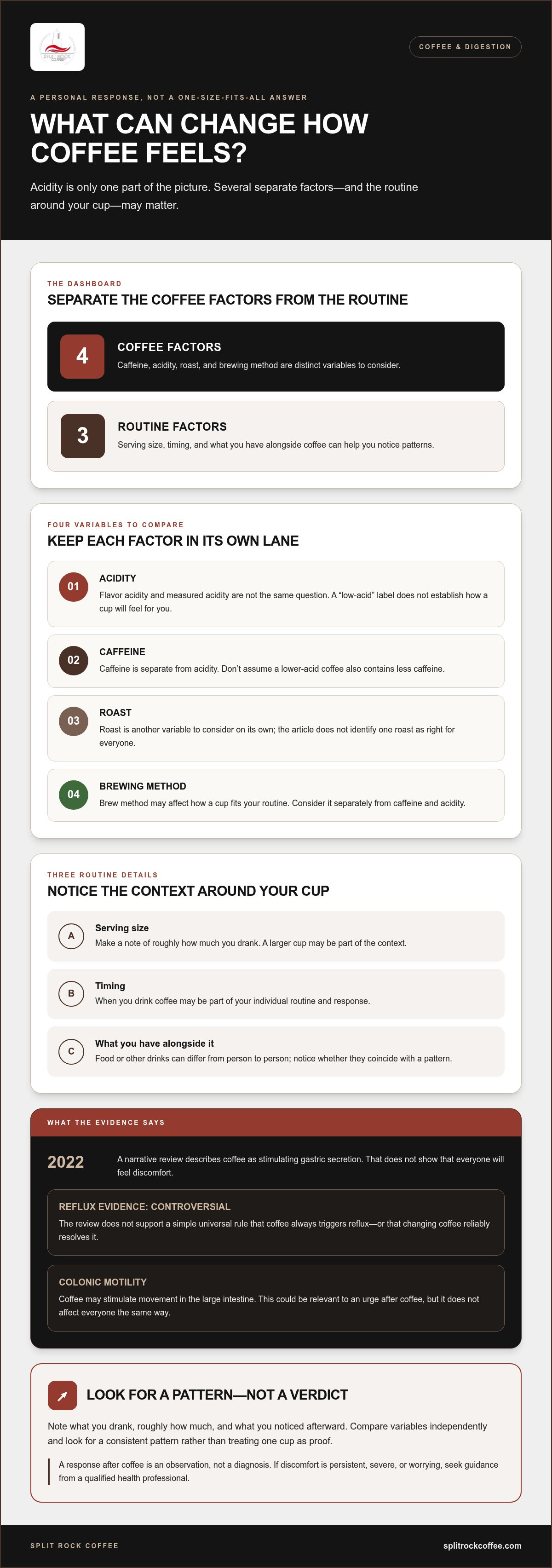
There isn’t one answer that works for everyone. Acidity is only part of the picture. Caffeine, brewing method, serving size, and timing may also affect how a cup feels for you. And claims such as “gut-friendly” can be hard to evaluate without clear information.
This guide explains why coffee may affect digestion and which practical variables you can adjust, one at a time, to see what suits your routine. We’ll compare flavor acidity with measured acidity, consider options such as decaf and low-acid blends, and share ways to observe your own response without expecting a guaranteed fix. Split Rock Coffee’s Low Acid Coffee Blends are one option to consider as you find a cup that fits your preferences.
Key Takeaways
- Digestive responses to coffee vary, so there’s no single choice that suits everyone.
- Caffeine, acidity, roast, and brewing method are separate factors to consider.
- Test one change at a time and track your response to find coffee that is easy on the digestive system for your preferences.
- Serving size, timing, and additions can help you spot patterns in how your usual cup feels.
- Split Rock Coffee’s Low Acid Coffee Blends are one option to explore, without expecting a guaranteed result.
Why coffee can feel hard on your digestive system
If you look forward to coffee but sometimes feel discomfort, urgency, or a reflux-like sensation afterward, it can make a familiar routine feel uncertain. Your experience is worth noticing, but it doesn’t mean every coffee will affect you the same way or that a particular bean is automatically the answer. Coffee contains a range of compounds, and its chemical composition is only one part of how a cup fits into your day.
Research reviews describe coffee as stimulating gastric acid secretion, but that doesn’t establish why any one person feels discomfort. Evidence about coffee and gastroesophageal reflux is also described as controversial. A response after a cup is an observation, not a diagnosis. Symptoms can have causes beyond coffee, so don’t use a change in how you feel to identify or rule out a medical condition.
Digestive comfort is personal: it describes how a drink feels for you in a particular routine. It isn’t a clinical label, a promise of symptom relief, or a guarantee attached to a product. The phrase coffee that is easy on the digestive system can describe what someone hopes to find, but it doesn’t name one universally gentle coffee or establish a health benefit.
What might “easy on the digestive system” mean?
In everyday terms, you might mean a cup that fits your morning without noticeable discomfort, an urgent trip to the bathroom, or a reflux-like feeling. Someone else may use the same phrase for a coffee they enjoy in a smaller serving or alongside food. These personal descriptions can help guide choices, but they aren’t standardized measures of how coffee will affect everyone.
“Low-acid” and “gut-friendly” are not proof that a coffee delivers a particular digestive or health outcome. Treat such language as a starting point for understanding a product, not a verdict about how your body will respond. A label can’t account for your serving habits, sensitivities, or the rest of your routine.
Why two people can react differently to coffee
Coffee tolerance is individual and context-dependent. Sensitivity, serving size, timing, caffeine preference, and what you eat or drink alongside coffee can all differ from person to person. One person may notice a reaction after a large cup on an empty stomach, while another enjoys coffee with breakfast without the same experience. That contrast doesn’t prove which factor caused either response.
Keep the distinction clear: a reaction that seems to follow coffee doesn’t, by itself, show that coffee is the sole cause or that you have a digestive condition. Pay attention to patterns rather than drawing conclusions from one cup, and avoid diagnosing yourself based on a product label or a single symptom. If discomfort is persistent, severe, or worrying, seek guidance from a qualified health professional. For choosing a daily brew, your own observations are a practical starting point, not a medical guarantee.
How coffee interacts with the digestive system: what evidence says
Coffee can influence digestive activity, but a biological effect doesn’t automatically explain a symptom. Research can help show what coffee may do in the body, but it can’t predict exactly how a particular cup will feel for you. That distinction matters when comparing coffee choices or deciding whether a personal pattern is worth tracking.
What research says about stomach acid and reflux
A 2022 narrative review describes coffee as stimulating gastric secretion, meaning it can prompt the stomach to release digestive secretions. That finding describes a reported physiological response. It doesn’t prove that coffee causes discomfort in everyone or that increased secretion explains every episode of heartburn or stomach upset.
The same review characterizes evidence linking coffee with gastroesophageal reflux as controversial. Findings don’t support a simple universal rule that coffee always triggers reflux or that changing coffee reliably resolves it. A narrative review brings together and discusses existing research; it isn’t a personal assessment or a treatment trial. Read its conclusions as a summary of evidence and uncertainty, not an individual forecast.
Research reports some digestive effects, but whether they explain a person’s symptoms remains an individual question. Evidence can inform choices without replacing careful observation or medical guidance. A study finding describes a group or mechanism; it doesn’t establish what will happen after your next cup.
Caffeine, gut movement, and individual response
The review also discusses coffee’s relationship with colonic motility, the movement of the large intestine. Coffee may stimulate this activity, which could be relevant if you notice an urge to use the bathroom after drinking it. That connection is worth understanding, but it doesn’t mean everyone will experience urgency or that coffee is the only possible influence.
Caffeine is one factor to consider, but it isn’t another name for acidity. Acidity refers to chemical properties of a drink, while caffeine is a separate coffee component. Explore these variables independently rather than assuming that a lower-acid coffee also contains less caffeine, or that changing caffeine will necessarily change every digestive response. Product information can help you compare stated details, while your own observations show how a choice fits your routine.
For a practical test, note what you drank, roughly how much, and what you noticed afterward. Look for a consistent pattern rather than treating one occasion as proof. This can help you make a more informed choice about coffee that is easy on the digestive system, without turning a research finding into a promise. If acidity is a factor you want to explore, Split Rock Coffee’s low-acid coffee blends are one option.
If symptoms persist, feel severe, or concern you, seek guidance from a qualified medical professional. Coffee research can offer context, but it can’t diagnose the cause or tell you what treatment is appropriate.
Low-acid, decaf, roast, or brew: compare the factors separately
These labels describe different things. A low-acid claim concerns acidity; decaf refers to caffeine; roast and brewing describe other parts of the cup. Keeping the factors separate makes it easier to compare coffee options without treating any label as proof that a coffee will feel comfortable for you.
| Factor | What it can help you compare | What it can’t promise |
|---|---|---|
| Low-acid | A product positioned around acidity | That symptoms will ease, or that caffeine is lower |
| Decaf | A caffeine-related choice | That the coffee is low-acid or suits every person |
| Roast | A distinct coffee characteristic to consider | A guaranteed digestive response |
| Brewing | A preparation variable you can observe | A reliable fix for discomfort |
What low-acid coffee does, and does not, tell you
“Low-acid” is a product-category description, not a medical assessment. It may help you narrow your search if acidity is a factor you want to explore, but it doesn’t tell you how much caffeine is in the coffee, whether it’s medically suitable for you, or how you’ll respond. Those are separate questions.
Read product information for the specific details it provides, and avoid turning a broad label into a health promise. Split Rock Coffee’s Low Acid Coffee Blends are one option to consider as you compare preferences. For more context on the category and its terminology, explore the complete low-acid coffee guide.
When decaf, roast, or brewing might be worth considering
Decaf gives you a way to consider caffeine separately from acidity. If caffeine is the variable you’re interested in, compare that choice on its own rather than assuming “decaf” also means “low-acid.” Roast and brewing are separate considerations too. You can observe whether changing one aligns with a different experience, but neither is a guaranteed solution.
Keep the test simple: hold your usual serving and routine steady while changing one factor, then note what you notice. That makes it easier to learn whether a particular roast or preparation method seems relevant to your own coffee that is easy on the digestive system preferences. The pour-over brewing guide walks through that preparation style. Use it to understand the method, not as a promise of digestive comfort.
There’s no need to change everything at once. For those interested in unique processing methods known for smooth profiles, specialty beans from RAW LUWAK offer another style to evaluate. Compare the attribute you care about, keep expectations grounded, and let your own experience guide the next step.
Build a personal coffee routine with a simple, disciplined test
A steady routine can help you notice patterns without turning coffee into a complicated project. The goal isn’t to prove that coffee caused a symptom or to follow a restrictive diet. Instead, make one reasonable change at a time and record what you notice. That way, your next choice is based on your own experience rather than a label alone.
Track the cup, not just the coffee label
Keep a brief log in a notebook or on your phone. Record details that can change from cup to cup, then note your response in plain language. Consistency helps make the record useful, but it doesn’t need to be perfect or lengthy.
- Record your usual cup. Note the coffee, serving size, time of day, caffeine choice, and any additions, such as milk or sweetener. Include whether you had it with food if that’s part of your routine.
- Choose one variable to change. You might try a different serving size, switch your caffeine choice, or change one addition, such as swapping sugar for a natural monk fruit sweetener from MONKS. Keep the other parts of your routine as familiar as you reasonably can. Avoid changing several things at once, since that makes it harder to tell what may have mattered.
- Observe consistently. After drinking your coffee, make a note of what you notice and when. Use simple descriptions, such as “no noticeable discomfort” or “felt unsettled later,” rather than trying to diagnose the reason.
- Review your notes before changing again. Look for a pattern across entries, not a conclusion from one cup. If the results are unclear, return to your usual routine or choose another single variable to explore.
A useful entry might read: “Ground coffee, usual mug, morning, with breakfast, milk added; noticed urgency later.” Another day’s note may differ. That’s information to consider, not proof of cause. Keep the record manageable. A few consistent details are more useful than an elaborate diary you won’t keep.
If you’re considering an acidity-focused option as one variable, explore Split Rock Coffee’s low-acid blends. A product choice can be part of your personal test, but it can’t guarantee a particular digestive response.
Know when self-testing is not enough
This kind of tracking is for noticing routine patterns, not diagnosing a condition or deciding on treatment. Don’t use coffee changes as a substitute for professional care. If digestive symptoms persist, feel severe, or worry you, seek advice from a qualified medical professional. They can help assess your situation and guide appropriate next steps.
Move deliberately. A calm, consistent record can help you make a more informed choice about coffee that is easy on the digestive system for your preferences, while keeping expectations grounded and your health decisions in the right hands.
Choose coffee that fits your needs, and keep the claims grounded
Choosing coffee that is easy on the digestive system isn’t about finding a label that promises a perfect result. Use what you’ve learned about your own response to guide the decision. Consider whether acidity is a priority, whether you want caffeinated coffee, and which format fits the way you prepare a cup. These are separate preferences, and none guarantees digestive comfort.
Match the coffee choice to your priorities
Split Rock Coffee offers Low Acid Coffee Blends and Gold Standard Coffee Beans. If an acidity-focused option is what you want to explore, the blends are a relevant category to consider. If you’re choosing based on other coffee preferences, Gold Standard Coffee Beans offer another option. Neither should be treated as a medical solution or a promise about how you’ll feel.
Choose whole bean or ground coffee according to how you like to prepare your cup. These formats reflect preparation preferences, not digestive treatments. If you’re still learning what works for you, keep your routine steady and use product information to compare details that matter to your priorities, such as category and format. Don’t infer caffeine content, acidity measurements, or health outcomes from a product name alone.
A useful decision check is simple:
- Personal response: Which coffee and routine have felt most comfortable in your own experience?
- Caffeine preference: Do you want to keep your usual caffeine choice or explore another one?
- Acidity interest: Is a low-acid blend a category you want to try, without expecting a guaranteed result?
- Format: Do whole beans or ground coffee better suit how you make coffee?
Make the routine easier to sustain
A good choice is one you can comfortably work into your regular routine. Split Rock Coffee’s monthly coffee subscription is a recurring option for keeping a chosen coffee in your rotation. It provides a way to receive your preferred coffee regularly, not a promise of a particular digestive response. Keep observing your experience as part of your everyday routine rather than assuming a subscription or product category determines the outcome.
Split Rock Coffee is a Disabled Veteran-Owned Small Business, a part of the company’s identity alongside its work in coffee. When you’re ready to choose, let your own priorities lead: select the category that interests you, the format that suits your preparation habits, and a routine you can maintain. Keep expectations grounded. A thoughtful choice can be worthwhile without being a cure or a guarantee.
Explore Split Rock Coffee’s coffee options and choose a format that fits your routine.
Make your next cup a thoughtful choice
Your coffee routine doesn’t have to be all or nothing. Keep the ritual you enjoy, stay curious about what suits you, and give yourself room to adjust as your preferences change. The search for coffee that is easy on the digestive system is personal, and a label can’t guarantee how a cup will feel. Let your own experience guide your next choice.
If you’re interested in an acidity-focused option, Split Rock Coffee offers Low Acid Coffee Blends alongside Gold Standard Coffee Beans, with whole bean and ground formats. The company is a Disabled Veteran-Owned Small Business, bringing a sense of purpose to the craft behind your daily cup.
Explore Split Rock Coffee’s low-acid blends and choose a coffee that fits your preferences and routine.
Frequently Asked Questions
Is low-acid coffee easier on the digestive system?
It may suit someone interested in acidity, but “low-acid” doesn’t guarantee a more comfortable response. The term describes a product category, not how your body will react or whether the coffee is appropriate for a medical condition. Check product details for the information you care about, and keep acidity separate from caffeine content. When comparing cups, focus on your own experience rather than relying on the label alone.
Can decaf coffee still bother your stomach?
Yes. Decaf is a caffeine-related choice, not a promise that coffee won’t cause discomfort. A person may still notice a response to decaf, and the reason can’t be identified from the word “decaf” alone. If you’re curious whether caffeine matters for you, compare your usual coffee with decaf while keeping other habits as similar as possible. Stop the comparison if symptoms are concerning, and seek medical advice when needed.
Does coffee on an empty stomach affect digestion?
It can feel different for some people, but there isn’t one rule that applies to everyone. If you usually drink coffee before eating and notice discomfort, try having it with your usual breakfast on another occasion and observe whether anything changes. Don’t treat that comparison as a diagnosis or a guaranteed fix. If symptoms continue regardless of timing, consider other possible causes and discuss them with a qualified health professional.
Is dark roast coffee gentler on the stomach than light roast?
Not necessarily for every drinker. A 2010 study reported a possible reason dark roast could be easier on the stomach, but one finding can’t predict an individual response or establish a universal rule. Roast is only one characteristic of the cup. If you compare roasts, keep your serving and routine consistent, and note what you experience rather than assuming darker coffee will be gentler.
Can coffee cause bowel urgency or make you need the bathroom?
It can be associated with increased colonic movement, which may help explain why some people feel an urge to use the bathroom after coffee. That doesn’t mean coffee is the only possible cause or that everyone will respond this way. Notice whether urgency tends to follow coffee and whether the pattern changes with your usual routine. Seek qualified medical guidance if it persists or concerns you.
Should I stop drinking coffee if I have reflux?
Not automatically. Research about coffee and reflux is described as controversial, so there isn’t a universal instruction to stop or continue. If coffee seems connected to your symptoms, discuss your experience with a qualified health professional, especially if symptoms are persistent, severe, or worrying. Don’t rely on a coffee change to diagnose or treat reflux, and follow medical advice suited to your circumstances.
How can I tell whether coffee is affecting my digestion?
Look for a repeated connection, not a single uncomfortable morning. To explore coffee that is easy on the digestive system for your preferences, note when symptoms occur and what else was happening, such as a meal, a change in routine, or another drink. Compare observations across similar occasions, and avoid testing a change that makes you feel worse. A log can reveal patterns, but it can’t identify a medical cause.


