Low Acid Espresso Beans: The Disciplined Guide to Stomach-Friendly Shots (2026)
Charring your coffee beans into an oily, bitter crisp won't protect your stomach from acid reflux. For years, espresso lovers dealing with painful heartburn or gastritis flares were told that any dark roast would solve their problems, only to end up with harsh, acrid cups that still trigger digestive discomfort. Sourcing genuine low acid espresso beans isn't about settling for scorched carbon or watery, lifeless extractions; it requires purposeful origin selection, dense bean structure, and disciplined roasting craftsmanship.
You shouldn't have to abandon your morning ritual or endure flat, sour shots just to protect your gut. You can pull balanced, heavy-bodied espresso crowned with thick, golden crema without inflaming your stomach lining. Below, we break down the exact bean terroirs, roasting benchmarks, and dial-in adjustments needed to build a reliable, stomach-friendly coffee ritual every single day.
Key Takeaways
- Understand the critical difference between sensory cup brightness and the chemical acid compounds that actively trigger digestive burn.
- Explore how disciplined thermal roasting breaks down chlorogenic irritants while developing natural compounds that actively support stomach comfort.
- Identify the optimal origins and processing styles for low acid espresso beans to achieve thick, resilient crema without sour astringency.
- Calibrate your machine with a precise five-step dialing framework designed to prevent channeling and eliminate sharp, acidic extraction spikes.
- Build a dependable morning ritual centered on whole bean freshness to protect your gut health and sustain high daily performance.
Why Does Traditional Espresso Trigger Stomach Burn and Acid Reflux?
Espresso delivers an immediate, uncompromising sensory punch. Yet for thousands of dedicated coffee drinkers, that morning double shot triggers severe heartburn, chest pressure, and gut inflammation. To build a sustainable ritual, you must understand that genuine low acid espresso beans are not just standard beans roasted darker; they are intentionally sourced and roasted to minimize chemical compounds that irritate the stomach lining.
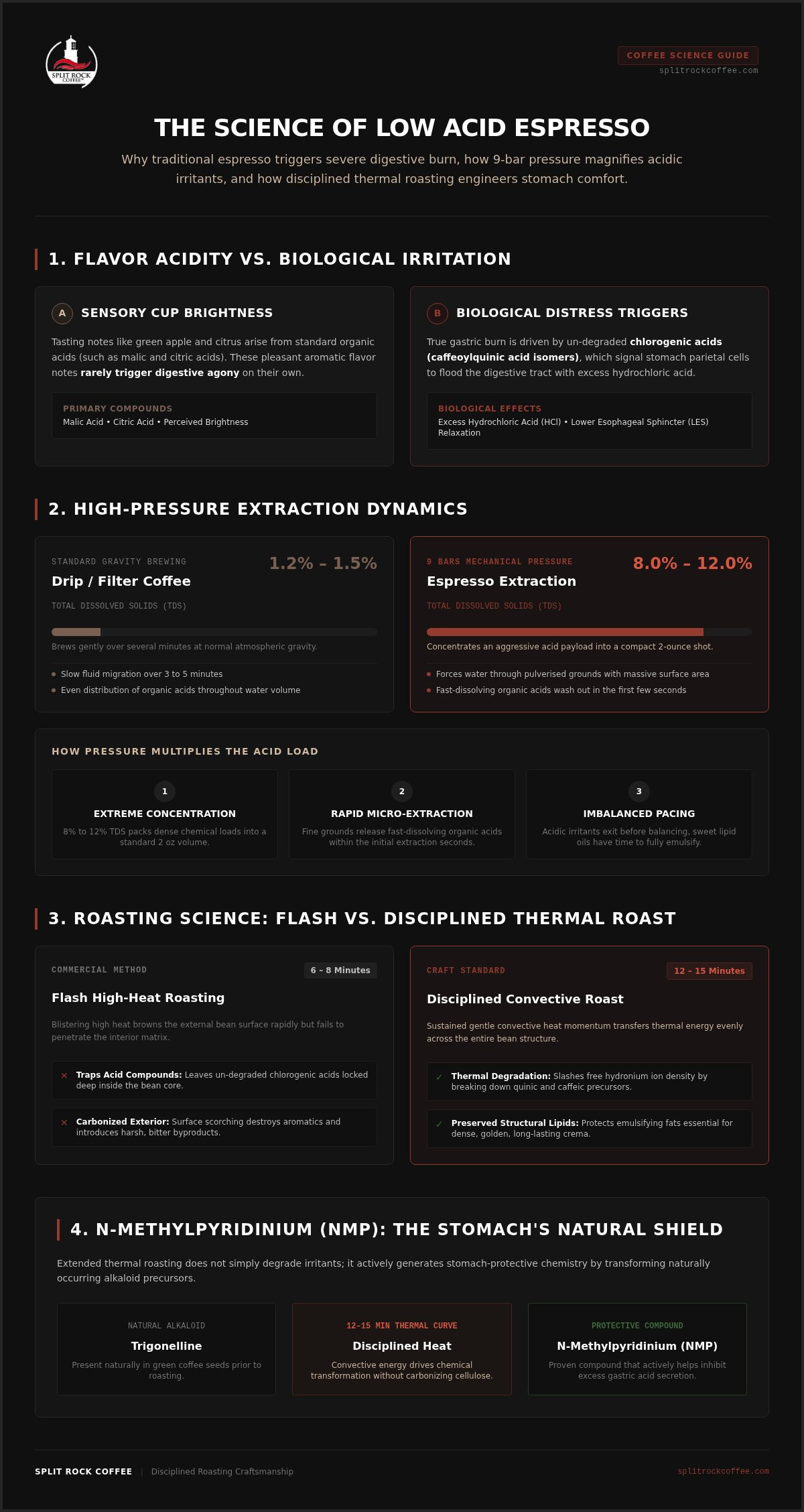
Coffee drinkers often confuse sensory cup brightness with biological acidity. While bright tasting notes like green apple or citrus stem from organic compounds like malic and citric acids, biological discomfort is determined by pH levels, titratable acid, and specific chemical irritants. When you examine our comprehensive guide to low acid coffee, the physiological baseline becomes clear. True stomach distress traces back to two biological reactions: hyper-stimulation of stomach acid and the relaxation of the lower esophageal sphincter (LES).
Chlorogenic Acids vs. Perceived Flavor Acidity
Citrusy fruit notes in specialty coffee rarely cause digestive agony on their own. Instead, internal burn is sparked by chlorogenic acids in green and roasted coffee, especially caffeoylquinic acid isomers. These compounds trigger parietal cells in your stomach wall to pump out excess hydrochloric acid. Standard light-roast espresso concentrates these raw, un-degraded organic acids, bombarding an empty stomach with gut-irritating payloads.
How High-Pressure Extraction Multiplies Acid Concentration
Standard drip coffee brews over several minutes at normal gravity, yielding an extraction with 1.2% to 1.5% total dissolved solids (TDS). Espresso turns that dynamic on its head.
- Extreme concentration: Forcing water through fine grounds at nine bars of mechanical pressure yields a dense 8% to 12% TDS shot, packing an intense acid load into a tiny two-ounce volume.
- Rapid micro-extraction: Finely pulverized grounds expose massive surface area. This causes harsh, fast-dissolving organic acids to wash out in the first few seconds of extraction.
- Imbalanced pacing: High pressure strips out aggressive acidic irritants long before balancing, sweet lipid oils fully emulsify into the cup.
Standard espresso machines magnify whatever chemistry enters the portafilter. Starting with properly developed low acid espresso beans gives your machine the right foundation, preventing high-pressure extraction from turning your morning cup into a gut-wrenching shot.
The Roasting Science: How Heat Transforms Low Acid Espresso Beans
Heat is the great equalizer in coffee roasting. Many commercial roasters assume that burning a bean until it shines with surface oil solves digestive problems. That's a mistake. Scorching green coffee carbonizes delicate bean cellular walls, destroying rich aromatics while baking in bitter, acrid byproducts that can aggravate an empty stomach. Genuine craft demands patience, purposeful heat transfer, and exact timing to convert raw green seeds into gut-friendly fuel.
Disciplined roasting alters coffee chemistry from the inside out. When roasting low acid espresso beans, slow and sustained thermal momentum breaks down volatile compounds while protecting sweet, emulsifying fats. These healthy lipids are non-negotiable; without them, you lose the golden, micro-textured crema that anchors a satisfying extraction. Medical perspectives align with this balance. As detailed in the Cleveland Clinic's guidance on coffee and acid reflux, roasts that temper specific gastric irritants help espresso lovers enjoy their daily routine without triggering reflux symptoms.
The Thermal Degradation of Chlorogenic Acids
Commercial flash-roasting relies on blisteringly high temperatures over six to eight minutes. While this fast method browns the bean surface, it traps un-degraded chlorogenic acids deep inside the core. A disciplined, extended roast curve works differently. By sustaining gentle convective heat across twelve to fifteen minutes, thermal energy gradually breaks down quinic and caffeic acid precursors without carbonizing the structural cellulose. This precise heat window slashes free hydronium ion density while keeping natural sweetness alive.
N-Methylpyridinium (NMP): The Gut's Natural Shield
Extended roasting does more than just break down harsh acids; it actively builds protective chemistry. Sustained heat transforms trigonelline, a naturally occurring alkaloid in green coffee, into N-methylpyridinium (NMP). Research highlights why NMP matters for coffee lovers:
- Targeted acid regulation: NMP actively signals human gastric parietal cells to curb unnecessary hydrochloric acid secretion.
- Concentration shifts: Clinical food chemistry data shows NMP levels surge from 29 mg/L in light commercial roasts up to 87 mg/L in dialed-in dark roasts.
- Irritant reduction: Concurrently, harsh chlorogenic acids drop from 1,126 mg/L down to 323 mg/L, creating an optimal digestive balance.
Achieving this protective threshold demands rigorous craft at the roaster controls. If you want dependable extractions backed by thoughtful roasting discipline, exploring our batch-roasted Low Acid Coffee Blends offers an uncompromising path to clean, rich morning fuel.
Evaluating Low Acid Espresso Beans: Origin, Variety, and Processing
Great espresso starts at the farm level long before the roaster drum begins to spin. Many coffee enthusiasts believe ultra-high altitude is the universal gold standard for all coffee. For pour-overs, high elevations produce dynamic, tart fruit acids. For espresso, those dense, high-grown beans yield intense citric acidity that can wreak havoc on an empty stomach. Pulling a shot under nine bars of pressure concentrates those sharp compounds into an aggressive extract.
Selecting stomach-friendly beans requires evaluating terroir, bean genetics, and harvest processing. Dense, lower-altitude Arabica varieties like Bourbon and Mundo Novo naturally develop lower concentrations of harsh organic acids while packing rich chocolate and hazelnut undertones. Strict adherence to specialty coffee standards ensures green lots remain defect-free and screened against mold toxins that cause systemic digestive inflammation.
Low-Altitude Growing Regions and Natural Processing
Origin soil and regional microclimates dictate the baseline chemical profile of your cup. When looking for lower-acid profiles, specific regions stand out:
- Brazil (Cerrado and Sul de Minas): Lower growing elevations (800 to 1,100 meters) produce beans rich in natural sweetness, nutty body, and low native malic acid.
- Sumatra: Traditional wet-hulling yields heavy, earthy flavor profiles with exceptionally low perceived brightness and minimal chemical tartness.
- Dry Natural Processing: Allowing the coffee cherry to dry whole under the sun infuses the seed with natural sugars from the mucilage, yielding thicker crema, velvety viscosity, and a stomach-soothing mouthfeel.
Selecting Between Single Origins and Crafted Blends
Single-origin coffees showcase distinct regional terroir, but they can be finicky inside an espresso basket. A micro-lot from one farm often swings between sour under-extraction and harsh astringency during minor grind adjustments. For a consistent, stomach-friendly morning cup, disciplined blending provides stability. Combining smooth, dry-processed South American beans with dense, earthy Pacific varieties balances total extraction dynamics. This balance delivers heavy body, uniform flow, and rich, resilient crema without pulling sharp acidic spikes.
Premium low acid espresso beans rely on this intentional synergy. When you choose whole beans grown with care and blended for balance, you safeguard both the richness of your morning cup and the comfort of your digestive tract.
How to Dial In and Brew Low Acid Espresso for Maximum Comfort
Even the finest roast fails if your extraction technique is sloppy. High-pressure espresso machines do not forgive poor puck preparation. When water finds microscopic cracks in a coffee bed, it tears through those pathways, an error known as channeling. Channeling causes localized under-extraction, unleashing sharp, unbuffered acidic surges straight into your cup while over-extracting bitter astringency elsewhere. Grinding fresh whole bean coffee immediately before pulling your shot ensures uniform particle density, giving you full control over every variable. For broader daily routines, reviewing our daily coffee recommendations reinforces how systematic preparation protects digestive comfort.
The 5-Step Low Acid Dial-In Protocol
Dialing in low acid espresso beans requires strict discipline at the grinder and group head. Follow this precise five-step sequence to eliminate sour bite and harsh compounds:
- Step 1 (Dose): Weigh exactly 18 grams of fresh whole bean coffee into your portafilter basket using an accurate digital scale.
- Step 2 (Distribute and Tamp): Use a needle distribution tool (WDT) to break up clumps, followed by a flat, level tamp at roughly 25 to 30 pounds of pressure to prevent edge channeling.
- Step 3 (Pre-infusion): Engage a gentle 5-second low-pressure pre-infusion (around 2 to 3 bars) to saturate the puck evenly before full pressure hits.
- Step 4 (Extraction Window): Target an output yield of 36 to 40 grams (a 1:2 to 1:2.2 ratio) within 28 to 32 seconds to draw out rich, emulsified oils while avoiding thin, sour runs.
- Step 5 (Thermal Stability): Maintain brew water temperatures between 198°F and 202°F. Cooler water leaves organic acids sour and unextracted; excessive heat burns delicate sugars.
Water Mineral Composition and Extraction Control
Water represents over 90% of your finished espresso. Brewing with distilled or zero-mineral reverse osmosis water is a recipe for stomach distress; pure water aggressively extracts aggressive acids without providing natural mineral buffers. Aim for filtered water containing 40 to 70 ppm of bicarbonate alkalinity. Dissolved bicarbonates act as an internal chemical cushion, moderating residual cup acidity and delivering a smoother mouthfeel without scaling up your boiler heating element.
Mastering this mechanical discipline ensures sweet, heavy-bodied extractions that comfort your digestive tract. Ready to calibrate your setup with beans engineered for this balance? Shop our signature Whole Bean and Ground Coffee today to experience how precision roasting and mindful brewing transform your morning ritual.
Building a Sustainable Morning Ritual with Stomach-Friendly Coffee
Your morning routine sets the tempo for everything that follows. Digestive comfort isn't an afterthought; it's a foundational requirement for steady focus, clear energy, and peak performance. When your first drink of the day causes stomach distress, your momentum breaks before the workday even begins. Selecting premium low acid espresso beans is the vital first step, but establishing an unbroken, stomach-friendly morning ritual requires genuine intentionality from bean storage to daily execution.
To see how different roasts align with stomach comfort across varied brewing setups, explore our guide to the best low acid coffee beans to equip your home bar with purpose.
Freshness and Whole Bean Integrity
Oxygen degrades delicate coffee oils through lipid oxidation. Pre-ground bags sitting on supermarket shelves for months lose their protective aromatic compounds, leaving stale coffee that can irritate sensitive stomachs. Grinding whole beans immediately before extraction locks in vital aromatics while preventing oxidative breakdown. Store your beans in an airtight, opaque container away from direct sunlight, ambient heat, and moisture to preserve their dense internal sugars and crema-producing oils.
The Veteran-Owned Mission: Craftsmanship with Purpose
Split Rock Coffee was founded in 2013 with a simple, disciplined mission: craft exceptional coffee that honors the community it serves. Operating as a Service-Disabled Veteran-Owned Small Business (SDVOSB), we approach sourcing and roasting with tactical precision. We refuse to compromise on quality, sourcing clean green beans and applying slow, steady heat to curb harsh organic acids.
Whether you choose our signature Low Acid Coffee Blends or reach for The Gold Standard Coffee Beans, our roasts are crafted to protect your digestive wellness without sacrificing rich, full-bodied espresso character. Both are available in Whole Bean and Ground Coffee formats. A recurring Monthly Coffee Subscription keeps your pantry supplied with freshly roasted batches, removing friction from your schedule and ensuring your mornings are always powered by smooth, dependable fuel.
When you rely on high-grade low acid espresso beans backed by clean sourcing and purposeful roasting, you don't have to choose between rich espresso crema and long-term digestive ease. You command both.
Take Command of Your Morning Extraction
You don't have to surrender the rich intensity of a morning shot just to protect your stomach. Sourcing disciplined low acid espresso beans allows you to eliminate harsh gastric irritants without sacrificing the natural oils that generate thick, golden crema. When you pair intentional bean density with steady brew mechanics, every pull delivers heavy-bodied flavor that stays remarkably gentle on your gut.
As a Service-Disabled Veteran-Owned Small Business (SDVOSB), Split Rock Coffee approaches every roast with tactical dedication. Whether you choose our balanced Low Acid Coffee Blends or experience the disciplined roast profile of The Gold Standard Coffee Beans, our whole bean coffees provide the ideal foundation for stomach-friendly espresso. Set up reliable doorstep delivery through our Monthly Coffee Subscription so your grinder never runs dry. Step up to your machine with complete confidence. Upgrade your daily shot with Split Rock Coffee's Low Acid Blends and fuel your morning without the burn.
Frequently Asked Questions
Can you pull real espresso with low acid espresso beans?
Yes, you can pull authentic, full-bodied shots complete with thick crema using low acid espresso beans. The secret lies in disciplined roasting that protects natural oils while breaking down harsh acids. Dry-processed and low-altitude beans retain dense cellular structures and lipids that emulsify under nine bars of pressure, delivering the signature syrupy texture, deep cocoa crema, and velvety mouthfeel of traditional Italian shots without the caustic bite.
Are dark roast coffee beans always lower in acid than light roast?
Not necessarily, because roast level alone does not guarantee a digestive-friendly cup. While extended roasting breaks down chlorogenic acids, rapid industrial flash-roasting chars bean exteriors while trapping raw acids inside. Scorching coffee also creates bitter carbon compounds that actively irritate sensitive stomach linings. True stomach comfort demands slow, controlled heat application that preserves balancing oils rather than incinerating the bean into bitter carbon.
Will low acid espresso help with acid reflux and GERD symptoms?
Low acid coffee is specifically roasted to minimize common digestive triggers, though it is not a medical cure. Standard espresso shocks an empty stomach with concentrated caffeoylquinic acids, signaling parietal cells to release excess stomach acid. Beans crafted with lower chemical acidity and higher N-methylpyridinium levels reduce this internal stimulation. Many espresso drinkers managing reflux report noticeable relief and less chest burn when switching to carefully roasted, stomach-friendly beans.
What makes espresso taste sour instead of rich and sweet?
Sour espresso is almost always caused by under-extraction or water channeled through uneven grounds. Fast-dissolving organic acids extract within the first few seconds of brewing, while sweet sugars and heavy lipids require sustained contact. If your grind is too coarse, your brew water too cold, or your puck unevenly tamped, water rushes through without extracting the balancing sweet solubles. The result is a thin, sharp, puckering shot that bites your tongue and upsets your stomach.
Is whole bean better than ground coffee for low acid espresso?
Yes, fresh whole bean coffee is far superior for dialing in stomach-friendly shots. Pre-ground coffee oxidizes rapidly on the shelf, which destabilizes natural protective oils and yields stale, irritating compounds. Whole beans shield these lipids until the moment of grinding. Fresh grinding also gives you the precise control needed to adjust your particle size for smooth extraction, which prevents the micro-channeling that causes sharp, acidic surges in your cup.
How do roasters naturally lower acidity without using chemical additives?
Roasters reduce acidity through deliberate origin selection and disciplined thermal application. Purposeful roasters choose Arabica varieties grown in lower-altitude terroirs like Brazil or Sumatra, where coffees naturally mature with less native malic and citric acid. During roasting, artisan craftsmen use extended convection profiles to systematically dismantle irritating chlorogenic compounds. This heat transition encourages the natural formation of N-methylpyridinium, creating stomach-friendly low acid espresso beans without chemical washes, steam treatments, or foreign buffering additives.
Can I use low acid coffee blends in an automated bean-to-cup machine?
Yes, low acid blends perform exceptionally well in automated super-automatic espresso machines. Bean-to-cup machines rely on consistent bean density to dose and tamp automatically inside internal brew groups. Properly developed low acid roasts offer rich solubility without leaving greasy, oily residues that clog delicate internal grinders. Make sure to choose medium-to-dark roasts with a matte surface, ensuring smooth feeding through your machine hopper while pulling rich, stomach-friendly shots at the touch of a button.


