
Best Way to Store Whole Coffee Beans: The Disciplined Freshness Guide (2026)
Tossing your fresh roast into the freezer every morning doesn't preserve its craftsmanship; it quietly degrades it. If you've ever opened a bag after just two weeks only to find the aroma gone and the flavor completely flat, you know the sting of wasted potential. Conflicting advice is everywhere online, but finding the best way to store whole coffee beans shouldn't feel like guesswork or a gamble with premium roasts. You work hard for your morning routine, and every cup ought to honor the discipline behind the craft.
In this guide, you will master the proven methods to defend whole coffee beans from stale degradation and brew peak-flavor cups day after day. We'll expose the four environmental enemies that destroy bean integrity, clear up the confusion regarding when freezing is genuinely useful versus actively harmful, and help you establish an effortless daily counter ritual that keeps every pour rich, smooth, and full of life.
Key Takeaways
- Identify the four natural enemies (oxygen, heat, light, and moisture) that attack volatile coffee aromatics and turn delicate bean oils rancid.
- Discover why an opaque canister with an active seal kept in a cool pantry is the best way to store whole coffee beans for everyday use.
- Unpack the freezer debate to see why daily temperature shifts ruin bean cell structure, and learn when long-term cold storage actually makes sense.
- Master the post-roast degassing curve to capture peak cup complexity between days 7 and 28 without letting valuable beans go stale.
The 4 Enemies of Coffee Freshness: Why Whole Beans Degrade
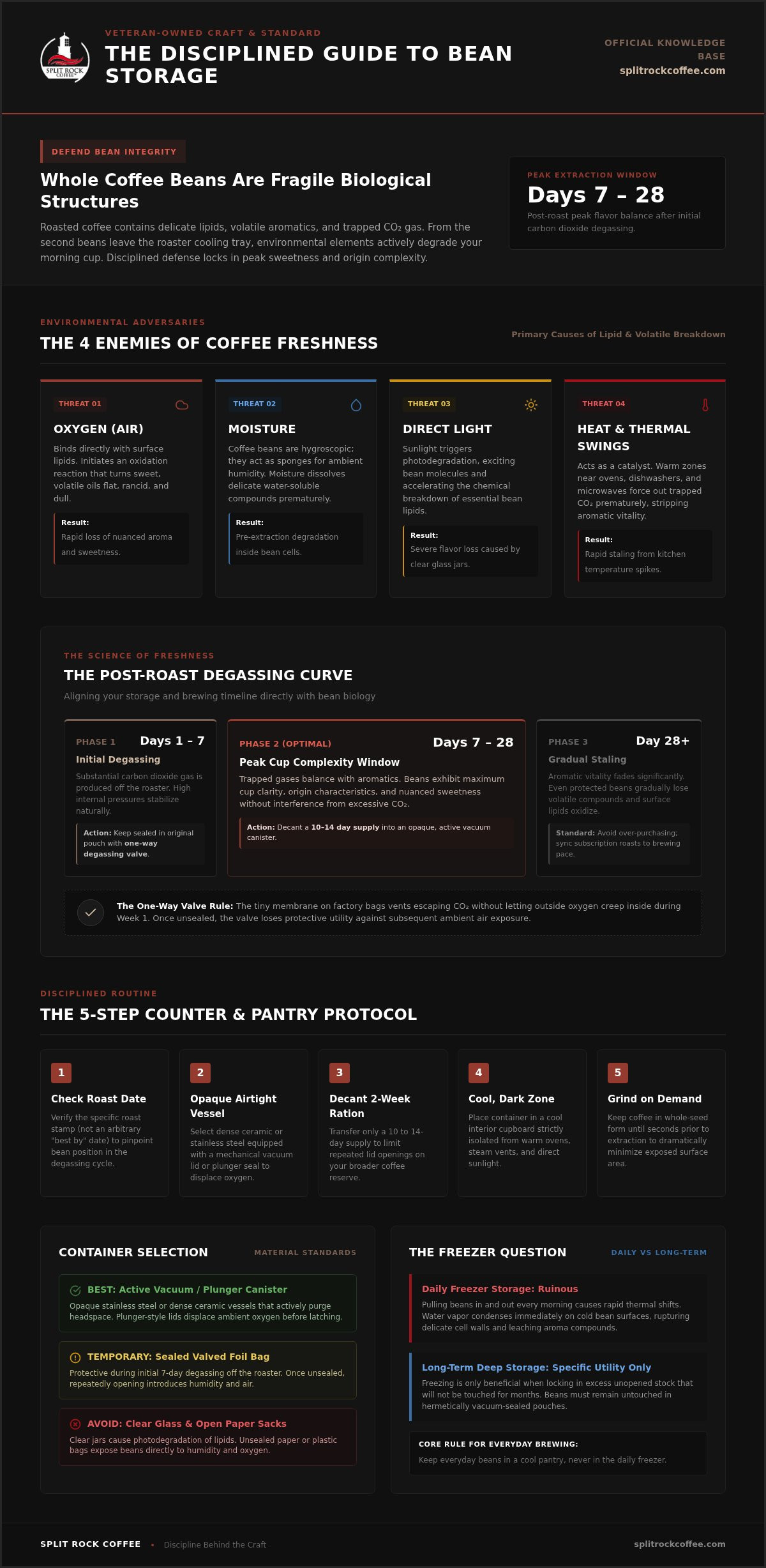
Roasted coffee is not an inert dry pantry staple. It is a fragile biological structure rich in delicate lipids, volatile aromatic compounds, and trapped carbon dioxide gas. The moment beans leave the cooling tray, a relentless countdown begins. Protecting that craftsmanship requires vigilance. If you want to master the best way to store whole coffee beans, you first have to recognize the four natural adversaries quietly degrading your morning cup: oxygen, moisture, light, and heat.
Oxygen and Moisture: The Primary Destructive Forces
Air is the quickest saboteur of flavor. The second roasted beans encounter ambient room air, oxygen binds with delicate surface lipids. This chemical chain reaction turns aromatic, sweet oils flat, rancid, and dull.
Ambient kitchen humidity compounds the damage. Coffee beans are naturally hygroscopic; they act like sponges for surrounding vapor. Moisture reactivates cellular chemistry inside the bean, prematurely dissolving water-soluble compounds before hot water ever touches your brewing gear. Historical research on coffee bean storage methods confirms that unsealed environments rapidly leach volatile compounds. When you brew meticulously crafted roasts like specialty coffee, unchecked air and humidity strip away origin characteristics within days.
Light and Heat: Hidden Kitchen Hazards
Displaying whole beans in clear glass canisters on open shelves looks stylish, but it sacrifices cup quality. Sunlight triggers photodegradation, exciting bean molecules and accelerating the breakdown of essential lipids.
Heat acts as a catalyst, speeding up staling. Storing coffee in cabinets right next to an oven, microwave, or steam-venting dishwasher subjects beans to rapid thermal swings. These temperature spikes force out trapped carbon dioxide gas, stripping beans of their aromatic vitality.
To defend your coffee, maintain strict environmental standards:
- Keep whole beans sealed in an opaque container.
- Store them in a cool, dry pantry away from heat-generating appliances.
- Eliminate exposure to direct sunlight and fluctuating thermal zones.
Knowing the best way to store whole coffee beans comes down to disciplined defense against these four forces every single day.
How to Store Whole Coffee Beans: A Step-by-Step Method
Executing a disciplined kitchen routine protects your investment from roast date to brew. Simply tossing an unsealed retail bag into a cupboard leaves your morning ritual vulnerable. By aligning your storage habits directly with the bean's natural degassing cycle, you can lock in nuanced sweetness and vibrant aroma. Here is the step-by-step protocol for the best way to store whole coffee beans at home:
- Check the roast date: Look for a specific roast stamp, not an arbitrary "best by" window, to gauge where your beans sit in their degassing cycle.
- Select an opaque, airtight vessel: Choose stainless steel or dense ceramic equipped with a mechanical vacuum lid or plunger seal to lock out ambient air.
- Decant a two-week ration: Transfer only what you intend to brew over a 10 to 14-day window to limit repeated lid openings on your broader supply.
- Stash in a cool, dark zone: Place the container inside an interior cupboard away from warm stoves and sunlight.
- Grind strictly on demand: Leave beans in whole-seed form until seconds before extraction to minimize exposed surface area.
Managing Post-Roast Degassing with One-Way Valves
Freshly roasted coffee produces substantial volumes of carbon dioxide gas during its initial seven days off the roaster. High-grade roaster bags include a tiny one-way valve designed specifically for this phase. This membrane vents escaping carbon dioxide without letting outside oxygen creep inside.
Keep your whole beans sealed inside that original factory-valved pouch during this initial resting week. Doing so allows internal pressures to stabilize naturally while holding off the primary enemies of coffee freshness until the roast settles into its peak brewing window.
Transferring to Airtight Canisters for Daily Duty
Once you break the factory seal after the resting period, the built-in valve loses its protective utility. Every subsequent bag opening introduces fresh air and humidity. At this transition point, moving your beans into a dedicated vessel becomes the best way to store whole coffee beans for daily use.
Use canisters that actively purge empty interior space. Plunger-style displacement vessels push trapped air out before latching, while vacuum lids evacuate headspace volume entirely. This disciplined layer of protection ensures your how to brew pour over coffee ritual yields balanced extraction and complex aromatics in every pour. If you want consistently fresh roasts shipped right after degassing, consider exploring whole bean batches from Split Rock Coffee to anchor your morning pantry.
The Freezer Question: When Freezing Whole Beans Works and When It Fails
Few topics trigger as much debate as the freezer question. Enthusiasts often argue you should never freeze beans under any circumstances, while others insist sub-zero temperatures are the ultimate freshness hack. The truth requires clear operational nuance. Cold halts staling reactions, but home freezers introduce severe environmental threats if handled carelessly. Deciding whether freezing fits the best way to store whole coffee beans depends entirely on how often you open that freezer door.
Why Daily Freezer Visits Ruin Fresh Coffee
Pulling your primary coffee container out of the freezer every morning is a recipe for stale coffee. When freezing-cold beans hit warm room air, water vapor instantly condenses on their exterior surfaces, much like droplets forming on an iced glass in summer. That moisture dissolves delicate aromatic oils right on the seed.
Return that container back to the freezer, and you trap that water inside. The resulting ice crystals fracture cellular walls and leach away core sweetness. Roasted beans are also remarkably porous; they act like microscopic scent traps. Leave an imperfectly sealed bag alongside frozen fish or leftovers, and those volatile aromas will ruin your roast within days.
The Tactical Protocol for Long-Term Bean Archiving
Freezer storage is not meant for daily duty. It is strictly a deep-preservation tactic for extra batches you won't touch for weeks. In alignment with the National Coffee Association's storage guidelines, keeping coffee away from daily moisture fluctuations protects cell integrity for up to 3 to 6 months without flavor loss.
To freeze without degrading quality, run this operational checklist:
- Portion into airtight weekly rations: Divide bulk whole beans into single-week quantities using airtight, vacuum-sealed bags.
- Archive in cold, stable zones: Bury packs toward the back of an upright freezer or down inside a chest freezer, far from frost-free defrost cycles.
- Defrost completely before opening: Allow sealed bags to rest on the counter overnight until they reach ambient room temperature before slicing the seal.
Never return thawed beans to the cold. For daily brewing, the best way to store whole coffee beans remains a dark, room-temperature pantry where beans stay dry, steady, and shielded from thermal shock.
Selecting the Best Containers: What to Buy and What to Avoid
Every piece of coffee gear in your kitchen serves a clear purpose, and your storage hardware deserves the same rigorous evaluation. A decorative container might look charming next to the kettle, but if it allows air and light to reach your roast, it undoes the roaster's careful work. Finding the best way to store whole coffee beans begins with selecting engineered vessels built to block outside elements completely.
Engineered Canisters: Vacuum vs. Air Displacement
Modern specialty canisters handle air removal through two distinct mechanical designs: vacuum pressure and physical displacement.
Vacuum-sealed canisters use an integrated twisting lid or an electric pump to evacuate ambient air from inside the jar. This lowers atmospheric pressure, effectively starving ongoing oxidative reactions. Displacement vessels take a different, purely mechanical approach. They use an inner plunger lid with a two-way valve that you push down until it sits directly against the coffee bed, forcing trapped headspace air out through the top.
Both styles perform exceptionally well. For maximum defense, choose canisters crafted from food-grade stainless steel or dense ceramic. These opaque materials create an impenetrable barrier against kitchen light while eliminating the risk of fragile glass shattering on a busy morning counter.
Storage Containers You Must Ban from Your Kitchen
Certain containers do far more harm than good. Strip these common storage mistakes out of your setup immediately:
- Clear glass mason jars: While visually appealing, clear glass provides zero UV protection. Natural daylight and overhead kitchen fixtures trigger photo-oxidation, turning delicate bean oils rancid within days.
- Twist-tie grocery bags: Thin paper roaster sacks with metal fold-down ties allow constant air circulation. They turn beans stale and flat in under a week.
- Standard plastic food tubs: Traditional snap-on plastic containers trap massive air pockets inside. As you work through the supply, that expanding headspace speeds up staling. Thin plastics can also absorb stale odors over time.
Disciplined storage hardware protects the subtle tasting notes you paid for. Investing in an opaque, active-seal container is the best way to store whole coffee beans and defend your daily brew. Upgrade your pantry with fresh batches of The Gold Standard Coffee Beans to experience how pure flavor tastes when properly guarded.
Freshness Timelines: Managing Sourcing and Subscriptions for Peak Flavor
Specialty coffee moves through a predictable sensory life cycle. Optimal flavor typically peaks between day 7 and day 28 post-roast, once volatile carbon dioxide stabilizes and complex aromatic compounds fully emerge. Roast depth plays a critical operational role in this timeline. Darker roasts feature a more porous, brittle cell structure. Consequently, they degas and oxidize substantially faster than denser light or medium roasts.
As beans go stale, cellular degradation alters water solubility during brewing. This chemical shift leads to harsh, inconsistent extractions that taste sharp, hollow, and bitter. Preserving pristine bean cellular structure is essential to savoring the best low acid coffee beans without aggravating your stomach with oxidized, rancid oils. Ultimately, the best way to store whole coffee beans starts with smart inventory management: sourcing only what you can brew inside that peak window.
Reading Roast Dates vs. Misleading Grocery Expiration Codes
Supermarket shelves are infamous for masking aging inventory behind vague "best by" stamps. An expiration date set twelve months in the future often conceals beans that sat in distribution warehouses for half a year, stripped of origin character.
A clear roast date printed on the bag tells the real story. It provides immediate transparency over the bean's true age and degassing progress. Checking this window protects your investment in quality low acid coffee, ensuring the cup you brew delivers authentic sweetness and balanced flavor rather than flat bitterness.
Eliminate Stale Storage with Disciplined Fresh Delivery
Even the most advanced engineered canister cannot turn back time. The ultimate defense against staling is keeping kitchen inventory lean by matching incoming batches directly to your weekly consumption.
Setting up a recurring Monthly Coffee Subscription eliminates stale beans before the problem starts. Small-batch deliveries land on your counter at the exact moment your previous supply winds down. Explore whole bean options across our signature Low Acid Coffee Blends, roasted with purposeful precision to minimize harsh stomach acid, or count on the bold consistency of The Gold Standard Coffee Beans. Sourcing on demand is the best way to store whole coffee beans, ensuring every morning pour honors your standards.
Defend Your Daily Roast with Disciplined Standards
Exceptional coffee is a daily investment in your energy and focus. Protecting that craftsmanship requires vigilance against oxygen, light, heat, and moisture. As you've learned, the best way to store whole coffee beans isn't tossing open bags into a fluctuating freezer; it's locking small batches inside an opaque, airtight canister kept in a steady, cool pantry.
Founded in 2013 on relentless craft discipline, our Service-Disabled Veteran-Owned Small Business approaches roasting with mission-driven purpose. Our precision small-batch roasting protects stomach comfort and delicate flavor aromatics, giving you rich extraction without harsh bitterness. Pair disciplined kitchen storage with a flexible Monthly Coffee Subscription to ensure peak-fresh roasts arrive right on schedule at your door. Secure Your Fresh Whole Bean Delivery with Split Rock Coffee today and take pride in fueling your routine with an uncompromising cup every morning.
Frequently Asked Questions
What is the best way to store whole coffee beans at home?
The best way to store whole coffee beans at home is inside an opaque, airtight canister kept in a cool, dark pantry away from heat and moisture. Choose a vessel made of stainless steel or ceramic featuring a vacuum pump or displacement lid. Keep the container far from appliances like dishwashers and ovens. Only pull out what you plan to brew over two weeks, leaving beans whole until right before extraction.
Can you store whole coffee beans in the original bag they came in?
Yes, you can keep beans in their original bag during the first week post-roast, provided the bag has a functioning one-way degassing valve. The valve lets escaping carbon dioxide vent without allowing outside oxygen in. Once you break that factory seal, however, repeated openings compromise the interior atmosphere. After opening, roll the bag tight to displace air, or transfer your beans into an engineered storage canister for daily duty.
Does keeping whole coffee beans in the refrigerator make them last longer?
No, storing whole coffee beans in the refrigerator accelerates staling rather than preventing it. Refrigerators are damp, odor-rich environments that ruin specialty roasts. Roasted beans act like microscopic sponges; they readily absorb aromas from onions, dairy, or leftovers. The chill and constant door openings also cause surface condensation, dissolving sweet aromatic oils before brewing. Keep your beans at steady room temperature in a dry pantry instead.
How long do whole coffee beans stay fresh in an airtight container?
Whole coffee beans generally maintain peak flavor between one and six weeks after their roast date when kept in a quality airtight container. After six weeks, origin notes, sweetness, and crisp acidity gradually soften as carbon dioxide depletes and residual oxygen interacts with surface oils. While the beans remain completely safe to brew for several months, consuming your supply within 28 days guarantees the balanced cup the roaster intended.
What happens if you store whole coffee beans in a clear glass jar?
Storing whole coffee beans in a clear glass jar exposes them to natural and artificial light, causing rapid photodegradation. Light waves excite delicate chemical bonds inside roasted beans, accelerating lipid oxidation. Within days on an open counter, this reaction strips out vibrant flavor notes and turns essential oils flat, bitter, and rancid. If you must use glass jars, store them inside a dark pantry cabinet rather than on display.
Is it better to store coffee beans whole or grind them all at once?
It is far better to store coffee as whole beans and grind strictly on demand before brewing. Grinding shatters beans into thousands of microscopic particles, exponentially expanding the surface area exposed to oxygen. Ground coffee loses substantial aroma within 15 minutes of grinding and goes stale in under two weeks. Protecting the outer cellular shell until brew time is the best way to store whole coffee beans for daily flavor.
How can you tell if whole coffee beans have gone stale?
You can identify stale whole coffee beans through a flat aroma, an absence of bubbling during brewing, and a dull, hollow cup flavor. Fresh beans smell intensely fragrant and swell with active carbon dioxide bubbles when hit with hot water. Stale beans remain flat and silent during the pour. If the dry beans smell like cardboard, wood, or musty nuts, the delicate oils have oxidized past their prime.


