The Low Acid Coffee Roasting Process: The Science of Gut-Friendly Fuel
Why should your first cup of high-performance fuel end in a painful battle with heartburn? For many, the morning ritual has become a tactical error, leading to the frustration of chronic discomfort or the disappointment of bland, flavorless alternatives. You don't have to settle for coffee that tastes like tinted water just to protect your gut. The secret lies in the low acid coffee roasting process, a disciplined approach to bean science that targets chlorogenic acid degradation without sacrificing the soul of the roast.
We know you demand excellence in every cup and refuse to compromise on the Gold Standard of flavor. It's exhausting to navigate marketing jargon that obscures the truth about how your coffee is actually crafted. This article promises to demystify the roasting techniques that eliminate stomach burn while preserving a bold profile. We'll explore the chemistry of the Maillard reaction, the impact of thermal precision, and why a mission-driven approach to roasting creates a superior, gut-friendly experience for a community that values both strength and health.
Key Takeaways
- Understand how thermal precision degrades chlorogenic acids, the primary trigger for stomach discomfort, while keeping bold flavor intact.
- Explore the science of the low acid coffee roasting process and why timing the "First Crack" is the decisive moment for digestive comfort.
- Identify why natural roasting discipline is the superior choice over chemical stripping for those who refuse to settle for bland coffee.
- Learn how to optimize your daily ritual at home using brewing methods that naturally complement a low-acid profile.
- Connect with the Split Rock mission of providing the Gold Standard for a community that values resilience, service, and quality.
The Chemistry of Low Acid Coffee: Why the Roasting Process Matters
Coffee is more than a morning beverage; it's the fuel that powers your mission. However, for those dealing with GERD or chronic stomach sensitivity, that fuel can often feel like a liability. True craftsmanship begins with understanding that the low acid coffee roasting process is not about stripping away flavor. It's a deliberate thermal strategy designed to degrade specific organic acids that trigger physical discomfort. By applying heat with discipline, we transform raw, green seeds into a potent brew that respects your body's limits without compromising on strength.
Understanding The Chemistry of Low Acid Coffee requires looking past the surface level of "brightness." Many coffee lovers confuse the citrusy "pop" of a light roast with actual chemical acidity. In reality, perceived flavor and measured pH levels are two different battlefronts. While a bean might taste fruity, its actual pH determines how your gut reacts. A successful low acid coffee roasting process targets the molecular structure of the bean, ensuring the final product provides high-energy sustenance without the subsequent burn. This transition from green bean to roasted fuel is a total chemical overhaul.
The Role of Chlorogenic Acids in Gastric Distress
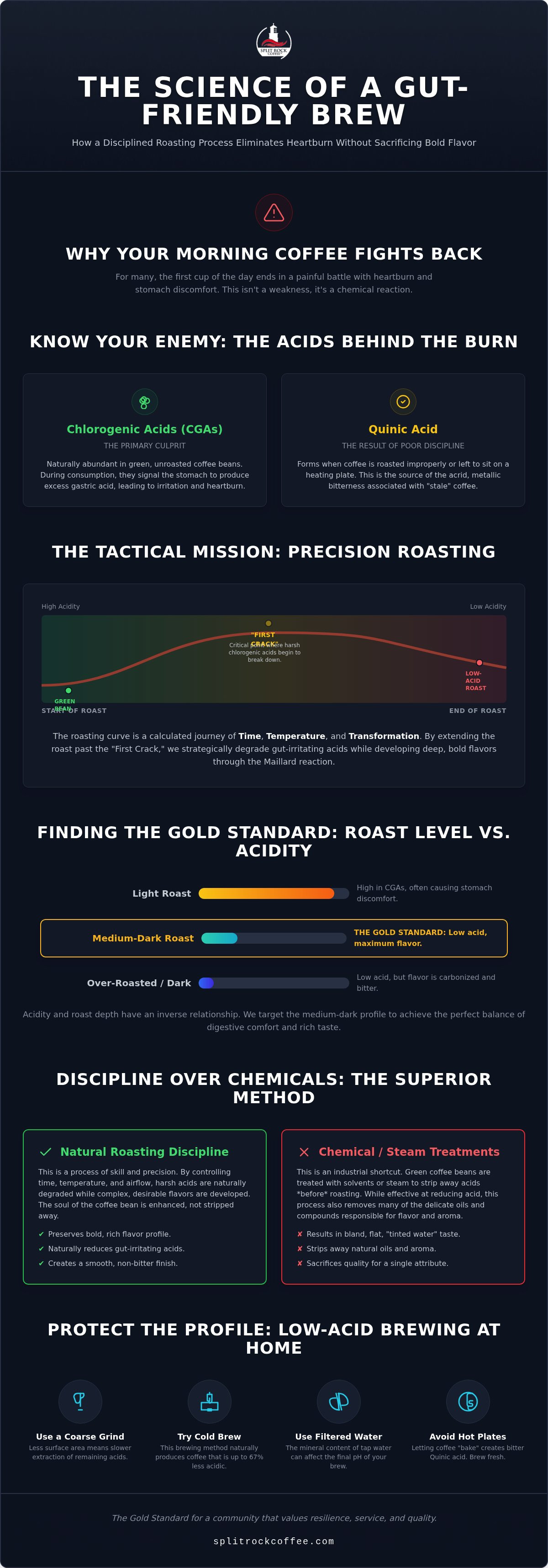
The primary culprit behind your post-coffee heartburn is a group of compounds known as Chlorogenic acids (CGAs). These acids are naturally abundant in green coffee beans. When you consume them, they signal your stomach to produce an excess of gastric acid, leading to that all-too-familiar irritation. Standard light roasts often retain high levels of these irritants because the beans haven't spent enough time under the intense scrutiny of the roasting drum. Our goal is a physiological mission. We use heat to break these compounds down, creating a brew that honors the gut lining while maintaining the Gold Standard of excellence.
Quinic Acid and the "Stale Coffee" Burn
Not all acidity is created equal. While CGAs are inherent to the bean, quinic acid is often the result of poor discipline. It forms when coffee is roasted improperly or left to bake on a heating plate for too long. This is the source of that acrid, metallic bitterness that ruins a good morning. There is a distinct difference between the vibrant, healthy acidity found in specialty beans and the punishing burn of low-quality roasts. The Maillard reaction, which creates those deep, savory chocolate and nut notes we love, serves as a natural counterbalance by developing complex sugars that mask and mitigate residual acid levels. It's a delicate dance of chemistry where precision timing ensures the final cup is both powerful and smooth.
The Roasting Curve: Precision Timing for Acid Reduction
Mastering the low acid coffee roasting process requires more than just high-end sensors; it demands the same unwavering discipline we honed during our service. As a Disabled Veteran-Owned roastery, we approach the TTT framework, Time, Temperature, and Transformation, as a tactical mission. This isn't a race to the finish line. It's a calculated journey where every second the bean spends in the heat alters its molecular makeup. We track The Roasting Curve with a meticulous eye, knowing that the "First Crack" is the critical turning point. This audible pop signals that the bean's internal structure is expanding, finally allowing the degradation of the harsh organic acids that cause gastric distress.
Precision airflow is another essential tool in our arsenal. As the roast progresses, beans shed chaff and release smoke that can trap acrid byproducts. If these linger, they impart a sour, metallic quality to the final brew. We maintain high-velocity airflow to strip away these acidic influences, ensuring the flavor remains clean and bold. This level of scrutiny is what separates a generic roast from a mission-ready fuel that respects your gut.
The Impact of Roast Levels and Acidity
Acidity and roast depth share a direct, inverse relationship. Light roasts often leave the gut-irritating acids fully intact, which is why they frequently cause trouble for those with sensitive stomachs. On the other end of the spectrum, over-roasting creates a carbonized, bitter profile that lacks character. We've found that a medium-dark profile represents the Gold Standard for both flavor and digestive health. You can explore our full breakdown of coffee roast levels and acidity to see how we balance these competing forces. It's about finding that sweet spot where richness thrives and irritation disappears.
Thermal Stability: The Roaster’s Disciplined Eye
A steady heat curve is non-negotiable for quality. Flash roasting, or hitting beans with sudden, extreme heat, might be efficient for mass production, but it leaves the core of the bean underdeveloped and acidic. We account for bean density, understanding that a harder bean requires more intentional heat penetration to break down those internal compounds. Once the target transformation is achieved, we use precision cooling to lock in the profile instantly. This quenching process halts the chemical reactions, ensuring the integrity of our Low Acid Coffee Blends remains consistent from our roastery to your cup. It's a slow, deliberate process that honors the craft and the community we serve.
Slow Roasting vs. Steam Treatments: Choosing Your Method
When you're on the hunt for coffee that won't punish your stomach, you'll encounter two very different schools of thought. One relies on industrial shortcuts to strip acidity away before the beans ever see a flame. The other, which we champion at Split Rock Coffee, utilizes the low acid coffee roasting process as a form of natural thermal discipline. We begin our mission by sourcing high-altitude beans. These beans are naturally denser and possess a more stable chemical base, providing a superior starting point for a roast that aims for both power and digestive peace. From there, it’s a matter of choosing between chemical intervention and the craftsman's patience.
Steam Pre-Treatment: The Industrial Shortcut
Many mass-market brands utilize steam pre-treatment to lower acidity levels quickly. This industrial method involves subjecting green beans to high-pressure steam to strip away the outer waxy layer, which contains many of the primary irritants. While this is a functional solution for cases of extreme sensitivity, it often comes at a steep price for the coffee lover. Steaming can leave the final product tasting flat, earthy, or even "baggy." It strips away the nuance of the bean, making it nearly impossible to reach the Gold Standard flavor profile we demand for our community. It’s a shortcut that misses the mark on quality.
Thermal Degradation: The Craftsman’s Choice
We believe in the power of the roaster to shape the bean's destiny through heat and time. By using prolonged, steady heat, we encourage the natural chemical changes during coffee roasting to do the heavy lifting. This method of thermal degradation breaks down chlorogenic acids without the need for external chemicals or moisture-stripping steam. It requires a high level of roastery discipline to execute correctly. You must roast long enough to eliminate the burn, yet stop precisely before the delicate origin notes are lost to carbonization. This low acid coffee roasting process preserves the vibrant chocolate and nut tones that define our Low Acid Coffee Blends. It’s about doing the hard work to ensure you get a cup that is both potent and kind to your gut. We choose this path because we refuse to compromise on the experience of the brew or the health of the person drinking it.
The Split Rock Mission: Roasting for Quality and Purpose
Split Rock Coffee was built on a foundation of service and resilience. Founded in 2013 as a Service-Disabled Veteran-Owned Small Business (SDVOSB), our mission has always been clear: provide the highest quality fuel for those who refuse to settle. We don't view roasting as a simple retail transaction. It's a commitment to our community. The "Gold Standard" isn't just a marketing label; it's the benchmark we use to measure both the boldness of the flavor and the level of digestive comfort. Our veteran-led discipline means we approach every batch with the same tactical precision we used in uniform.
Achieving the perfect cup requires more than just intent. It requires a repeatable, rigorous low acid coffee roasting process that leaves no room for error. We've spent over a decade refining our techniques to ensure that every sip provides high-energy sustenance without the debilitating burn of high-acidity beans. This dedication to quality is why our community trusts us to deliver the best low acid coffee beans available today.
A Disciplined Approach to Sourcing
The mission begins long before the roaster is fired up. Since our founding in 2013, we've adhered to a strict set of principles for sourcing our green beans. We select only those that are naturally lower in acid from the start, often focusing on specific high-altitude varieties that offer a cleaner, more resilient profile. Every shipment of "The Gold Standard Coffee Beans" undergoes a vetting process for consistency that rivals any military inspection. Our criteria include:
- High-Altitude Density: Ensuring the bean can withstand our thermal discipline.
- Natural Low Acidity: Prioritizing varietals that lack the harsh chemical bite.
- Moisture Stability: Guaranteeing a uniform roast across the entire batch.
If the raw material doesn't meet these specifications, it never makes it to the roasting floor. This level of scrutiny is the first line of defense in protecting your gut health and ensuring a superior experience.
Batch Consistency and the SDVOSB Edge
Quality control is where our SDVOSB heritage truly shines. We treat small-batch roasting as a tactical requirement rather than a marketing buzzword. It allows us to monitor the thermal curve of every roast with a level of detail that industrial operations simply cannot match. We operate with a "No Man Left Behind" philosophy in our quality control. This means every single bag of our Low Acid Coffee Blends is tested to ensure it meets our mission requirements before it leaves our facility. We refuse to let a single inferior bean compromise the integrity of the batch. This consistency through our low acid coffee roasting process ensures you get the same reliable fuel every time you brew. We take pride in our craft because we know that the results serve a greater purpose.
Experience the difference that veteran-led discipline makes by securing your supply of The Gold Standard Coffee Beans today.
Optimizing Your Brew: Protecting the Low Acid Profile at Home
You've secured the right beans; now, you must protect that investment. The low acid coffee roasting process we employ at Split Rock Coffee is designed to give you a head start, but improper brewing can re-introduce the very bitterness and acidity we worked so hard to eliminate. Think of your brewing setup as the final stage of the mission. To maintain the integrity of your fuel, you need to match our roastery discipline with precision in your kitchen. Certain methods naturally favor a smoother profile by altering how the water interacts with the bean's chemistry.
Cold brew remains the ultimate tactical advantage for those with extreme sensitivity. By using time instead of heat to extract flavor, you bypass the thermal triggers that release harsher oils and acids. If you prefer a hot cup, the French Press is a reliable ally. Its immersion style and requirement for a coarse grind ensure a heavy-bodied result that is significantly easier on the gut. Even if you require a concentrated kick to start your day, making espresso with low acid coffee is a viable way to get your high-energy fuel without the subsequent burn. The relationship between time and acid is simple: heat acts as a catalyst, so the more you control the temperature, the better your stomach will feel.
Temperature Control: Avoiding the Acid Spike
Boiling water is often too aggressive for specialty beans. When you hit your grounds with water at a rolling boil, you "shock" the beans, which can cause a sudden release of unwanted acidic compounds and a dry, ashy finish. For a disciplined extraction, aim for a temperature range between 195°F and 205°F. This is the sweet spot where you extract the rich, chocolatey notes of our Low Acid Coffee Blends without the irritation. If you're using a pour-over method, execute your pours with purpose and precision, ensuring the water moves steadily through the grounds rather than sitting and over-extracting.
The Grind Factor
Consistency in your grind size is non-negotiable for gut health. An uneven grind leads to "fines" that over-extract and "boulders" that under-extract, creating a muddy, acidic profile that ruins the experience. We offer both Whole Bean and Ground options to suit your equipment, but always prioritize freshness. Once the bean is ground, the surface area increases, making it vulnerable to oxidation. Store your Gold Standard beans in a cool, dark, airtight container. Oxygen is the enemy of quality; it accelerates the development of stale acids that can trigger heartburn. By controlling the environment of your beans, you ensure every cup honors the heritage and hard work that went into the low acid coffee roasting process.
Fuel Your Mission Without the Burn
You no longer have to choose between a bold, high-performance brew and your digestive health. By mastering the low acid coffee roasting process, we've moved past industrial shortcuts to embrace a methodology rooted in thermal discipline and chemical precision. From the degradation of chlorogenic acids at the "First Crack" to the meticulous sourcing of high-altitude beans, every step we take is a commitment to your daily sustenance. Your morning ritual should be a source of strength, not a tactical error that leads to discomfort.
As a Service-Disabled Veteran-Owned Small Business founded in 2013, Split Rock Coffee operates with a sense of duty to our community. We've refined our meticulously roasted Low Acid Coffee Blends to ensure they meet the Gold Standard of flavor while respecting your gut. We take pride in the craft because we understand that the results serve a greater purpose. It's time to reclaim your coffee experience with fuel that works as hard as you do.
Secure your Gold Standard fuel today with a Split Rock Coffee Subscription and experience the difference that veteran-led discipline makes in every cup. Take charge of your morning and fuel your day with confidence.
Frequently Asked Questions
Does the low acid coffee roasting process remove caffeine?
No, the low acid coffee roasting process doesn't remove caffeine from the beans. Caffeine is a highly stable alkaloid that remains intact even as we apply the thermal discipline needed to break down organic acids. While our roasting profile focuses on eliminating the triggers for stomach discomfort, the energy-boosting properties of the bean stay exactly where they belong. You get the full tactical advantage of high-energy fuel without the subsequent gut burn.
Is dark roast always lower in acid than light roast?
Generally, darker roasts are lower in acid because they spend more time in the roaster, allowing for greater thermal breakdown of acidic compounds. However, roast level is only one part of the mission. A disciplined medium-dark approach can achieve superior acid reduction while preserving the complex flavor notes of the Gold Standard. It's the precision of the heat curve, rather than just the final color, that dictates the digestive impact on your stomach.
How do you measure the acidity level in roasted coffee?
Acidity is measured using the pH scale, where a higher number indicates lower acidity. Standard coffee typically sits around a pH of 5.0, while a successful low acid coffee roasting process aims for a pH of 5.5 or higher. We use this scientific benchmark to ensure our blends meet the requirements for gut health. This objective measurement provides the confidence you need to enjoy your morning cup without the fear of irritation or physical setback.
Can I use a regular coffee maker for low acid beans?
Yes, you can use any standard drip machine, Keurig, or pour-over setup for these beans. While methods like Cold Brew or French Press naturally complement a low-acid profile, our meticulous roasting process ensures the beans are gut-friendly regardless of the equipment. The key is maintaining a consistent grind size and using water between 195°F and 205°F to protect the integrity of the roast and avoid shocking the beans with excessive heat.
What is the difference between low acid and acid-free coffee?
The primary difference is that "acid-free" coffee doesn't exist in nature. All coffee contains some organic acids, which are essential for flavor. We focus on Low Acid Coffee Blends because they represent a realistic, science-based reduction of the specific compounds that trigger reflux. Claiming a coffee is acid-free is often misleading marketing jargon. We prefer the discipline of honest labeling and measurable pH improvements that actually protect your gut and honor the craft.
How does the roasting process affect the flavor of low acid blends?
The process shifts the flavor profile away from sharp, citrusy brightness toward deep, savory notes like chocolate, caramel, and toasted nuts. By targeting the degradation of chlorogenic acids, we allow the Maillard reaction to flourish, creating a rich and smooth body. This results in a cup that feels more substantial and satisfying. It provides the Gold Standard experience of a bold roast without the acrid, metallic finish often found in high-acid, mass-market beans.
Is low acid coffee better for people with acid reflux?
Yes, low acid coffee is specifically designed to be gentler on the stomach for those dealing with GERD or acid reflux. By reducing the concentration of chlorogenic acids, the coffee triggers less gastric acid production in your body. This makes it a reliable fuel source for anyone who has previously struggled with the burn. It's about providing a way to stay in the fight and enjoy your morning ritual without sacrificing your physical well-being.


