What Does Low Acid Coffee Taste Like? A Guide to the Gold Standard Flavor Profile
Most coffee drinkers believe that choosing a stomach-friendly brew means surrendering the soul of their morning ritual to a cup of flavorless brown water. It's a common fear, and frankly, a justified one. You want the high-energy sustenance and the comfort of a warm mug, but you're tired of the post-sip heartburn and that sharp, metallic bitterness found in cheap, mass-produced roasts. We understand that mission. You shouldn't have to choose between your digestive health and a premium sensory experience that fuels your day.
So, what does low acid coffee taste like? When beans are roasted to a disciplined Gold Standard, the result is a revelation of smooth, chocolatey depth and nutty richness that bypasses the citrus-heavy sharpness of standard blends. This guide explores the refined roasting techniques that protect your stomach while unlocking a bold, complex flavor profile. We'll break down the sensory notes of premium beans and show you how to identify a reliable daily fuel source. Discover how a purposeful approach to coffee can provide the rich, pain-free experience you deserve without sacrificing an ounce of flavor.
Key Takeaways
- Ditch the metallic bitterness of cheap roasts for a profile defined by chocolatey depth and a smooth, mellow finish that honors your morning ritual.
- Understand exactly what does low acid coffee taste like when the roasting process is treated as a disciplined craft rather than a commercial shortcut.
- Explore the sensory science behind the Maillard reaction, which replaces sharp, citrus acidity with savory, toasted notes that provide a richer body.
- Identify the Gold Standard benchmarks of a premium brew, including roast-date transparency and the specific regional origins required for a stomach-friendly experience.
- Secure a reliable daily fuel source that protects your digestive health while delivering the high-energy sustenance you need to stay on mission.
What Does Low Acid Coffee Taste Like? The Sensory Profile
When you first take a sip of a disciplined brew, the difference is immediate. If you've spent years bracing yourself for the sharp, metallic tang of standard roasts, you might wonder: what does low acid coffee taste like? It's a profile built on a foundation of natural smoothness and a deep, chocolate-forward character. While regular roasts often chase a "brightness" or "citrus" quality that can feel like a sharp sting on the tongue, low acid blends pivot toward a mellow, grounded experience. You won't find the sour or aggressive bite that typically triggers reflux. Instead, you get a cup that feels intentional and steady. Ultimately, the low-acid experience is defined by a masterful balance of heavy body and remarkably low astringency.
The 'Smooth' Factor: Understanding Mouthfeel
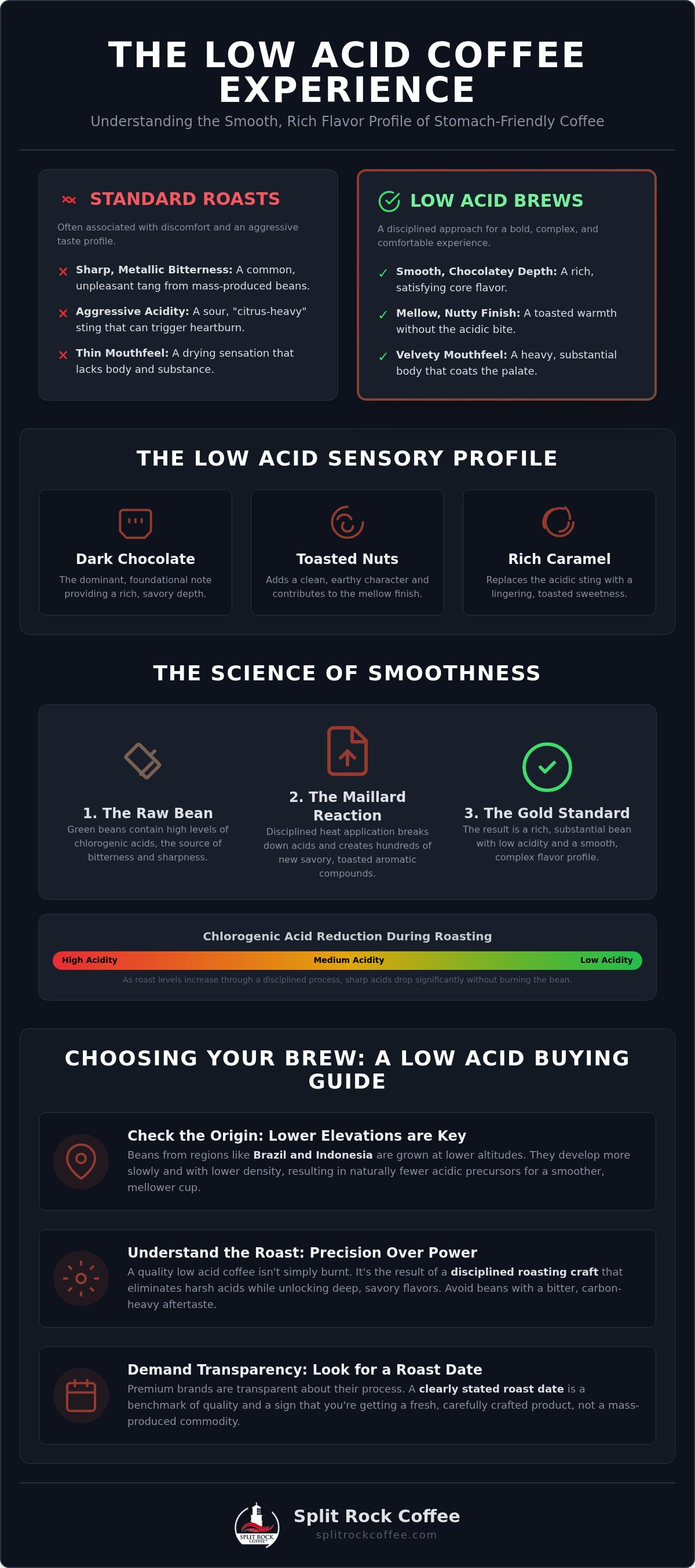
The texture of a Gold Standard brew is often described as velvety. It coats the palate without the harsh, drying sensation common in high-acid beans. This change in mouthfeel happens because specialized roasting techniques target specific chemical compounds in coffee, specifically chlorogenic acids, which are responsible for that thin, metallic finish. When these acids are reduced through precise heat application, the coffee feels thicker and more substantial. It's a heavy, satisfying weight in the cup. This provides a sense of sustenance rather than just a quick caffeine jolt, ensuring every sip feels like a reward for your hard work.
Common Flavor Notes: From Cocoa to Nutty Undertones
Because the roasting mission focuses on breaking down acids, the flavor profile shifts away from delicate floral or fruity notes. These "bright" flavors are usually the first to go during the specialized roasting process required for Low Acid Coffee Blends. In their place, you'll discover dominant notes of dark chocolate, toasted nuts, and rich caramel. The experience is often described as "earthy" but clean. The finish is notably sweet, replacing the typical acidic sting with a lingering, toasted warmth. It's a robust flavor profile that honors the heritage of traditional coffee while removing the pain points that hold many drinkers back. By focusing on these deeper, savory elements, the coffee achieves a level of richness that feels both premium and approachable. It's the kind of coffee that stays with you, providing a steady foundation for whatever the day demands.
The Sensory Science: Why Roasting Changes the Taste
The transformation from a raw, green bean to a finished brew is a matter of disciplined heat application. To understand what does low acid coffee taste like, you have to look at the chemical mission taking place inside the drum. Roasting is not just about changing the color of the bean. It's a calculated strike against chlorogenic acids. According to a meta-analysis of acids in coffee from the University of California, Davis, the concentration of these acids drops significantly as roast levels increase. However, the true craft lies in reaching that threshold without incinerating the flavor.
The primary driver of this flavor shift is the Maillard reaction. This process occurs when heat bridges the gap between amino acids and reducing sugars, creating hundreds of new aromatic compounds. In a low acid environment, this reaction prioritizes savory, toasted, and malty notes. While generic brands often over-roast their beans to a "burnt" finish just to kill the acidity, our approach focuses on precision. We aim for a profile that is rich and substantial, providing Gold Standard Coffee Beans that fuel your day without the bitter, carbon-heavy aftertaste of an undisciplined roast. This is the difference between a bean that is simply treated with chemicals and one that is mastered through roasting expertise.
Altitude and Origin: The Foundation of Flavor
A smooth cup starts in the soil. Beans grown at lower elevations, particularly in regions like Brazil and Indonesia, are the disciplined choice for low acid profiles. At these altitudes, the beans develop more slowly and with lower density, which naturally results in fewer acidic precursors. The soil composition in these regions further supports a mellow development. This means the roaster isn't fighting the bean to remove acid; they're working with its natural strengths to highlight chocolatey and nutty undertones from the very first crack.
Medium vs. Dark Roasts in the Low Acid World
There is a persistent myth that only a charred, dark roast can be stomach-friendly. That isn't the case. While dark roasts are effective at breaking down acids, a properly executed medium roast can achieve the same mission while preserving a broader spectrum of flavor complexity. A medium roast offers a "cleaner" experience that many find more refreshing for a morning ritual. Whether you prefer the smoky depth of a dark roast or the balanced sweetness of a medium blend, the goal remains the same: a cup that provides sustained energy without the physical cost of reflux.
Low Acid vs. Regular Coffee: A Side-by-Side Comparison
Choosing between these two profiles is a matter of prioritizing your body's resilience without abandoning the craft you love. Regular coffee is celebrated for its "vibrancy," but for many, that vibrancy is simply a polite word for digestive aggression. When evaluating the merits of Low Acid Coffee vs Regular Coffee, we look at four key pillars: acidity, body, sweetness, and aftertaste. Regular coffee often presents a thin, tea-like body and a sharp, citrus-forward acidity. In contrast, what does low acid coffee taste like when compared directly? It offers a heavy, syrupy body and a sweetness reminiscent of molasses or dark cocoa. Skeptics often claim the low-acid label is a marketing scam. However, flavor is the ultimate proof of the process. If the sharp, back-of-the-throat sting is gone, the roasting discipline has done its job.
The Aftertaste Test: Clean Finish vs. Lingering Burn
A Gold Standard brew is defined by its clean finish. Regular coffee often leaves a sour, metallic coating on the palate that can persist for hours. This is the lingering ghost of chlorogenic acid, which can disrupt your focus and cause discomfort. Low acid blends provide a refreshing alternative. Their mellow nature doesn't clash with savory or sweet dishes, making them a superior companion for your morning meal. It is a more harmonious way to start your day, ensuring your palate remains ready for the next mission rather than being weighed down by a bitter film.
Is It 'Weak'? Addressing the Strength Misconception
Don't confuse low acidity with a lack of strength. Acidity is a flavor note, while strength is a measure of caffeine and dissolved solids. You can brew a cup that is incredibly bold and high-energy while remaining completely stomach-friendly. The key is maintaining a disciplined bean-to-water ratio and using quality Low Acid Coffee Blends. Strength comes from the density of the extraction, not the sharpness of the bean. By focusing on a proper extraction, you get the fuel you need to stay on mission without the physical fallout of a high-acid roast. It is about working smarter, not harder, to achieve the perfect cup.
Choosing Your Brew: A Low Acid Buying Guide
Selecting the right bag requires a level of scrutiny that matches the effort put into the roast itself. When you ask what does low acid coffee taste like, you're looking for a specific benchmark of quality that isn't found on every grocery store shelf. The disciplined choice is always whole bean. Grinding just before you brew preserves the volatile oils that carry those rich, nutty notes we've discussed. If convenience is your priority, high-quality ground coffee is available, but you must look for origin transparency and a clear roast date. A transparent label tells a story of heritage and quality. If a brand hides its origin or lacks a specific roast date, it's a red flag. Our "Mission First" approach relies on small-batch roasting to ensure the precision needed to hit the Gold Standard without the inconsistencies of mass production. For more depth on these standards, consult The Ultimate Guide to Low Acid Coffee.
Low Acid Decaffeinated Coffee: Purity and Taste
Many drinkers fear that removing caffeine also removes the flavor, leaving a watery, uninspiring cup. That's a failure of process, not the bean. To maintain a profile of chocolatey depth, we look to the Swiss Water Process. Unlike chemical methods that can leave a harsh, metallic aftertaste, this water-based approach preserves the bean's integrity. Low acid decaf is the ultimate disciplined choice for an evening ritual. It provides the warmth and sensory richness of a premium roast without the late-night jitters. It's proof that you don't have to sacrifice flavor for functionality. You get the same smooth finish as our caffeinated Low Acid Coffee Blends, just without the spark.
Subscription Benefits: Never Run Out of Fuel
Consistency is the backbone of any successful routine. A Monthly Coffee Subscription ensures that your morning fuel is always at peak freshness. The Gold Standard Coffee Beans are best enjoyed within weeks of roasting, as oxidation is the enemy of a smooth finish. A subscription helps you maintain a baseline for what does low acid coffee taste like at its absolute freshest. By choosing a recurring delivery, you eliminate the risk of settling for a stale, high-acid alternative from a local mart when you run out. It's a simple way to protect your stomach and your palate every single day. Keep your pantry stocked and your mission on track with a reliable supply of premium beans delivered to your door.
Experience the Gold Standard with Split Rock Coffee
Split Rock Coffee operates with a high degree of confidence because our methods are rooted in a clear sense of duty. Since our founding in 2013, we've focused on one primary objective: delivering a high-energy daily fuel source that won't leave you sidelined by discomfort. As a Service-Disabled Veteran-Owned Small Business, we understand that reliability is the backbone of any mission. When you ask what does low acid coffee taste like in the context of our roasting workshop, the answer is a benchmark of excellence. It's the result of scrutinizing every bean and mastering the heat of the drum to ensure chlorogenic acids are broken down without sacrificing the essential oils that provide that signature, heavy body. We don't just sell coffee; we provide the sustenance needed for those who lead disciplined, purposeful lives.
Our commitment to service extends far beyond the final brew. We view ourselves as guardians of a specific mission, acting as a bridge between high-end craftsmanship and the community we serve. Every bag represents a legacy of resilience and pride. This isn't just about retail. It's about a humble commitment to a larger social cause and the people who rely on us for their daily start. We've mastered the roasting process to achieve the Gold Standard of flavor, ensuring that every sip is smooth, rich, and entirely free of the aggressive bite found in mass-produced roasts.
Our Low Acid Blends: A Profile for Every Palate
Our flagship Low Acid Coffee Blends are crafted for those who refuse to settle for a mediocre morning. We offer a range of profiles designed to meet your specific tactical needs, whether you're heading into a long shift or enjoying a rare moment of quiet. Our blends are available in both Whole Bean and Ground Coffee formats, ensuring you have the right tools for your preferred brewing method. The flavor profiles we've developed include:
- The Dark Roast: A bold, smoky experience with heavy notes of dark cocoa and a lingering, sweet finish.
- The Medium Roast: A balanced, "Breakfast Blend" style that highlights toasted walnuts and caramel sweetness.
- The Decaf Choice: A Swiss Water Processed brew that maintains full flavor depth without the caffeine spark.
When you choose our beans, you're supporting a veteran-owned small business that prioritizes quality over shortcuts. Every purchase honors a heritage of hard work and dedication to the craft.
Start Your Mission Today
Your morning ritual should be a source of strength, not a source of pain. We invite you to join our mission and finally experience a cup that aligns with your health goals without surrendering the rich sensory experience you love. Taste and health can coexist in one cup, provided that cup is filled with a disciplined roast. Don't wait for the next bout of heartburn to make a change. Secure your daily fuel by starting a Monthly Coffee Subscription today. It's the most efficient way to ensure The Gold Standard Coffee Beans are always ready when you are. Visit our shop and experience the difference that purposeful craftsmanship makes.
Take Command of Your Morning Ritual
Reclaim your ritual with the confidence that comes from a disciplined roast. You've learned that low acid coffee is a refined roasting craft, not a compromise on quality. By targeting specific chemical compounds and embracing the Maillard reaction, a Gold Standard roast delivers a velvety mouthfeel and rich cocoa notes that sustain you throughout the day. You no longer have to wonder what does low acid coffee taste like; it tastes like a bold, chocolate-forward victory over the metallic sting of mass-market beans. It is a smoother, more purposeful way to fuel your mission without the physical cost of reflux.
Split Rock Coffee brings over 10 years of low acid expertise to every batch we produce. As a Service-Disabled Veteran-Owned Small Business, we apply a high level of scrutiny to ensure every bag meets our Gold Standard roasting quality benchmarks. We invite you to experience a brew that honors both your health and your palate. Shop the Gold Standard: Experience Low Acid Coffee Without the Burn today and secure the reliable daily fuel you need to stay on mission. Your best cup is waiting.
Frequently Asked Questions
Does low acid coffee taste like dirt or earth?
No, a disciplined roast should never taste like dirt. While some beans from specific regions like Indonesia have natural earthy undertones, the sensory experience of what does low acid coffee taste like is defined by chocolatey richness and toasted nuts. If your coffee tastes like soil, it's likely a result of poor processing or low-grade beans rather than the low-acid roasting method itself. We focus on a clean finish that provides pure sustenance.
Is low acid coffee less bitter than regular coffee?
Low acid coffee is significantly less bitter than standard mass-produced roasts. The specialized roasting techniques we use target chlorogenic acids, which are the primary culprits behind that sharp, metallic bitterness. By breaking these down through precise heat application, we unlock a smoother, more mellow flavor profile. This allows the natural sweetness of the bean to shine through, providing a more balanced cup that is easier on both your palate and your stomach.
Can I still get a dark roast flavor in a low acid coffee?
You can definitely enjoy a robust dark roast flavor while maintaining low acidity. In fact, darker roasts are naturally more stomach-friendly because the longer roasting time breaks down more acidic compounds. Our dark Low Acid Coffee Blends offer the smoky, deep intensity you expect without the accompanying heartburn. It's a bold experience that prioritizes depth and chocolatey notes, ensuring you get the high-energy fuel you need with a disciplined, smooth finish.
What is the best brewing method to preserve low acid flavor?
Cold brewing is the most effective method for minimizing acid extraction, but a French press or pour-over is excellent for preserving the rich flavor profile. These methods allow for a controlled extraction that highlights the heavy body and nutty undertones of premium beans. Avoid using boiling water, as excessive heat can pull out residual bitterness. Aim for a temperature around 195 to 205 degrees Fahrenheit to maintain the Gold Standard balance of strength and smoothness.
Does low acid decaffeinated coffee taste different from regular decaf?
Low acid decaf often tastes superior to regular decaf because it avoids harsh chemical treatments. We utilize the Swiss Water Process, which relies on water and temperature to remove caffeine while leaving the flavor oils intact. This results in a cup that maintains the chocolatey depth and substantial mouthfeel of our caffeinated blends. You won't find the watery or metallic "off" flavors associated with standard decaffeination, making it a reliable choice for your evening ritual.
Why does some low acid coffee taste burnt?
A burnt taste often indicates an undisciplined roasting process where the roaster used excessive heat to force the acid levels down. While charring the beans does reduce acidity, it also destroys the nuanced flavor profile of the coffee. Our mission is to reach the Gold Standard by using precise heat application that breaks down acids without incinerating the sugars. This ensures your coffee tastes like rich cocoa and toasted nuts rather than carbon or ash.
Can I add milk or creamer to low acid coffee without ruining the taste?
You can absolutely add milk or creamer, though many find they don't need it. Because the natural bitterness is reduced, the coffee has an inherent sweetness that pairs beautifully with dairy or plant-based alternatives. The heavy body of our Low Acid Coffee Blends stands up well to creamers, creating a velvety, dessert-like experience. It's a versatile daily fuel source that adapts to your personal preferences while remaining consistently smooth and gentle on your digestive system.
How do I know if a coffee is truly low acid just by the label?
Understanding what does low acid coffee taste like starts with reading the label for origin and roast date. Look for beans from low-altitude regions like Brazil or Indonesia and a clear roasted on date. Transparency is a hallmark of quality, and many craft roasters use professional equipment from DuraFast Label Company Canada to ensure their mission-critical information is clearly presented. Truly low-acid brands will often mention specialized roasting techniques or third-party testing rather than just using a generic marketing claim. As a veteran-owned business, we prioritize this level of scrutiny to ensure every bag meets our rigorous benchmarks.


